Loading...
Done
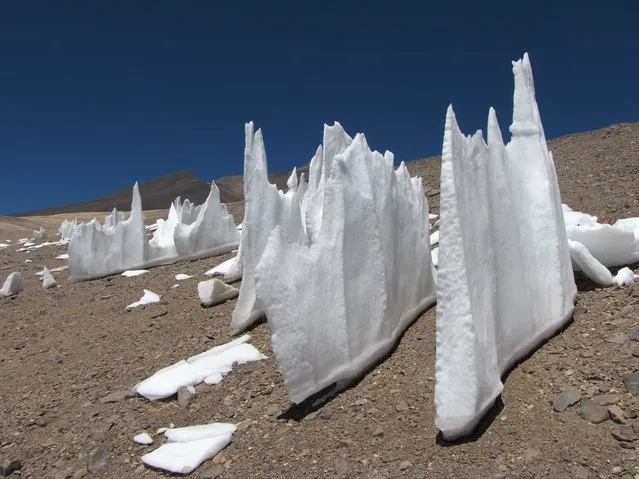
The Strange Snow Formations Called Penitentes

Penitentes, or nieves penitentes (Spanish for “penitent-shaped snows”), are a snow formation found at high altitudes. They take the form of tall thin blades of hardened snow or ice, closely spaced with the blades oriented towards the general direction of the sun.
Details
06 Jul 2015 09:11:00
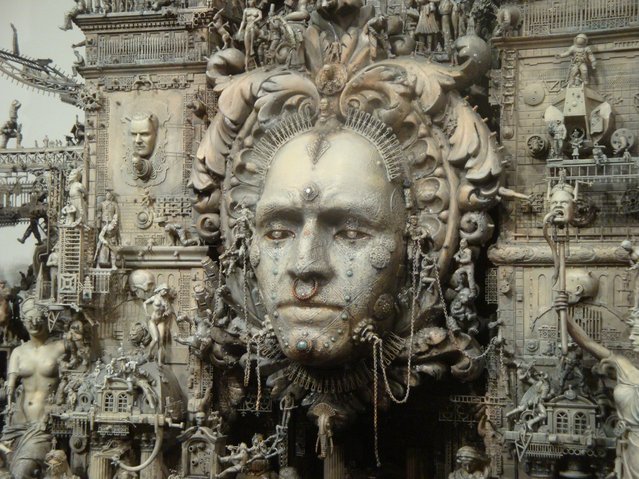
Art by Kris Kuksi

A post-industrial Rococo master, Kris Kuksi obsessively arranges characters and architecture in asymmetric compositions with an exquisite sense of drama. Instead of stones and shells he uses screaming plastic soldiers, miniature engine blocks, towering spires and assorted debris to form his landscapes.
Details
06 Sep 2012 11:32:00
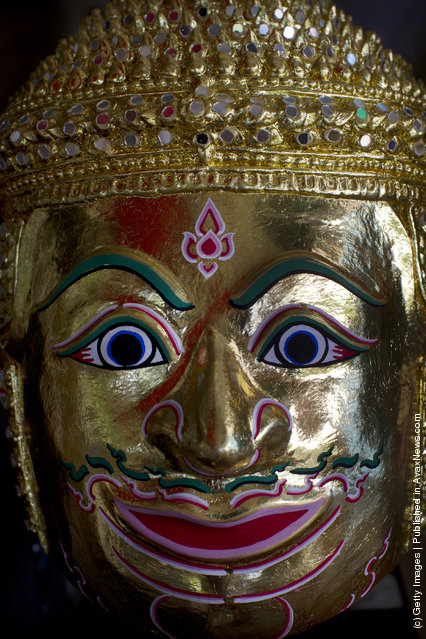
Traditional Thai Khon Mask

A close up of a Khon mask July 8, 2011 in Angthong, Thailand. The paper mache Khon masks, are part of the ornate glittering costumes used in the stylized classical Thai dance form known as Khon. (Photo by Paula Bronstein/Getty Images)
Details
29 Nov 2011 10:20:00
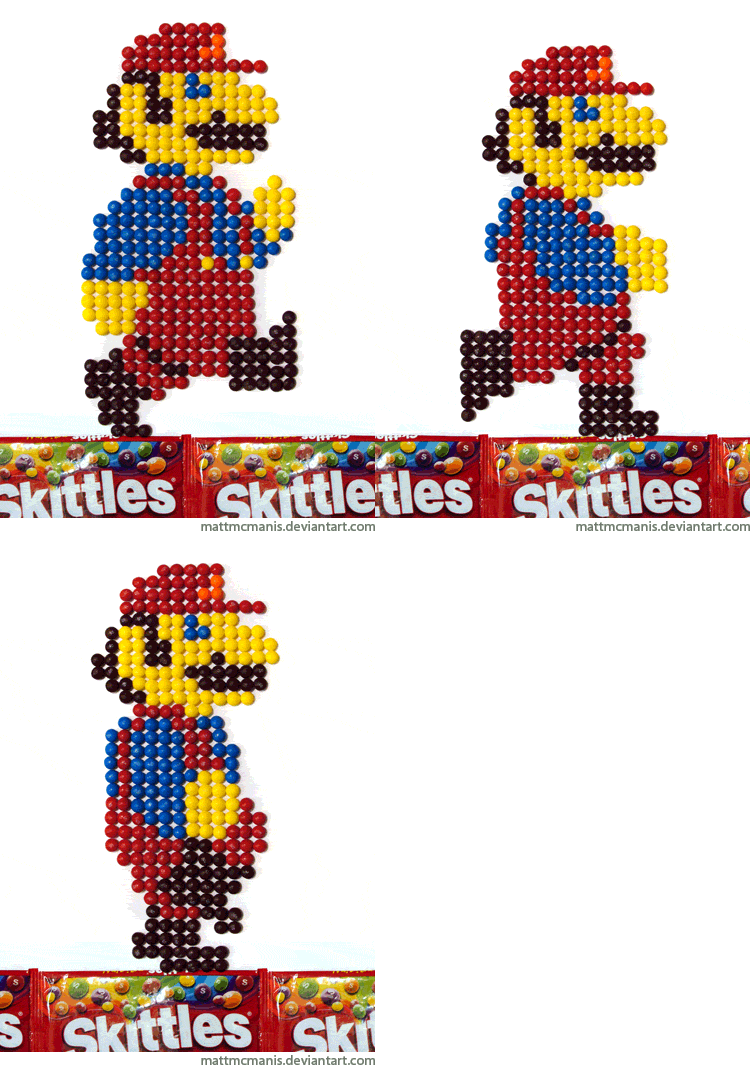
Skittle Art By Matt McManis

Super Mario finds himself in his original pixelated form in these playful Matt McManis Skittles illustrations. Depicting the overalls-wearing Italian video game character and Pac-Man, these delectable candy designs culminate as a merging of the gamer, the glutton and the creative.

Details
05 Apr 2014 13:00:00
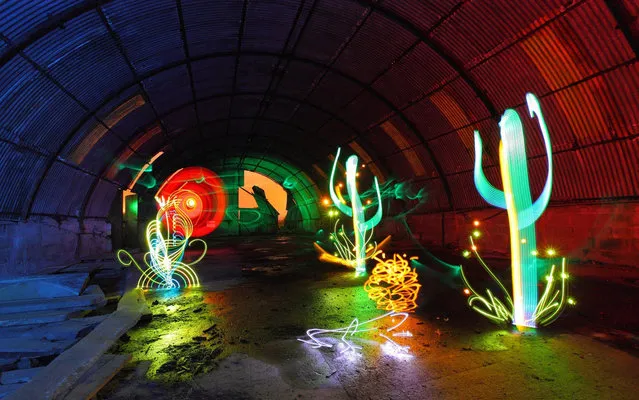
Michael Bosanko By Light Artist

Light painting photographer Michael Bosanko has been capturing light since 2004. He discovered light painting on accident, Michael says this of his moment of discovery, “the moon formed part of the scene, but the camera shake caused the moon to make a streak.

Details
18 Feb 2013 10:45:00
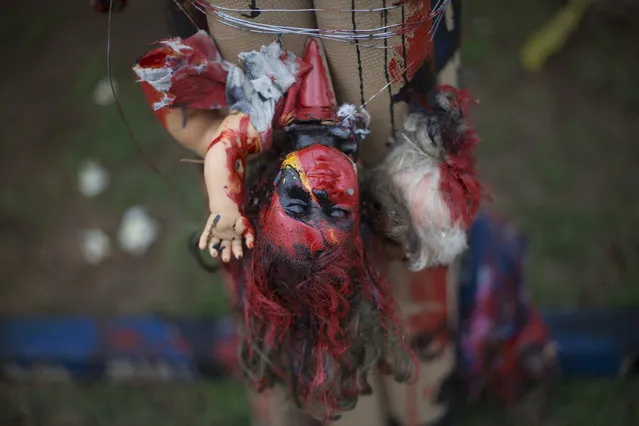
A doll forms part of a sculpture as part of an exhibit titled The Sea Isnt Made for Fish at Rio de Janeiro Federal University in Rio de Janeiro, Brazil, Monday, June 1, 2015. Art students have taken advantage of a material they have in endless supply trash to create an exhibition that aims to draw attention to the fetid state of the citys Guanabara Bay, where the Olympic sailing events are to be held next year. (AP Photo/Silvia Izquierdo)

A doll forms part of a sculpture as part of an exhibit titled The Sea Isn't Made for Fish at Rio de Janeiro Federal University in Rio de Janeiro, Brazil, Monday, June 1, 2015. Art students have taken advantage of a material they have in endless supply trash to create an exhibition that aims to draw attention to the fetid state of the citys Guanabara Bay, where the Olympic sailing events are to be held next year. (AP Photo/Silvia Izquierdo)
Details
08 Jun 2015 15:25:00
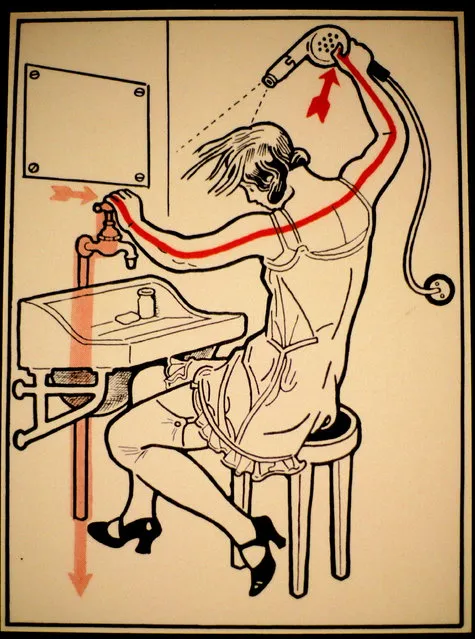
The book “Elektroschutz in 132 Bildern” (Electrical Protection in 132 Pictures) was published in Vienna in the early 1900s by a Viennese physician named Stefan Jellinek (1878-1968, a founder of the Electro-Pathological Museum). The pictures are nice and direct and unambiguous; they teach, graphically, that the surest way to kill yourself with electricity is to form a complete path from source (usually the bright red arrow) to ground (the screened back, pink arrow). Arrowheads provide the path for current flow. (Photo by The Vienna Technical Museum)

The book “Elektroschutz in 132 Bildern” (Electrical Protection in 132 Pictures) was published in Vienna in the early 1900s by a Viennese physician named Stefan Jellinek (1878-1968, a founder of the Electro-Pathological Museum). The pictures are nice and direct and unambiguous; they teach, graphically, that the surest way to kill yourself with electricity is to form a complete path from source (usually the bright red arrow) to ground (the screened back, pink arrow). Arrowheads provide the path for current flow. (Photo by The Vienna Technical Museum)
Details
11 Aug 2014 11:10:00
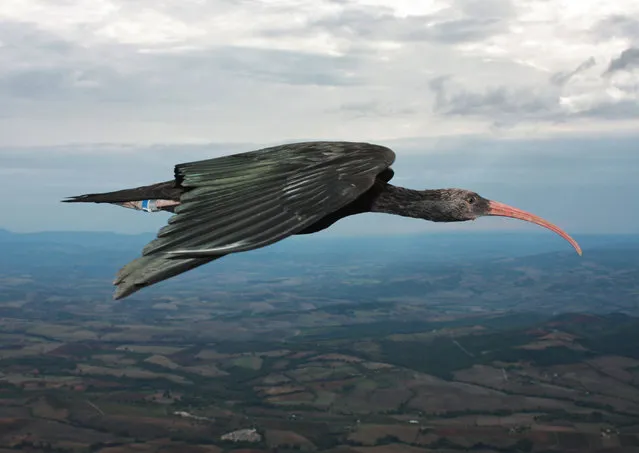
In this undated photo made available by journal Nature on January 15, 2014, a northern bald ibis (Geronticus eremita) flies in Tuscany, Italy. A new study released Wednesday, January 15, 2014 says the birds choreograph the flapping of their wings, getting a boost from an updraft of air in the wake of the flapping wings by flying behind the first bird and off to the side. When a flock of birds take advantage of these aerodynamics, they form a V. (Photo by Markus Unsöld/AP Photo)

In this undated photo made available by journal Nature on January 15, 2014, a northern bald ibis (Geronticus eremita) flies in Tuscany, Italy. A new study released Wednesday, January 15, 2014 says the birds choreograph the flapping of their wings, getting a boost from an updraft of air in the wake of the flapping wings by flying behind the first bird and off to the side. When a flock of birds take advantage of these aerodynamics, they form a V. (Photo by Markus Unsöld/AP Photo)
Details
18 Jan 2014 13:54:00