Loading...
Done
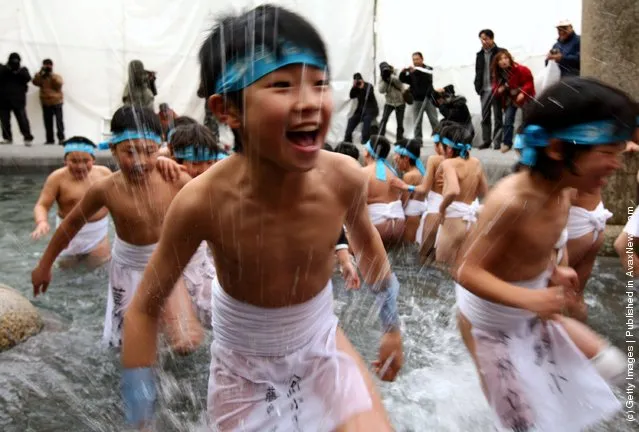
Japanese children wear loincloths as they splash about in freezing cold water during Saidaiji Naked Festival, at Saidaiji Temple

“A Hadaka Matsuri (“Naked Festival”) is a type of Japanese festival, or matsuri, in which participants wear a minimum amount of clothing; usually just a Japanese loincloth (called fundoshi), sometimes with a short happi coat, and rarely completely naked. Whatever the clothing, it is considered to be above vulgar, or everyday, undergarments, and on the level of holy Japanese shrine attire. Naked festivals are held in dozens of places throughout Japan every year, usually in the summer or winter. The most famous festival is held in Okayama, where the festival originated. Every year, over 9,000 men participate in this festival”. – Wikipedia

Photo: Japanese men wear loincloths as they splash about in freezing cold water during Saidaiji Naked Festival, at Saidaiji Temple on February 18, 2012 in Okayama, Japan. (Photo by Buddhika Weerasinghe/Getty Images)
Details
19 Feb 2012 12:18:00
Foreign tourists join the annual Songkran Festival celebration, the Thai traditional New Year, also known as the water festival in Silom district of Bangkok, Thailand, 13 April 2014. The three-day Songkran Festival runs from 13 to 15 April and is celebrated with splashing water and putting powder on each others faces as a symbolic sign of cleansing and washing away the sins from the old year. (Photo by Narong Sangnak/EPA)

Foreign tourists join the annual Songkran Festival celebration, the Thai traditional New Year, also known as the water festival in Silom district of Bangkok, Thailand, 13 April 2014. The three-day Songkran Festival runs from 13 to 15 April and is celebrated with splashing water and putting powder on each others faces as a symbolic sign of cleansing and washing away the sins from the old year. (Photo by Narong Sangnak/EPA)
Details
17 Apr 2014 11:19:00
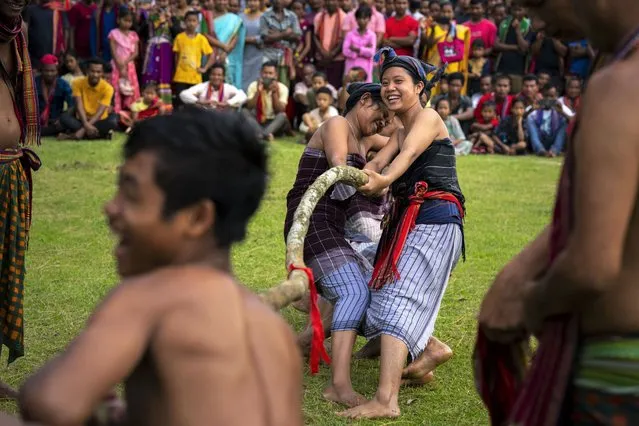
Indian Rabha tribal women in traditional attire take part in a tug of war competition with men during Baikho festival at Gamerimura village along the Assam Meghalaya border, west of Gauhati, India, Saturday, June 4, 2022. (Photo by Anupam Nath/AP Photo)

Indian Rabha tribal women in traditional attire take part in a tug of war competition with men during Baikho festival at Gamerimura village along the Assam Meghalaya border, west of Gauhati, India, Saturday, June 4, 2022. (Photo by Anupam Nath/AP Photo)

Details
09 Jun 2022 04:57:00
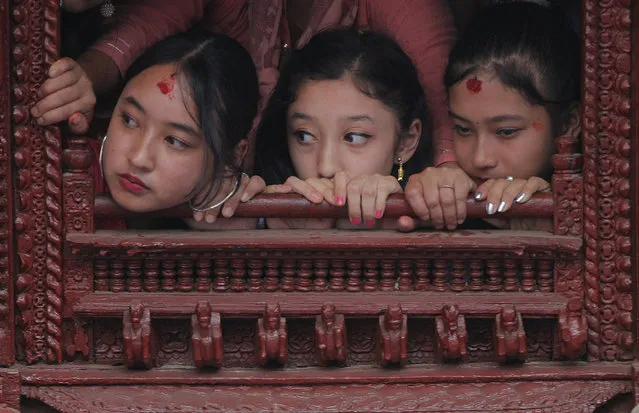
A former living goddess Kumari, middle, watches the Indra Jatra festival, an eight-day festival that honors Indra, the Hindu god of rain, in Kathmandu, Nepal, Friday, September 13, 2019. (Photo by Niranjan Shrestha/AP Photo)

A former living goddess Kumari, middle, watches the Indra Jatra festival, an eight-day festival that honors Indra, the Hindu god of rain, in Kathmandu, Nepal, Friday, September 13, 2019. (Photo by Niranjan Shrestha/AP Photo)
Details
18 Sep 2019 00:03:00
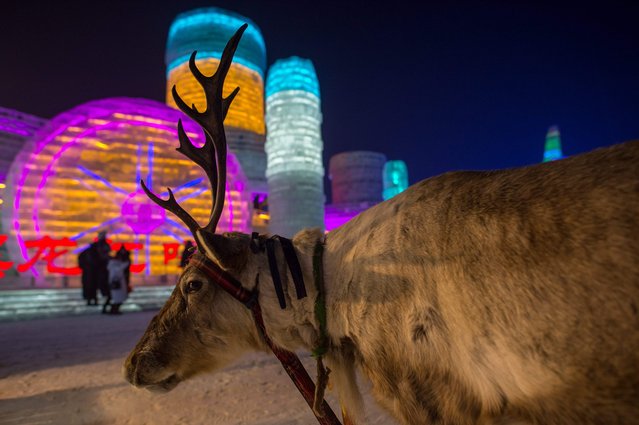
A reindeer is seen as people visit ice sculptures illuminated by coloured lights at the Harbin Ice and Snow Festival to celebrate the new year in Harbin on January 4, 2017. (Photo by Nicolas Asfouri/AFP Photo)

A reindeer is seen as people visit ice sculptures illuminated by coloured lights at the Harbin Ice and Snow Festival to celebrate the new year in Harbin on January 4, 2017. (Photo by Nicolas Asfouri/AFP Photo)
Details
05 Jan 2017 13:25:00
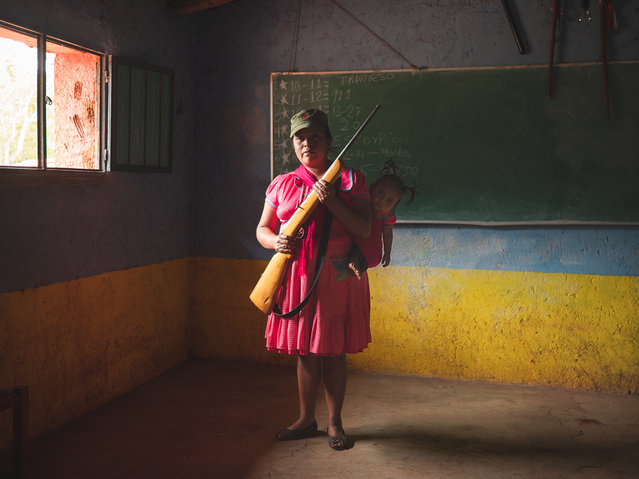
Forgotten Guerrero. A female member of the community defence force holds her weapon. Since early 2019, the village has been attacked repeatedly by Los Ardillos cartel, prompting residents to take action. Rincón de Chautla, Guerrero, 10 June 2019. (Photo by Alfredo Bosco/Luz with the support of Le Figaro Magazine, Winner of the 2020 Humanitarian Visa d’or award, International Committee of the Red Cross/International Festival of Photojournalism 2020)

Forgotten Guerrero. A female member of the community defence force holds her weapon. Since early 2019, the village has been attacked repeatedly by Los Ardillos cartel, prompting residents to take action. Rincón de Chautla, Guerrero, 10 June 2019. (Photo by Alfredo Bosco/Luz with the support of Le Figaro Magazine, Winner of the 2020 Humanitarian Visa d’or award, International Committee of the Red Cross/International Festival of Photojournalism 2020)
Details
02 Sep 2020 00:05:00
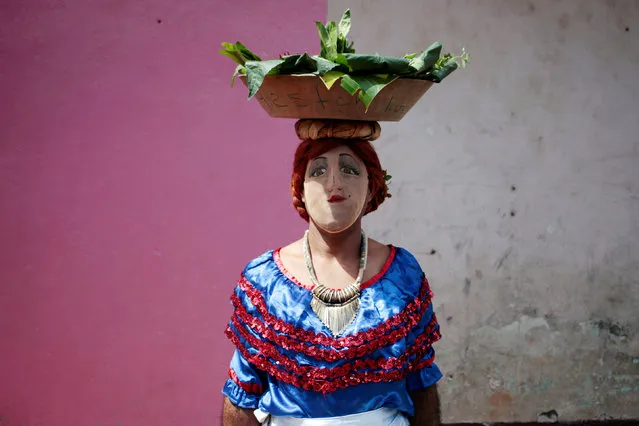
A man with a mask poses for a portrait as he takes part in festivities in honour of patron saint San Jeronimo in Masaya city, Nicaragua November 20, 2016. (Photo by Oswaldo Rivas/Reuters)

A man with a mask poses for a portrait as he takes part in festivities in honour of patron saint San Jeronimo in Masaya city, Nicaragua November 20, 2016. (Photo by Oswaldo Rivas/Reuters)
Details
22 Nov 2016 11:04:00


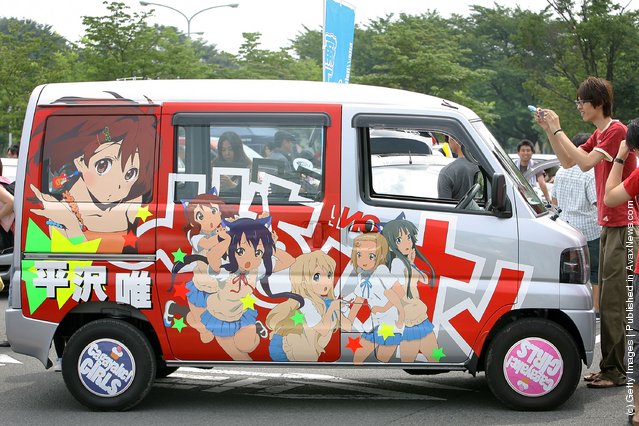
“Itasha (痛車), literally “painmobile”, is a Japanese term for an otaku fad of individuals decorating the bodies of their cars with fictional characters of anime, manga, or video games (especially bishōjo game or eroge). These characters are predominately “cute” female. The decorations usually involve paint schemes and stickers. Automobiles are called Itasha, while similar motorcycles and bicycles are called itansha (痛単車) and itachari (痛チャリ), respectively”. – Wikipedia


Photo: A visitor takes pictures of an anime-decorated «Itasha» car displayed during the “Moe Fes in Washimiya” at Washimiya Town Hall on July 18, 2009 in Washimiya, Saitama, Japan. Itasha, a word derived from “itai” (painful) and “sha” (car), are vehicles decorated with mostly female characters from Japanese manga, anime and video games. (Photo by Kiyoshi Ota/Getty Images)
Details
02 May 2011 08:38:00