Loading...
Done
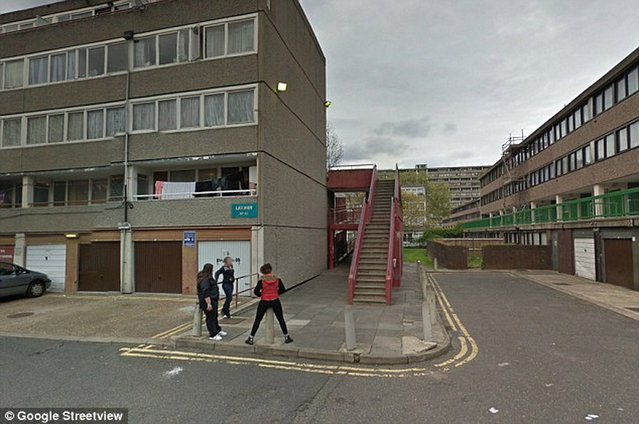
Bad Part of Town By Google Street View

Take a walk on the wild side around some of the most down right dangerous places in the world - and all without leaving your desk, courtesy of Google Street View. Since 2007, Google's amazing technology has given people the chance to visit the Eiffel Tower, peer out over San Francisco's Golden Gate Bridge or walk along a beach in the Bahamas. But as well as mapping the tourist-friendly hotspots, Google also ventured into places you really wouldn't want to find yourself. Here is a collection of some the most notorious areas captured by the infamous roaming camera cars from around the UK and the world.
Details
03 Oct 2013 11:05:00
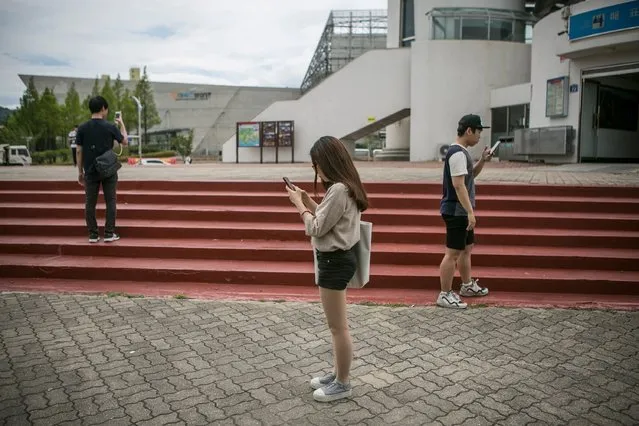
South Korean youths play Pokemon Go on July 15, 2016 in Sokcho, South Korea. (Photo by Jean Chung/Getty Images)

South Korean youths play Pokemon Go on July 15, 2016 in Sokcho, South Korea. South Korea is not one of the initial Pokemon Go released countries, nor is the game likely to be released officially any time soon as the South Korean government does not allow Google to use its map; however, South Korean game enthusiasts are now visiting a handful of loophole areas in the north eastern side of the country near the border of North Korea to join the global frenzy of Pokemon Go. (Photo by Jean Chung/Getty Images)
Details
16 Jul 2016 08:49:00
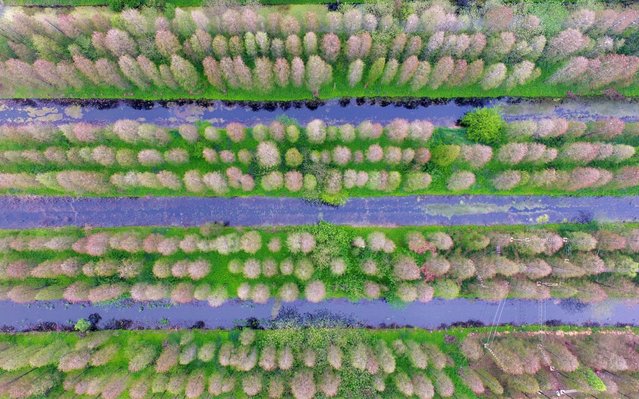
Overlooking qingshuitan Wetland Park in the air, thousands of Chinese fir trees turn green. Gaoyou City, Jiangsu Province, China, April 20, 2020. April 22 is world earth day. (Photo credit should read Costfoto/Barcroft Media via Getty Images)

Overlooking qingshuitan Wetland Park in the air, thousands of Chinese fir trees turn green. Gaoyou City, Jiangsu Province, China, April 20, 2020. April 22 is world earth day. (Photo credit should read Costfoto/Barcroft Media via Getty Images)
Details
27 Apr 2020 00:05:00
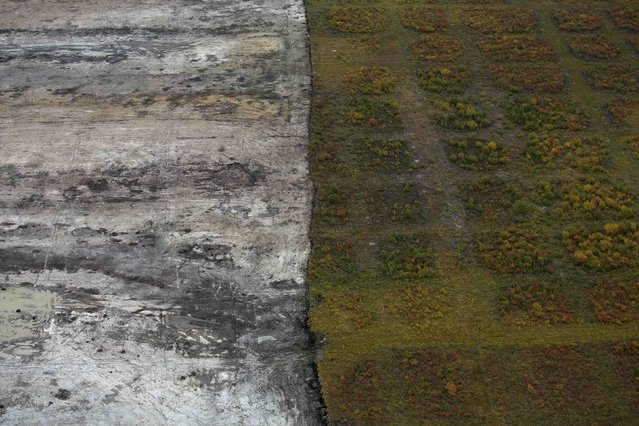
The top layer of muskeg and earth (L) is removed at the Syncrude tar sands operations near Fort McMurray, Alberta, September 17, 2014. Syncrude currently produces 350,000 barrels per day of high quality light, low sulphur crude oil according to company reports. (Photo by Todd Korol/Reuters)

The top layer of muskeg and earth (L) is removed at the Syncrude tar sands operations near Fort McMurray, Alberta, September 17, 2014. Syncrude currently produces 350,000 barrels per day of high quality light, low sulphur crude oil according to company reports. (Photo by Todd Korol/Reuters)
Details
21 Sep 2014 11:06:00
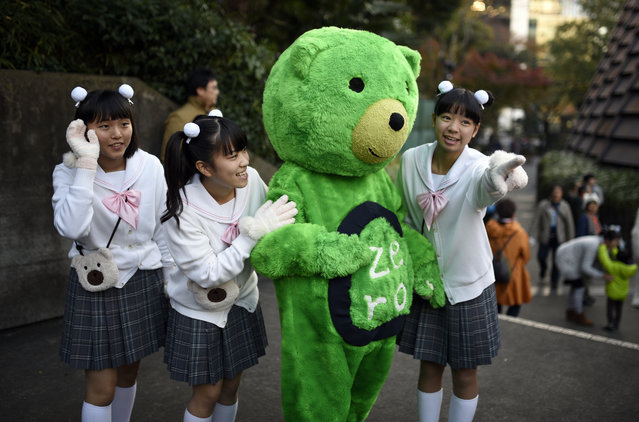
Young Japanese women pose with a green bear costumed person during the 'Earth Parade 2015' in Tokyo, Japan, Saturday, November 28, 2015. (Photo by Franck Robichon/EPA)

Young Japanese women pose with a green bear costumed person during the 'Earth Parade 2015' in Tokyo, Japan, Saturday, November 28, 2015. Ahead of the U.N. climate change summit in Paris starting this week, about 1,000 citizens and environmental activists took to the streets of Tokyo on Saturday, calling for strong actions to combat global warming. (Photo by Franck Robichon/EPA)
Details
30 Nov 2015 08:00:00
Mina Sue Choi (L) from South Korea reacts after winning the Miss Earth 2022 pageant during the coro​nation night in Manila, Philippines, 29 November 2022. (Photo by Francis R. Malasig/EPA/EFE)

Mina Sue Choi (L) from South Korea reacts after winning the Miss Earth 2022 pageant during the coro​nation night in Manila, Philippines, 29 November 2022. (Photo by Francis R. Malasig/EPA/EFE)
Details
09 Dec 2022 05:05:00
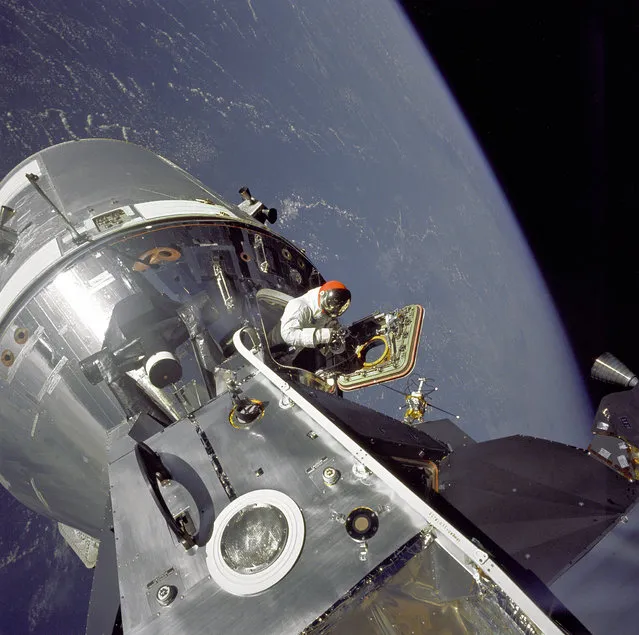
Apollo 9 Command/Service Modules (CSM) nicknamed “Gumdrop” and Lunar Module (LM), nicknamed “Spider” are shown docked together as Command Module pilot David R. Scott stands in the open hatch. Astronaut Russell L. Schweickart, Lunar Module pilot, took this photograph of Scott during his EVA as he stood on the porch outside the Lunar Module. Apollo 9 was an Earth orbital mission designed to test docking procedures between the CSM and LM as well as test fly the Lunar Module in the relative safe confines of Earth orbit. (Photo by NASA)

Apollo 9 Command/Service Modules (CSM) nicknamed “Gumdrop” and Lunar Module (LM), nicknamed “Spider” are shown docked together as Command Module pilot David R. Scott stands in the open hatch. Astronaut Russell L. Schweickart, Lunar Module pilot, took this photograph of Scott during his EVA as he stood on the porch outside the Lunar Module. Apollo 9 was an Earth orbital mission designed to test docking procedures between the CSM and LM as well as test fly the Lunar Module in the relative safe confines of Earth orbit. (Photo by NASA)
Details
20 Jul 2014 11:47:00
On August 31, 2012, a long filament of solar material that had been hovering in the sun's atmosphere, the corona, erupted out into space at 4:36 p.m. EDT. The coronal mass ejection, or CME, traveled at over 900 miles per second. The CME did not travel directly toward Earth, but did connect with Earth's magnetic environment, or magnetosphere, causing aurora to appear on the night of Monday, September 3. (Photo by NASA/GSFC/SDO)

On August 31, 2012, a long filament of solar material that had been hovering in the sun's atmosphere, the corona, erupted out into space at 4:36 p.m. EDT. The coronal mass ejection, or CME, traveled at over 900 miles per second. The CME did not travel directly toward Earth, but did connect with Earth's magnetic environment, or magnetosphere, causing aurora to appear on the night of Monday, September 3. (Photo by NASA/GSFC/SDO via The Atlantic)
Details
14 Sep 2012 09:01:00