Loading...
Done
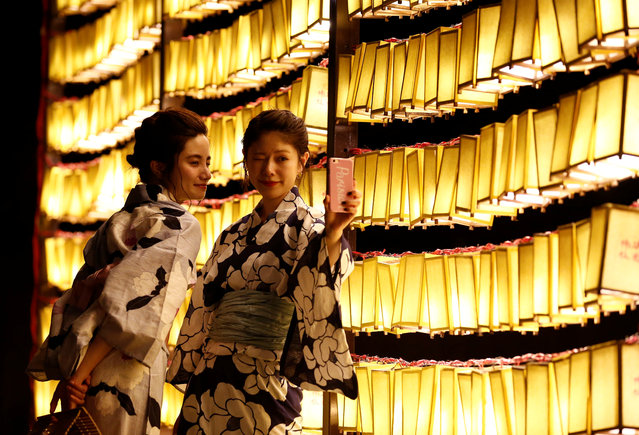
Women in yukatas, or casual summer kimonos, take their selfie in front of paper lanterns during the annual Mitama Festival at the Yasukuni Shrine, where more than 2.4 million war dead are enshrined, in Tokyo, Japan July 13, 2017. (Photo by Kim Kyung-Hoon/Reuters)

Women in yukatas, or casual summer kimonos, take their selfie in front of paper lanterns during the annual Mitama Festival at the Yasukuni Shrine, where more than 2.4 million war dead are enshrined, in Tokyo, Japan July 13, 2017. (Photo by Kim Kyung-Hoon/Reuters)
Details
18 Aug 2017 08:39:00
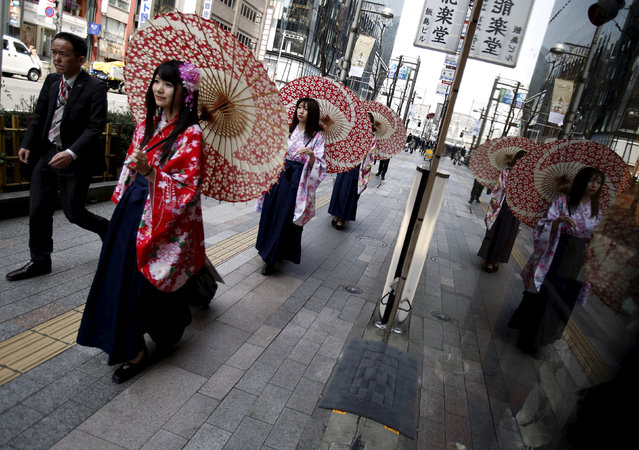
Women in Kimono holding an umbrella walk on a street at Ginza shopping district in Tokyo, Japan, March 31, 2016. (Photo by Yuya Shino/Reuters)

Women in Kimono holding an umbrella walk on a street at Ginza shopping district in Tokyo, Japan, March 31, 2016. (Photo by Yuya Shino/Reuters)
Details
05 Sep 2016 11:09:00
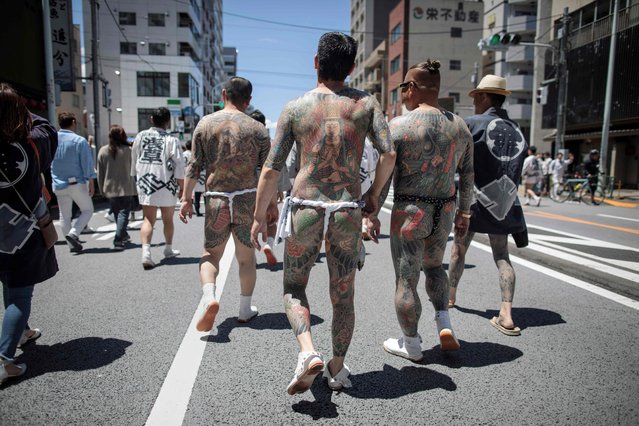
Participants with traditional Japanese tattoos (Irezumi), related to the Yakuza, walk through the Asakusa district during the annual Sanja Matsuri festival in Tokyo on May 20, 2018. Sanja Matsuri festival is a celebration for the three founders of Sensoji Temple in the Asakusa neighbourhood with nearly two million people visiting during the three-day event. (Photo by Behrouz Mehri/AFP Photo)

Participants with traditional Japanese tattoos (Irezumi), related to the Yakuza, walk through the Asakusa district during the annual Sanja Matsuri festival in Tokyo on May 20, 2018. Sanja Matsuri festival is a celebration for the three founders of Sensoji Temple in the Asakusa neighbourhood with nearly two million people visiting during the three-day event. (Photo by Behrouz Mehri/AFP Photo)
Details
17 Jul 2018 00:05:00
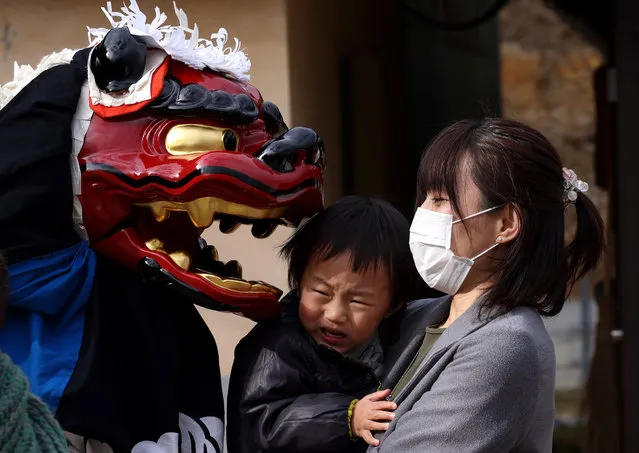
A performer wearing a lion mask performs the Ise Daikagura lion dance at the remote village of Yamanawa on February 08, 2021 in Ryuo, Japan. Ise Daikagura is a group of traditional Lion Dance performers who pray in front of farmers houses and businesses for good grain harvests and disease-free lives. Performers play sacred music using drums and flutes with two lion mask dancers. A lion mask is considered a symbol of God, who enters the house and performs in front of the Shinto God, a statue placed inside the house, mostly in the kitchen. These prayers are called “Kamodo Barai”. After the prayers, they are gifted with money, rice, sake and Japanese sweets from the householders. A group can travel for more than one hundred days to thousands of households and businesses throughout rural-villages in western Japan, and pray to those who are unable to visit the country’s most sacred shrine, the Grand Ise Shrine in Mie Prefecture. The group started its performance in the Edo era between 1603 to 1868 according to Japanese history. The Japanese government designated it as an important folk cultural national property in 1981. (Photo by Buddhika Weerasinghe/Getty Images)

A performer wearing a lion mask performs the Ise Daikagura lion dance at the remote village of Yamanawa on February 08, 2021 in Ryuo, Japan. Ise Daikagura is a group of traditional Lion Dance performers who pray in front of farmers houses and businesses for good grain harvests and disease-free lives. (Photo by Buddhika Weerasinghe/Getty Images)
Details
18 Feb 2021 09:27:00
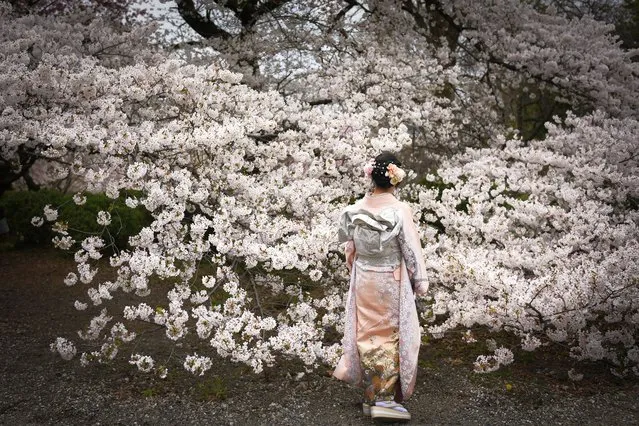
A woman with Kimono looks at cherry trees in bloom in Shinjuku Gyoen in Tokyo, Japan on Thursday, April 4, 2024. (Photo by Noriko Hayashi for The Washington Post)

A woman with Kimono looks at cherry trees in bloom in Shinjuku Gyoen in Tokyo, Japan on Thursday, April 4, 2024. (Photo by Noriko Hayashi for The Washington Post)
Details
29 Apr 2024 05:21:00
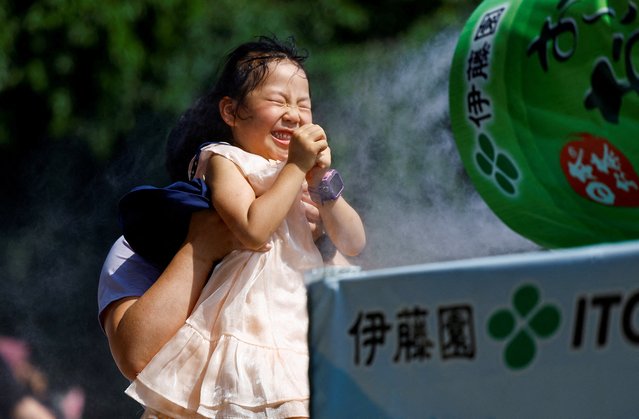
A child reacts as a family takes a break next to a cooling mist at the Sensoji temple as Japanese government issued heat stroke alerts in 39 of the country's 47 prefectures in Tokyo, Japan on July 22, 2024. (Photo by Issei Kato/Reuters)

A child reacts as a family takes a break next to a cooling mist at the Sensoji temple as Japanese government issued heat stroke alerts in 39 of the country's 47 prefectures in Tokyo, Japan on July 22, 2024. (Photo by Issei Kato/Reuters)
Details
29 Jul 2024 03:37:00
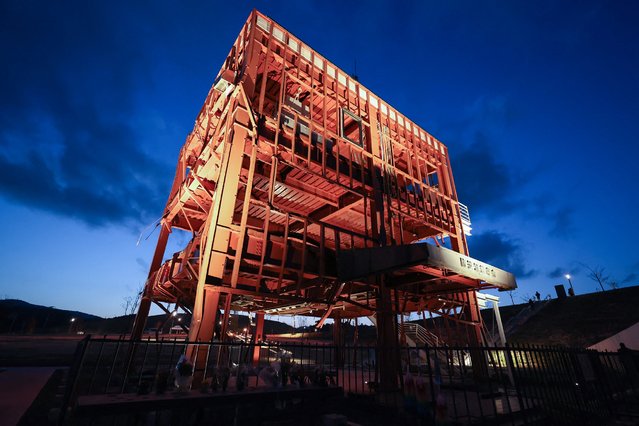
This photo taken on March 10, 2025 shows the former disaster prevention office building in Minamisanriku Town, Miyagi Prefecture, lit up on the eve of the 14th anniversary of the 2011 earthquake and tsunami disaster. (Photo by JIJI Press/AFP Photo)

This photo taken on March 10, 2025 shows the former disaster prevention office building in Minamisanriku Town, Miyagi Prefecture, lit up on the eve of the 14th anniversary of the 2011 earthquake and tsunami disaster. (Photo by JIJI Press/AFP Photo)
Details
14 Apr 2025 03:54:00
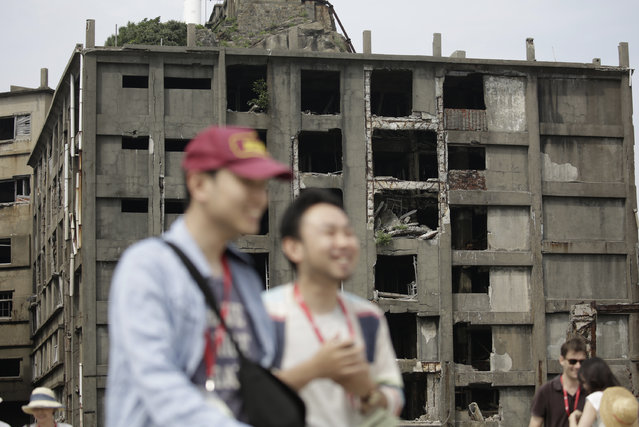
In this June 29, 2015 photo, forlorn buildings are seen at Hashima Island, commonly known as Gunkanjima, which means “Battleship Island”, off Nagasaki, Nagasaki Prefecture, southern Japan. (Photo by Eugene Hoshiko/AP Photo)

In this June 29, 2015 photo, forlorn buildings are seen at Hashima Island, commonly known as Gunkanjima, which means “Battleship Island”, off Nagasaki, Nagasaki Prefecture, southern Japan. The island is one of 23 old industrial facilities seeking UNESCO's recognition as world heritage “Sites of Japan's Meiji Industrial Revolution” meant to illustrate Japan's rapid transformation from a feudal farming society into an industrial power at the end of the 19th century. UNESCO's World Heritage Committee is expected to approve the proposal during a meeting being held in Bonn, Germany, through July 9. (Photo by Eugene Hoshiko/AP Photo)

Details
01 Jul 2015 13:41:00