Loading...
Done
Afghanistan: Dogs of War Part 2

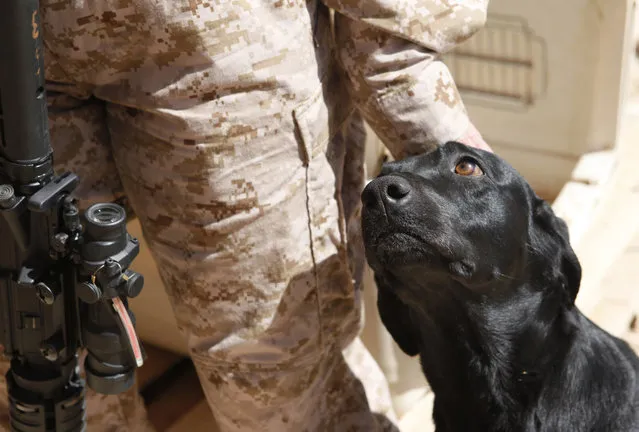
Throughout the course of the long war in Afghanistan, Coalition troops have relied on thousands of military working dogs to help keep them safe, and make their jobs easier. The dogs are trained to detect explosives, to find illegal drugs, to search for missing comrades, or target enemy combatants. Not only are they active on the front lines, but behind the lines they serve as therapy dogs, service dogs, and loyal companions. They also share the same risks as the ground troops, suffering injuries and sometimes death on the battlefields. Gathered here are images of these dogs and their handlers in Afghanistan and back home, from over the past several years, part of the ongoing series here on Afghanistan.
Details
05 Jun 2014 21:10:00
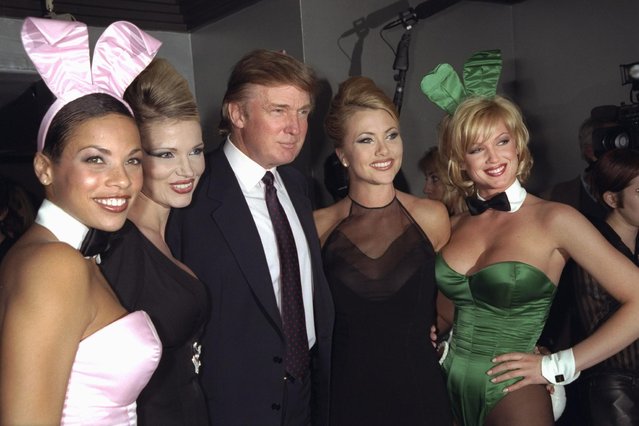
Donald Trump is flanked by Playmates at a party celebrating Playboy magazine's 45th anniversary at the Life Club in New York on December 3, 1998. (Photo by Richard Corkery/NY Daily News Archive via Getty Images)

Donald Trump is flanked by Playmates at a party celebrating Playboy magazine's 45th anniversary at the Life Club in New York on December 3, 1998. (Photo by Richard Corkery/NY Daily News Archive via Getty Images)
Details
10 Aug 2018 00:05:00
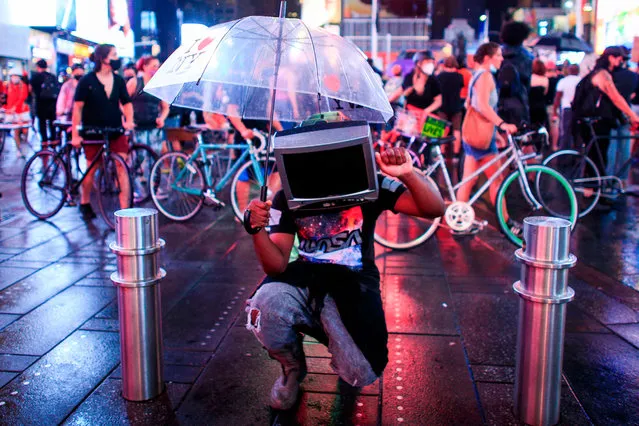
A demonstrator uses a TV case as a facemask during a protest to demand justice for Daniel Prude, on September 3, 2020 in New York City. Protests were planned in New York September 3 over the death of Daniel Prude, a black man that police hooded and forced face down on the road, according to video footage that prompted a probe from the state's attorney general. (Photo by Kena Betancur/AFP Photo)

A demonstrator uses a TV case as a facemask during a protest to demand justice for Daniel Prude, on September 3, 2020 in New York City. Protests were planned in New York September 3 over the death of Daniel Prude, a black man that police hooded and forced face down on the road, according to video footage that prompted a probe from the state's attorney general. (Photo by Kena Betancur/AFP Photo)
Details
07 Sep 2020 00:05:00
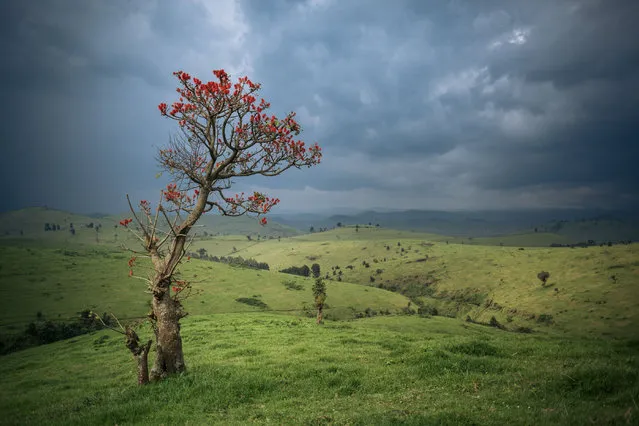
This photograph, taken on September 28, 2019, shows an Erythrina Abyssinica planted in a pasture on Ferme Espoir, owned by former President Joseph Kabila, in Masisi territory, northeast of the Democratic Republic of Congo. (Photo by Alexis Huguet/AFP Photo)

This photograph, taken on September 28, 2019, shows an Erythrina Abyssinica planted in a pasture on Ferme Espoir, owned by former President Joseph Kabila, in Masisi territory, northeast of the Democratic Republic of Congo. (Photo by Alexis Huguet/AFP Photo)
Details
17 Sep 2020 00:01:00
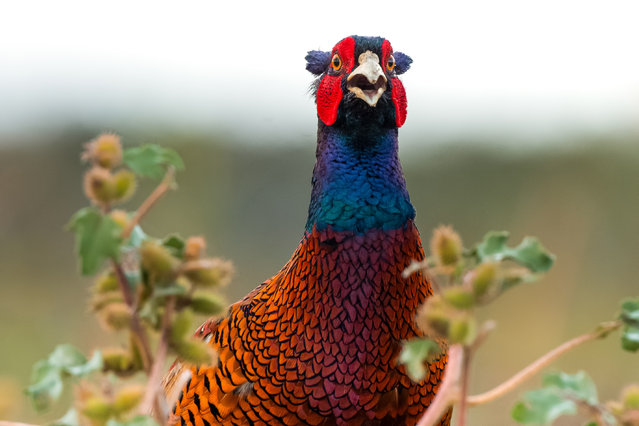
A pheasant is seen among grasses in Bursa, Turkiye on October 07, 2024. Pheasants mostly live in forested areas, thickets and wetlands. Unlike females, male pheasants have a much more remarkable structure with their long tails and feathers in bright and variable colors. Also, they feed on fruits, grains, seeds and invertebrates. (Photo by Alper Tuydes/Anadolu via Getty Images)

A pheasant is seen among grasses in Bursa, Turkiye on October 07, 2024. Pheasants mostly live in forested areas, thickets and wetlands. Unlike females, male pheasants have a much more remarkable structure with their long tails and feathers in bright and variable colors. Also, they feed on fruits, grains, seeds and invertebrates. (Photo by Alper Tuydes/Anadolu via Getty Images)
Details
27 Oct 2024 04:43:00
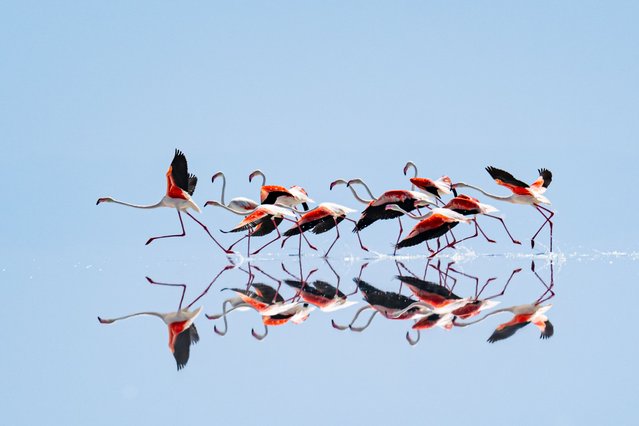
Flamingos preparing to take flight are reflected on Lake Tuz, which hosts thousands of flamingos every year, in Ankara, Turkiye, on June 24, 2025. This year, the lake has seen a decline in flamingo numbers due to drought, prompting the birds to shift their migration route to other wetlands across Turkiye. (Photo by Harun Ozalp/Anadolu via Getty Images)

Flamingos preparing to take flight are reflected on Lake Tuz, which hosts thousands of flamingos every year, in Ankara, Turkiye, on June 24, 2025. This year, the lake has seen a decline in flamingo numbers due to drought, prompting the birds to shift their migration route to other wetlands across Turkiye. (Photo by Harun Ozalp/Anadolu via Getty Images)
Details
31 Jul 2025 02:48:00
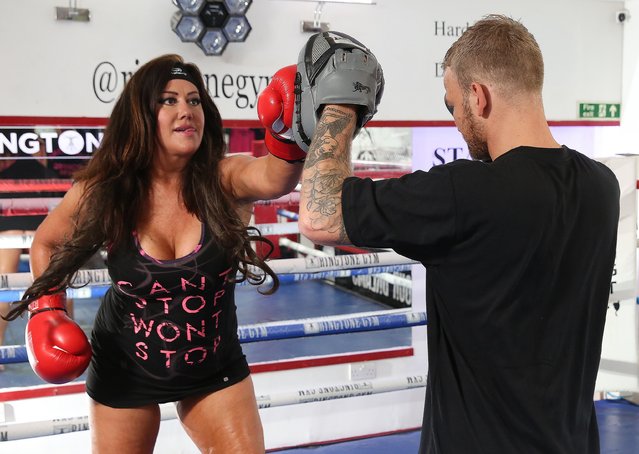
New lovebirds boxer Robin Deakin – once known as “Britain's Worst Boxer” – and former UK “Big Brother” star Lisa Appleton go to the boxing gym in London, United Kingdom on September 28, 2016. The pair were seen holding hands in the street on arrival, and they then slogged it out in the ring and fooled about in Robin's gym. (Photo by FameFlynet UK)

New lovebirds boxer Robin Deakin – once known as “Britain's Worst Boxer” – and former UK “Big Brother” star Lisa Appleton go to the boxing gym in London, United Kingdom on September 28, 2016. The pair were seen holding hands in the street on arrival, and they then slogged it out in the ring and fooled about in Robin's gym. (Photo by FameFlynet UK)
Details
30 Sep 2016 09:38:00
With its huge eyes, comical name and diminutive size, Mark R. Smith’s image of a baby Hawaiian bobtail squid can’t help but raise a smile. A curiously endearing creature, the cephalopod is just 1.5cm across, its mantle cavity bearing more than a passing resemblance to a rather natty shower cap. But it is also a beautiful example of symbiosis – nature’s version of “I’ll scratch your back if you scratch mine” – for on the underside of the squid is a light organ which houses bioluminescent bacteria. The squid offers the bacteria protection and food, while the bacteria emit a glow – a handy trait that the squid uses to offset its silhouette, helping it to evade predators in the depths below. Mark R. Smith’s entry combines several images of a Hawaiian bobtail squid with different focus lengths to create a final picture with greater depth of field than normal. (Photo by Mark R. Smith/Wellcome Images/Macroscopic Solutions)

With its huge eyes, comical name and diminutive size, Mark R. Smith’s image of a baby Hawaiian bobtail squid can’t help but raise a smile. A curiously endearing creature, the cephalopod is just 1.5cm across, its mantle cavity bearing more than a passing resemblance to a rather natty shower cap. But it is also a beautiful example of symbiosis – nature’s version of “I’ll scratch your back if you scratch mine” – for on the underside of the squid is a light organ which houses bioluminescent bacteria. The squid offers the bacteria protection and food, while the bacteria emit a glow – a handy trait that the squid uses to offset its silhouette, helping it to evade predators in the depths below. Mark R. Smith’s entry combines several images of a Hawaiian bobtail squid with different focus lengths to create a final picture with greater depth of field than normal. (Photo by Mark R. Smith/Wellcome Images/Macroscopic Solutions)
Details
08 Mar 2017 00:05:00