Loading...
Done
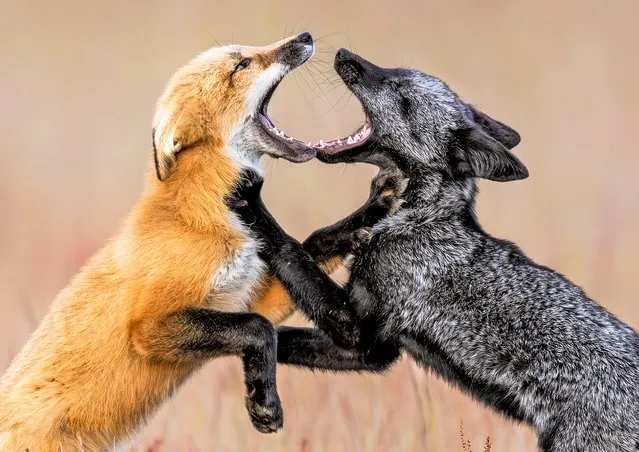
The rabbit population of San Juan Island, brought in to feed lighthouse keepers, got so big that in the 1930s foxes were introduced to kill them. Although they are red foxes, their coats can be orange, silver, black or multi-coloured. Picture date: September 2023. (Photo by Jun Zuo/Solent News)

The rabbit population of San Juan Island, brought in to feed lighthouse keepers, got so big that in the 1930s foxes were introduced to kill them. Although they are red foxes, their coats can be orange, silver, black or multi-coloured. Picture date: September 2023. (Photo by Jun Zuo/Solent News)
Details
08 Oct 2023 04:03:00
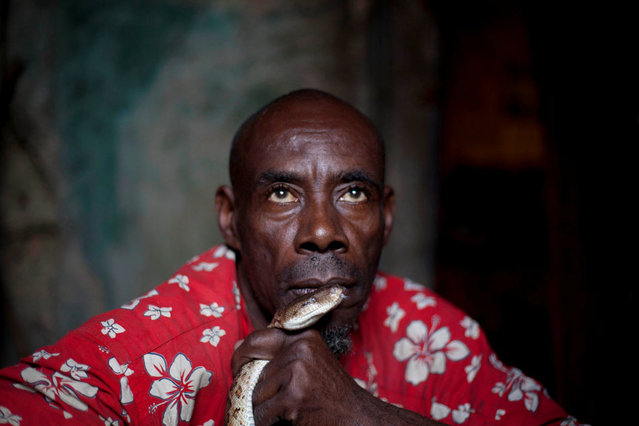
In this January 25, 2013 photo, snake handler Saintilus Resilus holds a snake in front of his lips as he trains the snake to recognize his smell as he prepares for his street performances during the pre-Lenten Carnival season, at his home in Petionville, Haiti. Resilus sees himself as something of a performance artist, showing off with snakes and other animals that Haitians don't see every day, earning tips from impromptu audiences. (Photo by Dieu Nalio Chery/AP Photo/Matt Dayhoff)

In this January 25, 2013 photo, snake handler Saintilus Resilus holds a snake in front of his lips as he trains the snake to recognize his smell as he prepares for his street performances during the pre-Lenten Carnival season, at his home in Petionville, Haiti. Resilus sees himself as something of a performance artist, showing off with snakes and other animals that Haitians don't see every day, earning tips from impromptu audiences. (Photo by Dieu Nalio Chery/AP Photo via Matt Dayhoff)
Details
02 Feb 2013 10:11:00
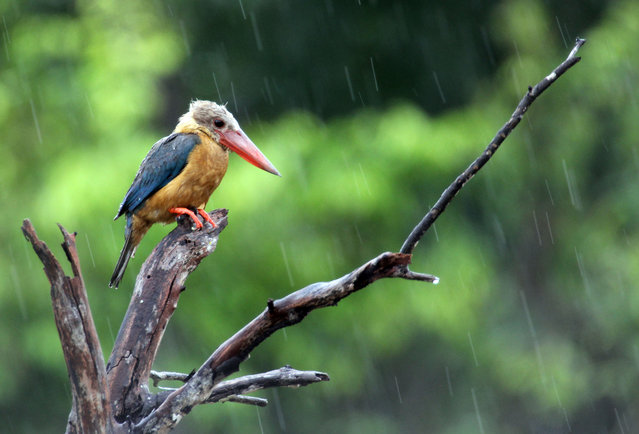
Stork-billed kingfisher during rain in Bintan, Indonesia. The tree species is sparsely distributed in the tropical Indian subcontinent and south-east Asia, from India to Indonesia. (Photo by Sijori Images/Barcroft Images)

A stork-billed kingfisher (Pelargopsis capensis) is seen perched on a tree during monsoon rain on July 25, 2016 in Bintan, Indonesia. The stork-billed kingfisher is a tree species which is widely but sparsely distributed in the tropical Indian subcontinent and Southeast Asia, from India to Indonesia. This kingfisher is resident throughout its range. It is very large, measuring 35 to 38 cm (14 to 15 in) in length. The adult has a green back, blue wings and tail, and grey head. (Photo by Sijori Images/Barcroft Images)
Details
27 May 2017 07:47:00
Baby Fennec Fox

“The fennec fox is a small nocturnal fox found in the Sahara of North Africa. Its most distinctive feature is unusually large ears. The name “fennec” comes from the Arabic word for fox, and the species name zerda has a Greek origin that refers to its habitat. The fennec is the smallest species of canid in the world; coat, ears and kidney functions have adapted to a high-temperature, low-water, desert environment. In addition, its hearing is sensitive enough to hear prey moving underground”. – Wikipedia

Photo: A Baby Fennec is seen at Sunshine International Aquarium on June 24, 2009 in Tokyo, Japan. The small nocturnal fox babies were born on May 17 2009. (Photo by Junko Kimura/Getty Images)

Details
16 Sep 2011 12:02:00
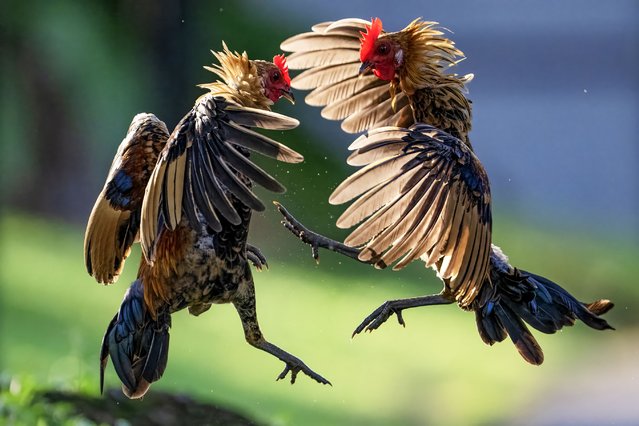
A pair of red junglefowl fight over territory in Pasir Ris Park, Singapore in the second decade of February 2025. (Photo by Liew Tong Leng/Solent News)

A pair of red junglefowl fight over territory in Pasir Ris Park, Singapore in the second decade of February 2025. (Photo by Liew Tong Leng/Solent News)
Details
23 Feb 2025 03:16:00
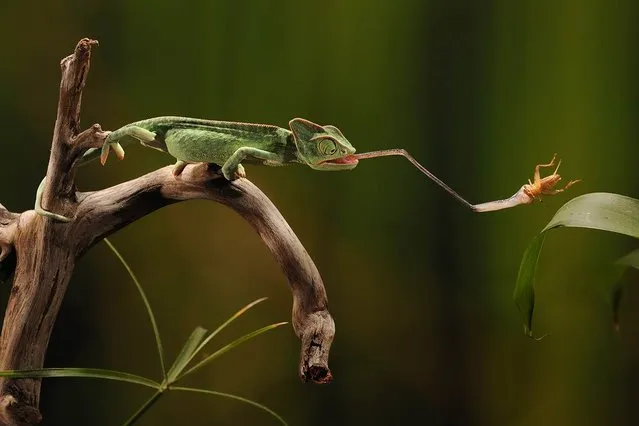
A veiled chameleon extends its tongue to catch a cricket

“Scott Linstead is an internationally published, freelance wildlife photographer/writer. His clients include Natural History Magazine, Hewlett Packard, Ranger Rick Magazine and a number of wildlife publications in North America and Europe. Scott's column on the techniques of bird photography appears in every issue of Outdoor Photography Canada”.

Photo: A veiled chameleon extends its tongue to catch a cricket. Canadian wildlife photographer Scott Linstead, formerly an aerospace engineer and high school teacher, uses a device called Phototrap “to not only photograph the elusive, but also the unimaginably quick”. (Photo by Scott Linstead)
Details
22 May 2012 11:32:00
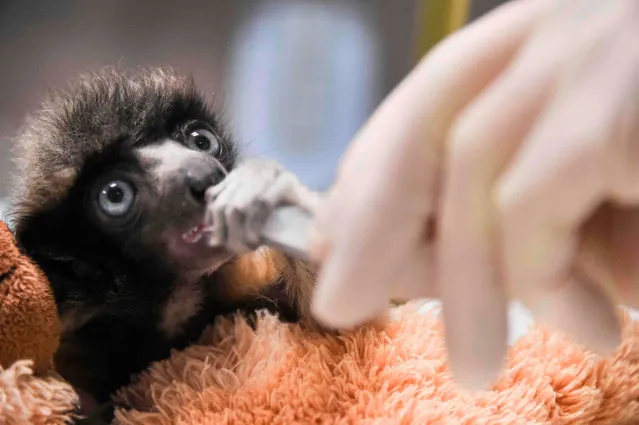
A veterinarian from the zoo of Besancon feeds “Soa”, a female crowned sifaka, in Besancon, eastern France, on February 18, 2019. The crowned sifaka is a critically endangered species from Madagascar. There were only 6 females over 20 individuals living in 7 zoos worldwide end of 2018. (Photo by Sébastien Bozon/AFP Photo)

A veterinarian from the zoo of Besancon feeds “Soa”, a female crowned sifaka, in Besancon, eastern France, on February 18, 2019. The crowned sifaka is a critically endangered species from Madagascar. There were only 6 females over 20 individuals living in 7 zoos worldwide end of 2018. (Photo by Sébastien Bozon/AFP Photo)
Details
24 Feb 2019 00:03:00
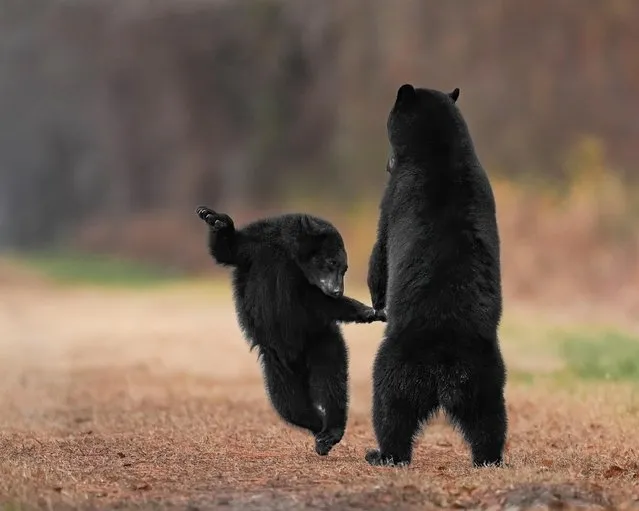
A black bear cub performs for its mum at the Pocosin Lakes National Wildlife park in North Carolina, US in January 2022. (Photo by Jennifer Hadley/Animal News Agency)

A black bear cub performs for its mum at the Pocosin Lakes National Wildlife park in North Carolina, US in January 2022. (Photo by Jennifer Hadley/Animal News Agency)
Details
23 Jan 2022 04:31:00