Loading...
Done
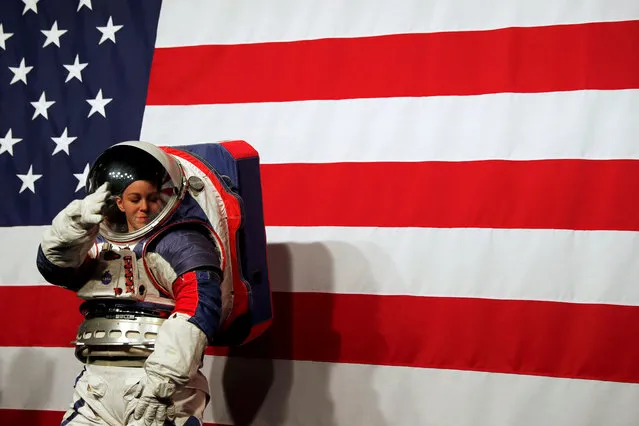
Advanced Space Suit Engineer at NASA Kristine Davis wears the xEMU prototype space suit for the next astronaut to the moon by 2024, during its presentation at NASA headquarters in Washington, U.S., October 15, 2019. (Photo by Carlos Jasso/Reuters)

Advanced Space Suit Engineer at NASA Kristine Davis wears the xEMU prototype space suit for the next astronaut to the moon by 2024, during its presentation at NASA headquarters in Washington, U.S., October 15, 2019. (Photo by Carlos Jasso/Reuters)
Details
22 Oct 2019 00:03:00
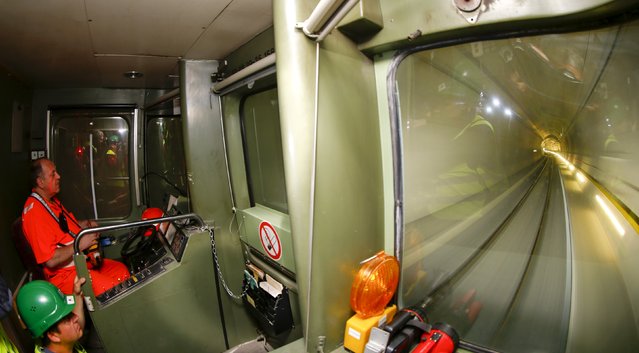
Engine driver Josef Kowatsch (top L) steers a train through the NEAT Gotthard Base Tunnel during a media visit near the town of Erstfeld August 24, 2015. (Photo by Arnd Wiegmann/Reuters)

Engine driver Josef Kowatsch (top L) steers a train through the NEAT Gotthard Base Tunnel during a media visit near the town of Erstfeld August 24, 2015. Crossing the Alps, the world's longest train tunnel should become operational at the end of 2016, consisting of two parallel single track tunnels, each of a length of 57 km (35 miles). (Photo by Arnd Wiegmann/Reuters)
Details
25 Aug 2015 10:42:00
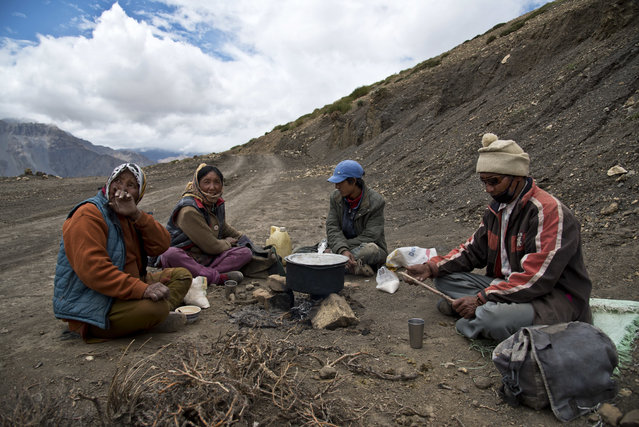
In this August 17, 2016, photo, from left to right, Chhering Chodom, 60, Tashi Yangzom, 50, Lobsang Chhering, 27, and Dorje Tandup, 58, drink milk tea on the side of the road. For centuries, the sleepy valley nestled in the Indian Himalayas remained a hidden Buddhist enclave forbidden to outsiders. Enduring the harsh year-round conditions of the high mountain desert, the people of Spiti Valley lived by a simple communal code – share the Earth's bounty, be hospitable to neighbors, and eschew greed and temptation at all turns. That's all starting to change, for better or worse. Since India began allowing its own citizens as well as outsiders to visit the valley in the early 1990s, tourism and trade have boomed. And the marks of modernization, such as solar panels, asphalt roads and concrete buildings, have begun to appear around some of the villages that dot the remote landscape at altitudes above 4,000 meters (13,000 feet). (Photo by Thomas Cytrynowicz/AP Photo)

In this August 17, 2016, photo, from left to right, Chhering Chodom, 60, Tashi Yangzom, 50, Lobsang Chhering, 27, and Dorje Tandup, 58, drink milk tea on the side of the road. For centuries, the sleepy valley nestled in the Indian Himalayas remained a hidden Buddhist enclave forbidden to outsiders. Enduring the harsh year-round conditions of the high mountain desert, the people of Spiti Valley lived by a simple communal code – share the Earth's bounty, be hospitable to neighbors, and eschew greed and temptation at all turns. That's all starting to change, for better or worse. (Photo by Thomas Cytrynowicz/AP Photo)

Details
15 Sep 2016 09:22:00
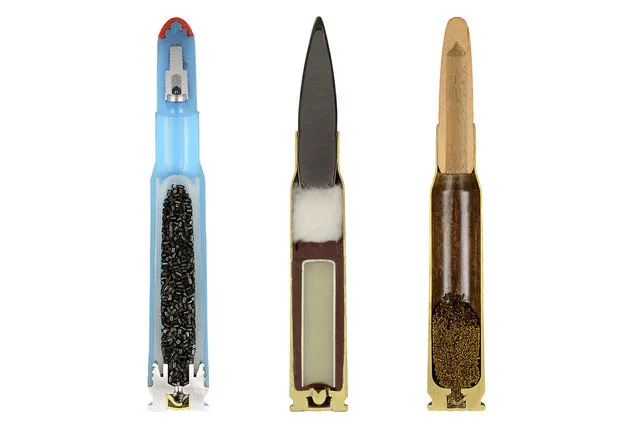
Cross Sections Of Bullets By Sabine Pearlman

Sabine Pearlman‘s photographs find beauty in the destructive engineering of ammunition with this series of cross-sections of bullets cartridges from a Swiss bunker. They reveal the complexity inside each case. This series, which consists of 900 specimens, was photographed inside a WWII bunker in Switzerland. Pearlman says that she is intrigued by the beautiful complexity of the ammo set against its destructive purpose, at once showing off humanity’s ability to create and destroy.
Details
27 Jun 2013 12:42:00
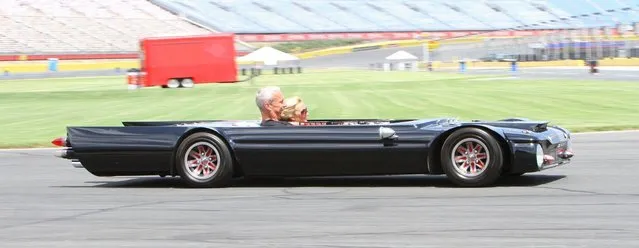
The Flatmobile - The Worlds Lowest Car

At 19 inches high, the Flatmobile is the world’s lowest street legal car. It just so happens to be a replica of the Batmobile and has a jet engine that shoots 20 foot flames out of the rear! Ground clearance is at a whopping 2 inches! You could probably park this thing under a large SUV at your local supermarket.
Details
15 Jan 2014 12:19:00
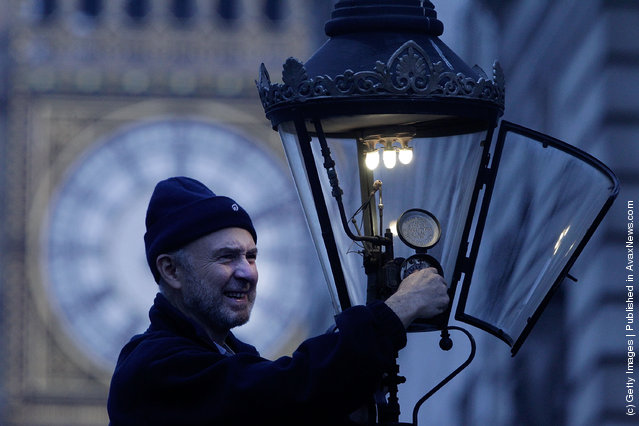
Gas Street Lamps

British Gas engineer Martin Caulfield, 69, services and cleans a gas lamp in front of Big Ben on October 31, 2011 in London, England. Caulfield has been looking after the traditional lights since 1982. There are still around 1600 left in the capital. (Photo by Matthew Lloyd/Getty Images)
Details
03 Nov 2011 09:31:00
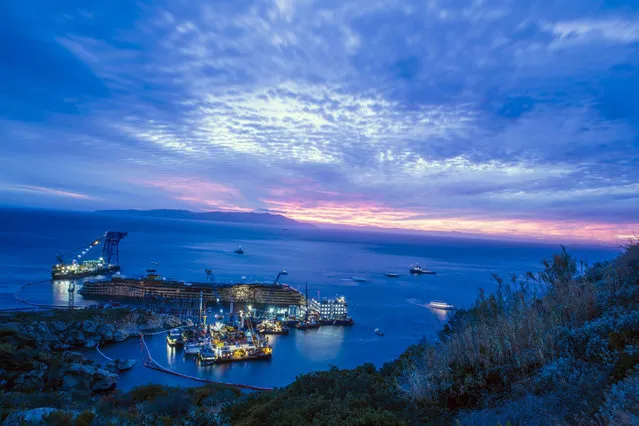
A general view showing the shipwrecked cruise ship Costa Concordia in an upright position after the salvage operations in Giglio island, Italy, 17 September 2013. Salvage crews pulled off a major engineering feat when they straightened the listed Costa Concordia cruise ship from the rocks it had been wedged against for the past 20 months. The delicate operation took 19 hours and was completed at 4 am (0200 GMT). The vessel ran aground near the island of Giglio, in Tuscany, in an accident that made world-wide news. (Photo by Angelo Carconi/EPA)

A general view showing the shipwrecked cruise ship Costa Concordia in an upright position after the salvage operations in Giglio island, Italy, 17 September 2013. Salvage crews pulled off a major engineering feat when they straightened the listed Costa Concordia cruise ship from the rocks it had been wedged against for the past 20 months. The delicate operation took 19 hours and was completed at 4 am (0200 GMT). The vessel ran aground near the island of Giglio, in Tuscany, in an accident that made world-wide news. (Photo by Angelo Carconi/EPA)
Details
18 Sep 2013 09:27:00


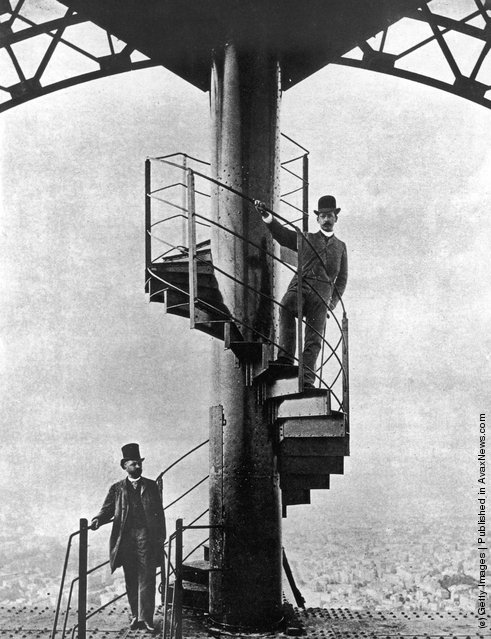
“The Eiffel Tower (French: La Tour Eiffel, nickname La dame de fer, the iron lady) is a puddle iron lattice tower located on the Champ de Mars in Paris. Built in 1889, it has become both a global icon of France and one of the most recognizable structures in the world. The tower is the tallest building in Paris and the most-visited paid monument in the world. Named for its designer, engineer Gustave Eiffel, the tower was built as the entrance arch to the 1889 World's Fair. The tower stands 324 metres (1,063 ft) tall, about the same height as an 81-storey building”. – Wikipedia

Photo: French engineer Alexandre Gustave Eiffel (1832–1923), left, poses high on the steps of the completed Eiffel Tower, which he designed for the 1889 Paris Exposition. (Photo by General Photographic Agency/Getty Images)
Details
08 May 2011 09:56:00