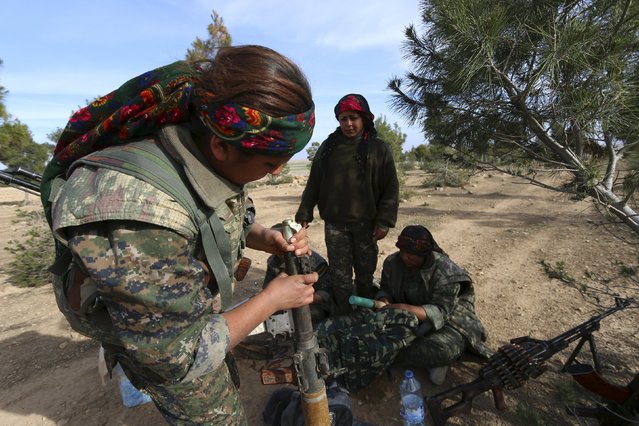
Fighters from the Democratic Forces of Syria prepare their weapons in the southwestern countryside of Hasaka, Syria February 17, 2016. Picture taken February 17, 2016. (Photo by Rodi Said/Reuters)
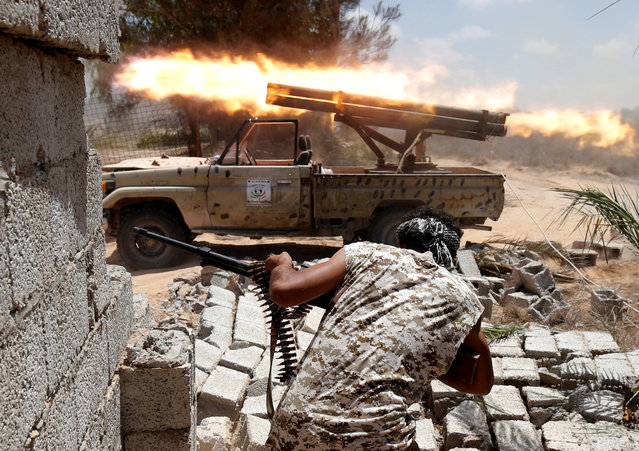
Libyan forces allied with the U.N.-backed government fire weapons during a battle with IS fighters in Sirte, Libya, July 21, 2016. (Photo by Goran Tomasevic/Reuters)
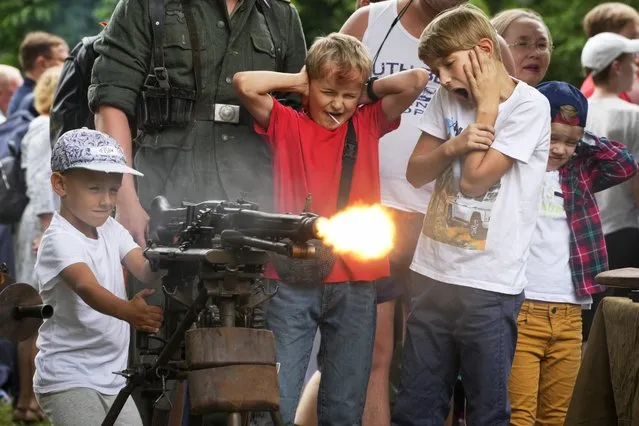
A boy shoots a World War II ages machine gun with blanks at a weapon exhibition during a military show in St. Petersburg, Russia, Sunday, July 10, 2022. (Photo by Dmitri Lovetsky/AP Photo)
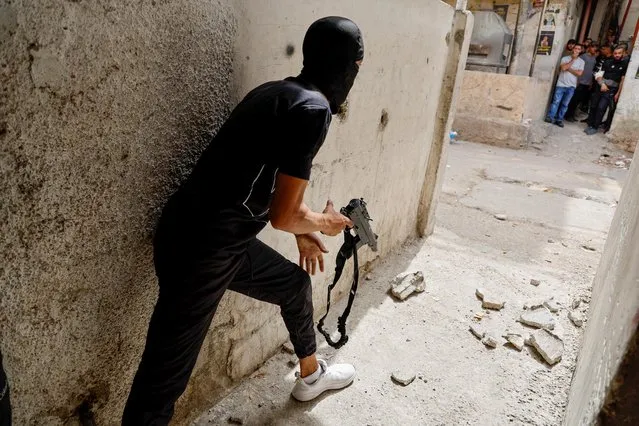
A Palestinian holding a weapon takes cover between buildings amid clashes with Israeli troops during an Israeli raid in Nablus in the Israeli-occupied West Bank on June 13, 2023. (Photo by Raneen Sawafta/Reuters)
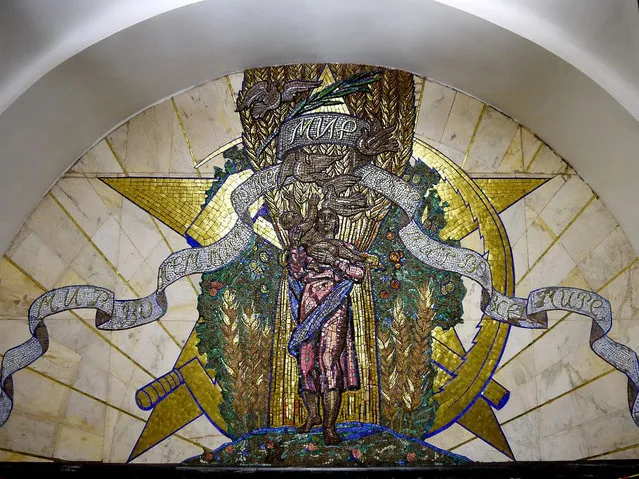
The is a rapid transit system serving Moscow and the neighbouring town of Krasnogorsk. Opened in 1935 with one 11-kilometre (6.8 mi) line and 13 stations, it was the first underground railway system in the Soviet Union. As of 2011, the Moscow Metro has 185 stations and its route length is 305.7 kilometres (190.0 mi). The system is mostly underground, with the deepest section 84 metres (276 ft) at the Park Pobedy station. The Moscow Metro is the world's second most heavily used rapid transit system after Tokyo's twin subway.
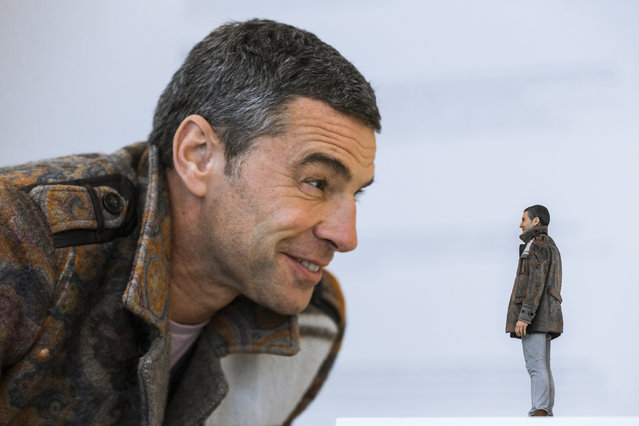
Customer Andreas Kroker looks at a 3D-printed figure of himself at the Twinkind 3D printing studio in Berlin, December 13, 2013. A 3D-printed likeness is produced by taking a 360 degree photographic scan of a person, which is then rendered into a 3D digital model and retouched to meet the requirements for printing. The printing machine uses this digital model to produce a high-resolution solid figure. Twinkind co-founder Timo Schaedel said, people often come to the session well-groomed, with fresh hair-cuts and their best clothes, “just as they used to do in the past, when they had their portrait taken in a photo studio”. (Photo by Thomas Peter/Reuters)
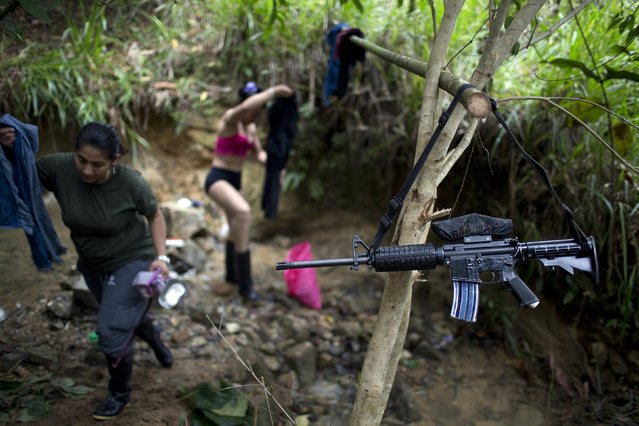
In this January 4, 2016 photo, the weapon of a rebel fighter for the 36th Front of the Revolutionary Armed Forces of Colombia, or FARC, hangs from a branch serving as a makeshift clothesline, near a rebel camp, in Antioquia state, in the northwest Andes of Colombia. “We’ll lay aside our weapons, like the accord says, but never hand them over”, says Juan Pablo, a commander of the 36th Front. (Photo by Rodrigo Abd/AP Photo)