Loading...
Done
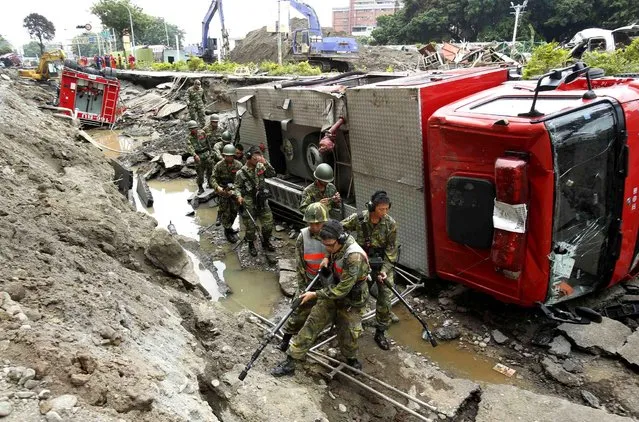
Soldiers use electronic sensors to search for missing firefighters under a line of fire trucks caught in massive gas explosions in Kaohsiung, Taiwan, Friday, August 1, 2014. A series of underground explosions about midnight Thursday and early Friday ripped through Taiwan's second-largest city, killing scores of people, Taiwan's National Fire Agency said Friday. (Photo by Wally Santana/AP Photo)

Soldiers use electronic sensors to search for missing firefighters under a line of fire trucks caught in massive gas explosions in Kaohsiung, Taiwan, Friday, August 1, 2014. A series of underground explosions about midnight Thursday and early Friday ripped through Taiwan's second-largest city, killing scores of people, Taiwan's National Fire Agency said Friday. (Photo by Wally Santana/AP Photo)
Details
01 Aug 2014 12:16:00
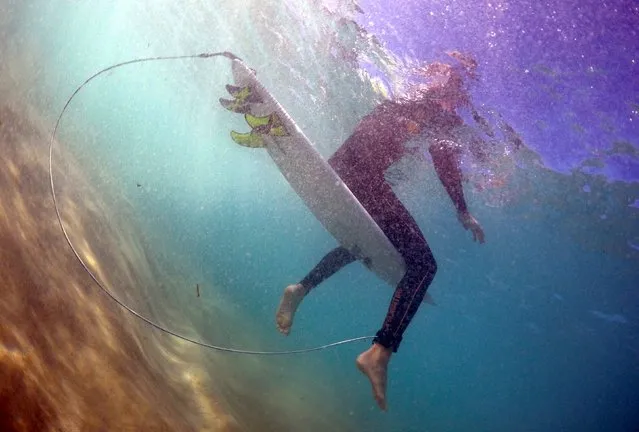
Surfer Arlen Macpherson sits on his board, which has an electronic shark repellent device installed, at Sydney's Bondi Beach in Australia, August 18, 2015. A spate of shark attacks in Australia has left some of world's top surfing beaches deserted and many people having second thoughts about taking a swim as the summer approaches. Macpherson paid A$390 for a device embedded in his surf board to repel sharks by emitting an electronic force field that overpowers its sensing organs. (Photo by David Gray/Reuters)

Surfer Arlen Macpherson sits on his board, which has an electronic shark repellent device installed, at Sydney's Bondi Beach in Australia, August 18, 2015. A spate of shark attacks in Australia has left some of world's top surfing beaches deserted and many people having second thoughts about taking a swim as the summer approaches. Macpherson paid A$390 for a device embedded in his surf board to repel sharks by emitting an electronic force field that overpowers its sensing organs. (Photo by David Gray/Reuters)
Details
19 Aug 2015 12:47:00
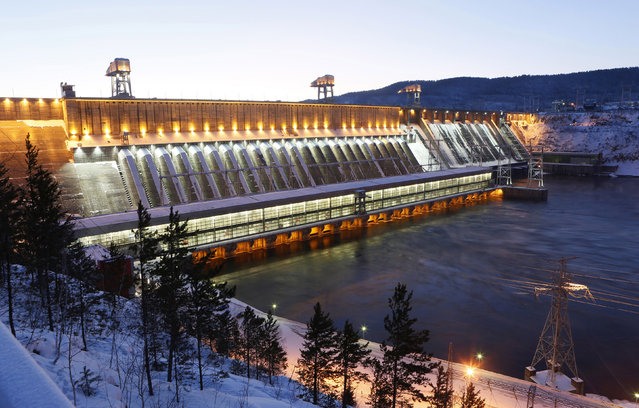
A general view shows the Krasnoyarsk hydro-electric power station on the Yenisei River near the Siberian city of Krasnoyarsk, Russia, January 13, 2016. The power plant, owned by EuroSibEnergo company, part of En+ Group, with a generating capacity of 6,000 megawatt (MW), has a ferro-concrete dam 124-metres high and 1065-metres long and is the second largest Russian hydroelectric power station. About 85% of the energy generated is intended for the Rusal Krasnoyarsk aluminium smelter, according to representatives of the power station. (Photo by Ilya Naymushin/Reuters)

A general view shows the Krasnoyarsk hydro-electric power station on the Yenisei River near the Siberian city of Krasnoyarsk, Russia, January 13, 2016. The power plant, owned by EuroSibEnergo company, part of En+ Group, with a generating capacity of 6,000 megawatt (MW), has a ferro-concrete dam 124-metres high and 1065-metres long and is the second largest Russian hydroelectric power station. About 85% of the energy generated is intended for the Rusal Krasnoyarsk aluminium smelter, according to representatives of the power station. (Photo by Ilya Naymushin/Reuters)
Details
16 Jan 2016 08:03:00
Dancer Megan changes costume as she performs in the review “Feerie” at the Moulin Rouge in Paris, France, July 3, 2018. Each show requires 1,000 outfits, all crafted in the workshops that have been supplying the Moulin Rouge for decades. Each dancer has to make between 10 and 15 costume changes per show, with about 90 seconds to complete each one before they have to be back out on stage. (Photo by Philippe Wojazer/Reuters)

Dancer Megan changes costume as she performs in the review “Feerie” at the Moulin Rouge in Paris, France, July 3, 2018. Each show requires 1,000 outfits, all crafted in the workshops that have been supplying the Moulin Rouge for decades. Each dancer has to make between 10 and 15 costume changes per show, with about 90 seconds to complete each one before they have to be back out on stage. (Photo by Philippe Wojazer/Reuters)
Details
05 Oct 2019 00:03:00
Mariana Sousa, student of the Ballet Paraisopolis, warms up during a rehearse in Paraisopolis favela, outskirts of Sao Paulo, Brazil on August 27, 2020, amid the new coronavirus COVID-19 pandemic. The 200 ballet students of Paraisopolis, the second largest favela in Sao Paulo, restarted rehearsals after five months with a coreography about a police operation that put their community in mourning last year. (Photo by Nelson Almeida/AFP Photo)

Mariana Sousa, student of the Ballet Paraisopolis, warms up during a rehearse in Paraisopolis favela, outskirts of Sao Paulo, Brazil on August 27, 2020, amid the new coronavirus COVID-19 pandemic. The 200 ballet students of Paraisopolis, the second largest favela in Sao Paulo, restarted rehearsals after five months with a coreography about a police operation that put their community in mourning last year. (Photo by Nelson Almeida/AFP Photo)
Details
11 Sep 2020 00:03:00
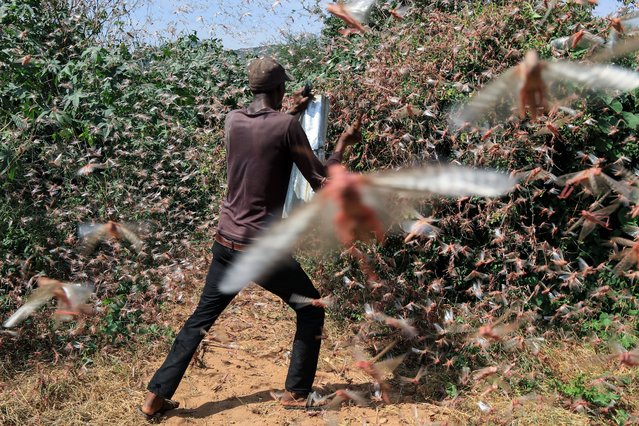
A man uses iron sheet to make noises, as a way of trying to disperse desert locusts that had invaded their farms during the second wave invasion in Kakongo village, in Nuu-Mwingi East, in Kitui, Kenya, 06 February 2021. The second wave invasion of the desert locusts in the country comes at a time where most famers are expecting to harvest their farm produce in the country. According to the United Nations Food and Agriculture Organization (FAO), on 04 February, warned numerous immature desert locust swarms persist in southern Ethiopia and Kenya. Some of the swarms are in community areas and therefore cannot be treated. In Kenya, immature swarms continue to spread westwards across northern and central counties where there are currently about 20 small swarms present, mostly about 50 hectares in size, it said. (Photo by Daniel Irungu/EPA/EFE)

A man uses iron sheet to make noises, as a way of trying to disperse desert locusts that had invaded their farms during the second wave invasion in Kakongo village, in Nuu-Mwingi East, in Kitui, Kenya, 06 February 2021. The second wave invasion of the desert locusts in the country comes at a time where most famers are expecting to harvest their farm produce in the country. (Photo by Daniel Irungu/EPA/EFE)
Details
25 Feb 2021 08:17:00
Zed Nelson by The Family

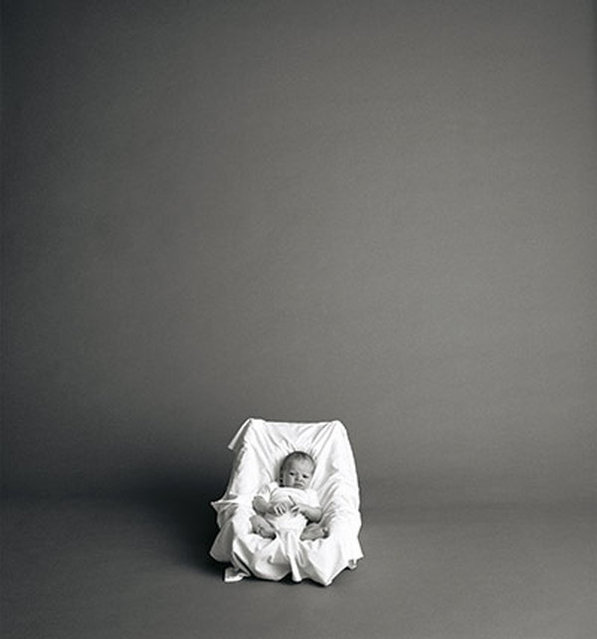
Zed Nelson has photographed the same family, once a year on the same day, for 20 years. I take hundreds of photo’s of my extended family all year round, some just languish on my computer screen unseen by anyone, some get printed, some framed. What is really interesting about this project is not only the obvious time scale but his “ analytical approach“. The same plain background is used for each session and he chooses only 1 frame to represent that years image. My many photographs are a mishmash of family events, his create a family history unfolding . Perhaps less really is more.
Details
22 Jun 2015 10:27:00
Things Cut in Half

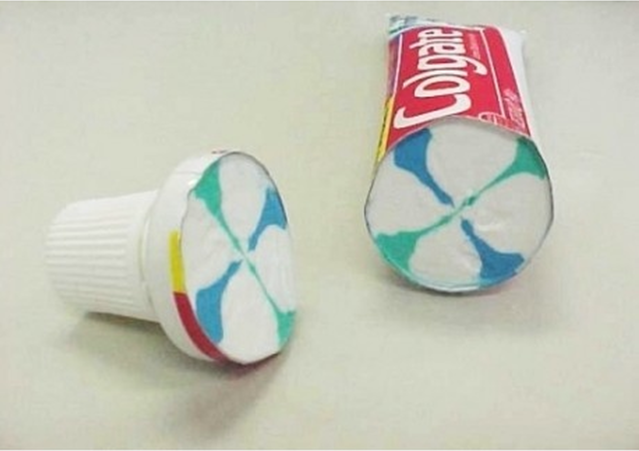
HalfPics is a Twitter feed pointing to things cut in half like a bowl of ramen, a Mini Cooper, and toothpaste. Their tagline: “Ever wonder what stuff looks like when it’s cut in half?” Yes. We previously posted about “Cut Food,” a photo series of foods cut neatly in half by food photographer Beth Galton and food stylist Charlotte Omnès.


See also:Things Cut in Half Part2
Details
07 Sep 2013 10:32:00