Loading...
Done
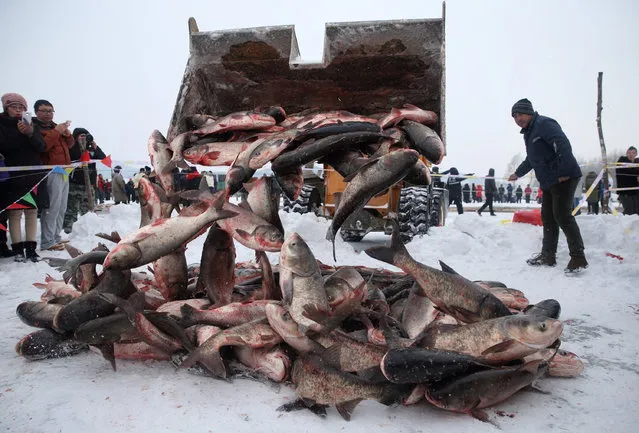
People participate in a winter fishing event in Changchun, Jilin province, China, December 25, 2016. Picture taken December 25, 2016. (Photo by Reuters/Stringer)

People participate in a winter fishing event in Changchun, Jilin province, China, December 25, 2016. Picture taken December 25, 2016. (Photo by Reuters/Stringer)
Details
27 Dec 2016 10:21:00


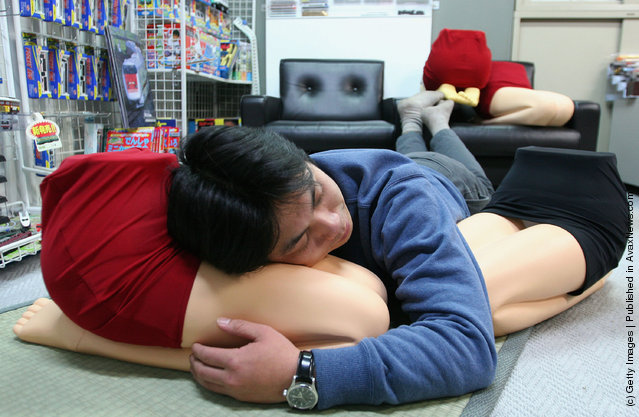
Developer of “Hizamakura”, or lap pillow, Makoto Igarashi, introduces the product at Trane Co., Ltd.'s HQ on December 14, 2004 in Tokyo, Japan. (Photo by Koichi Kamoshida/Getty Images)
Details
19 May 2011 10:53:00
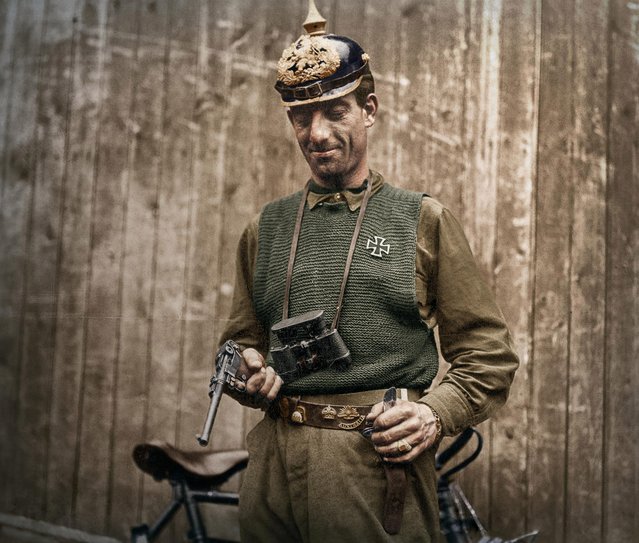
One image shows an unidentified American soldier posing with a pistol, helmet, and Iron Cross medal taken from a German soldier, 1918. (Photo by Mario Unger/Mediadrumworld)

The faces of war have been brought back to life after a series of World War One photographs were expertly colourised. The black and white snaps were painstakingly restored and colourised by photographer Mario Unger (53) from Rotenturm, Austria. Here: One image shows an unidentified American soldier posing with a pistol, helmet, and Iron Cross medal taken from a German soldier, 1918. (Photo by Mario Unger/Mediadrumworld)
Details
04 Dec 2017 07:47:00
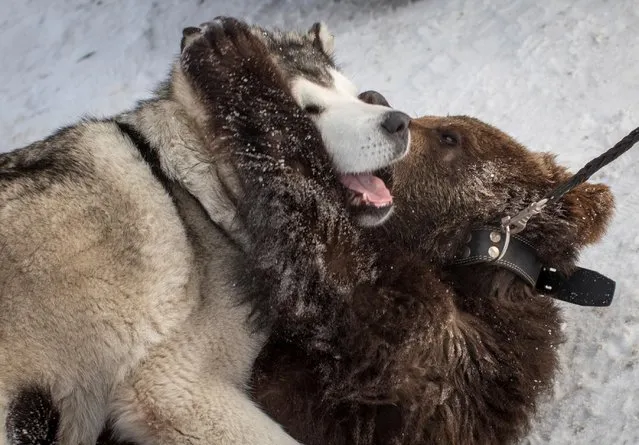
Andreyka, a 10-month-old female bear cub, plays with Rommi, an Alaskan malamute, at the Siberian Zoo in the settlement of Listvyanka, Irkutsk Region, Russia on December 9, 2020. The bear cub, which was found in a weak condition earlier this year, now play-fights with the Alaskan malamute, who adopted her and has seen three generations of bear cubs brought up in the Siberian zoo and released back into the wild. (Photo by Yuri Novikov/Reuters)

Andreyka, a 10-month-old female bear cub, plays with Rommi, an Alaskan malamute, at the Siberian Zoo in the settlement of Listvyanka, Irkutsk Region, Russia on December 9, 2020. The bear cub, which was found in a weak condition earlier this year, now play-fights with the Alaskan malamute, who adopted her and has seen three generations of bear cubs brought up in the Siberian zoo and released back into the wild. (Photo by Yuri Novikov/Reuters)
Details
17 Dec 2020 00:05:00
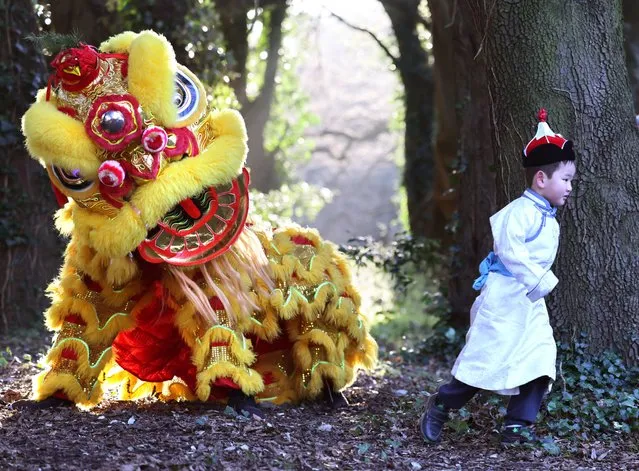
Suadar Oyunbold, age 5 runs from a Lion Dancer in Dublin City Farm at St Anne’s Park on January 9, 2023 to mark the launch of the programme for Dublin Lunar New Year which runs from 21-29 January. (Photo by Dara Mac Dónaill/The Irish Times)

Suadar Oyunbold, age 5 runs from a Lion Dancer in Dublin City Farm at St Anne’s Park on January 9, 2023 to mark the launch of the programme for Dublin Lunar New Year which runs from 21-29 January. (Photo by Dara Mac Dónaill/The Irish Times)
Details
09 Feb 2023 04:49:00
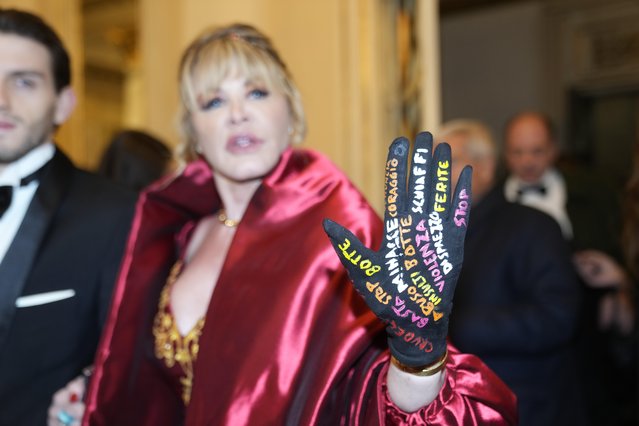
Doctor Dvora Ancona wears a glove bearing writings against violence on women as she arrives to attend La Scala opera house's gala season opener, Giuseppe Verdi's opera “Don Carlo” at the Milan La Scala theater, Italy, Thursday December 7, 2023. The season-opener Thursday, held each year on the Milan feast day St. Ambrose, is considered one of the highlights of the European cultural calendar. (Photo by Luca Bruno/AP Photo)

Doctor Dvora Ancona wears a glove bearing writings against violence on women as she arrives to attend La Scala opera house's gala season opener, Giuseppe Verdi's opera “Don Carlo” at the Milan La Scala theater, Italy, Thursday December 7, 2023. The season-opener Thursday, held each year on the Milan feast day St. Ambrose, is considered one of the highlights of the European cultural calendar. (Photo by Luca Bruno/AP Photo)
Details
18 Feb 2025 04:05:00
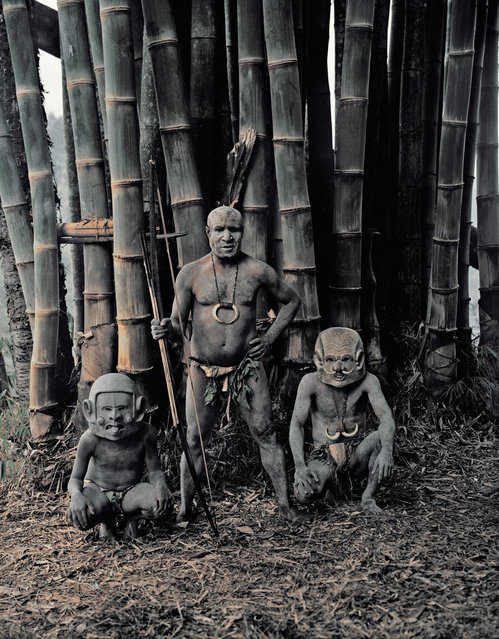
“Asaro from the Eastern Highlands”. The mudmen could not cover their faces with mud because the people of Papua New Guinea thought that the mud from the Asaro river was poisonous. So instead of covering their faces with this alleged poison, they made masks from pebbles that they heated and water from the waterfall, with unusual designs such as long or very short ears either going down to the chin or sticking up at the top, long joined eyebrows attached to the top of the ears, horns and sideways mouths. (Jimmy Nelson)

“Asaro from the Eastern Highlands”. The mudmen could not cover their faces with mud because the people of Papua New Guinea thought that the mud from the Asaro river was poisonous. So instead of covering their faces with this alleged poison, they made masks from pebbles that they heated and water from the waterfall, with unusual designs such as long or very short ears either going down to the chin or sticking up at the top, long joined eyebrows attached to the top of the ears, horns and sideways mouths. (Photo and caption by Jimmy Nelson)
Details
20 Oct 2013 08:54:00
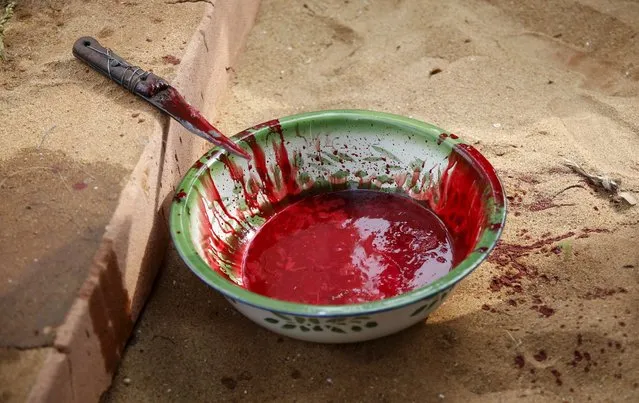
A knife is seen beside a bowl containing blood after a ram was killed as a sacrifice in front of a shrine at the annual voodoo festival in Ouidah, Benin, January 10, 2016. (Photo by Akintunde Akinleye/Reuters)

A knife is seen beside a bowl containing blood after a ram was killed as a sacrifice in front of a shrine at the annual voodoo festival in Ouidah, Benin, January 10, 2016. In Ouidah, a small town and former slave port in the West African country of Benin, the annual voodoo festival gathers visitors from far and wide. It's a week that brings together priests and dignitaries, rich and poor, locals and visitors from as far afield as the Caribbean and France. The festival commemorates the estimated 60 million people who lost their homelands and their freedom during the African slave trade. (Photo by Akintunde Akinleye/Reuters)
Details
23 Jan 2016 12:55:00