Loading...
Done
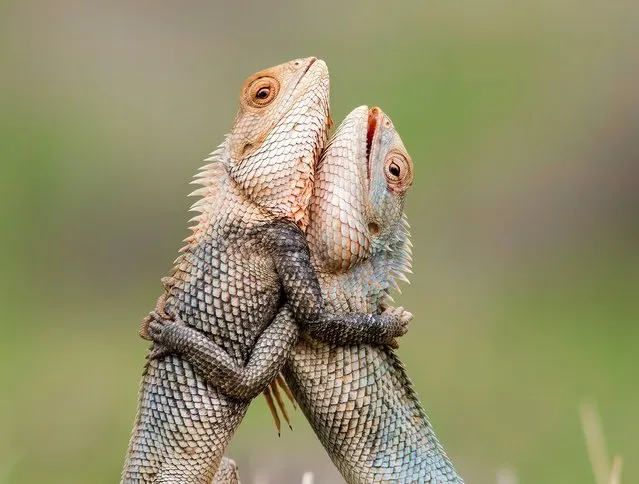
The males, of the Oriental Garden species, are battling over territory in Solapur in the Maharashtra state, India on May 20, 2022. Occasionally, the tussle can be brutal, ending in a fatality with one lizard biting another to encourage them to retreat. (Photo by Ratnakar Hiremath/Solent News)

The males, of the Oriental Garden species, are battling over territory in Solapur in the Maharashtra state, India on May 20, 2022. Occasionally, the tussle can be brutal, ending in a fatality with one lizard biting another to encourage them to retreat. (Photo by Ratnakar Hiremath/Solent News)
Details
05 Jun 2022 04:05:00
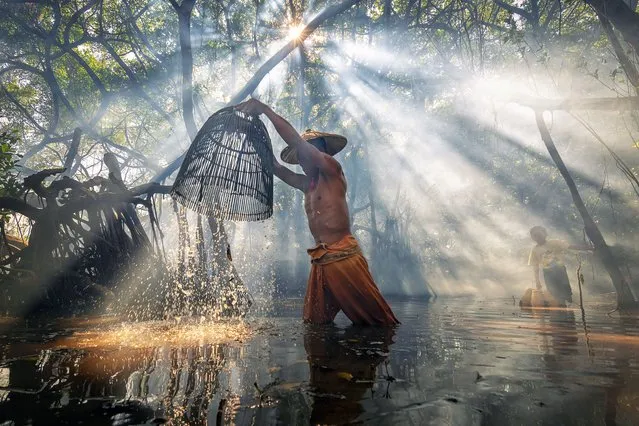
The winners have been announced for the Global Photo Awards 2022. “Mangrove Fisherman” (Inle Lake, Myanmar) by Zay Year Lin wins first place in the people category. (Photo by Zay Year Lin/Global Photo Awards 2022)

The winners have been announced for the Global Photo Awards 2022. “Mangrove Fisherman” (Inle Lake, Myanmar) by Zay Year Lin wins first place in the people category. (Photo by Zay Year Lin/Global Photo Awards 2022)
Details
14 Aug 2022 05:01:00
An adult and two children stop to cool off at the water from an open fire hydrant in hot and humid weather in New York City on Thursday, July 11, 2024. After dealing with extreme humidity and heat for the past few days the trip-state area got a break as humidity levels took a slight but noticeable drop. (Photo by John Angelillo/UPI/Rex Features/Shutterstock)

An adult and two children stop to cool off at the water from an open fire hydrant in hot and humid weather in New York City on Thursday, July 11, 2024. After dealing with extreme humidity and heat for the past few days the trip-state area got a break as humidity levels took a slight but noticeable drop. (Photo by John Angelillo/UPI/Rex Features/Shutterstock)
Details
22 Jul 2024 04:18:00
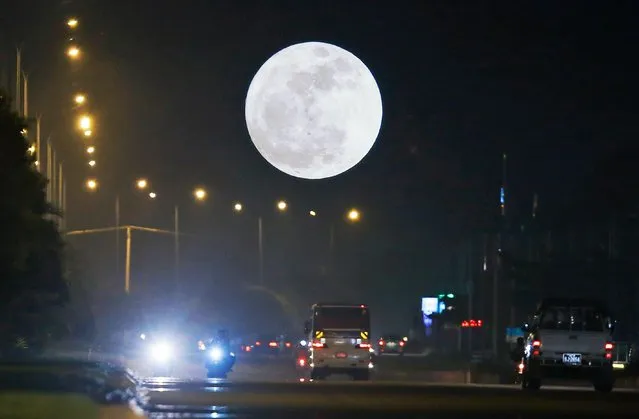
A so-called “Supermoon” dominates the sky while traffic rolls in the streets in Naypyitaw, Myanmar, 03 December 2017. According to the National Aeronautics and Space Administration (NASA) a series of three “Supermoons” – dubbed the “Supermoon trilogy” – will appear in the sky on 03 December 2017, on 01 January 2018 and and 31 January 2018. A 'Supermoon' commonly is a full moon at its closest distance to the earth with the moon appearing larger than usual. (Photo by Hein Htet/EPA/EFE)

A so-called “Supermoon” dominates the sky while traffic rolls in the streets in Naypyitaw, Myanmar, 03 December 2017. According to the National Aeronautics and Space Administration (NASA) a series of three “Supermoons” – dubbed the “Supermoon trilogy” – will appear in the sky on 03 December 2017, on 01 January 2018 and and 31 January 2018. A “Supermoon” commonly is a full moon at its closest distance to the earth with the moon appearing larger than usual. (Photo by Hein Htet/EPA/EFE)
Details
05 Dec 2017 07:45:00
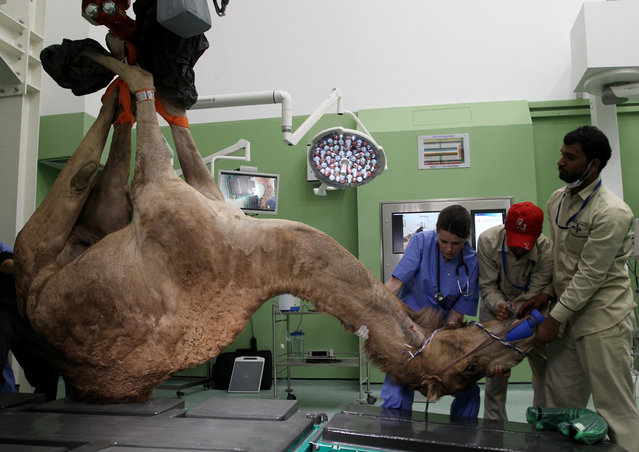
A camel is seen as he is being brought for the foot surgery at the Dubai Camel Hospital in Dubai, UAE, December 11, 2017. (Photo by Satish Kumar/Reuters)

A camel is seen as he is being brought for the foot surgery at the Dubai Camel Hospital in Dubai, UAE, December 11, 2017. (Photo by Satish Kumar/Reuters)
Details
17 Dec 2017 04:37:00
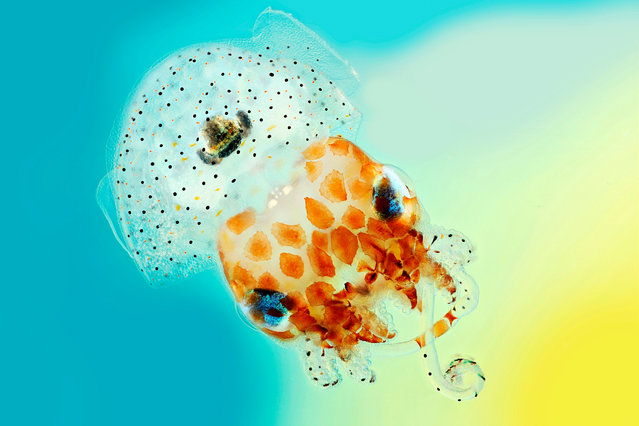
With its huge eyes, comical name and diminutive size, Mark R. Smith’s image of a baby Hawaiian bobtail squid can’t help but raise a smile. A curiously endearing creature, the cephalopod is just 1.5cm across, its mantle cavity bearing more than a passing resemblance to a rather natty shower cap. But it is also a beautiful example of symbiosis – nature’s version of “I’ll scratch your back if you scratch mine” – for on the underside of the squid is a light organ which houses bioluminescent bacteria. The squid offers the bacteria protection and food, while the bacteria emit a glow – a handy trait that the squid uses to offset its silhouette, helping it to evade predators in the depths below. Mark R. Smith’s entry combines several images of a Hawaiian bobtail squid with different focus lengths to create a final picture with greater depth of field than normal. (Photo by Mark R. Smith/Wellcome Images/Macroscopic Solutions)

With its huge eyes, comical name and diminutive size, Mark R. Smith’s image of a baby Hawaiian bobtail squid can’t help but raise a smile. A curiously endearing creature, the cephalopod is just 1.5cm across, its mantle cavity bearing more than a passing resemblance to a rather natty shower cap. But it is also a beautiful example of symbiosis – nature’s version of “I’ll scratch your back if you scratch mine” – for on the underside of the squid is a light organ which houses bioluminescent bacteria. The squid offers the bacteria protection and food, while the bacteria emit a glow – a handy trait that the squid uses to offset its silhouette, helping it to evade predators in the depths below. Mark R. Smith’s entry combines several images of a Hawaiian bobtail squid with different focus lengths to create a final picture with greater depth of field than normal. (Photo by Mark R. Smith/Wellcome Images/Macroscopic Solutions)
Details
08 Mar 2017 00:05:00
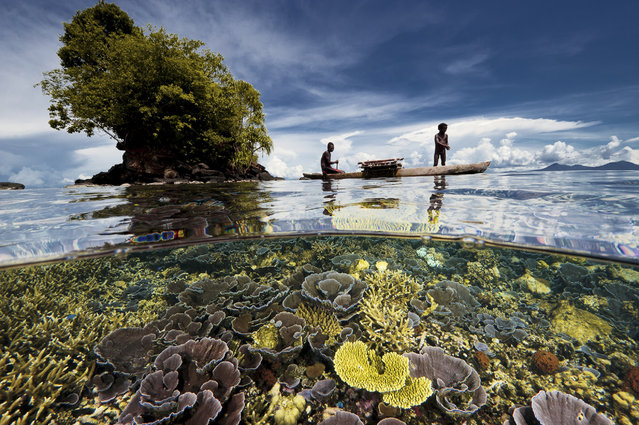
From the “Paradise Revisited” story in the November 2013 issue of National Geographic magazine, this image is a beautiful vision of father and son fishermen as they move through the multicolored coral gardens of Kembe Bay, Papua New Guinea, in a traditional outrigger canoe. (Photo by David Doubilet/National Geographic Creative)

From the “Paradise Revisited” story in the November 2013 issue of National Geographic magazine, this image is a beautiful vision of father and son fishermen as they move through the multicolored coral gardens of Kembe Bay, Papua New Guinea, in a traditional outrigger canoe. (Photo by David Doubilet/National Geographic Creative)
Details
29 Apr 2017 07:28:00
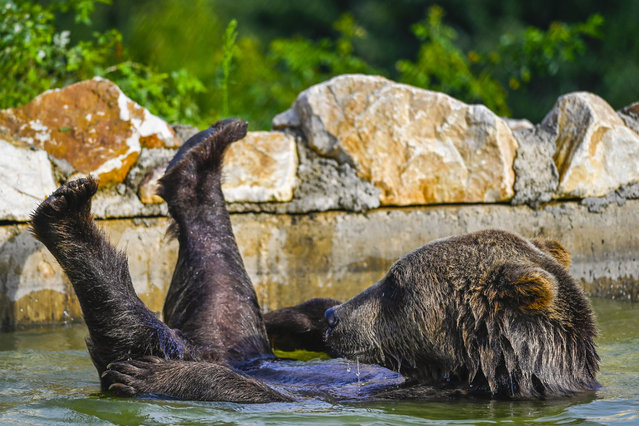
A brown bears cools off in a pool at the bear sanctuary near the village of Mramor, on August 18, 2020. The bear sanctuary was closed for visitors on August 18, as part of safety measures to curb the spread of the COVID-19 (novel coronavirus) disease. (Photo by Armend Nimani/AFP Photo)

A brown bears cools off in a pool at the bear sanctuary near the village of Mramor, on August 18, 2020. The bear sanctuary was closed for visitors on August 18, as part of safety measures to curb the spread of the COVID-19 (novel coronavirus) disease. (Photo by Armend Nimani/AFP Photo)
Details
23 Aug 2020 00:03:00