Loading...
Done
The Berenson robot strolls among visitors during the exhibition “Persona : Oddly Human” at the Quai Branly museum in Paris, France, February 23, 2016. The Berenson robot, developed in France in 2011, is the brainchild of anthropologist Denis Vidal and robotics engineer Philippe Gaussier. Its programming allows it to record reactions of museum visitors to certain pieces of art and then use the data to develop its own unique taste, which allows “Berenson” to judge whether or not it likes a certain work of art within an exhibition. (Photo by Philippe Wojazer/Reuters)

The Berenson robot strolls among visitors during the exhibition “Persona : Oddly Human” at the Quai Branly museum in Paris, France, February 23, 2016. The Berenson robot, developed in France in 2011, is the brainchild of anthropologist Denis Vidal and robotics engineer Philippe Gaussier. Its programming allows it to record reactions of museum visitors to certain pieces of art and then use the data to develop its own unique taste, which allows “Berenson” to judge whether or not it likes a certain work of art within an exhibition. (Photo by Philippe Wojazer/Reuters)
Details
25 Feb 2016 12:26:00
An actor performs during the show “Paris de Nuit” in Santiago, Chile, 20 September 2016. The show is a combination of cabaret and circus, produced by the Recirquel Contemporary Circus Company from Budapest, and will be performed at the Mapocho Cultural station from 20 to 25 September. (Photo by Mario Ruiz/EPA)

An actor performs during the show “Paris de Nuit” in Santiago, Chile, 20 September 2016. The show is a combination of cabaret and circus, produced by the Recirquel Contemporary Circus Company from Budapest, and will be performed at the Mapocho Cultural station from 20 to 25 September. (Photo by Mario Ruiz/EPA)
Details
22 Sep 2016 10:17:00
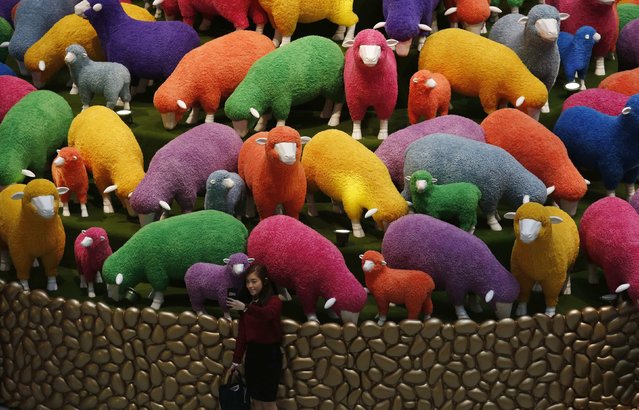
A woman takes a selfie in front of a Lunar New Year display featuring sheep at a shopping mall in Hong Kong, February 13, 2015. (Photo by Bobby Yip/Reuters)

A woman takes a selfie in front of a Lunar New Year display featuring sheep at a shopping mall in Hong Kong, February 13, 2015. (Photo by Bobby Yip/Reuters)
Details
14 Feb 2015 13:05:00
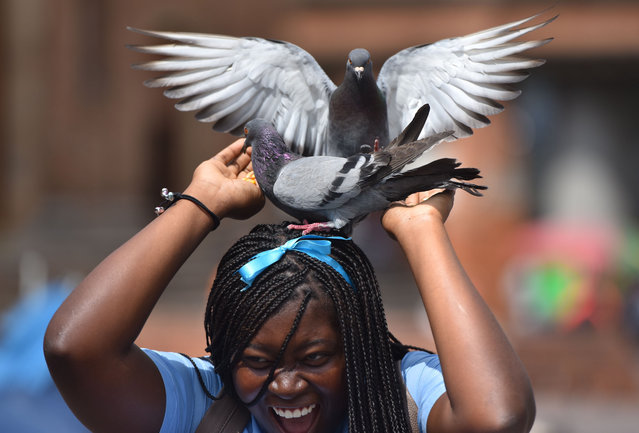
A woman walks at the Boulevard of the River the eve of the International Women's Day, in Cali, Colombia, 07 March 2019. (Photo by Ernesto Guzman Jr./EPA/EFE)

A woman walks at the Boulevard of the River the eve of the International Women's Day, in Cali, Colombia, 07 March 2019. (Photo by Ernesto Guzman Jr./EPA/EFE)
Details
09 Mar 2019 00:03:00
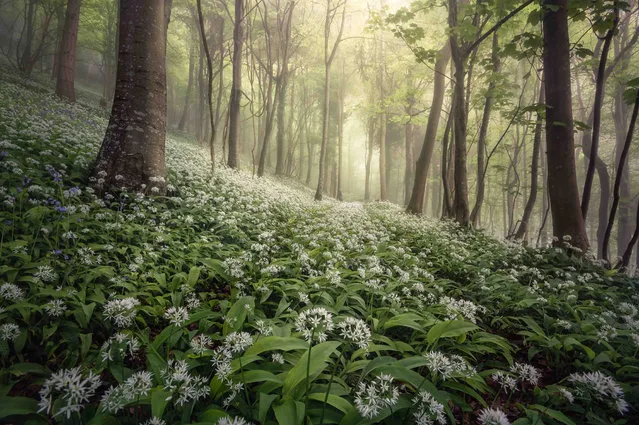
Woolland Woods, Dorset. Landscape photographer of the year 2020. “Taken in spring of 2018 in a wooded area close to Milborne St Andrew in Dorset, this was the third visit to the area in a matter of days. On the previous days, both devoid of morning mists, the light had been harsh and unappealing but the third day delivered stunning conditions with mist swirling through the trees. The low shooting position allowed more emphasis to be placed on the wild garlic and pathway”. (Photo by Chris Frost/UK Landscape Photographer of the Year 2020)

Woolland Woods, Dorset. Landscape photographer of the year 2020. “Taken in spring of 2018 in a wooded area close to Milborne St Andrew in Dorset, this was the third visit to the area in a matter of days. On the previous days, both devoid of morning mists, the light had been harsh and unappealing but the third day delivered stunning conditions with mist swirling through the trees. The low shooting position allowed more emphasis to be placed on the wild garlic and pathway”. (Photo by Chris Frost/UK Landscape Photographer of the Year 2020)
Details
22 Oct 2020 00:03:00
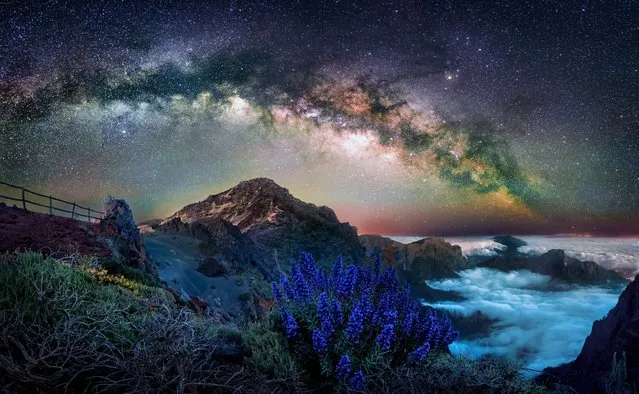
Tony North; First place, Breathing Spaces; Overall Winner; Blue Tajinaste, La Palma, Canary Islands, Spain. “Echium thyrsiflorum is endemic to the mountains of La Palma island – from high up, there was a magnificent view of both the caldera below, and the stars above. The Unesco La Palma biosphere reserve encompasses the entire island, with the Caldera de Taburiente containing mountains with a highest peak of 2,426 metres – the Roque de los Muchachos”. (Photo by Tony North/IGPOTY)

Tony North; First place, Breathing Spaces; Overall Winner; Blue Tajinaste, La Palma, Canary Islands, Spain. “Echium thyrsiflorum is endemic to the mountains of La Palma island – from high up, there was a magnificent view of both the caldera below, and the stars above. The Unesco La Palma biosphere reserve encompasses the entire island, with the Caldera de Taburiente containing mountains with a highest peak of 2,426 metres – the Roque de los Muchachos”. (Photo by Tony North/IGPOTY)
Details
10 Feb 2023 04:41:00
He performs his moves during the wedding celebrations, with his prosthetic limbs removed. (Photo by Yassine Alaoui Ismaili/The Guardian)

Street photographer Yassine Alaoui Ismaili follows 16-year-old Emeer Guesmi, aka B-boy Zulu Rema, as he trains and performs breakdance moves – all without the use of his legs. At a breakdance championship in Tunisia, Casablanca-based street photographer Yassine Alaoui Ismaili noticed an unusual competitor: Emeer Guesmi, dancing without the aid of his lower legs. He started following him as he trained and performed. (Photo by Yassine Alaoui Ismaili/The Guardian)
Details
23 Nov 2016 12:33:00
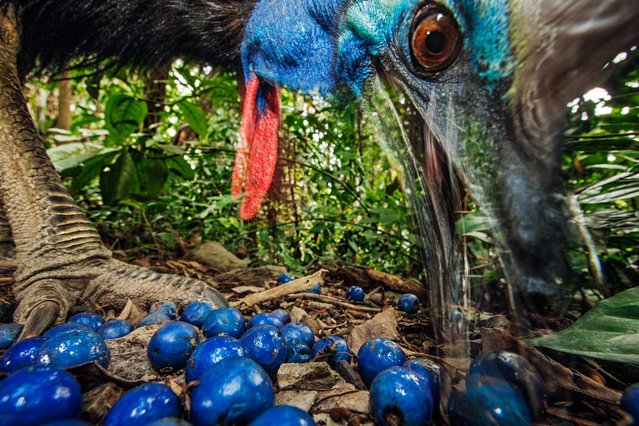
“Cassowaries are large, flightless birds related to emus and (more distantly) to ostriches, rheas, and kiwis”, writes Olivia Judson in the September issue of National Geographic magazine. (Photo by Christian Ziegler/National Geographic)

“Cassowaries are large, flightless birds related to emus and (more distantly) to ostriches, rheas, and kiwis”, writes Olivia Judson in the September issue of National Geographic magazine. How large? People-size: Adult males stand well over five foot five and top 110 pounds. Females are even taller, and can weigh more than 160 pounds. Dangerous when roused, they’re shy and peaceable when left alone. But even birds this big and tough are prey to habitat loss. The dense New Guinea and Australia rain forests where they live have dwindled. Today cassowaries might number 1,500 to 2,000. And because they help shape those same forests – by moving seeds from one place to another – “if they vanish”, Judson writes, “the structure of the forest would gradually change” too. (Photo by Christian Ziegler/National Geographic)
Details
06 Jan 2014 12:21:00