Loading...
Done


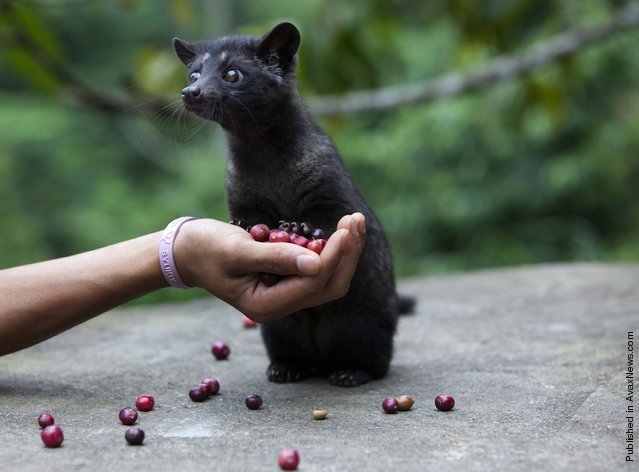
“Kopi luwak (Malay pronunciation), or civet coffee, is one of the world's most expensive and low-production coffee. It is made from the beans of coffee berries which have been eaten by the Asian Palm Civet (Paradoxurus hermaphroditus) and other related civets, then passed through its digestive tract. ...
Details
19 Mar 2011 18:41:00
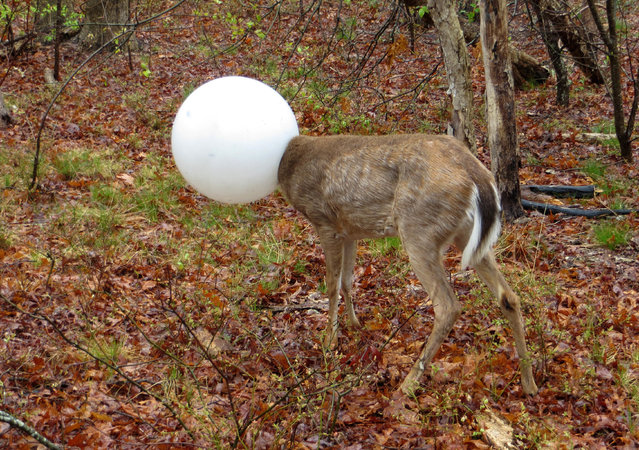
In this May 3, 2016 photo provided by the New York State Department of Environmental Conservation, a deer with its head caught in the globe from a lighting fixture over its head stands in the woods in Centereach, N.Y. The deer was able to extricate itself with the help of Environmental Conservation Officer, Jeff Hull. Hull wrestled with the deer for a while and the globe shook free in the process. (Photo by New York State Department of Environmental Conservation via AP Photo)

In this May 3, 2016 photo provided by the New York State Department of Environmental Conservation, a deer with its head caught in the globe from a lighting fixture over its head stands in the woods in Centereach, N.Y. The deer was able to extricate itself with the help of Environmental Conservation Officer, Jeff Hull. Hull wrestled with the deer for a while and the globe shook free in the process. (Photo by New York State Department of Environmental Conservation via AP Photo)

Details
08 May 2016 10:46:00
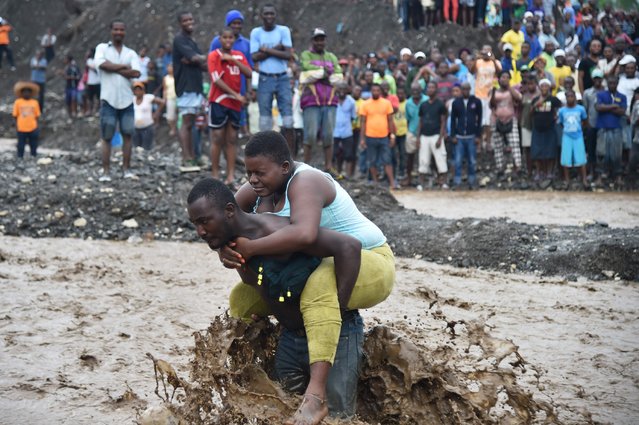
A man carries a woman across a  river at Petit Goave where a bridge collapsed during the rains of the Hurricane Matthew, southwest of Port-au-Prince, October 5, 2016. (Photo by Hector Retamal/AFP Photo)

A man carries a woman across a river at Petit Goave where a bridge collapsed during the rains of the Hurricane Matthew, southwest of Port-au-Prince, October 5, 2016. (Photo by Hector Retamal/AFP Photo)
Details
07 Oct 2016 09:52:00
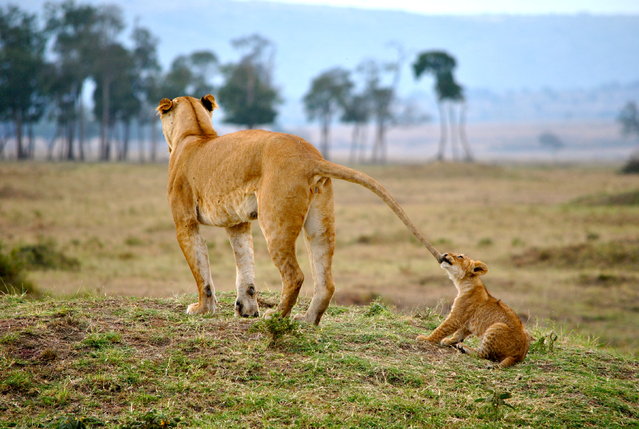
“A Mothers Tail”. A baby cub pulls on his mother's tail to get attention. Photo location: Masai Mara, Kenya. (Photo and caption by Tori Marsh/National Geographic Photo Contest)

“A Mothers Tail”. A baby cub pulls on his mother's tail to get attention. Photo location: Masai Mara, Kenya. (Photo and caption by Tori Marsh/National Geographic Photo Contest)
Details
21 Oct 2014 12:40:00
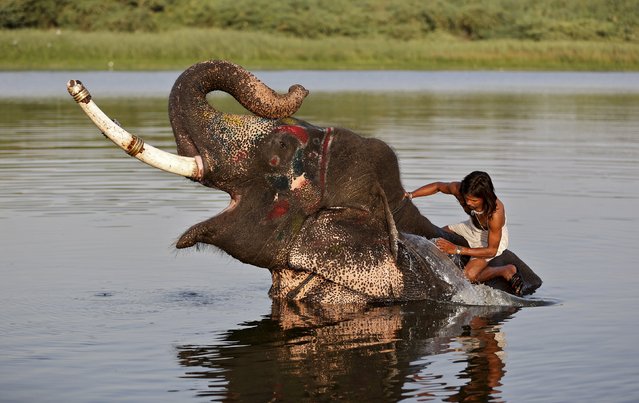
A mahout splashes water on his elephant in the river Sabarmati on a hot summer day in Ahmedabad, India, May 20, 2015. (Photo by Amit Dave/Reuters)

A mahout splashes water on his elephant in the river Sabarmati on a hot summer day in Ahmedabad, India, May 20, 2015. (Photo by Amit Dave/Reuters)
Details
21 May 2015 12:26:00
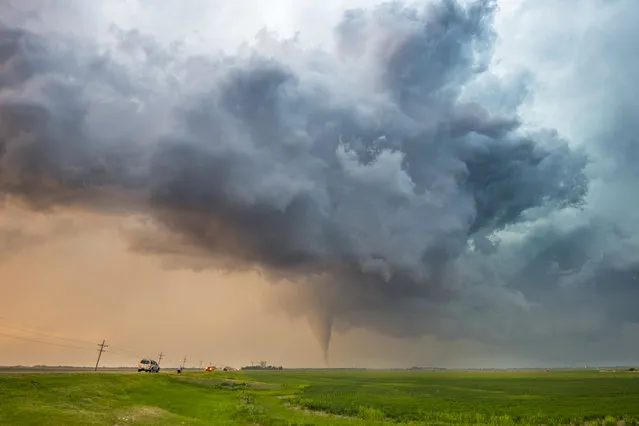
“The Sunsetter”. An EF-4 tornado rips through the open space of farmland near Rozel, Kansas. This tornado moves slowly but powerful towards the setting sun an gets its beautiful color right before sunset. Storm Chasers are spotting on the left side. Photo location: Rozel, Kansas. (Photo and caption by Dennis Oswald/National Geographic Photo Contest)

“The Sunsetter”. An EF-4 tornado rips through the open space of farmland near Rozel, Kansas. This tornado moves slowly but powerful towards the setting sun an gets its beautiful color right before sunset. Storm Chasers are spotting on the left side. Photo location: Rozel, Kansas. (Photo and caption by Dennis Oswald/National Geographic Photo Contest)

ATTENTION! All pictures are presented in high resolution. To see Hi-Res images – just TWICE click on any picture. In other words, click small picture – opens the BIG picture. Click BIG picture – opens VERY BIG picture.

Details
01 Dec 2013 11:03:00
An employee feeds a one-week-old coati cub with a bottle of milk at the Royev Ruchey zoo in the suburbs of Krasnoyarsk, Siberia, October 10, 2014. The mother of three cubs refused to nurse them, according to zoo employees. (Photo by Ilya Naymushin/Reuters)

An employee feeds a one-week-old coati cub with a bottle of milk at the Royev Ruchey zoo in the suburbs of Krasnoyarsk, Siberia, October 10, 2014. The mother of three cubs refused to nurse them, according to zoo employees. (Photo by Ilya Naymushin/Reuters)
Details
11 Oct 2014 14:18:00
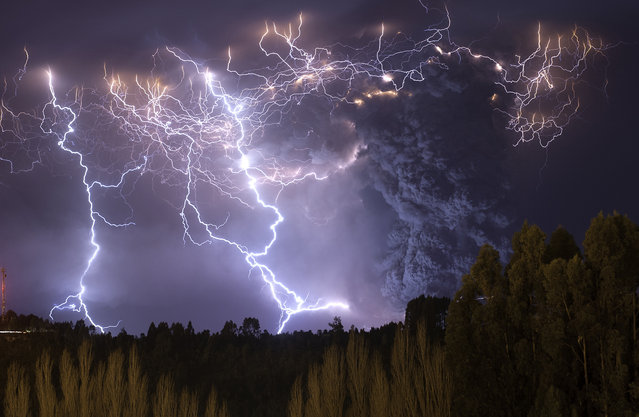
The eruption of Cordon Caulle began on June 4, 2011, located in the Region of Los Rios in Chile. For about 12 months, people and animals became accustomed to living with the daily fall of ash, which also caused problems in the air traffic in South America. The explosions and lightning during first days of the eruption could be seen from hundreds of miles around. This photograph was taken on the second night of eruption from the town of Lago Ranco. (Photo and caption by Francisco Negroni/National Geographic Traveler Photo Contest)

The eruption of Cordon Caulle began on June 4, 2011, located in the Region of Los Rios in Chile. For about 12 months, people and animals became accustomed to living with the daily fall of ash, which also caused problems in the air traffic in South America. The explosions and lightning during first days of the eruption could be seen from hundreds of miles around. This photograph was taken on the second night of eruption from the town of Lago Ranco. (Photo and caption by Francisco Negroni/National Geographic Traveler Photo Contest)

ATTENTION! All pictures are presented in high resolution. To see Hi-Res images – just TWICE click on any picture. In other words, click small picture – opens the BIG picture. Click BIG picture – opens VERY BIG picture.
Details
23 Jun 2013 11:24:00