Loading...
Done
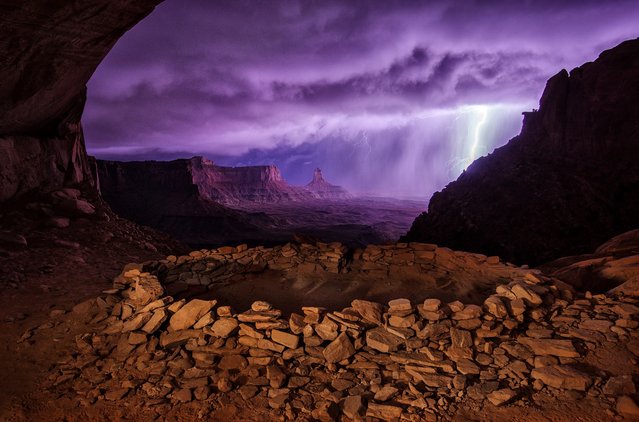
Second Place Winner: “Thunderstorm at False Kiva”. I hiked out to these ruins at night hoping to photograph them with the Milky Way, but instead a thunderstorm rolled through, creating this dramatic image. – Max Seigal. (Photo and caption by Max Seigal/National Geographic Traveler Photo Contest)

Second Place Winner: “Thunderstorm at False Kiva”. I hiked out to these ruins at night hoping to photograph them with the Milky Way, but instead a thunderstorm rolled through, creating this dramatic image. – Max Seigal. National Geographic Traveler Director of Photography Dan Westergren, one of this year's judges, shares his thoughts on the second place winner: “This photo combines two different scenes into one: the small kiva in a cliff dwelling and the grand vista of Canyonlands National Park across the valley. I really like the two different color palettes – warm inside and purple outside. This two-for-one scene was caused by the lightning storm outside the dwelling, which lit up the landscape like it was a huge electronic flash. Looking at this picture I can imagine what a wonderful sight it must have been for the ancient people who lived here. It doesn't seem too amazing now in our modern world, but might have been mind-blowing for the prehistoric residents”. Location: Utah. (Photo and caption by Max Seigal/National Geographic Traveler Photo Contest)
Details
02 Aug 2013 06:16:00
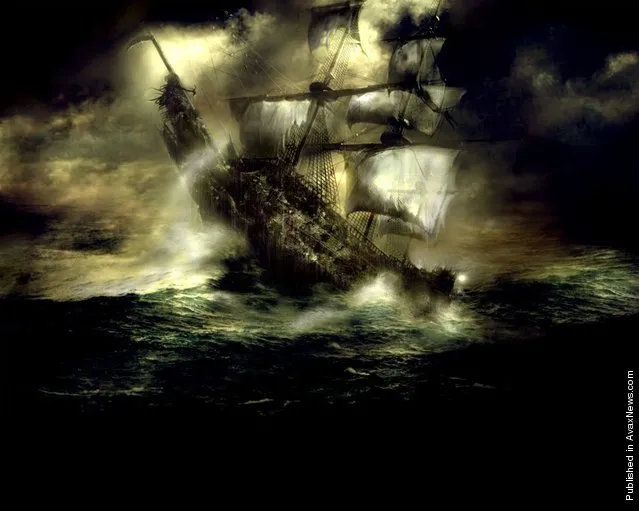
Ocean voyage

Do you think that history is a science? Well, not exactly. First, and foremost, history is the state's “legend of wars”, it’s official regalia. Of course, public historians are not interested in scientific truth – quite the opposite. In this respect, any attempt to present a state’s history as altruistic and benevolent as possible is welcomed and encouraged – as opposed to any revisionism attempts that may be more accurate. In this matter, Chinese have surpassed us all – they revised in highly creative manner (but rather shamelessly) the technology already invented by Europeans, a process that resulted in oldest state on the planet. Here is an interesting paradox: ask any sinologist about the Middle Kingdom during second century B.C., and he will describe it to you in such a vivid manner as if he has been living there all his life – but as soon as you will ask him to describe Chinese history in the 19-20th centuries… let's say, his eagerness will be greatly diminished. However, we will discuss China in a different article, and in the meantime we will try to understand how exactly historic “legend of wars” is formed and functions – based on a specific and well-known example. A great example is Ferdinand Magellan's first voyage around the world.
Details
14 Nov 2011 09:11:00
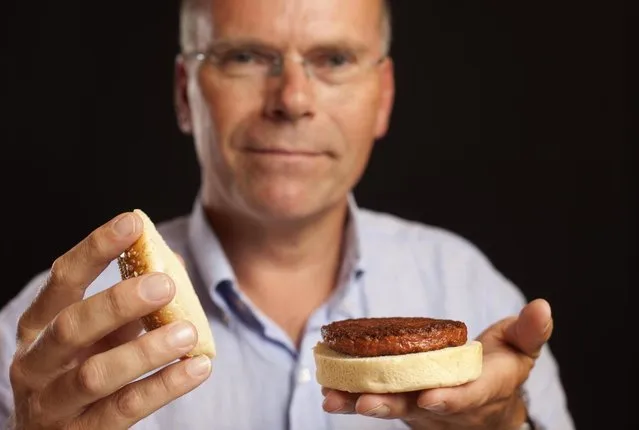
In this handout image provided by Ogilvy, a burger made from cultured beef, which has been developed by Professor Mark Post of Maastricht University in the Netherlands (pictured) is shown to the media during a press conference on August 5, 2013 in London, England. Cultured Beef could help solve the coming food crisis and combat climate change with commercial production of Cultured Beef beginning within ten to twenty years. (Photo by David Parry via Getty Images)

In this handout image provided by Ogilvy, a burger made from cultured beef, which has been developed by Professor Mark Post of Maastricht University in the Netherlands (pictured) is shown to the media during a press conference on August 5, 2013 in London, England. The in-vitro burger, cultured from cattle stem cells, the first example of what its creator says could provide an answer to global food shortages and help combat climate change, was fried in a pan and tasted by two volunteers. The burger is the result of years of research by Dutch scientist Mark Post, a vascular biologist at the University of Maastricht, who is working to show how meat grown in petri dishes might one day be a true alternative to meat from livestock.The meat in the burger has been made by knitting together around 20,000 strands of protein that has been cultured from cattle stem cells in Post's lab. (Photo by David Parry)
Details
06 Aug 2013 08:48:00
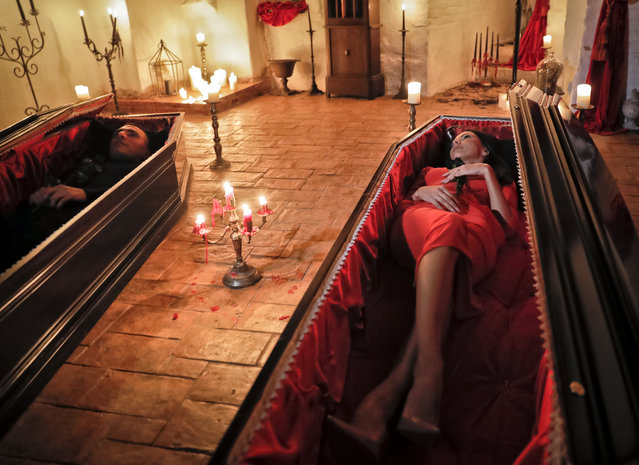
Tami Varma, right, and her brother Robin, the grandchildren of Devendra Varma, a scholar of English gothic tales and an expert in vampire lore, pose in coffins at the Bran Castle, in Bran, Romania, Monday, October 31, 2016. A Canadian brother and sister are passing Halloween night curled up in red velvet coffins in the Transylvanian castle that inspired the Dracula legend, the first time in 70 years anyone has spent the night in the gothic fortress, after they bested 88,000 people who entered a competition hosted by Airbnb to get the chance to dine and sleep at the castle in Romania. A portrait of medieval prince Vlad the Impaler is placed on the wall. (Photo by Vadim Ghirda/AP Photo)

Tami Varma, right, and her brother Robin, the grandchildren of Devendra Varma, a scholar of English gothic tales and an expert in vampire lore, pose in coffins at the Bran Castle, in Bran, Romania, Monday, October 31, 2016. A Canadian brother and sister are passing Halloween night curled up in red velvet coffins in the Transylvanian castle that inspired the Dracula legend, the first time in 70 years anyone has spent the night in the gothic fortress, after they bested 88,000 people who entered a competition hosted by Airbnb to get the chance to dine and sleep at the castle in Romania. A portrait of medieval prince Vlad the Impaler is placed on the wall. (Photo by Vadim Ghirda/AP Photo)
Details
01 Nov 2016 12:32:00
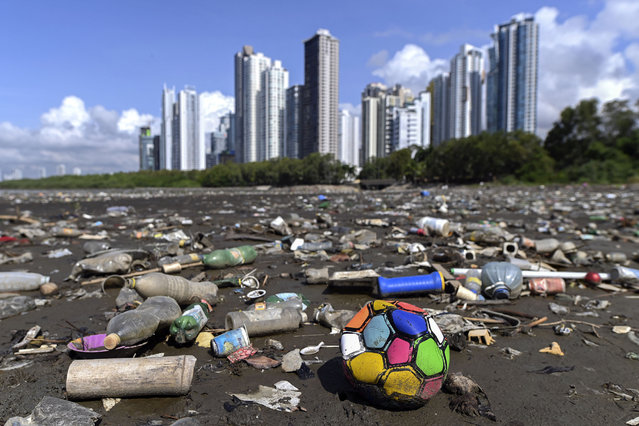
Garbage, including plastic waste, is seen at the beach of Costa del Este, in Panama City, on April 19, 2021. Every two weeks, Marine Biology students descend about five meters in the sea to take care of a coral nursery of the staghorn species (Acropora cervicornis) in Portobelo, Panama, with which they aim to restore reefs damaged by climate change and pollution, as part of the Reef2Reef project. (Photo by Luis Acosta/AFP Photo)

Garbage, including plastic waste, is seen at the beach of Costa del Este, in Panama City, on April 19, 2021. Every two weeks, Marine Biology students descend about five meters in the sea to take care of a coral nursery of the staghorn species (Acropora cervicornis) in Portobelo, Panama, with which they aim to restore reefs damaged by climate change and pollution, as part of the Reef2Reef project. (Photo by Luis Acosta/AFP Photo)
Details
21 Jun 2021 07:30:00
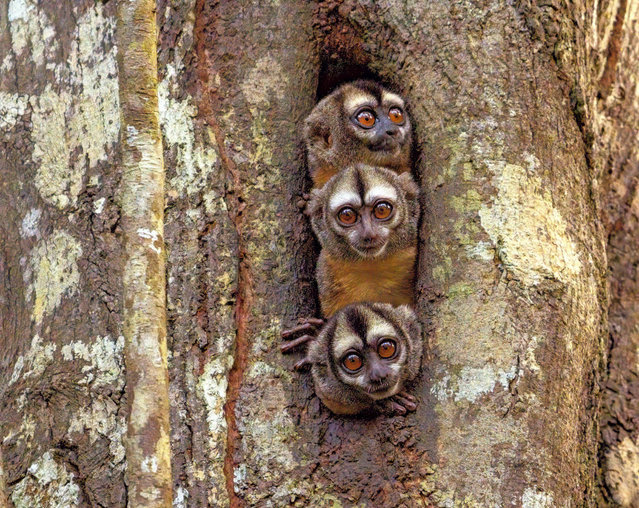
A curious trio of owl monkeys peep out of a tree hollow on the Marañón River near the city of Nauta, Peru in April 2024. (Photo by James Cai/Solent News)

A curious trio of owl monkeys peep out of a tree hollow on the Marañón River near the city of Nauta, Peru in April 2024. (Photo by James Cai/Solent News)
Details
05 May 2024 04:29:00
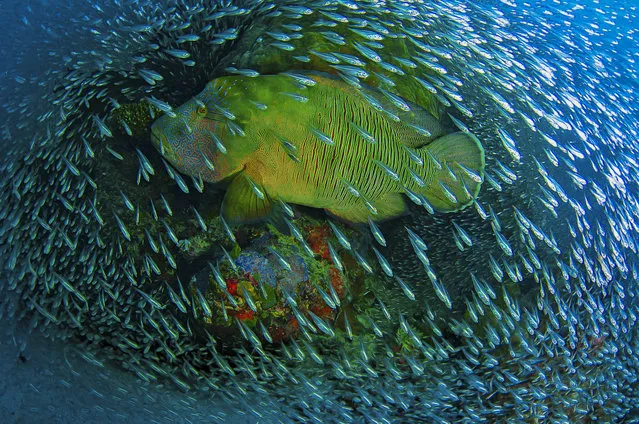
“7584 Fish”. On a windy day right after a Cyclone passed the far northern Great Barrier Reef i took some friends out to the reef. Never before i saw that many glass fish on this particular coral “bommie”. Just when i setup my camera, this Napoleon Wrasse swam right through the school of fish building a living frame. Photo location: Cairns, Great Barrier Reef, Flynn Reef, Australia. (Photo and caption by Christian Miller/National Geographic Photo Contest)

“7584 Fish”. On a windy day right after a Cyclone passed the far northern Great Barrier Reef i took some friends out to the reef. Never before i saw that many glass fish on this particular coral “bommie”. Just when i setup my camera, this Napoleon Wrasse swam right through the school of fish building a living frame. Photo location: Cairns, Great Barrier Reef, Flynn Reef, Australia. (Photo and caption by Christian Miller/National Geographic Photo Contest)
Details
07 Oct 2014 11:48:00
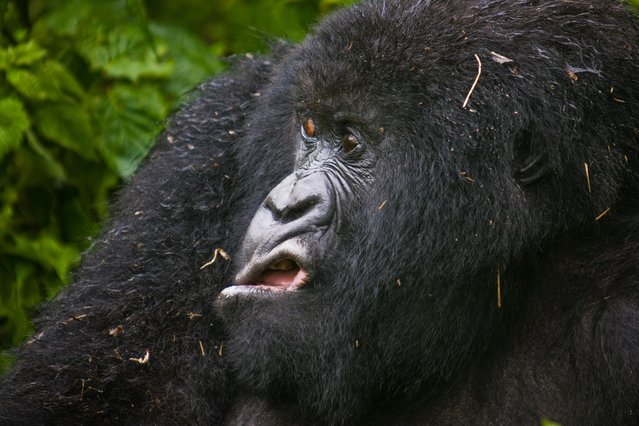
Mountains Gorilla is making grimaces, as he came out of the bush after the rain, in Virunga National Park, Rwanda. (Photo by Josef Friedhuber/Comedy Wildlife Photography Awards/Barcroft Media)

Prepare yourself for some rib-tickling laughter because the Comedy Wildlife Awards has announced its finalists. Founded by Tanzania-based photographers Paul Joynson-Hicks MBE and Tom Sullam, the aim of the awards is to put a spotlight on wildlife conservation efforts while simultaneously injecting some humour into the world of wildlife photography. Here: Mountains Gorilla is making grimaces, as he came out of the bush after the rain, in Virunga National Park, Rwanda. (Photo by Josef Friedhuber/Comedy Wildlife Photography Awards/Barcroft Media)
Details
07 Nov 2017 07:57:00