Loading...
Done
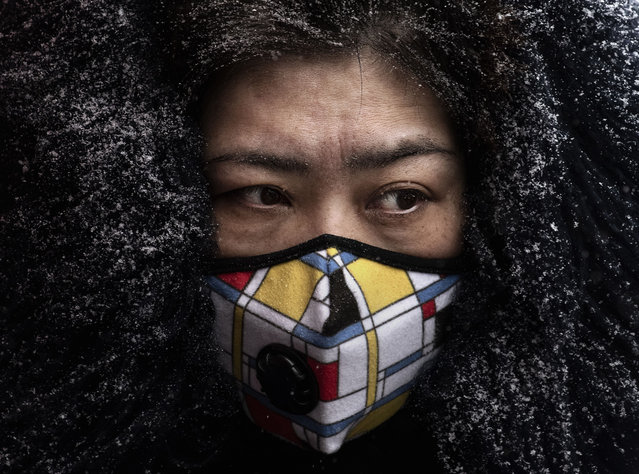
A Chinese woman wears a protective mask as she shops in a market on February 6, 2020 in Beijing, China. The number of cases of a deadly new coronavirus rose to more than 28000 in mainland China Thursday, days after the World Health Organization (WHO) declared the outbreak a global public health emergency. China continued to lock down the city of Wuhan in an effort to contain the spread of the pneumonia-like disease which medicals experts have confirmed can be passed from human to human. In an unprecedented move, Chinese authorities have put travel restrictions on the city which is the epicenter of the virus and municipalities in other parts of the country affecting tens of millions of people. The number of those who have died from the virus in China climbed to over 564 on Thursday, mostly in Hubei province, and cases have been reported in other countries including the United States, Canada, Australia, Japan, South Korea, India, the United Kingdom, Germany, France and several others. The World Health Organization has warned all governments to be on alert and screening has been stepped up at airports around the world. Some countries, including the United States, have put restrictions on Chinese travelers entering and advised their citizens against travel to China. (Photo by Kevin Frayer/Getty Images)

A Chinese woman wears a protective mask as she shops in a market on February 6, 2020 in Beijing, China. The number of cases of a deadly new coronavirus rose to more than 28000 in mainland China Thursday, days after the World Health Organization (WHO) declared the outbreak a global public health emergency. (Photo by Kevin Frayer/Getty Images)
Details
09 Feb 2020 00:07:00
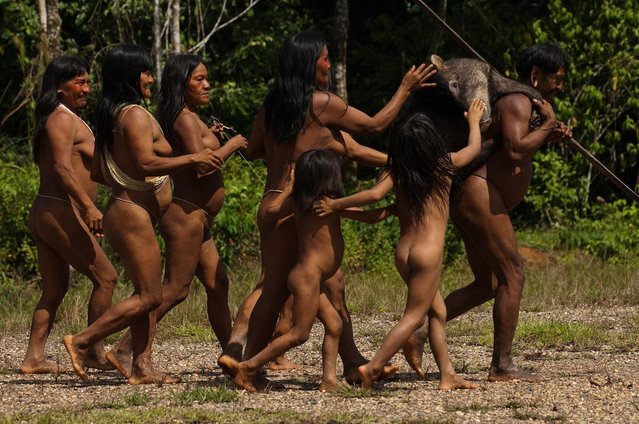
Spectacular images offering insight into the lives of the Huaorani people in the Ecuadorian Amazon have been revealed showing how they use traditional methods to hunt monkeys for food. The stunning pictures were taken by conservation photographer Pete Oxford from Torquay, Devon in the Ecuadorian Amazon. “The Huaorani Indians are a forest people highly in tune with their environment. Many are now totally acculturated since the 1950s by missionaries”, said Pete. “Today they face radical change to their culture to the proximity of oil exploration within their territory and the Yasuni National Park and Biosphere Reserve, they are vastly changed. Some still live very traditionally and for this shoot, through my Huaorani friend, a direct relative of those photographed he wanted to depict them as close to their original culture as possible. They still largely hunt with blow pipes and spears eating a lot of monkeys and peccaries”. The Huaorani are also known as the Waorani, Waodani or the Waos and are native Amerindians. Their lands are located between the Curaray and Napo rivers and speak the Huaorani language. Pete says that during his visit he was welcomed into the group and hopes that ancient cultures can be saved. Here: The tribe were seen celebrating after a hunter returned to camp with a wild pig. (Photo by Pete Oxford/Mediadrumworld.com)

Spectacular images offering insight into the lives of the Huaorani people in the Ecuadorian Amazon have been revealed showing how they use traditional methods to hunt monkeys for food. The stunning pictures were taken by conservation photographer Pete Oxford from Torquay, Devon in the Ecuadorian Amazon. Here: The tribe were seen celebrating after a hunter returned to camp with a wild pig. (Photo by Pete Oxford/Mediadrumworld.com)
Details
20 Jan 2017 07:58:00
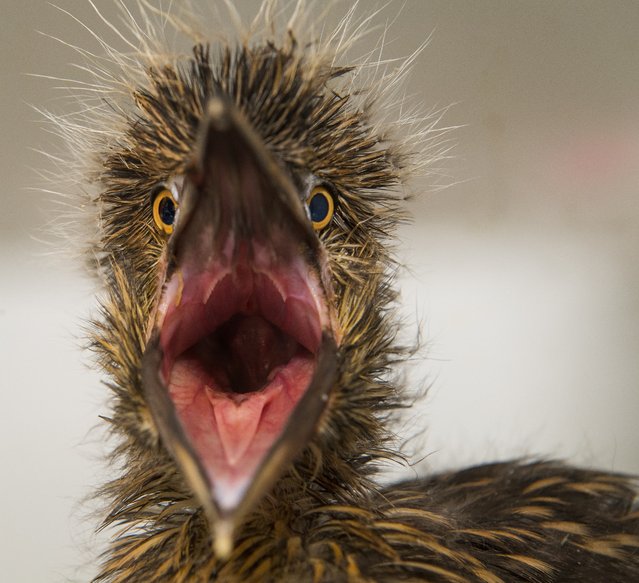
A baby Black-crowned Night Heron squawks in its incubator while being cared for at City Wildlife rescue and rehabilitation center in Washington, DC on May 31, 2017. The heron is one of several that have been brought to CW by the staff at The National Zoo over the past few years. The heron is a native bird and has made an established rookery inside the zoo grounds over a hundred years ago.  Every year at this time, some of the chicks get pushed or fall out of the nest and require human care.  Because the birds are native and not part of the Smithsonian collection, they partnered with CW to rehabilitate the herons for re-release back to the flock inside Zoo. They're reintroduced back to their flock so that they can migrate together in the Fall. The Black-crowned heron usually migrates from the DC area down to southeast North Carolina, some going as far as Jacksonville, FL in winter. The Black-crowned heron is the species of greatest conservation need in the District of Columbia because their numbers are in such rapid decline due to habitat loss. (Photo Linda Davidson/The Washington Post)

A baby Black-crowned Night Heron squawks in its incubator while being cared for at City Wildlife rescue and rehabilitation center in Washington, DC on May 31, 2017. The heron is one of several that have been brought to CW by the staff at The National Zoo over the past few years. (Photo Linda Davidson/The Washington Post)
Details
04 Jun 2017 08:04:00
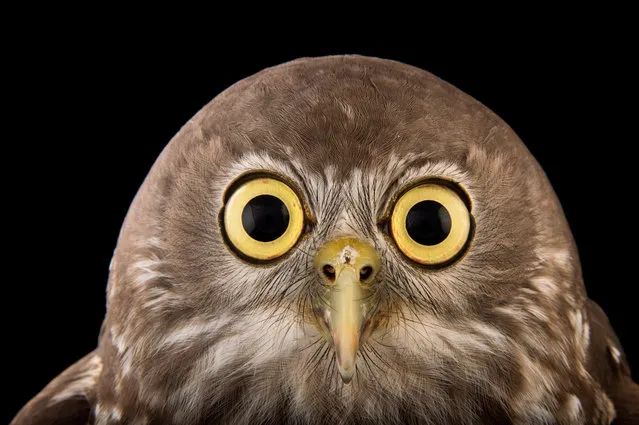
The National Geographic Photo Ark is a travelling exhibition of photographer Joel Sartore’s quest to create a photo archive of biodiversity around the world. So far, Sartore has captured studio portraits of more than 6,000 species – a number that he hopes to double. On 1 July, the ark will open at Melbourne zoo – the first time it has been exhibited in the southern hemisphere. More than 50 portraits will be on display, including many of Australian endangered animals being protected by programs at the zoo itself. These captions have been edited from text supplied by Melbourne zoo. Here: Barking owl. So-named because its call sounds like a barking dog, these birds are native to Australia, Indonesia and Papua New Guinea. In Victoria they are listed as an endangered species, and in 2003 there were estimated to be fewer than 50 breeding pairs. The main threat to the species in Victoria is loss of habitat, especially large trees with hollows in which they can nest and on which many of their prey depend. Apart from a bark, they may utter a chilling scream when they feel threatened. (Photo by Joel Sartore/National Geographic Photo Ark/The Guardian)

The National Geographic Photo Ark is a travelling exhibition of photographer Joel Sartore’s quest to create a photo archive of biodiversity around the world. So far, Sartore has captured studio portraits of more than 6,000 species – a number that he hopes to double. On 1 July, the ark will open at Melbourne zoo – the first time it has been exhibited in the southern hemisphere. More than 50 portraits will be on display, including many of Australian endangered animals being protected by programs at the zoo itself. These captions have been edited from text supplied by Melbourne zoo. Here: Barking owl. (Photo by Joel Sartore/National Geographic Photo Ark/The Guardian)
Details
01 Jul 2017 07:45:00
Apple CEO Tim Cook discusses the new iPhone 6 and iPhone 6 plus on Tuesday, September 9, 2014, in Cupertino, Calif. The iPhone 6 will have a screen measuring 4.7 inches, while the iPhone 6 Plus will be 5.5 inches. (Photo by Marcio Jose Sanchez/AP Photo)

Apple CEO Tim Cook discusses the new iPhone 6 and iPhone 6 plus on Tuesday, September 9, 2014, in Cupertino, Calif. The iPhone 6 will have a screen measuring 4.7 inches, while the iPhone 6 Plus will be 5.5 inches. (Photo by Marcio Jose Sanchez/AP Photo)
Details
10 Sep 2014 11:51:00
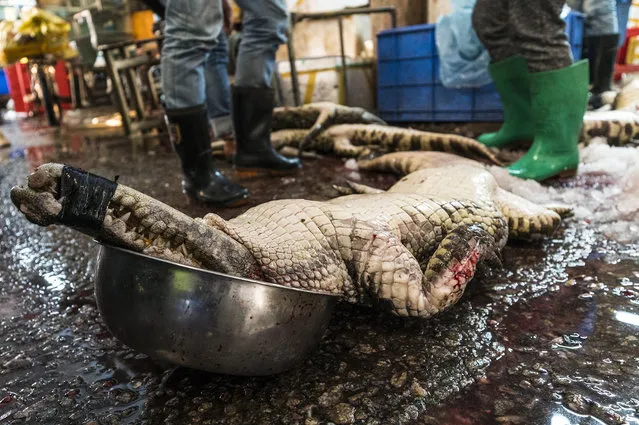
A dead crocodile is seen on Huangsha Seafood Market in Guangzhou, Guandong Province, China, 22 January 2018. Tsukiji Market of China or Huangsha Seafood Market is biggest one in Southern China and one of the biggest in China, as there are literally hundreds of different varieties of fish and seafood scattered throughout the market. Since the proximity of the fish market is so close to the Zhujiang River, it's quite easy for the large fishing vessels and fishermen to unload their fresh catch right at the market, which ensures that the fish and seafood remain fresh. Fish and other seafood are coming there from all around the globe. Seafood Market is full of different kinds of live fish, live shellfish, and live seafood on display in crystal clear tanks and it's common to see 5-star chefs, retailers and expats to source for fresh and high-quality seafood supplies for reasonable prices. While it is a wholesale fish market, since many Guangzhou restaurants and businesses come to purchase their seafood here, the public is welcome to come and even purchase. Many local Chinese have the vendors slice up fresh salmon fillets to take home or carry seafood into one of the nearby specialty restaurants, where they will cook if for them and serve it with vegetables and other side dishes of their choice. One of the biggest attractions for both, tourists and buyers, on market are crocodiles, which are brought there alive in wooden cases with taped jaws so they can?t accidentally bite. They are from crocodile farms from Guangdong, China and from Vietnam. Crocodile meat is popular in most Asian countries and it is consider as delicate one. Crocodiles weight from 10 to 25 kg and bigger ones are about 2 years old. They cost about 70 RMB (8.90 EURO) when bout as whole, or if you buy as parts most expensive and appreciated parts are paws 120 RMB (15.26 EURO) per kg, and tail 100 RMB (12.72 EURO) per kg. (Photo by Aleksandar Plavevski/EPA/EFE)

A dead crocodile is seen on Huangsha Seafood Market in Guangzhou, Guandong Province, China, 22 January 2018. Tsukiji Market of China or Huangsha Seafood Market is biggest one in Southern China and one of the biggest in China, as there are literally hundreds of different varieties of fish and seafood scattered throughout the market. (Photo by Aleksandar Plavevski/EPA/EFE)
Details
17 Apr 2020 00:05:00
A box of 36 coloured pencils as photographed in a studio with an illustrative price tag of $115 (US dollars), equivalent to the Bs. 725 (bolivars) that it costs on average to purchase in Caracas at the official exchange rate of 6.3 bolivars per dollar, in Caracas September 29, 2014. Venezuela's economic crisis has led to some shocking and surreal price distortions that hit people's buying power dramatically. (Photo by Carlos Garcia Rawlins/Reuters)

A box of 36 coloured pencils as photographed in a studio with an illustrative price tag of $115 (US dollars), equivalent to the Bs. 725 (bolivars) that it costs on average to purchase in Caracas at the official exchange rate of 6.3 bolivars per dollar, in Caracas September 29, 2014. Venezuela's economic crisis has led to some shocking and surreal price distortions that hit people's buying power dramatically. (Photo by Carlos Garcia Rawlins/Reuters)
Details
05 Oct 2014 11:25:00
ESA astronaut Tim Peake posted this stunning image on his social media channels, commenting: “Station passed through magnificent aurora Australis last night”. Tim is set to return to Earth on 18 June 2016, bringing his six-month Principia mission to the ISS to an end. During his stay he performed more than 30 scientific experiments for ESA and taking part in numerous others from ESA's international partners. ESA and the UK Space Agency have partnered to develop many exciting educational activities around the Principia mission, aimed at sparking the interest of young children in science and space. (Photo by Tim Peake/ESA/NASA)

ESA astronaut Tim Peake posted this stunning image on his social media channels, commenting: “Station passed through magnificent aurora Australis last night”. Tim is set to return to Earth on 18 June 2016, bringing his six-month Principia mission to the ISS to an end. During his stay he performed more than 30 scientific experiments for ESA and taking part in numerous others from ESA's international partners. ESA and the UK Space Agency have partnered to develop many exciting educational activities around the Principia mission, aimed at sparking the interest of young children in science and space. (Photo by Tim Peake/ESA/NASA)
Details
31 Dec 2016 10:21:00