Loading...
Done
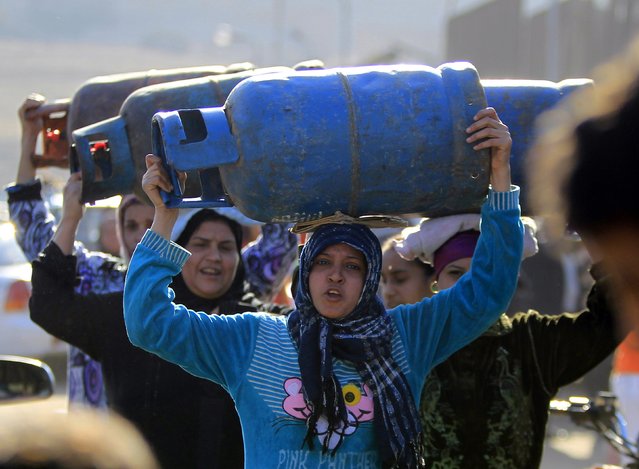
Women carry gas cylinders to fill them at a distribution point in Cairo January 19, 2015. Egypt is going through its worst energy crisis in decades and is seeking fresh sources of natural gas, which powers most of its homes and factories. (Photo by Mohamed Abd El Ghany/Reuters)

Women carry gas cylinders to fill them at a distribution point in Cairo January 19, 2015. Egypt is going through its worst energy crisis in decades and is seeking fresh sources of natural gas, which powers most of its homes and factories. (Photo by Mohamed Abd El Ghany/Reuters)
Details
20 Jan 2015 13:21:00
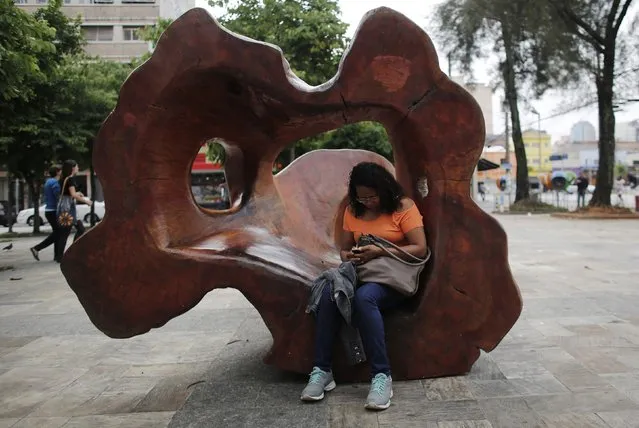
A resident types a text message on her mobile phone, as she sits on a bench made from a tree, which is a creation by Brazilian artist Hugo Franca at Largo da Batata square in Sao Paulo March 17, 2015. (Photo by Nacho Doce/Reuters)

A resident types a text message on her mobile phone, as she sits on a bench made from a tree, which is a creation by Brazilian artist Hugo Franca at Largo da Batata square in Sao Paulo March 17, 2015. Franca, a designer from Sao Paulo is working with the city to make use of fallen trees to turn them into sculpture furniture to line the city's parks, streets and plazas. Brazil's largest city was slammed by several strong storms this rainy season that brought with them heavy rain, lightning and winds as high as 90 kilometres (55 miles) per hour. (Photo by Nacho Doce/Reuters)
Details
20 Mar 2015 11:34:00
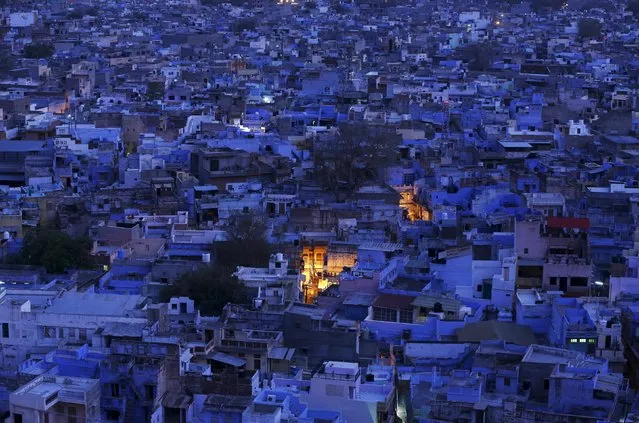
A general view of the residential area is pictured during dusk at Jodhpur in Rajasthan, April 5, 2015. Jodhpur, also known as the blue city in the desert Indian state of Rajasthan, which residents say originally, was used to show where the highest caste of priestly Hindus live, who wanted to set them apart from the rest of the population. Later the rest of the population followed suit. Another reason for the city to be blue is to keep the buildings cool during the summers, local residents said. (Photo by Adnan Abidi/Reuters)

A general view of the residential area is pictured during dusk at Jodhpur in Rajasthan, April 5, 2015. Jodhpur, also known as the blue city in the desert Indian state of Rajasthan, which residents say originally, was used to show where the highest caste of priestly Hindus live, who wanted to set them apart from the rest of the population. Later the rest of the population followed suit. Another reason for the city to be blue is to keep the buildings cool during the summers, local residents said. (Photo by Adnan Abidi/Reuters)
Details
12 Apr 2015 08:27:00
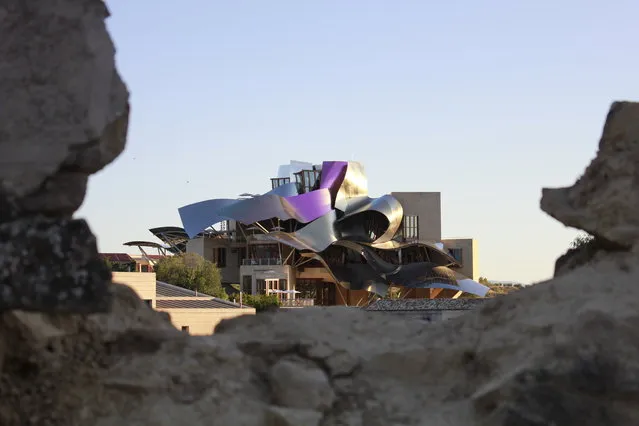
Hotel Marques de Riscal, A Luxury Collection Hotel

Since its unveiling in 2006 this masterpiece created by Frank Gehry to house the Hotel Marqués de Riscal has become a highly sought after contemporary, luxury retreat. Design, art, gastronomy, wine and the lush landscape all combine to create a memorable sojourn.
Details
11 Sep 2015 10:34:00
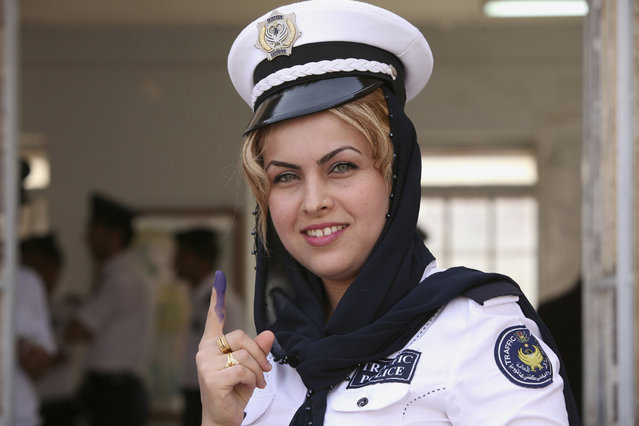
A traffic policewoman shows her ink-stained fingers after casting her ballot at a polling station, during early voting for the parliamentary election in the northern Iraqi province of Dohuk, April 28, 2014. Iraq will be holding its national elections on April 30. (Photo by Ari Jala/Reuters)

A traffic policewoman shows her ink-stained fingers after casting her ballot at a polling station, during early voting for the parliamentary election in the northern Iraqi province of Dohuk, April 28, 2014. Iraq will be holding its national elections on April 30. (Photo by Ari Jala/Reuters)
Details
29 Apr 2014 09:22:00
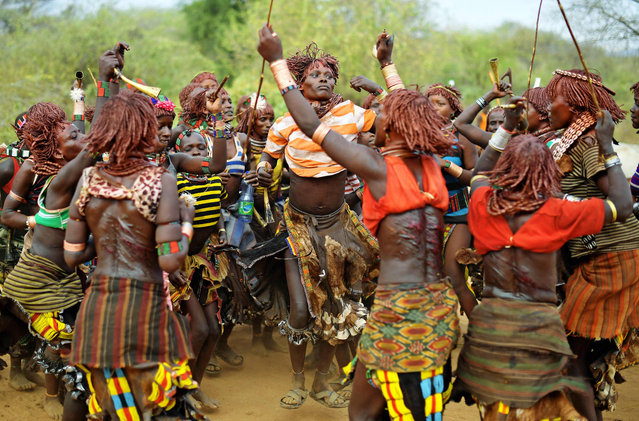
Hamar women dance before a bull jumping ceremony in Ethiopia's southern Omo Valley region near Turmi on September 19, 2016. The Hamar are a Nilotic ethnic group in Ethiopia. The construction of the Gibe III dam, the third largest hydroelectric plant in Africa, and large areas of very “thirsty” cotton and sugar plantations and factories along the Omo river are impacting heavily on the lives of tribes living in the Omo Valley who depend on the river for their survival and way of life. Human rights groups fear for the future of the tribes if they are forced to scatter, give up traditional ways through loss of land or ability to keep cattle as globalisation and development increases. (Photo by Carl De Souza/AFP Photo)

Hamar women dance before a bull jumping ceremony in Ethiopia's southern Omo Valley region near Turmi on September 19, 2016. The Hamar are a Nilotic ethnic group in Ethiopia. The construction of the Gibe III dam, the third largest hydroelectric plant in Africa, and large areas of very “thirsty” cotton and sugar plantations and factories along the Omo river are impacting heavily on the lives of tribes living in the Omo Valley who depend on the river for their survival and way of life. (Photo by Carl De Souza/AFP Photo)
Details
02 Oct 2016 08:45:00
Swimmers in fancy costume take part in the New Year's Day swim at Saundersfoot in Wales, Britain, January 1, 2017. (Photo by Rebecca Naden/Reuters)

Swimmers in fancy costume take part in the New Year's Day swim at Saundersfoot in Wales, Britain, January 1, 2017. (Photo by Rebecca Naden/Reuters)
Details
02 Jan 2017 13:13:00
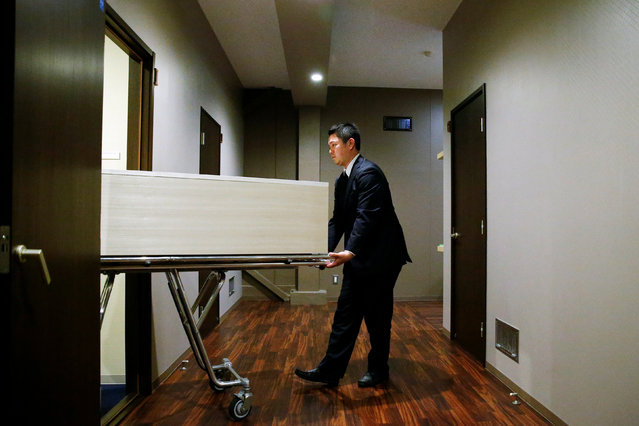
A staff member removes a coffin from a room of the “Corpse Hotel” in Kawasaki, Japan, April 20, 2016. (Photo by Thomas Peter/Reuters)

A staff member removes a coffin from a room of the “Corpse Hotel” in Kawasaki, Japan, April 20, 2016. Many so-called corpse hotels have emerged as a flourishing business in the city following a crunch in crematoriums. Families can rent a room in Sousou on a daily charge of 9,000 Japanese yen (£58, €74, $84) to keep the body of the deceased relative for up to four days until they find a crematorium. (Photo by Thomas Peter/Reuters)
Details
30 Apr 2016 09:46:00