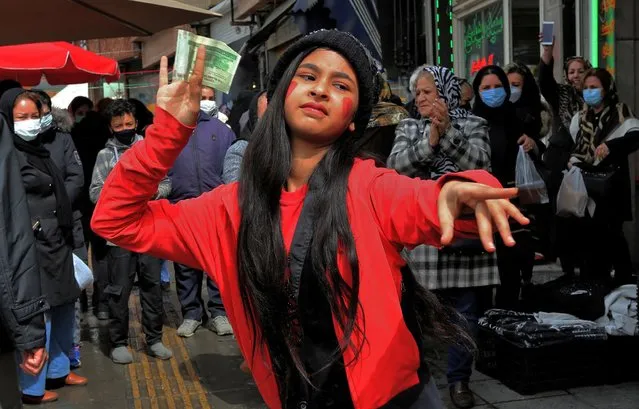
An Iranian girl wearing a costume inspired in the fictional folklore character Hajji Firuz, dances in Tehran on March 17, 2021 as Iranians prepare to celebrate Noruz, the Iranian New Year. Noruz, “new day” in Persian, is the New Year festivity celebrated in Iran as well as in Afghanistan and Kurdish regions in several countries. It begins with the spring equinox and symbolises rebirth. (Photo by Atta Kenare/AFP Photo)
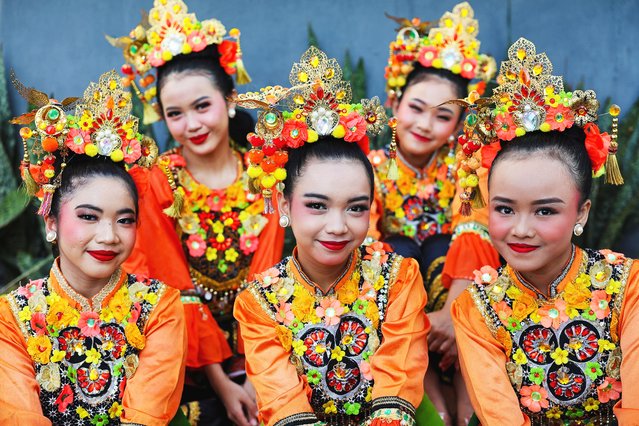
Dancers pose for a photo as they prepare during Festival Cilung or “Love the Environment” Festival, where boats made from recycled materials, mostly plastic bottles, sail on the Ciliwung River, one of the most polluted rivers in the world, to raise public awareness about river pollution, in Jakarta, Indonesia, on September 28, 2025. (Photo by Willy Kurniawan/Reuters)
Aleksandra Miroslaw, of Poland, competes during the speed portion of the women's sport climbing final at the 2020 Summer Olympics, Friday, August 6, 2021, in Tokyo, Japan. (Photo by Tsuyoshi Ueda/Pool Photo via AP Photo)
A woman receives a bouquet made of vegetables and flowers, priced at 238RMB, from a delivery staff of a florist outside an office building on Valentine's Day in Beijing, China, February 14, 2017. (Photo by Jason Lee/Reuters)
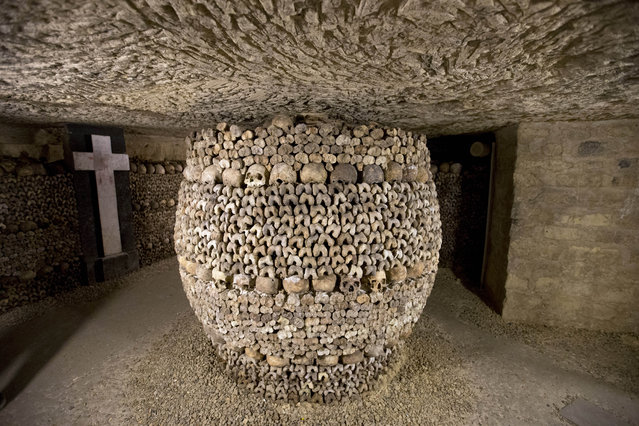
In this photo taken Tuesday, October 14, 2014, skulls and bones are stacked at the Catacombs in Paris, France. The subterranean tunnels, stretching 2 kilometers (1.24 miles), cradle the bones of some 6 million Parisians from centuries past and once gave refuge to smugglers. The site used to close at 5 p.m., but is now staying open until 8 p.m. The change is mainly aimed at allowing more people to visit and reducing long lines, since it can only hold a limited number of people at a time and visits can't be reserved in advance. (Photo by Francois Mori/AP Photo)
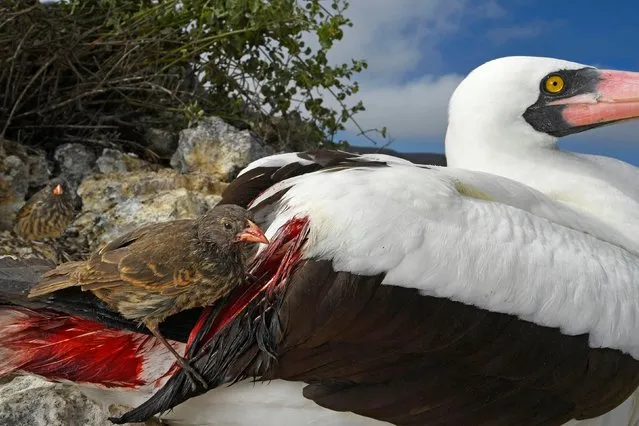
Bloodthirsty by Thomas P. Peschak, Germany/South Africa — winner, Behaviour: birds. When rations run short on Wolf Island, in the remote northern Galápagos, the sharp-beaked ground finches become vampires. Their sitting targets are Nazca boobies and other large birds. The finches rely on a scant diet of seeds and insects, which regularly dries up, so they drink blood to survive. ‘I’ve seen more than half a dozen finches drinking from a single Nazca booby,’ says Tom. Rather than leave their nests the boobies tolerate the vampires, and the blood loss doesn’t seem to cause permanent harm. (Photo by Thomas P. Peschak/2018 Wildlife Photographer of the Year)