Loading...
Done
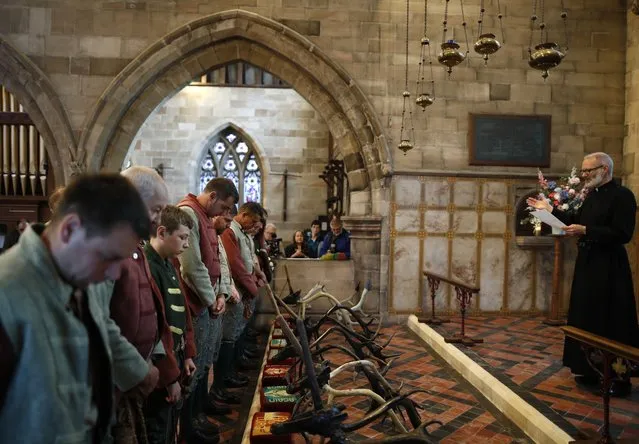
Reverend Simon Davis prays with the dancers before the Abbots Bromley Horn Dance in Abbots Bromley, Britain, September 12, 2016. The Abbots Bromley Horn Dance is an English folk dance dating back to the Middle Ages. The dance takes place each year in Abbots Bromley, a village in Staffordshire, England. The modern version of the dance involves reindeer antlers, a hobby horse, Maid Marian, and a Fool. According to some, the use of antlers suggests an Anglo-Saxon origin along with other native Anglo-Saxon traditions that have survived into modern times in various forms. (Photo by Darren Staples/Reuters)

Reverend Simon Davis prays with the dancers before the Abbots Bromley Horn Dance in Abbots Bromley, Britain, September 12, 2016. The Abbots Bromley Horn Dance is an English folk dance dating back to the Middle Ages. (Photo by Darren Staples/Reuters)
Details
13 Sep 2016 09:36:00
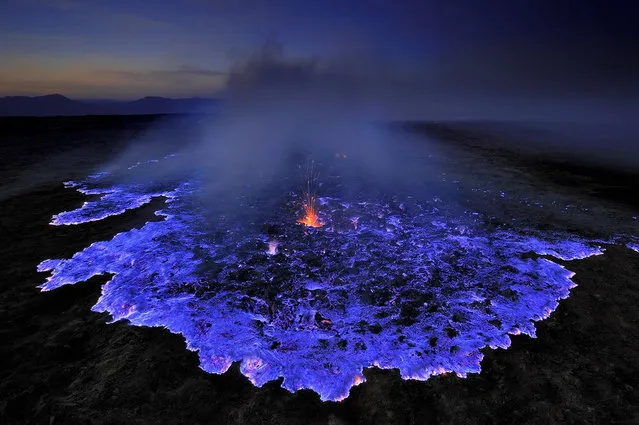
Blue Lava, Kawah Ijen Volcano, Indonesia

Located in East Java, Indonesia, Kawah Ijen is a volcano is home to the largest acidic crater lake in the world. What turns the waters of the lake in the 1 km caldera its beautiful turquoise color are the highly sulfuric gases emitted from the volcano underneath.
Details
07 May 2014 12:20:00
Christie Brinkley in 1985 and today. (Photo by Everett Collection/Splash)

Christie Brinkley in 1985 and today. (Photo by Everett Collection/Splash)
Details
10 Jul 2014 13:03:00
The Monkey and the Mask: Terrifying Portraits of Indonesia’s Street-Performing Macaques. (Photo by Perttu Saksa)

“A Kind of You” is a documentary work of an uncanny asian tradition, where monkeys are trained and dressed to act humanlike in order to ask money from the bypassers. Modern city culture has turned the old tradition in to eerie and haunting act of cruel street theatre where animals become something else, never able to reach our expectations”. – Perttu Saksa. (Photo by Perttu Saksa)

SEE ALSO: «Topeng Monyet: The Masked Monkeys Of Indonesia»


Details
06 Nov 2013 10:42:00
A women rides a motor bike on a street covered with volcanic ash from an eruption of Mount Kelud, in Solo, Indonesia, Friday, February 14, 2014. A major volcanic eruption in Indonesia blasted clouds of ash and debris 18 kilometers (12 miles) into the air on Friday, forcing authorities to close six airports, cancel flights elsewhere in Southeast Asia and evacuate more than 100,000 people from the mountain. (Photo by Hafidz Novalsyah/AP Photo)

A women rides a motor bike on a street covered with volcanic ash from an eruption of Mount Kelud, in Solo, Indonesia, Friday, February 14, 2014. A major volcanic eruption in Indonesia blasted clouds of ash and debris 18 kilometers (12 miles) into the air on Friday, forcing authorities to close six airports, cancel flights elsewhere in Southeast Asia and evacuate more than 100,000 people from the mountain. (Photo by Hafidz Novalsyah/AP Photo)
Details
15 Feb 2014 07:38:00
The Skeleton Coast, Namibia

The Skeleton Coast is the northern part of the Atlantic Ocean coast of Namibia and south of Angola from the Kunene River south to the Swakop River, although the name is sometimes used to describe the entire Namib Desert coast. The Bushmen of the Namibian interior called the region "The Land God Made in Anger", while Portuguese sailors once referred to it as "The Gates of Hell".
Details
23 Feb 2014 09:27:00
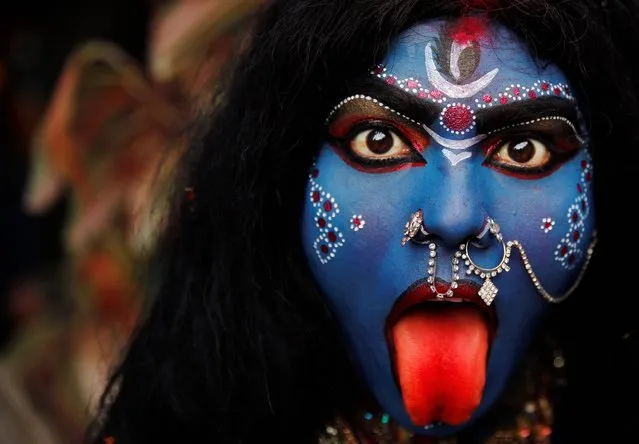
An Indian woman dressed as Hindu Goddess Kali participates in a “Shivratri” procession in Allahabad, India, Thursday, Feb. 27, 2014. “Shivaratri”, or the night of Shiva, is dedicated to the worship of Lord Shiva, the Hindu god of death and destruction. (Photo by Rajesh Kumar SinghAP Photo)

An Indian woman dressed as Hindu Goddess Kali participates in a “Shivratri” procession in Allahabad, India, Thursday, Feb. 27, 2014. “Shivaratri”, or the night of Shiva, is dedicated to the worship of Lord Shiva, the Hindu god of death and destruction. (Photo by Rajesh Kumar SinghAP Photo)
Details
01 Mar 2014 12:58:00
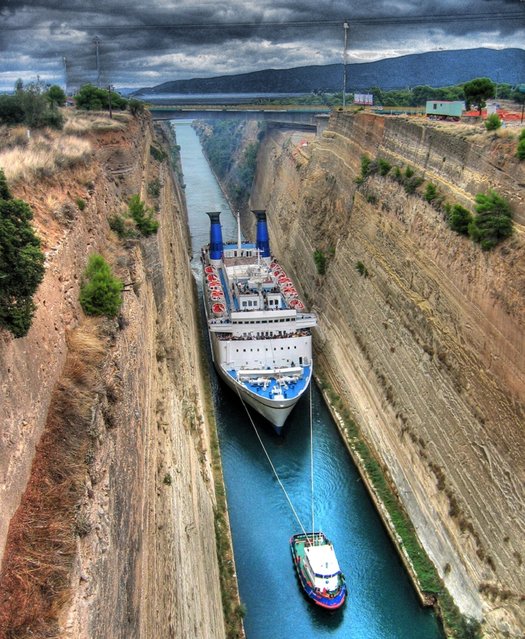
Corinth Canal

The Corinth Canal is a canal that connects the Gulf of Corinth with the Saronic Gulf in the Aegean Sea. It cuts through the narrow Isthmus of Corinth and separates the Peloponnesian peninsula from the Greek mainland, thus effectively making the former an island. The builders dug the canal through the Isthmus at sea level; no locks are employed. It is 6.4 kilometres (4.0 mi) in length and only 21.3 metres (70 ft) wide at its base, making it unpassable for most modern ships. It now has little economic importance.

Details
12 Mar 2013 12:21:00