Loading...
Done
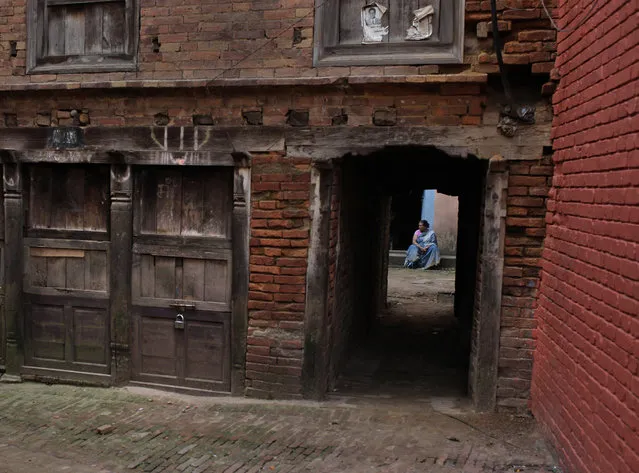
A Nepalese woman sits inside her house in an alley of Bhaktapur, 12 kilometers (7.5 miles) east of Kathmandu, Monday, May 25, 2015, one month after the deadly 7.8 magnitude earthquake hit Nepal. (Photo by Niranjan Shrestha/AP Photo)

A Nepalese woman sits inside her house in an alley of Bhaktapur, 12 kilometers (7.5 miles) east of Kathmandu, Monday, May 25, 2015, one month after the deadly 7.8 magnitude earthquake hit Nepal. Two powerful earthquakes devastated Nepal on April 25 and May 12, killing nearly 8,700 people and injuring 16,800 others. The quakes and aftershocks also triggered many landslides in the Himalayan nation, which boasts eight of the world's highest mountains gets about half a million tourists every year, with many coming to trek the Himalayan nation's scenic mountain trails. (Photo by Niranjan Shrestha/AP Photo)
Details
27 May 2015 00:06:00
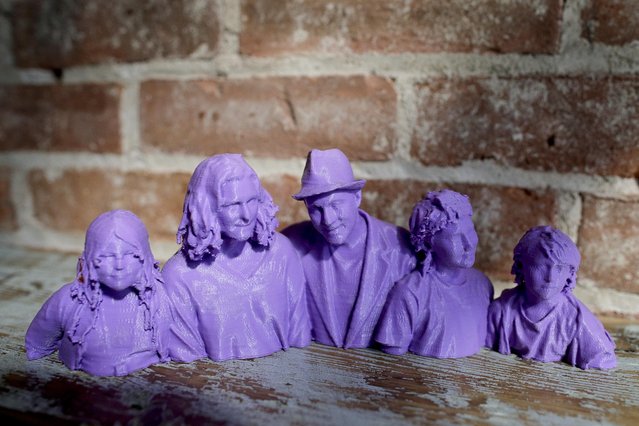
In this August 14, 2014 photo, a plastic bust statue of Kevin Micelli, center, and his family, made by a 3-D scanner and printer, sits on a shelf inside Micelli's coffee shop in New York. Micelli purchased the 3-D scanning and printing services at the Cubo toy store next door to his shop. With the old studio portrait supplanted by the selfie, 3-D scanning services provide a new reason for people to go to a store and stand stock-still in front of a camera. (Photo by Julie Jacobson/AP Photo)

“The advent of digital cameras and smartphones killed the traditional mall portrait studio, but 3-D printing has sparked a new trend. Overloaded with digital photos, statues may be moving in to fulfill our desire for portraits that stand out”. – Peter Svensson via The Associated Press. (Photo by Julie Jacobson/AP Photo)
Details
12 Oct 2014 12:28:00
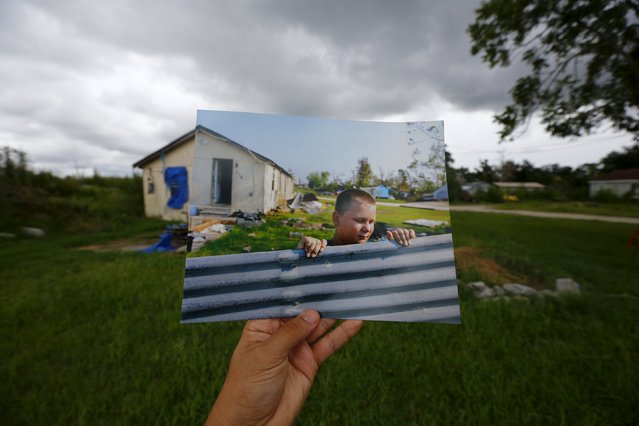
Photographer Carlos Barria holds a print of a photograph he took in 2005, as he matches it up at the same location 10 years on, in Lafitte, south of New Orleans, United States, August 16, 2015. The print shows Tyler Teal cleaning up his home, September 14, 2005, after Hurricane Katrina struck. (Photo by Carlos Barria/Reuters)

Photographer Carlos Barria holds a print of a photograph he took in 2005, as he matches it up at the same location 10 years on, in Lafitte, south of New Orleans, United States, August 16, 2015. The print shows Tyler Teal cleaning up his home, September 14, 2005, after Hurricane Katrina struck. In 2005, Hurricane Katrina triggered floods that inundated New Orleans and killed more than 1,500 people as storm waters overwhelmed levees and broke through floodwalls. (Photo by Carlos Barria/Reuters)
Details
23 Aug 2015 10:00:00
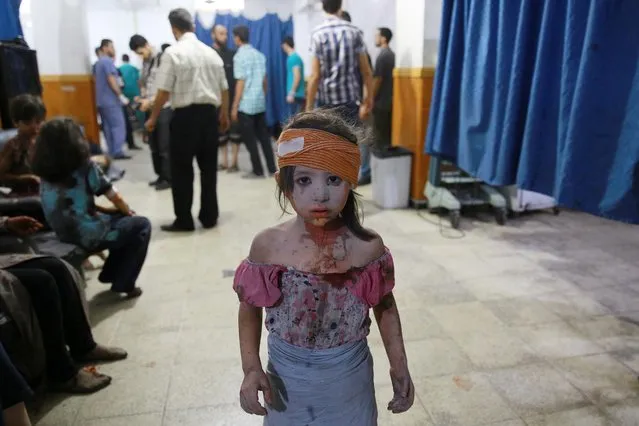
A wounded Syrian girl looks on at a make shift hospital in the rebel-held area of Douma, east of the capital Damascus, following shelling and air raids by Syrian government forces on August 22, 2015. (Photo by Abd Doumany/AFP Photo)

A wounded Syrian girl looks on at a make shift hospital in the rebel-held area of Douma, east of the capital Damascus, following shelling and air raids by Syrian government forces on August 22, 2015. At least 20 civilians and wounded or trapped 200 in Douma, a monitoring group said, just six days after regime air strikes killed more than 100 people and sparked international condemnation of one of the bloodiest government attacks in Syria's war. (Photo by Abd Doumany/AFP Photo)
Details
25 Aug 2015 10:52:00
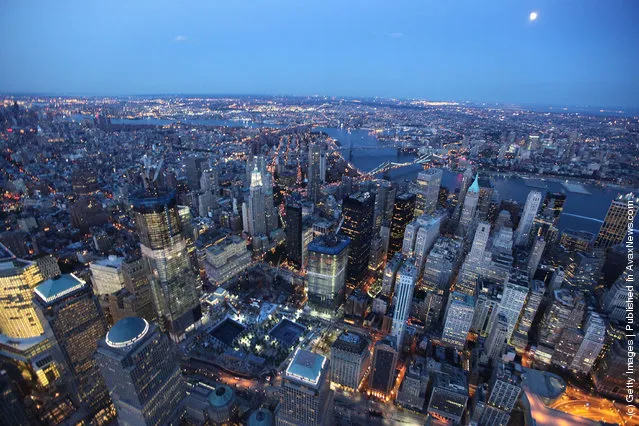
Construction Continues At Ground Zero On One World Trade Center

Construction continues on One World Trade Center (TALLEST BUILDING AT LOWER LEFT) as the memorial footprints of the twin towers are seen (BOTTOM C) on August 12, 2011 in New York City. Upon completion, One World Trade Center will be New York's tallest skyscraper, topping out at a symbolic 1,776 feet, with 3 million square feet of office space. More than 2,700 people were killed when al-Qaeda terrorists hijacked U.S. passenger jets and flew them into the twin towers of the World Trade Center on September 11, 2001. Nearly ten years after the crippling attacks on Lower Manhattan, business, tourism and new construction like One World Trade Center have rejuvenated the formerly devastated cityscape.(Photo by Mario Tama/Getty Images)
Details
14 Aug 2011 13:58:00
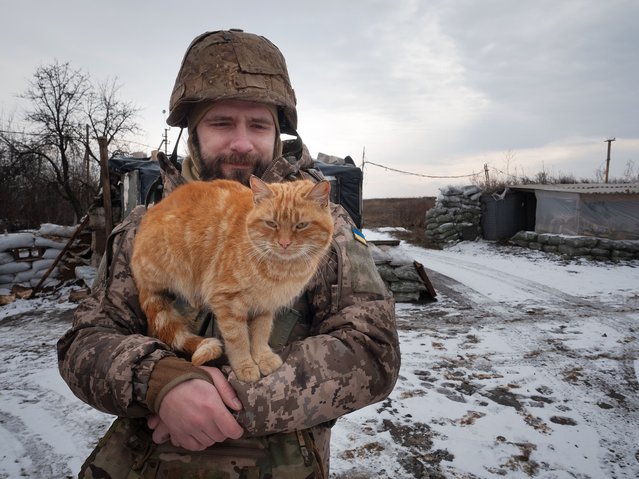
Ukrainian Serviceman Oleksii Hodzenko, aka Godzilla, was a civilian journalist. His father, Sergeant chief Dmytro "Godzilla" Godzenko was killed on March 31, 2016 at 6 a.m. in a mortar attack near the village of Zaitsevo near Horlivka in the Donetsk region. Since then Godzilla "junior" has joined the army, at a frontline position held by Ukraine's 503rd Detached Marine Battalion on February 7, 2022 near Verkhnotoretske, Ukraine. Regional tensions remain high as Russia continues to amass soldiers and military equipment along its border with Ukraine, where large swaths of the Luhansk and Donetsk regions are held by Russian-backed separatists. Russia has also moved roughly 30,000 troops into Belarus, which borders Ukraine to the north. American and European officials say they do not whether Russian President Vladimir Putin has made a decision to invade Ukraine, but have issued a series of warnings about the country's assertive military posture. (Photo by Gaelle Girbes/Getty Images)

Ukrainian Serviceman Oleksii Hodzenko, aka Godzilla, was a civilian journalist. His father, Sergeant chief Dmytro "Godzilla" Godzenko was killed on March 31, 2016 at 6 a.m. in a mortar attack near the village of Zaitsevo near Horlivka in the Donetsk region. Since then Godzilla "junior" has joined the army, at a frontline position held by Ukraine's 503rd Detached Marine Battalion on February 7, 2022 near Verkhnotoretske, Ukraine. Regional tensions remain high as Russia continues to amass soldiers and military equipment along its border with Ukraine, where large swaths of the Luhansk and Donetsk regions are held by Russian-backed separatists. Russia has also moved roughly 30,000 troops into Belarus, which borders Ukraine to the north. American and European officials say they do not whether Russian President Vladimir Putin has made a decision to invade Ukraine, but have issued a series of warnings about the country's assertive military posture. (Photo by Gaelle Girbes/Getty Images)
Details
13 Mar 2022 04:03:00
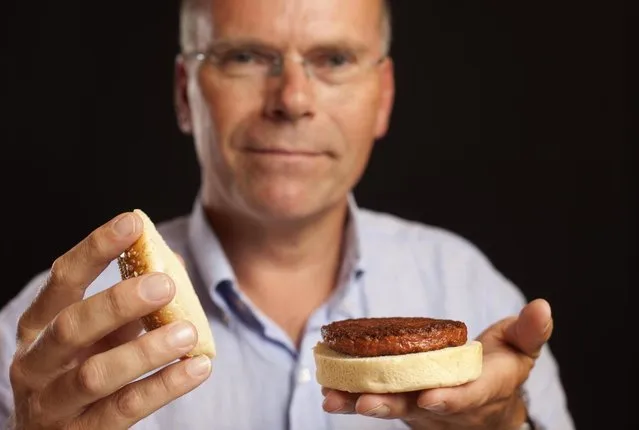
In this handout image provided by Ogilvy, a burger made from cultured beef, which has been developed by Professor Mark Post of Maastricht University in the Netherlands (pictured) is shown to the media during a press conference on August 5, 2013 in London, England. Cultured Beef could help solve the coming food crisis and combat climate change with commercial production of Cultured Beef beginning within ten to twenty years. (Photo by David Parry via Getty Images)

In this handout image provided by Ogilvy, a burger made from cultured beef, which has been developed by Professor Mark Post of Maastricht University in the Netherlands (pictured) is shown to the media during a press conference on August 5, 2013 in London, England. The in-vitro burger, cultured from cattle stem cells, the first example of what its creator says could provide an answer to global food shortages and help combat climate change, was fried in a pan and tasted by two volunteers. The burger is the result of years of research by Dutch scientist Mark Post, a vascular biologist at the University of Maastricht, who is working to show how meat grown in petri dishes might one day be a true alternative to meat from livestock.The meat in the burger has been made by knitting together around 20,000 strands of protein that has been cultured from cattle stem cells in Post's lab. (Photo by David Parry)
Details
06 Aug 2013 08:48:00
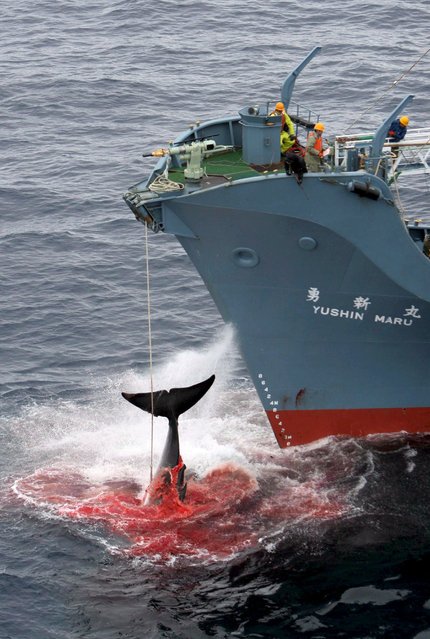
A file photograph dated 07 January 2006 and released by Greenpeace, showing the Yushin Maru, a factory ship in a Japanese whaling fleet, injuring a whale with it's first harpoon attempt. A UN court in The Hague on 31 March 2014 halted Japan's much-criticized whaling programme, ruling that it contravenes a 1986 moratorium on whale hunting. Japan must end its 'research whaling' programme, the International Court of Justice (ICJ) said. (Photo by Kate Davison/EPA)

A file photograph dated 07 January 2006 and released by Greenpeace, showing the Yushin Maru, a factory ship in a Japanese whaling fleet, injuring a whale with it's first harpoon attempt. A UN court in The Hague on 31 March 2014 halted Japan's much-criticized whaling programme, ruling that it contravenes a 1986 moratorium on whale hunting. Japan must end its 'research whaling' programme, the International Court of Justice (ICJ) said. Japan said the programme was for scientific research and permitted under international conventions. Australia had brought the case to the ICJ in 2010, charging that Japan was breaching international law by killing hundreds of whales every year for commercial purposes. Japan was “deeply disappointed” by the ruling, an unnamed government official was quoted by the Kyodo News agency as saying. But the official said Japan would stand by the ruling. (Photo by Kate Davison/EPA)
Details
01 Apr 2014 08:38:00