Loading...
Done
Tim Laman - Wildlife Photojournalist

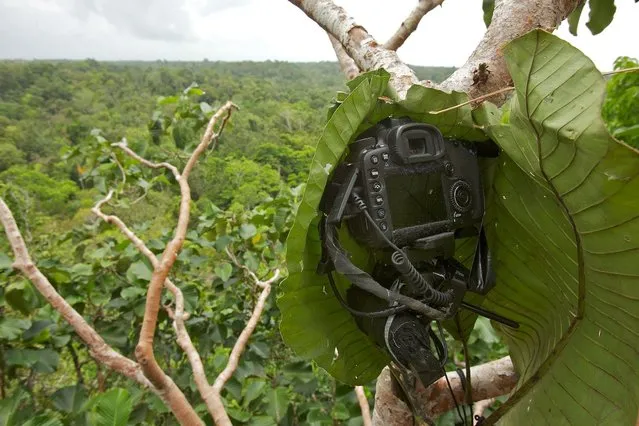
Tim Laman is a field biologist and wildlife photojournalist. His pioneering research in the rain forest canopy in Borneo led to a PhD from Harvard and his first National Geographic article in 1997. Since then, he has pursued his passion for exploring wild places and documenting little-known and endangered wildlife by becoming a regular contributor to National Geographic. He has eighteen articles to his credit to date, all of which have had a conservation message. Some have focused on endangered species such as Orangutans or Hornbills, while others, such as a series of articles on Conservation International’s Biodiversity Hotspots, have highlighted regions under intense pressure.
Details
14 Sep 2013 10:13:00
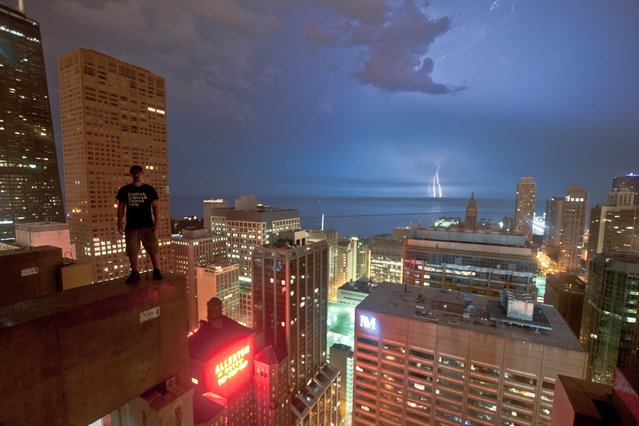
Bradley Garrett stands on the edge of the Ritz-Carlton Chicago as lightning strikes in the distance in Chicago, US. (Photo by Bradley L. Garrett/Barcroft Media)

These photographs are the work of urban explorer Dr Bradley Garrett who made headlines back in 2012 when he posted a series of snaps from the top of The Shard skyscraper while it was still under construction. Garrett, now a researcher at the University of Oxford, took these shots during his time with the London Consolidation Crew (LCC), a loose collection of urban explorers based in the English capital. Photo: Bradley Garrett stands on the edge of the Ritz-Carlton Chicago as lightning strikes in the distance in Chicago, US. (Photo by Bradley L. Garrett/Barcroft Media)
Details
24 Sep 2013 08:09:00
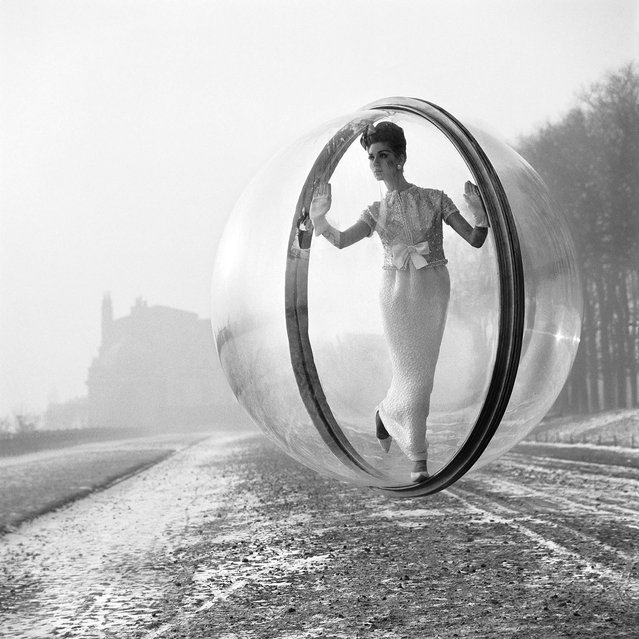
“Paris 1963” – Harper's Bazaar “Bubble” Spring Collection. (Photo by Melvin Sokolsky)

Born 1938 in New York, Melvin Sokolsky was a major figure in the revival of fashion photography from the 1960s. He was only 21 when he started working at Harper's Bazaar for which he produced the “Bubble” series of photographs depicting fashion models floating in giant clear plastic bubbles suspended in midair above the Seine river in Paris. Alongside his steady collaboration with Bazaar, he also worked for publications such as Vogue and the New York Times. Photo: “After Delvaux” – “Paris 1963” – Harper's Bazaar “Bubble” Spring Collection. (Photo by Melvin Sokolsky)
Details
30 Sep 2013 08:19:00
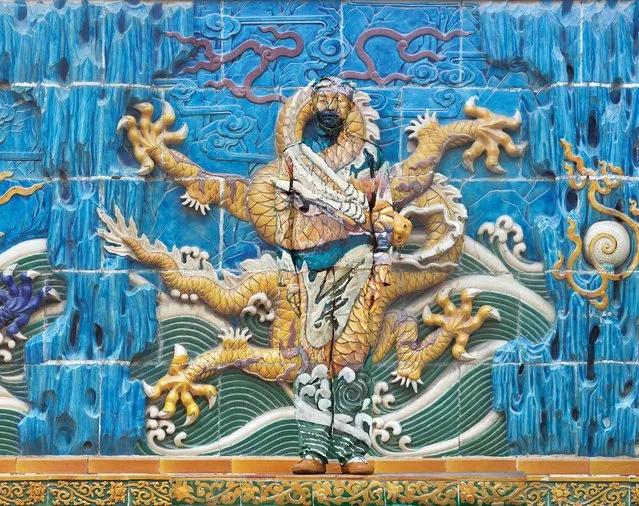
Optical illusions: artist Liu Bolin

“Liu Bolin is an artist born in China’s Shandong province in 1973, and he earned his Bachelor of Fine Arts from the Shandong College of Arts in 1995 and his Master of Fine Arts from the Central Academy of Fine Arts in Beijing in 2001. His work has been exhibited in museums around the world. Also known as “The Invisible Man”, Liu Bolin's most popular works are from his “Hiding in the City” series; photographic works that began as performance art in 2005”. – Wikipedia. (Photo by Reuters/China Daily)
Details
03 Oct 2013 09:29:00
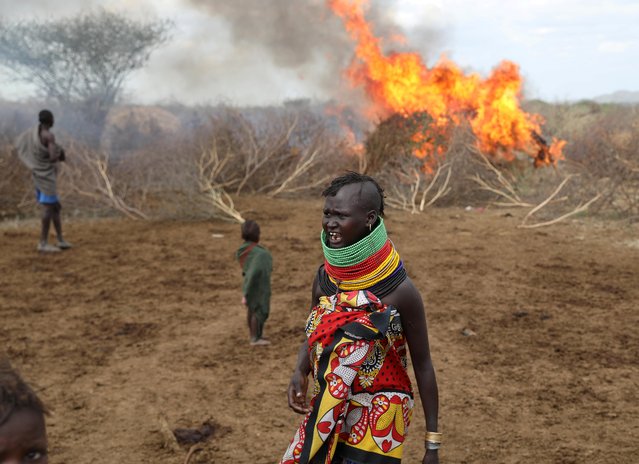
A Turkana tribeswoman reacts after an accidental fire of a shelter in Turkana settlement in Ilemi Triangle, Kenya, July 15, 2019. (Photo by Goran Tomasevic/Reuters)

A Turkana tribeswoman reacts after an accidental fire of a shelter in Turkana settlement in Ilemi Triangle, Kenya, July 15, 2019. The Ilemi Triangle, a disputed sliver of land along the border with Ethiopia and South Sudan, is the northernmost tip of Turkana, Kenya's poorest county. A series of deadly clashes between the Turkana community and other ethnic groups that they said had crossed from South Sudan have put people on edge, to the point of posting lookouts. (Photo by Goran Tomasevic/Reuters)
Details
25 Sep 2019 00:05:00
“Two Brothers”. We found about 20 lions eating a buffalo. When the male leaved the group we anticipated him to take photos. It is 8AM, light is perfect and the position too. The lion stops and looks down from the hill, another lion is coming up, it stiffens, I think that will be a fight, i'm tense, the camera is OK, the shots previously made perfect. Photo location: Masai Mara, Kenya. (Photo and caption by Massimo Mei/National Geographic Photo Contest)

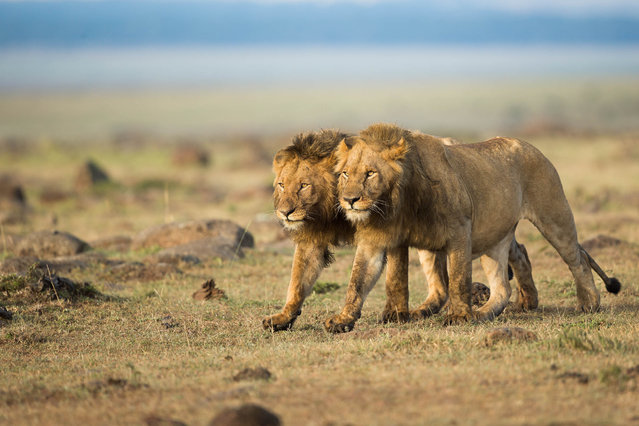
“Two Brothers”. We found about 20 lions eating a buffalo. When the male leaved the group we anticipated him to take photos. It is 8AM, light is perfect and the position too. The lion stops and looks down from the hill, another lion is coming up, it stiffens, I think that will be a fight, i'm tense, the camera is OK, the shots previously made perfect. The two meet, looking directly into their eyes, they sniff, rub against their heads, the tension drops, they start walking with the same step as when they were puppies, they are two brothers. Photo location: Masai Mara, Kenya. (Photo and caption by Massimo Mei/National Geographic Photo Contest)
Details
02 Jul 2014 09:45:00
A dhobi, or a washerman washes cloths on the banks of the River Gomti in Lucknow, India, Saturday, September 12, 2020. Dhobis are traditional laundry workers who wash clothes by hand and dry them in the sun, an occupation which has been in existence for generations. Most cities in India have a Dhobi Ghat, or washermen's area, where the city's pile of clothes is laundered. This practice is still popular in India, despite of modern technology. Around 1,000 families work in Lucknow's Dhobi Ghat. However, in light of the novel coronavirus, their wages have decreased drastically. With each family earning around US$100-200 per month. (Photo by Rajesh Kumar Singh/AP Photo)

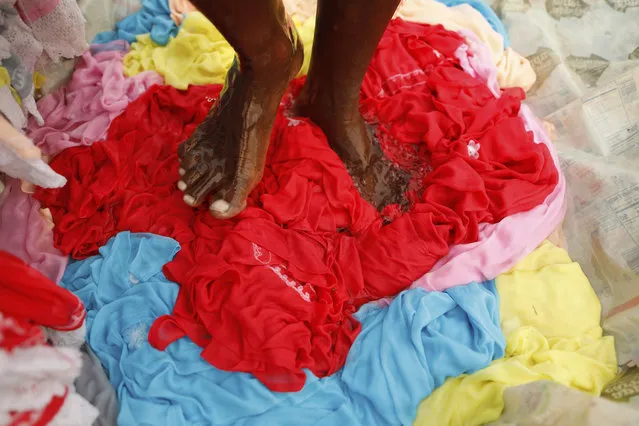
A dhobi, or a washerman washes cloths on the banks of the River Gomti in Lucknow, India, Saturday, September 12, 2020. Dhobis are traditional laundry workers who wash clothes by hand and dry them in the sun, an occupation which has been in existence for generations. Most cities in India have a Dhobi Ghat, or washermen's area, where the city's pile of clothes is laundered. This practice is still popular in India, despite of modern technology. Around 1,000 families work in Lucknow's Dhobi Ghat. However, in light of the novel coronavirus, their wages have decreased drastically. With each family earning around US$100-200 per month. (Photo by Rajesh Kumar Singh/AP Photo)
Details
25 Sep 2020 00:03:00
Syrian girls carry bags with bread as people queue up outisde a bakery in a rebel held neighbourhood in the northern city of Aleppo on July 12, 2016. Since mid-2012, Aleppo has been roughly divided between government control in the west and rebel control in the east, and has suffered enormous destruction in the war that has killed more than 280,000 people nationwide. Last week, a government advance brought regime troops within firing range of the Castello Road, the only remaining supply route into the opposition-held east, effectively severing rebel neighbourhoods from the outside world. With their route to the outside world cut, there is no new flour coming to the city's bakeries, and fuel to light their ovens is also now hard to find. (Photo by Karam Al-Masri/AFP Photo)

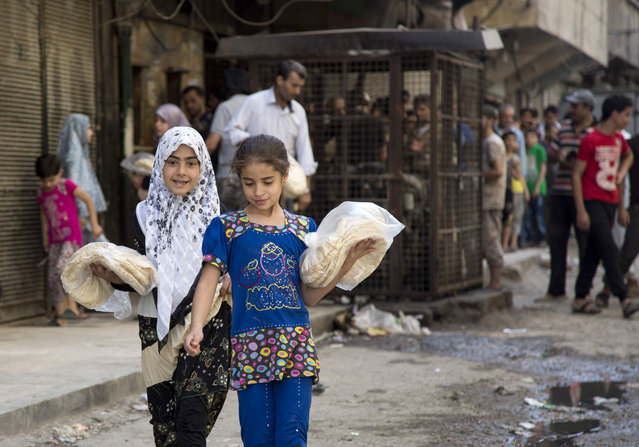
Syrian girls carry bags with bread as people queue up outisde a bakery in a rebel held neighbourhood in the northern city of Aleppo on July 12, 2016. Since mid-2012, Aleppo has been roughly divided between government control in the west and rebel control in the east, and has suffered enormous destruction in the war that has killed more than 280,000 people nationwide. Last week, a government advance brought regime troops within firing range of the Castello Road, the only remaining supply route into the opposition-held east, effectively severing rebel neighbourhoods from the outside world. With their route to the outside world cut, there is no new flour coming to the city's bakeries, and fuel to light their ovens is also now hard to find. (Photo by Karam Al-Masri/AFP Photo)
Details
08 Aug 2016 10:02:00