Loading...
Done
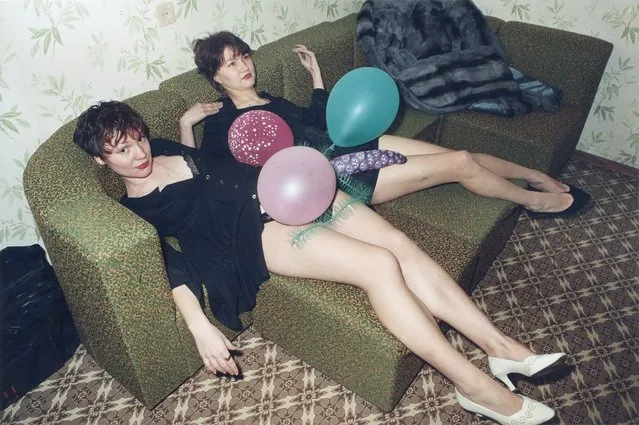
Yoshkar-Ola, Matrosova Street (1995). He turned his lens upon Russians – particularly young people – in the newly liberated state. (Photo by Sergey Chilikov)

Russian pop art photographer Sergey Chilikov captures a nation liberated from the social oppression of late-era Soviet rule – at parties, in the streets, and bouncing high. His exhibition, Photoprovocations, will be at Photo London, 19-22 May. Here: Yoshkar-Ola, Matrosova Street (1995). (Photo by Sergey Chilikov)
Details
20 May 2016 13:10:00
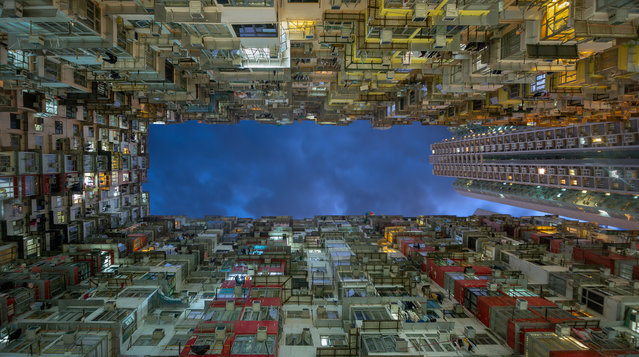
Winner. “I took this vertical image in the Quarry Bay district of Hong Kong during the dusk ‘blue hour’, when there was a perfect balance between the ambient light in the sky and the artificial lights of the high-rise residential buildings”. MICK RYAN, JUDGE: “Quarry Bay is a rich area for great shots and this is a particularly striking image of these old apartments, a unique perspective that was wisely taken as the light fades and the apartment lights come on”. (Photo by Jatinder Heer/The Guardian)

Winner. “I took this vertical image in the Quarry Bay district of Hong Kong during the dusk ‘blue hour’, when there was a perfect balance between the ambient light in the sky and the artificial lights of the high-rise residential buildings”. (Photo by Jatinder Heer/The Guardian)
Details
02 Nov 2018 00:05:00
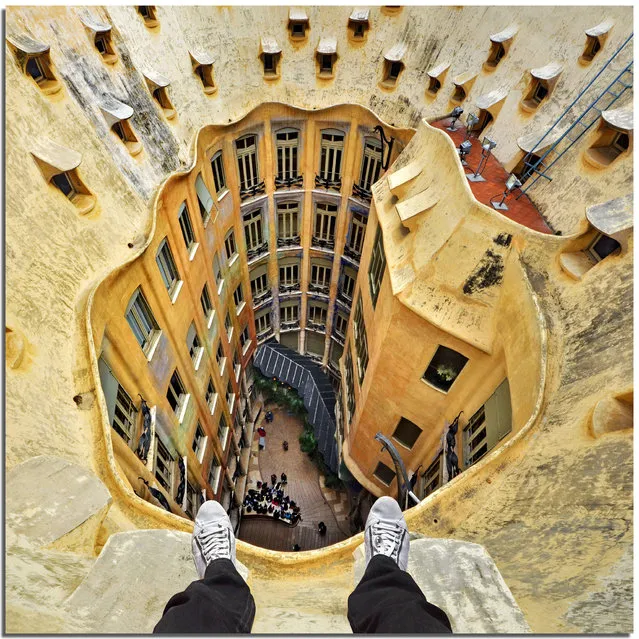
“Not for the faint of heart”. Casa Milà, better known as La Pedrera, is a building designed by the Catalan architect Antoni Gaudí and built during the years 1905–1910, being considered officially completed in 1912. It is located at 92, Passeig de Gràcia in the Eixample district of Barcelona, Catalonia, Spain. (Stefano Scarselli)

“Not for the faint of heart”. Casa Milà, better known as La Pedrera, is a building designed by the Catalan architect Antoni Gaudí and built during the years 1905–1910, being considered officially completed in 1912. It is located at 92, Passeig de Gràcia in the Eixample district of Barcelona, Catalonia, Spain. (Photo by Stefano Scarselli)
Details
17 Jan 2013 14:17:00
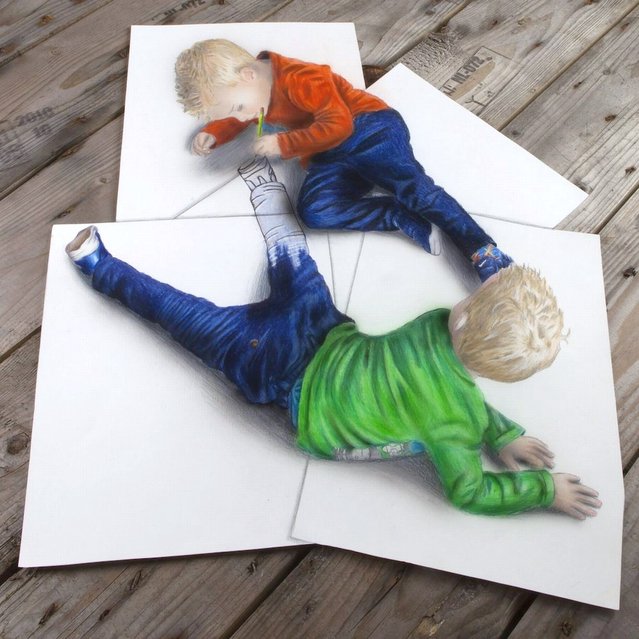
Ramon Bruin’s 3D illustration of two twins drawing each other. (Photo by Ramon Bruin/Medavia)

Armed with only paper, graphite and coloured pencils – plus his vivid imagination – the artist creates remarkable drawings that leap from the page when photographed. The 32-year-old, from Alkmaar in Holland, began experimenting with anamorphic 3D drawing five years ago. Photo: Ramon Bruin’s 3D illustration of two twins drawing each other. (Photo by Ramon Bruin/Medavia)
Details
28 Jul 2014 11:10:00
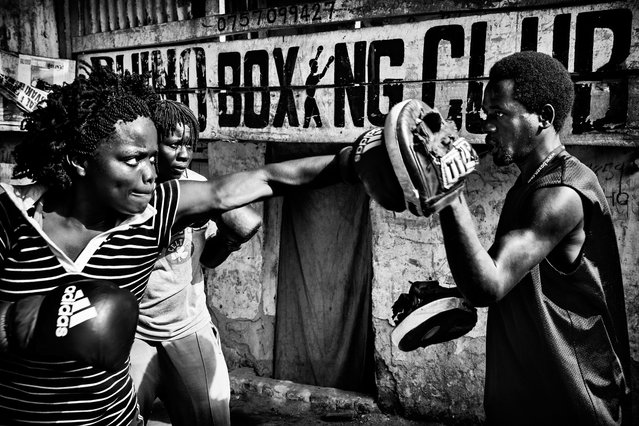
July 23, 2013 – Kampala, Uganda. Helene and Diana train daily more than 2.5 hours by Innocent Kapalata, a passionate and ambitious former boxer. Amidst the shanty homes a group of ambitious fighters are trying to reach for a better life. (Photo by Peter Bauza/ZUMA Press/VISUAL Press)

July 23, 2013 – Kampala, Uganda. Helene and Diana train daily more than 2.5 hours by Innocent Kapalata, a passionate and ambitious former boxer. Amidst the shanty homes a group of ambitious fighters are trying to reach for a better life. (Photo by Peter Bauza/ZUMA Press/VISUAL Press)
Details
30 Jul 2014 11:06:00
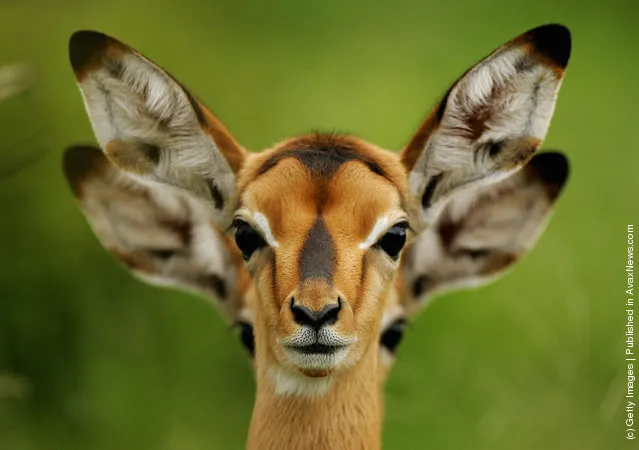
Impala pictured

Impala pictured in the Kruger National Park on December 7, 2007 in Mpumalanga, South Africa. (Photo by Warren Little/Getty Images)
Details
16 Aug 2011 12:20:00
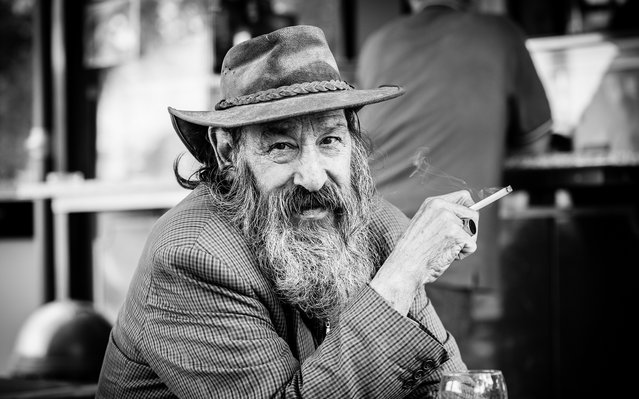
“In beard and hat”; Udine, Friuli-Venezia Giulia, Italy, 2013. (Giulio Magnifico)

“In beard and hat”; Udine, Friuli-Venezia Giulia, Italy, 2013. (Photo by Giulio Magnifico)
Details
28 Aug 2013 09:58:00
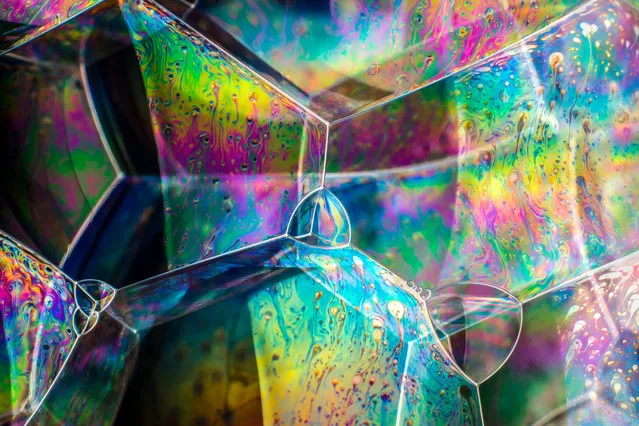
Soap Bubble Structures by Kym Cox. Bubbles optimise space and minimise their surface area for a given volume of air. This phenomenon makes them a useful tool in many areas of research, in particular, materials science and ‘packing’ – how things fit together. Bubble walls drain under gravity, thin at the top, thick at the bottom, which interferes with travelling lightwaves to create bands of colour. Black spots show the wall is too thin for interference colours, indicating the bubble is about to burst. (Photo by Kym Cox/2019 Science Photographer of the Year/RPS)

Soap Bubble Structures by Kym Cox. Bubbles optimise space and minimise their surface area for a given volume of air. This phenomenon makes them a useful tool in many areas of research, in particular, materials science and “packing” – how things fit together. Bubble walls drain under gravity, thin at the top, thick at the bottom, which interferes with travelling lightwaves to create bands of colour. Black spots show the wall is too thin for interference colours, indicating the bubble is about to burst. (Photo by Kym Cox/2019 Science Photographer of the Year/RPS)
Details
15 Aug 2019 00:03:00