Loading...
Done
Kawakanih Yawalapiti, 9, Upper Xingu region of Mato Grosso, Brazil, 2018: Kawakanih lives with her tribe, the Yawalapiti, in Xingu national park, a preserve in the Amazon basin of Brazil. The Yawalapiti collect seeds to preserve species unique to their ecosystem, which lies between the rain forest and savannah. Kawakanih’s diet is simple, consisting mainly of fish, cassava, porridge, fruit and nuts. “It takes five minutes to catch dinner”, says Kawakanih. “When you’re hungry, you just go to the river with your net”. (Photo by Gregg Segal/The Guardian)

Photographer Gregg Segal travelled the world to document children and the food they eat in a week. Partly inspired by the increasing problems of childhood obesity, he tracked traditional regional diets as yet unaffected by globalisation, and ironically, found that the healthiest diets were often eaten by the least well off. (Photo by Gregg Segal/The Guardian)
Details
03 Jul 2019 00:03:00
A young girl makes a “tomato angel” on a tomato covered street during the traditional tomato fight “Tomatina” during the fiestas in Bunol, Spain, 28 August 2013. This year's Tomatina is the first pay festival after Bunol's City Hall sold 15,000 tickets to take part in the tomato throwing. A total of 20,000 people, including 5,000 residents, will throw over 130,000 kg tomatoes. Local authorities decided to sell tickets this year to avoid the overcrowding in previous years in which over 50,000 people took part in the event. (Photo by Biel Alino/EPA)

A young girl makes a “tomato angel” on a tomato covered street during the traditional tomato fight “Tomatina” during the fiestas in Bunol, Spain, 28 August 2013. This year's Tomatina is the first pay festival after Bunol's City Hall sold 15,000 tickets to take part in the tomato throwing. A total of 20,000 people, including 5,000 residents, will throw over 130,000 kg tomatoes. Local authorities decided to sell tickets this year to avoid the overcrowding in previous years in which over 50,000 people took part in the event. (Photo by Biel Alino/EPA)
Details
29 Aug 2013 11:24:00
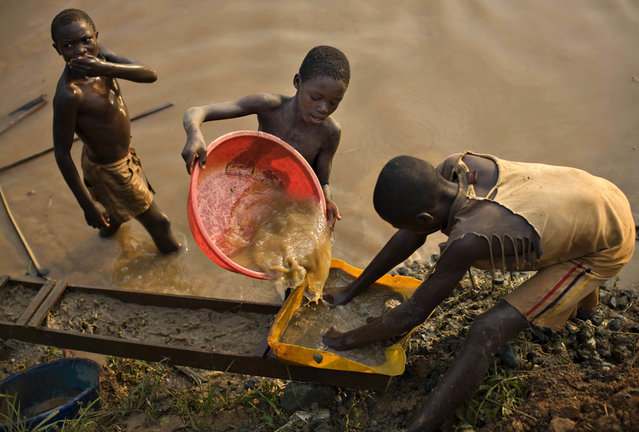
Boys pan for gold on a riverside at Iga Barriere, 25 km (15 miles) from Bunia, in the resource-rich Ituri region of eastern Congo February 16, 2009. Ituri is one of many areas of the country to have experienced bitter ethnic conflict between rival tribes in recent years. Massacres have left tens of thousands dead. It is this fighting that led U.S. authorities to take the unprecedented step of naming Congo in section 1502 of the Dodd-Frank financial regulation act, which says U.S.-listed companies that source gold, tungsten, tantalum and tin from Congo or its neighbours must assure the U.S. stock exchange regulator that their business is not helping fund conflict. (Photo by Finbarr O'Reilly/Reuters)

Boys pan for gold on a riverside at Iga Barriere, 25 km (15 miles) from Bunia, in the resource-rich Ituri region of eastern Congo February 16, 2009. Ituri is one of many areas of the country to have experienced bitter ethnic conflict between rival tribes in recent years. Massacres have left tens of thousands dead. It is this fighting that led U.S. authorities to take the unprecedented step of naming Congo in section 1502 of the Dodd-Frank financial regulation act, which says U.S.-listed companies that source gold, tungsten, tantalum and tin from Congo or its neighbours must assure the U.S. stock exchange regulator that their business is not helping fund conflict. (Photo by Finbarr O'Reilly/Reuters)
Details
12 Nov 2016 10:24:00
A woman holds Kalashnikov assault rifle during a training session with members of the Georgian Legion, a paramilitary unit formed mainly by ethnic Georgian volunteers to fight against Russian forces in Ukraine in 2014, in Kyiv, Ukraine, Saturday, February 19, 2022. Separatist leaders in eastern Ukraine have ordered a full military mobilization amid growing fears in the West that Russia is planning to invade the neighboring country. The announcement on Saturday came amid a spike in violence along the line of contact between Ukrainian forces and the pro-Russia rebels in recent days. (Photo by Efrem Lukatsky/AP Photo)

A woman holds Kalashnikov assault rifle during a training session with members of the Georgian Legion, a paramilitary unit formed mainly by ethnic Georgian volunteers to fight against Russian forces in Ukraine in 2014, in Kyiv, Ukraine, Saturday, February 19, 2022. Separatist leaders in eastern Ukraine have ordered a full military mobilization amid growing fears in the West that Russia is planning to invade the neighboring country. The announcement on Saturday came amid a spike in violence along the line of contact between Ukrainian forces and the pro-Russia rebels in recent days. (Photo by Efrem Lukatsky/AP Photo)
Details
24 Feb 2022 06:34:00
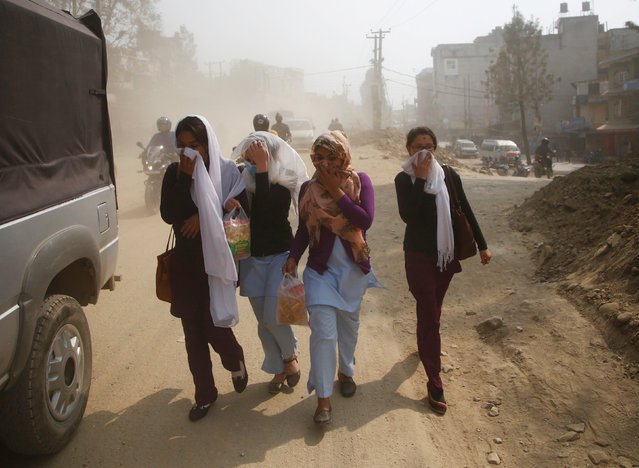
Pedestrians cover their face as they walk along the dusty road in Kathmandu, Nepal February 27, 2017. Nepal has forced 2,500 old vehicles off roads in its capital city of Kathmandu, part of a fight against alarming air pollution levels that have hit nine times World Health Organisation (WHO) limits. Air pollution has been a chronic problem in rapidly growing Kathmandu, which sits in a Himalayan valley and is home to more than 3mn people. Rising public anger with the smog is turning into a headache for a beleaguered government headed by former Maoist rebels. Dust from road works, exhaust from old, poorly maintained vehicles and smoke from coal-burning brick kilns blend in a murky haze that hangs over the ancient city, raising the risk of cancer, stroke, asthma and high blood pressure, experts say. Officials hope the ban on vehicles more than 20 years old will be a step towards a cleaner future. (Photo by Navesh Chitrakar/Reuters)

Pedestrians cover their face as they walk along the dusty road in Kathmandu, Nepal February 27, 2017. Nepal has forced 2,500 old vehicles off roads in its capital city of Kathmandu, part of a fight against alarming air pollution levels that have hit nine times World Health Organisation (WHO) limits. Air pollution has been a chronic problem in rapidly growing Kathmandu, which sits in a Himalayan valley and is home to more than 3mn people. (Photo by Navesh Chitrakar/Reuters)
Details
04 Mar 2017 00:04:00
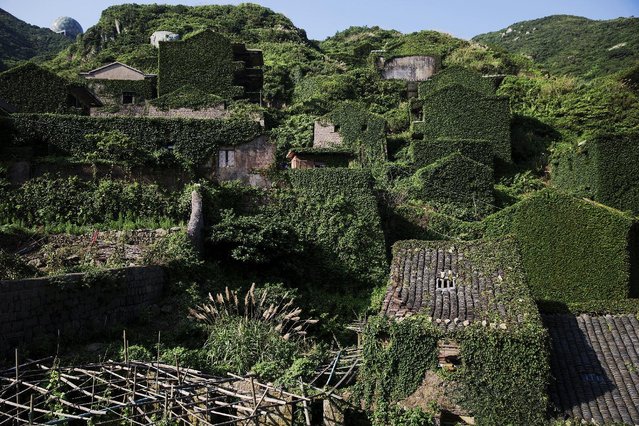
Plants grow on houses in the abandoned fishing village of Houtouwan on the island of Shengshan July 26, 2015. (Photo by Damir Sagolj/Reuters)

Plants grow on houses in the abandoned fishing village of Houtouwan on the island of Shengshan July 26, 2015. Just a handful of people still live in a village on Shengshan Island east of Shanghai that was once home to more than 2,000 fishermen. Every day hundreds of tourists visit Houtouwan, making their way on narrow footpaths past tumbledown houses overtaken by vegetation. The remote village, on one of more than 400 islands in the Shengsi archipelago, was abandoned in the early 1990s as first wealthy residents then others moved away, aiming to leave problems with education and food delivery behind them. (Photo by Damir Sagolj/Reuters)
Details
30 Jul 2015 12:24:00
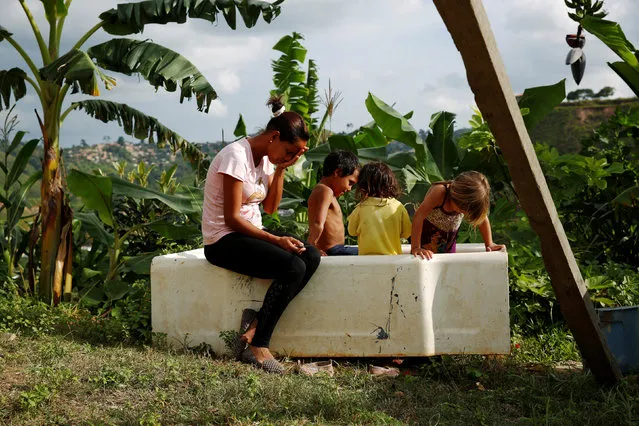
Lisibeht Martinez (L), 30, who was sterilized one year ago, sits next to her children while they play in a bathtub in the backyard of their house in Los Teques, Venezuela July 19, 2016. (Photo by Carlos Garcia Rawlins/Reuters)

Venezuela's food shortages, inflation and crumbling medical sector have become such a source of anguish that a growing number of young women are reluctantly opting for sterilizations rather than face the hardship of pregnancy and child-rearing. Traditional contraceptives like condoms or birth control pills have virtually vanished from store shelves, pushing women towards the hard-to-reverse surgery. While no recent national statistics on sterilizations are available, doctors and health workers say demand for the procedure is growing. (Photo by Carlos Garcia Rawlins/Reuters)
Details
04 Aug 2016 12:22:00
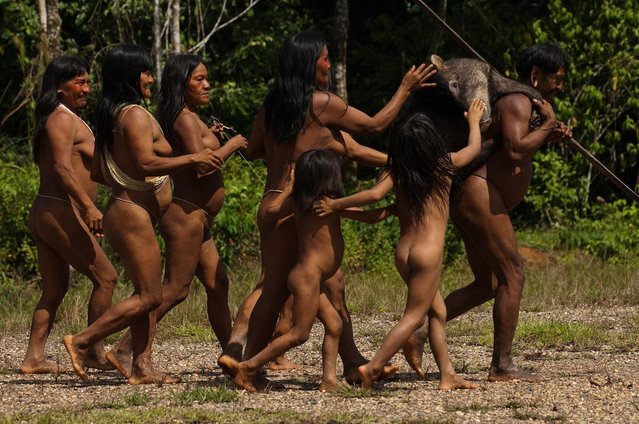
Spectacular images offering insight into the lives of the Huaorani people in the Ecuadorian Amazon have been revealed showing how they use traditional methods to hunt monkeys for food. The stunning pictures were taken by conservation photographer Pete Oxford from Torquay, Devon in the Ecuadorian Amazon. “The Huaorani Indians are a forest people highly in tune with their environment. Many are now totally acculturated since the 1950s by missionaries”, said Pete. “Today they face radical change to their culture to the proximity of oil exploration within their territory and the Yasuni National Park and Biosphere Reserve, they are vastly changed. Some still live very traditionally and for this shoot, through my Huaorani friend, a direct relative of those photographed he wanted to depict them as close to their original culture as possible. They still largely hunt with blow pipes and spears eating a lot of monkeys and peccaries”. The Huaorani are also known as the Waorani, Waodani or the Waos and are native Amerindians. Their lands are located between the Curaray and Napo rivers and speak the Huaorani language. Pete says that during his visit he was welcomed into the group and hopes that ancient cultures can be saved. Here: The tribe were seen celebrating after a hunter returned to camp with a wild pig. (Photo by Pete Oxford/Mediadrumworld.com)

Spectacular images offering insight into the lives of the Huaorani people in the Ecuadorian Amazon have been revealed showing how they use traditional methods to hunt monkeys for food. The stunning pictures were taken by conservation photographer Pete Oxford from Torquay, Devon in the Ecuadorian Amazon. Here: The tribe were seen celebrating after a hunter returned to camp with a wild pig. (Photo by Pete Oxford/Mediadrumworld.com)
Details
20 Jan 2017 07:58:00