Loading...
Done
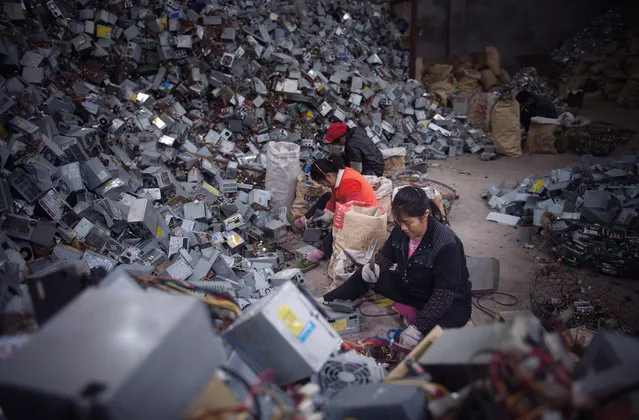
“The sustainable development goals cannot be met unless waste management is addressed as a priority”, says UK waste management charity Waste Aid. “E-waste is one of the fastest growing categories of the 7-10bn tonnes of waste produced globally every year”, adds director Mike Webster. “In our view, decent waste management is a basic right and we want governments around the world take this issue much more seriously – in 2012 only 0.2% of international aid went on improving solid waste management – it’s just not enough”. (Photo by Kai Loeffelbein/laif Agentur)

Sustainable development goal target 12.5 is to reduce waste. But with a planet increasingly dependent on technology, is that even possible? As of today, over 30m tonnes of electronic waste has been thrown out so far this year, according to the World Counts. Most e-waste is sent to landfills in Asia and Africa where it is recycled by hand, exposing the people who do it to environmental hazards. Kai Loeffelbein’s photographs of e-waste recycling in Guiyu, southern China show what happens to discarded computers. (Photo by Kai Loeffelbein/laif Agentur)
Details
19 Oct 2016 12:14:00
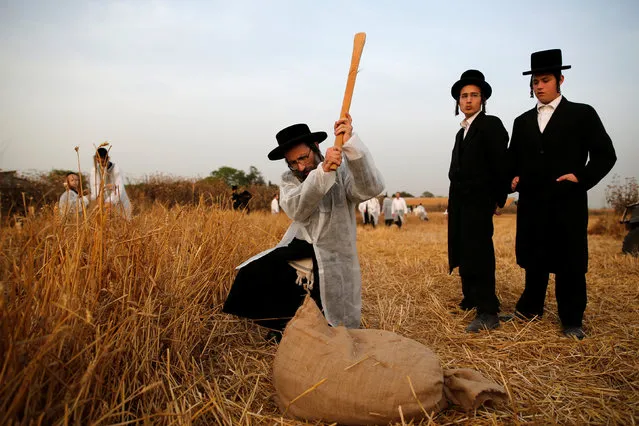
An Ultra-Orthodox Jewish man uses a stick to to separate the wheat grains in the Ultra-orthodox moshav of Komemiyut May 3, 2016. (Photo by Amir Cohen/Reuters)

An Ultra-Orthodox Jewish man uses a stick to to separate the wheat grains in the Ultra-orthodox moshav of Komemiyut May 3, 2016. The harvested wheat will later be used to make the traditional unleavened bread eaten during the Jewish holiday of Passover. (Photo by Amir Cohen/Reuters)
Details
04 May 2016 11:35:00
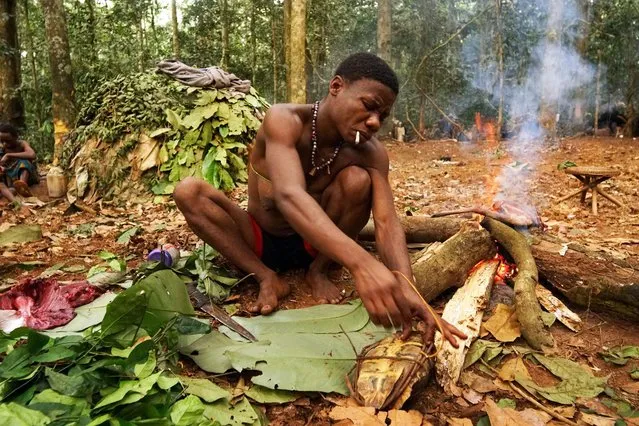
Baka pygmies in their forest home preparing food in, Sangha Forest, Central African Republic, February 2016. (Photo by Susan Schulman/Barcroft Images)

Baka pygmies in their forest home preparing food in, Sangha Forest, Central African Republic, February 2016. Here, in their forest home, traditional life continues in the face of multiplying challenges ranging from poachers, to ill health. Deep in the rainforests of central Africa lives one of the world’s most mysterious tribes. (Photo by Susan Schulman/Barcroft Images)
Details
18 Feb 2017 00:01:00
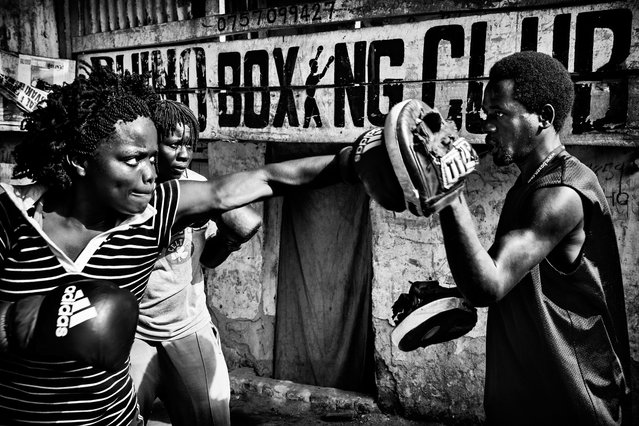
July 23, 2013 – Kampala, Uganda. Helene and Diana train daily more than 2.5 hours by Innocent Kapalata, a passionate and ambitious former boxer. Amidst the shanty homes a group of ambitious fighters are trying to reach for a better life. (Photo by Peter Bauza/ZUMA Press/VISUAL Press)

July 23, 2013 – Kampala, Uganda. Helene and Diana train daily more than 2.5 hours by Innocent Kapalata, a passionate and ambitious former boxer. Amidst the shanty homes a group of ambitious fighters are trying to reach for a better life. (Photo by Peter Bauza/ZUMA Press/VISUAL Press)
Details
30 Jul 2014 11:06:00
Heesco, Windsor. Born and raised in Mongolia and now living and working in Melbourne, Heesco is well known for his skill in rendering photo-realistic portraits. They speak to the viewer in a way that the subtext is enjoyable to decipher. Just what is the Blue Lady’s message? The sunglasses might mask the confronting gaze but her body language fills in the gaps. Heesco’s characters often wear traditional jewellery and clothing that remind us of his Mongolian cultural heritage. (Photo by Lou Chamberlin/The Guardian)

Heesco, Windsor. Born and raised in Mongolia and now living and working in Melbourne, Heesco is well known for his skill in rendering photo-realistic portraits. They speak to the viewer in a way that the subtext is enjoyable to decipher. Just what is the Blue Lady’s message? The sunglasses might mask the confronting gaze but her body language fills in the gaps. Heesco’s characters often wear traditional jewellery and clothing that remind us of his Mongolian cultural heritage. (Photo by Lou Chamberlin/The Guardian)
Details
26 Dec 2017 08:28:00
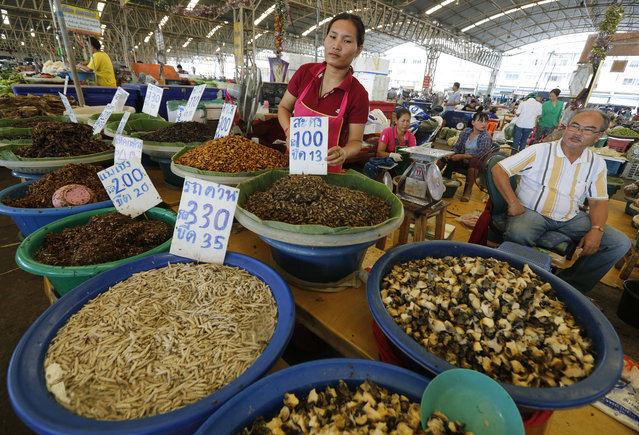
Thai vendors stand next to edible insects for sale at Talad Thai market in Pathum Thani province on the outskirts of Bangkok, Thailand, 15 July 2013. Insects have long been on the menu in Thailand, but academics and the United Nation's Food and Agriculture Organization (FAO) officials are hoping they will become a more common global source of protein and nutrients to meet the need for growing world food requirements in the future. (Photo by Narong Sangnak/EPA)

Thai vendors stand next to edible insects for sale at Talad Thai market in Pathum Thani province on the outskirts of Bangkok, Thailand, 15 July 2013. Insects have long been on the menu in Thailand, but academics and the United Nation's Food and Agriculture Organization (FAO) officials are hoping they will become a more common global source of protein and nutrients to meet the need for growing world food requirements in the future. (Photo by Narong Sangnak/EPA)
Details
22 May 2014 08:51:00


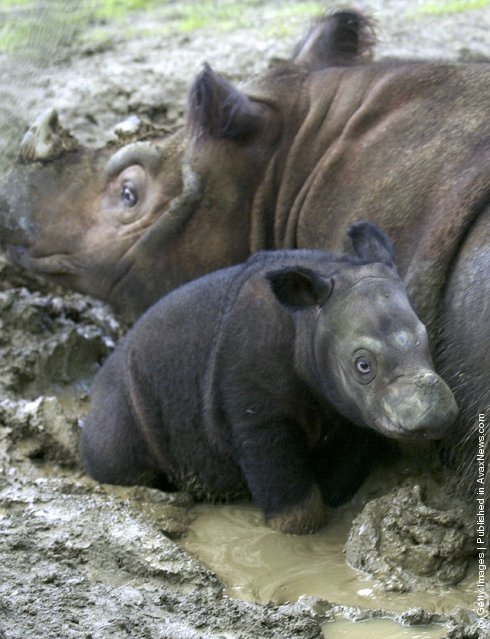
“The Sumatran Rhinoceros (Dicerorhinus sumatrensis) is a member of the family Rhinocerotidae and one of five extant rhinoceroses. It is the only extant species of the genus Dicerorhinus. It is the smallest rhinoceros, standing about 120–145 centimetres (3.9–4.76 ft) high at the shoulder, with a body length of 250 centimetres (8.2 ft) and weight of 500–800 kilograms (1,100–1,800 lb). Like the African species, it has two horns; the larger is the nasal horn, typically 15–25 centimetres (5.9–9.8 in), while the other horn is typically a stub. A coat of reddish-brown hair covers most of the Sumatran Rhino's body”. – Wikipedia

Photo: Emi, a Sumatran rhinoceros lies in the mud with her three-week-old female calf at the Cincinnati Zoo and Botanical Garden August 19, 2004 in Cincinnati, Ohio. Emi made history by becoming the first Sumatran rhino to produce two calves in captivity. (Photo by Mike Simons/Getty Images)
Details
22 Jun 2011 12:37:00
Hillary Clinton waves to a selfie-taking crowd at a recent campaign event in Orlando, Florida on September 26, 2016. (Photo by Barbara Kinney/Hillary for America)

Hillary Clinton waves to a selfie-taking crowd at a recent campaign event in Orlando, Florida on September 26, 2016. (Photo by Barbara Kinney/Hillary for America)
Details
13 Oct 2016 11:38:00