Loading...
Done
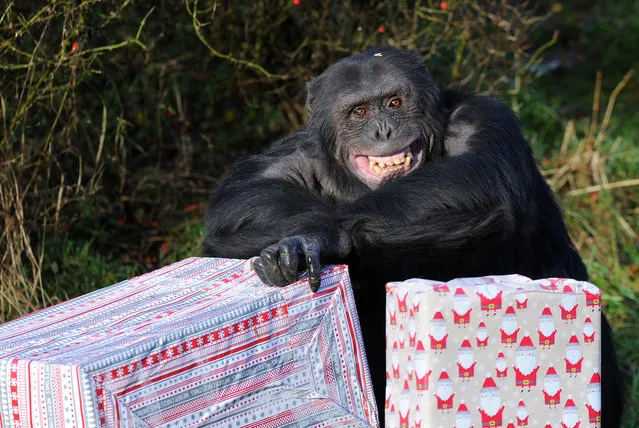
A Chimpanzee opens its Christmas presents at ZSL Whipsnade Zoo on December 17, 2013 in Bedfordshire, England. (Photo by Tony Margiocchi/Barcroft Media)

A Chimpanzee opens its Christmas presents at ZSL Whipsnade Zoo on December 17, 2013 in Bedfordshire, England. (Photo by Tony Margiocchi/Barcroft Media)
Details
26 Dec 2013 11:54:00
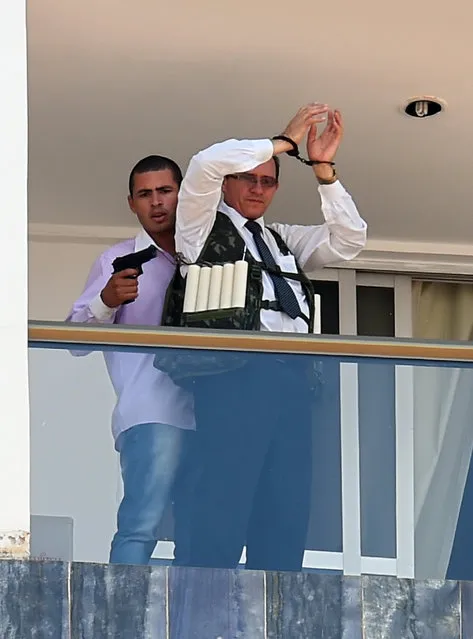
An unidentified man keeps a hotel employee with an explosive-laden vest at a balcony of the hotel in Brasilia on September 29, 2014. (Photo by Evaristo Sa/AFP Photo)

“A Brazilian hotel was evacuated in the capital, Brasilia, on Monday after a man took hostage an employee who was held for hours before he was safely released to police. Firefighters and police cordoned off the area and about 300 guests and other employees left the hotel – some reportedly told to leave by the man who took the employee hostage”. – Associated Press. (Photo by Evaristo Sa/AFP Photo)
Details
30 Sep 2014 08:59:00
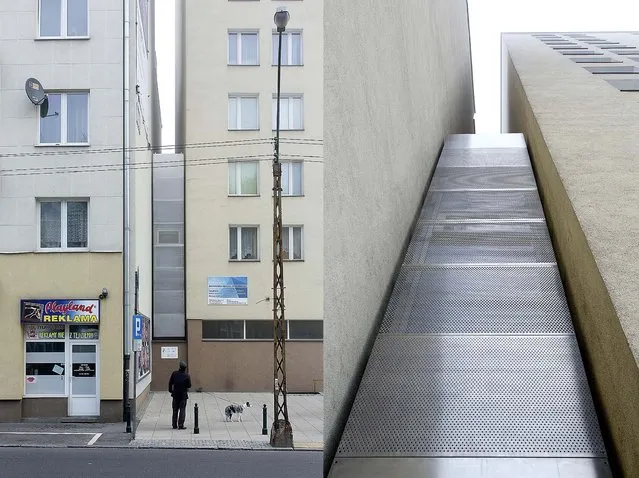
The Keret House is squeezed into the space between two apartment buildings in Warsaw. There's a four-inch gap between the apartment buildings to either side. A perforated steel facade was used to allow in more light. (Photo by Andrea Meichsner/The New York Times)

Measuring just five feet at its widest point, the ultra-thin home was unveiled in the Polish capital of Warsaw on Sunday, October 21, 2012. Photo: The Keret House is squeezed into the space between two apartment buildings in Warsaw. There's a four-inch gap between the apartment buildings to either side. A perforated steel facade was used to allow in more light. (Photo by Andrea Meichsner/The New York Times)
Details
25 Oct 2012 10:25:00
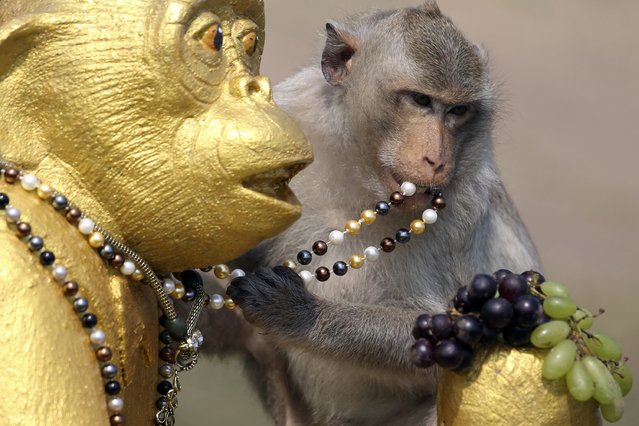
A long-tailed macaque grabs a necklace from a statue during the annual Monkey Buffet Festival at the Pra Prang Sam Yot temple in Lopburi, north of Bangkok November 30, 2014. The festival provides food and drinks to the local monkey population, which numbers more than 2,000, to thank them for drawing tourists to the town. (Photo by Damir Sagolj/Reuters)

A long-tailed macaque grabs a necklace from a statue during the annual Monkey Buffet Festival at the Pra Prang Sam Yot temple in Lopburi, north of Bangkok November 30, 2014. The festival provides food and drinks to the local monkey population, which numbers more than 2,000, to thank them for drawing tourists to the town. (Photo by Damir Sagolj/Reuters)
Details
01 Dec 2014 14:22:00
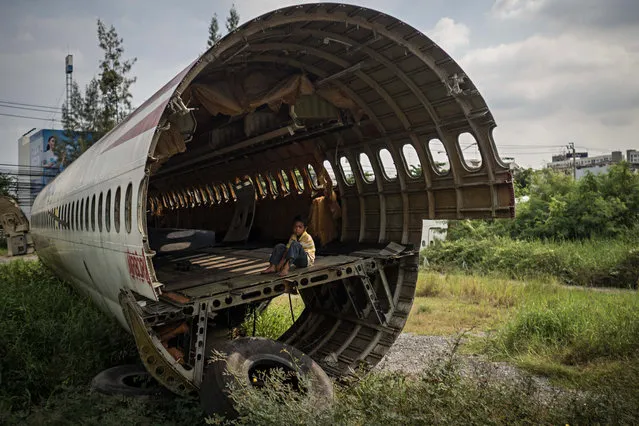
A child perches in one of the fuselages. (Photo by Lauren DeCicca/The Guardian)

Photojournalist Lauren DeCicca met three Thai families who have created makeshift homes from abandoned aeroplanes in a vacant lot in east Bangkok. This vacant lot on Ramkhamhaeng Road in east Bangkok is locally known as the “Airplane Graveyard”. Here: A child perches in one of the fuselages. (Photo by Lauren DeCicca/The Guardian)
Details
27 Oct 2016 12:11:00
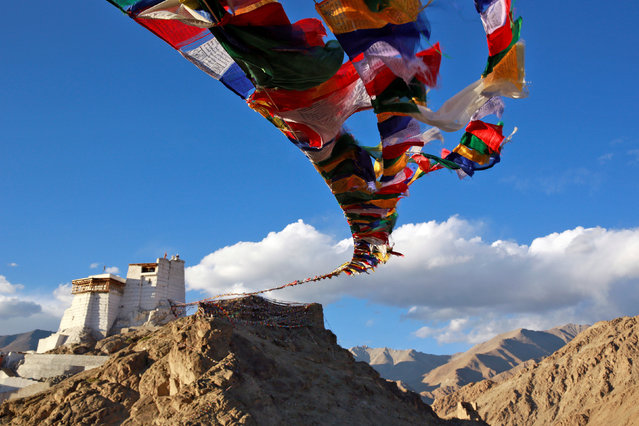
Prayer flags fly at Namgyal Tsemo Monastery above the town of Leh in Ladakh, India September 24, 2016. (Photo by Cathal McNaughton/Reuters)

Prayer flags fly at Namgyal Tsemo Monastery above the town of Leh in Ladakh, India September 24, 2016. High in the Indian Himalayas, young novice monks in maroon robes take their lessons inside the 15th-century Thiksey monastery. (Photo by Cathal McNaughton/Reuters)
Details
06 Jan 2017 14:13:00
Lv Mengmeng, who was born in 1995, poses for a photograph in Shanghai August 22, 2014. When asked if she would like siblings, Mengmeng said: “Maybe brothers, because I think they could protect me”. (Photo by Carlos Barria/Reuters)

Reuters Photographer Carlos Barria photographed a person born in each year China's one child policy has been in existence; from a man born in 1979, to a baby born in 2014, and asked them if they would have like to have siblings. Here: Lv Mengmeng, who was born in 1995, poses for a photograph in Shanghai August 22, 2014. When asked if she would like siblings, Mengmeng said: “Maybe brothers, because I think they could protect me”. (Photo by Carlos Barria/Reuters)
Details
06 Oct 2014 08:20:00
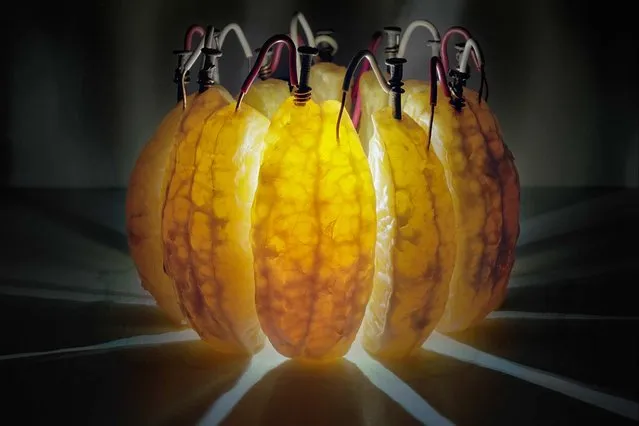
Wedges of an orange generate enough current and electrical juice – 3.5 volts – to power an LED. The fruit’s citric acid helps electrons flow from galvanized nails to copper wire in this 14-hour exposure. This image was published in September’s Visions of Earth, a trio of photos that appear in each issue of National Geographic. (Photo by Caleb Charland/National Geographic)

Wedges of an orange generate enough current and electrical juice – 3.5 volts – to power an LED. The fruit’s citric acid helps electrons flow from galvanized nails to copper wire in this 14-hour exposure. This image was published in September’s Visions of Earth, a trio of photos that appear in each issue of National Geographic. (Photo by Caleb Charland/National Geographic)
Details
06 Jan 2014 12:09:00