Loading...
Done
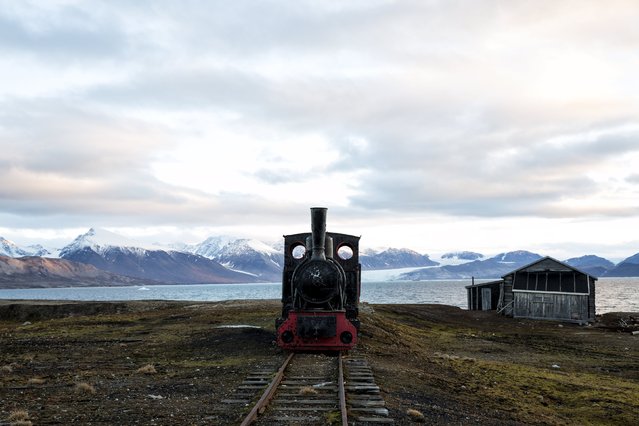
An old locomotive train that was used for transporting coal is preserved as a monument at Ny-Alesund, in Svalbard, Norway, October 11, 2015. (Photo by Anna Filipova/Reuters)

An old locomotive train that was used for transporting coal is preserved as a monument at Ny-Alesund, in Svalbard, Norway, October 11, 2015. A Norwegian chain of islands just 1,200 km (750 miles) from the North Pole is trying to promote new technologies, tourism and scientific research in a shift from high-polluting coal mining that has been a backbone of the remote economy for decades. (Photo by Anna Filipova/Reuters)
Details
29 Jan 2016 13:19:00
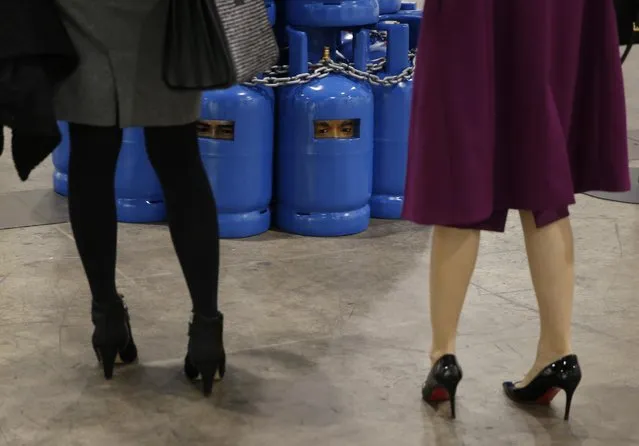
Visitors look at an artwork “Hierarchy of Prosperity” created by Indonesian artist Eko Nugroho during the VIP preview of the art fair “Art Basel” in Hong Kong, Tuesday, March 22, 2016. (Photo by Kin Cheung/AP Photo)

Visitors look at an artwork “Hierarchy of Prosperity” created by Indonesian artist Eko Nugroho during the VIP preview of the art fair “Art Basel” in Hong Kong, Tuesday, March 22, 2016. A set of gold-plated metal cubes, tapestries embroidered by unknown North Korean artisans and bales of cardboard waste are among the highlights of the Art Basel Hong Kong fair opening this week. (Photo by Kin Cheung/AP Photo)
Details
23 Mar 2016 11:59:00
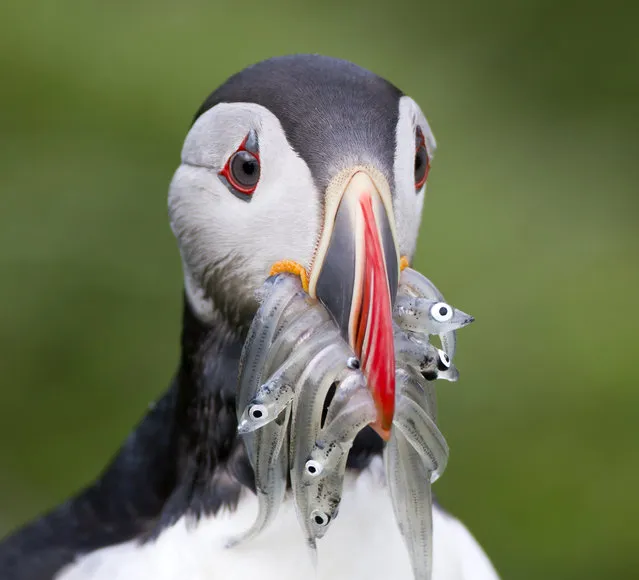
Atlantic Puffin Is AKA Puffins Or Puffin Birds

The Atlantic Puffin is definitely a curious-looking bird. The special coloring that this bird develops for the breeding season in the spring is very reminiscent of tropical birds. The bright colors of the beak and the markings around the eyes serve no particular advantage and have evolved as a result of sexual selection. However, Puffins don’t look that pretty all year round. They shed all these festive colors in partial moult after the breeding season is over. They lose the ornaments around their eyes, their face becomes darker, and their beak becomes very different. The natural habitat of these birds is the cold waters of the North Atlantic Ocean.
Details
12 Nov 2014 13:40:00
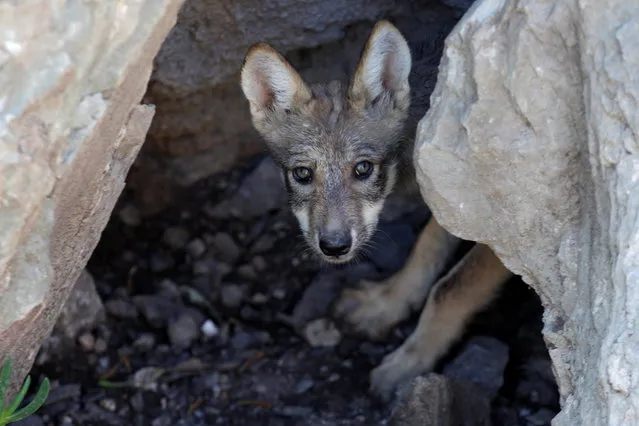
A newly born Mexican gray wolf cub, an endangered native species, is seen at its enclosure at the Museo del Desierto in Saltillo, Mexico, July 19, 2016. (Photo by Daniel Becerril/Reuters)

A newly born Mexican gray wolf cub, an endangered native species, is seen at its enclosure at the Museo del Desierto in Saltillo, Mexico, July 19, 2016. Though once held in high regard in Pre-Columbian Mexico, it is the most endangered gray wolf in North America, having been extirpated in the wild during the mid-1900s through a combination of hunting, trapping, poisoning and digging pups from dens. (Photo by Daniel Becerril/Reuters)
Details
21 Jul 2016 13:34:00
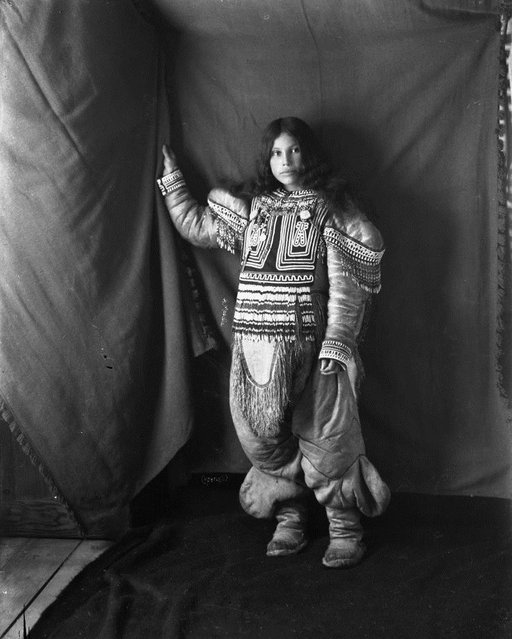
Moodie was born in 1854 in Toronto, and after a move to England she met and married John Douglas Moodie in 1878, and had six children. Here: Inuit woman, Kootucktuck, in her beaded attigi. Fullerton Harbour, Nunavut, February 1905. (Photo by Geraldine Moodie/The Guardian)

Geraldine Moodie overcame harsh conditions to become western Canada’s first professional female photographer, capturing beautiful images in the country’s most remote regions. An exhibition, “North of Ordinary: The Arctic Photographs of Geraldine and Douglas Moodie”, is at Glenbow, Calgary, 18 February – 10 September. Here: Inuit woman, Kootucktuck, in her beaded attigi. Fullerton Harbour, Nunavut, February 1905. (Photo by Geraldine Moodie/The Guardian)
Details
17 Feb 2017 00:04:00
Bounce Below The World’s First Subterranean Playground

If you’re afraid of heights, caves, the dark, suffer from claustrophobia or vertigo, this might not be for you, but if not, a small Welsh town has the perfect subterranean adventure for you: the world’s largest underground trampoline. Just unveiled in Blaenau Ffestiniog, North Wales, Bounce Below is a network of trampolines and slides mounted to the walls of an abandoned slate mine at heights of 20 feet to 180 feet off the ground. Visitors are welcome to climb, bounce, slide, and jump in the netting amidst a technicolor light show.
Details
15 Jul 2014 11:19:00
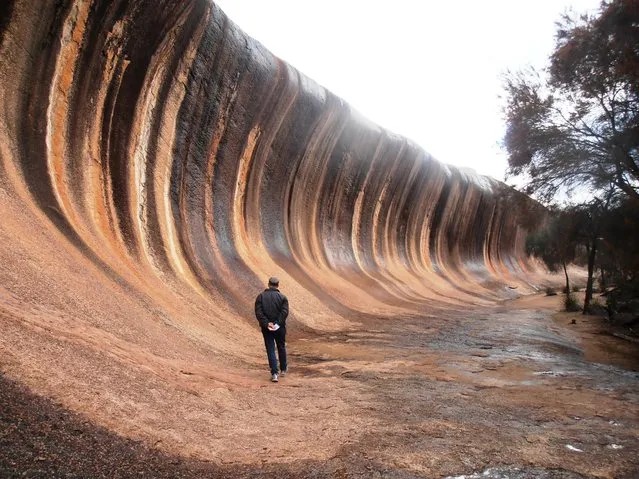
Wave Rock, Arizona

Wave Rock is a natural rock formation that is shaped like a tall breaking ocean wave. The "wave" is about 14 m (46 ft) high and around 110 m (360 ft) long. It forms the north side of a solitary hill, which is known as “Hyden Rock”. This hill, which is a granite inselberg, lies about 3 km (2 mi) east of the small town of Hyden and 296 km (184 mi) east-southeast of Perth, Western Australia. Wave Rock and Hyden Rock are part of a 160 ha (395-acre) nature reserve, Hyden Wildlife Park.
Details
12 Aug 2014 10:21:00
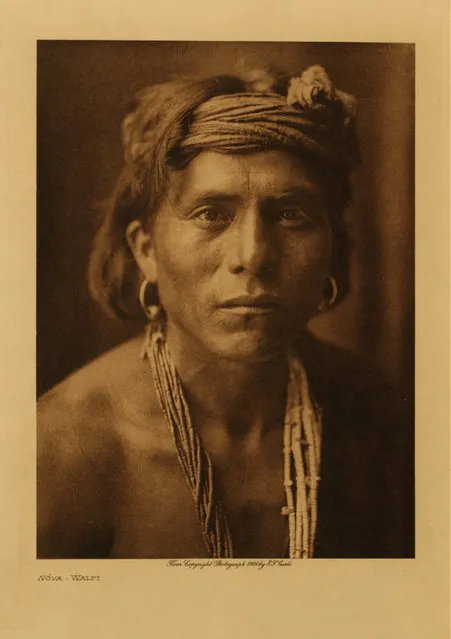
Nova, a Walpi, in 1906. (Photo by Edward S. Curtis)

At the beginning of the 20th century, Edward S. Curtis set out to document what he saw as a disappearing race: the Native American. From 1907 to 1930, Curtis took more than 2,000 photos of 80 tribes stretching from the Great Plains to the Pacific Northwest and Alaska. He then published and sold these photos, along with narrative text, in 20 volumes of work known as “The North American Indian”. It is one of the most significant collections of its kind, “probably the most important photographic document of its age and its topic,” said Jeffrey Garrett, associate university librarian for Special Libraries at Northwestern University. (Photo by Edward S. Curtis)
Details
07 Sep 2014 12:57:00