Loading...
Done
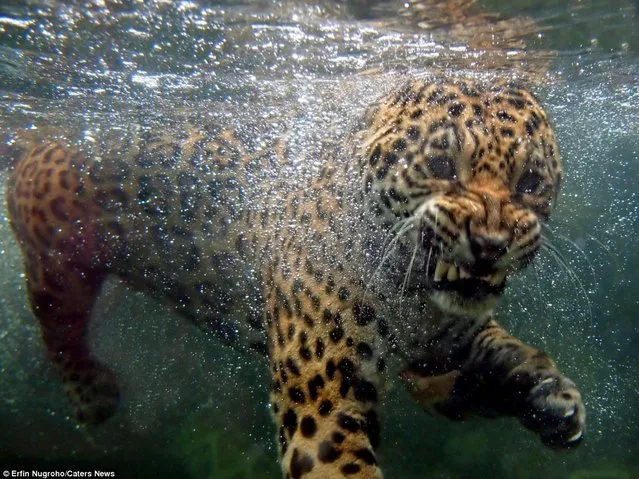
Hungry Rare Jaguar Swims For His Supper

“Most cats run away at the first sign of water but this jaguar shows that some just love to make a splash. The fierce-looking feline was spotted doing an impressive moggy paddle as it swam for meat at Taman Safari in Indonesia. The spectacular shots were captured by professional photographer, Erfin Nugroho, who was visiting the centre for endangered animals with his family”. – Richard Hartley-Parkinson. (Photo by Erfin Nugroho/Caters News)
Details
18 Apr 2012 11:49:00
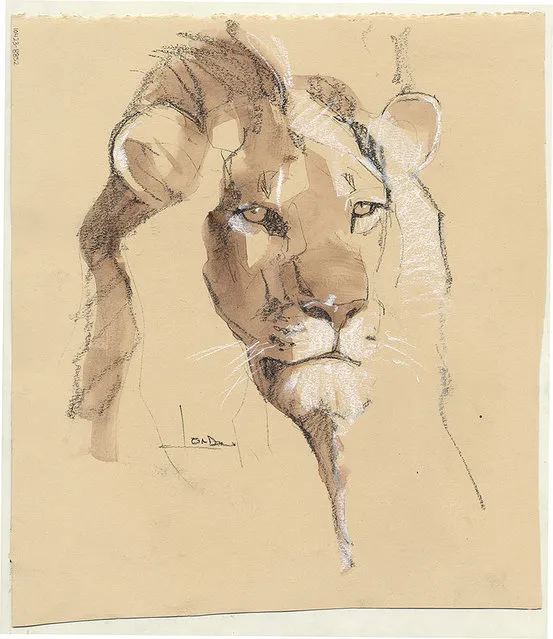
Drawing By Anne London

Anne London found her focus at the age of 19 while working for Tippi Hedren, founder of Shambala , a refuge for big cats, elephants and other species located in California. There, as she walked among the animals, she realized that the commercial art field was not for her, and she dedicated her life to bringing about awareness of the plight of endangered wildlife across the globe, and raising money for conservation efforts.
Details
29 May 2014 06:59:00
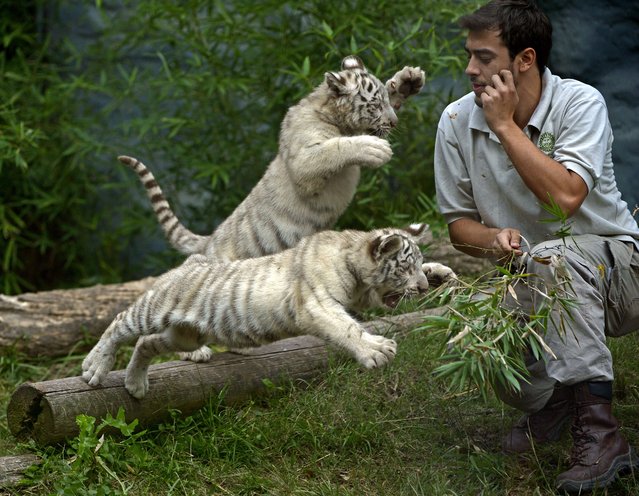
Two three-month-old female white Bengal tiger cubs play with a zoo keeper in their enclosure at the Buenos Aires' Zoo, in Argentina, on April 17, 2014. Captive white Bengal tiger Cloe, gave birth to three cubs – two females and one male – on January 14, 2014. (Photo by Juan Mabromata/AFP Photo)

Two three-month-old female white Bengal tiger cubs play with a zoo keeper in their enclosure at the Buenos Aires' Zoo, in Argentina, on April 17, 2014. Captive white Bengal tiger Cloe, gave birth to three cubs – two females and one male – on January 14, 2014. (Photo by Juan Mabromata/AFP Photo)
Details
19 Apr 2014 12:27:00
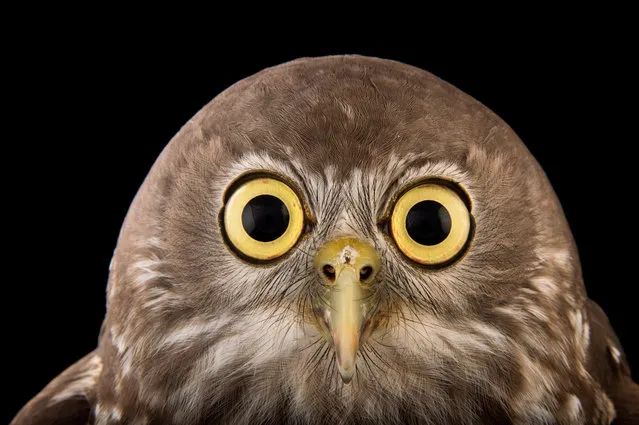
The National Geographic Photo Ark is a travelling exhibition of photographer Joel Sartore’s quest to create a photo archive of biodiversity around the world. So far, Sartore has captured studio portraits of more than 6,000 species – a number that he hopes to double. On 1 July, the ark will open at Melbourne zoo – the first time it has been exhibited in the southern hemisphere. More than 50 portraits will be on display, including many of Australian endangered animals being protected by programs at the zoo itself. These captions have been edited from text supplied by Melbourne zoo. Here: Barking owl. So-named because its call sounds like a barking dog, these birds are native to Australia, Indonesia and Papua New Guinea. In Victoria they are listed as an endangered species, and in 2003 there were estimated to be fewer than 50 breeding pairs. The main threat to the species in Victoria is loss of habitat, especially large trees with hollows in which they can nest and on which many of their prey depend. Apart from a bark, they may utter a chilling scream when they feel threatened. (Photo by Joel Sartore/National Geographic Photo Ark/The Guardian)

The National Geographic Photo Ark is a travelling exhibition of photographer Joel Sartore’s quest to create a photo archive of biodiversity around the world. So far, Sartore has captured studio portraits of more than 6,000 species – a number that he hopes to double. On 1 July, the ark will open at Melbourne zoo – the first time it has been exhibited in the southern hemisphere. More than 50 portraits will be on display, including many of Australian endangered animals being protected by programs at the zoo itself. These captions have been edited from text supplied by Melbourne zoo. Here: Barking owl. (Photo by Joel Sartore/National Geographic Photo Ark/The Guardian)
Details
01 Jul 2017 07:45:00


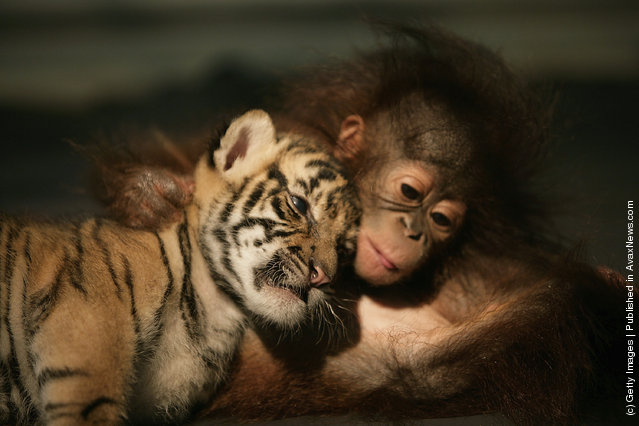
Dema and Manis, the 26-day-old endangered Sumatran Tiger cubs play together at the “Taman Safari Indonesia” Animal Hospital, on February 26, 2007 in Cisarua, Bogor Regency, West Java, Indonesia. The two Sumatran tiger-cubs recently born at the hospital have been rejected by their mother Cicis, while baby Orangutans, Irma and Nia have also been rejected by their mothers. All babies are being looked after by staff at the Animal Hospital. (Photo by: Dimas Ardian/Getty Images)
Details
24 Apr 2011 12:51:00
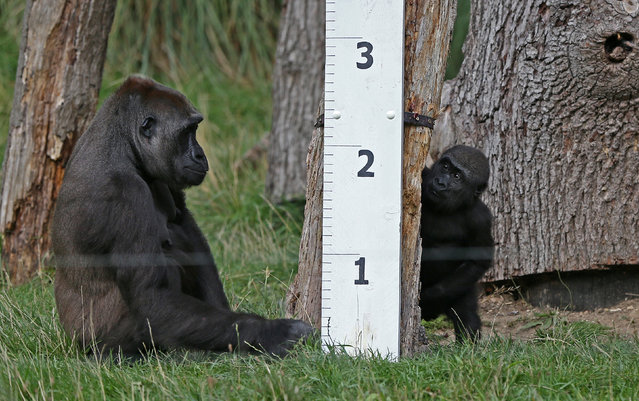
Gorillas sit next to a ruler during a photocall for the annual weigh-in at London Zoo in London, Britain August 24, 2017. (Photo by Neil Hall/Reuters)

Gorillas sit next to a ruler during a photocall for the annual weigh-in at London Zoo in London, Britain August 24, 2017. During the weigh-in, animals across the zoo have their vital statistics recorded including their height and weight and the information is then shared with zoos across the world to help zookeepers compare important information on thousands of endangered species. (Photo by Neil Hall/Reuters)
Details
26 Aug 2017 08:16:00
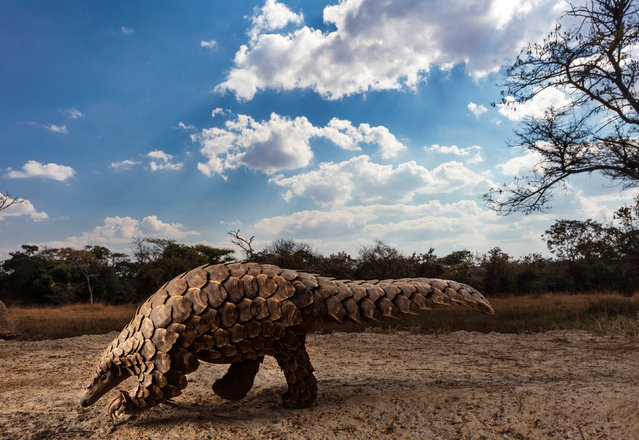
Pangolins in Crisis: Brent Stirton, South Africa; 1st place, Natural world and wildlife. “Pangolins are the world’s most illegally trafficked mammals, with an estimated one million trafficked to Asia in the last 10 years. Their scales are used in traditional Chinese and Vietnamese medicine, and their meat is sold as a high-priced delicacy. As a result, pangolins are listed as critically endangered and anyone who trades or consumes them is breaking the law. This body of work exposes the trade, while exploring aspects of illegality and celebrating the people who are trying to save these animals”. (Photo by Brent Stirton/Sony World Photography Awards 2020)

Pangolins in Crisis: Brent Stirton, South Africa; 1st place, Natural world and wildlife. “Pangolins are the world’s most illegally trafficked mammals, with an estimated one million trafficked to Asia in the last 10 years. Their scales are used in traditional Chinese and Vietnamese medicine, and their meat is sold as a high-priced delicacy. As a result, pangolins are listed as critically endangered and anyone who trades or consumes them is breaking the law. This body of work exposes the trade, while exploring aspects of illegality and celebrating the people who are trying to save these animals”. (Photo by Brent Stirton/Sony World Photography Awards 2020)
Details
11 Jun 2020 00:05:00
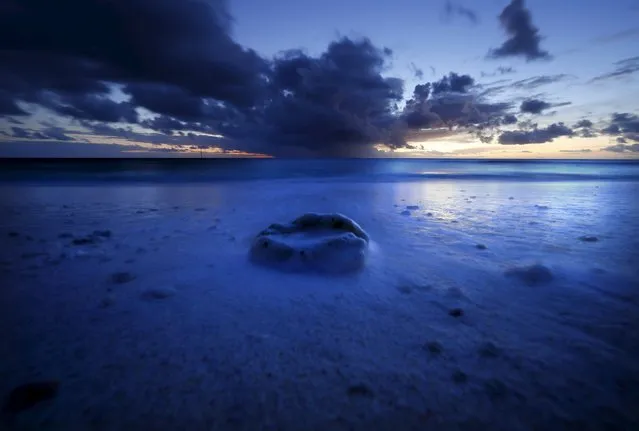
A reef shell lies on a beach as the sun sets on Lady Elliot Island located north-east of the town of Bundaberg in Queensland, Australia, June 10, 2015. (Photo by David Gray/Reuters)

A reef shell lies on a beach as the sun sets on Lady Elliot Island located north-east of the town of Bundaberg in Queensland, Australia, June 10, 2015. UNESCO World Heritage delegates recently snorkelled on Australia’s Great Barrier Reef, thousands of coral reefs, which stretch over 2,000 km off the northeast coast. Surrounded by manta rays, dolphins and reef sharks, their mission was to check the health of the world's largest living ecosystem, which brings in billions of dollars a year in tourism. Some coral has been badly damaged and animal species, including dugong and large green turtles, are threatened. UNESCO will say on Wednesday whether it will place the reef on a list of endangered World Heritage sites, a move the Australian government wants to avoid at all costs, having lobbied hard overseas. Earlier this year, UNESCO said the reef's outlook was “poor”. (Photo by David Gray/Reuters)
Details
30 Jun 2015 12:21:00