Loading...
Done
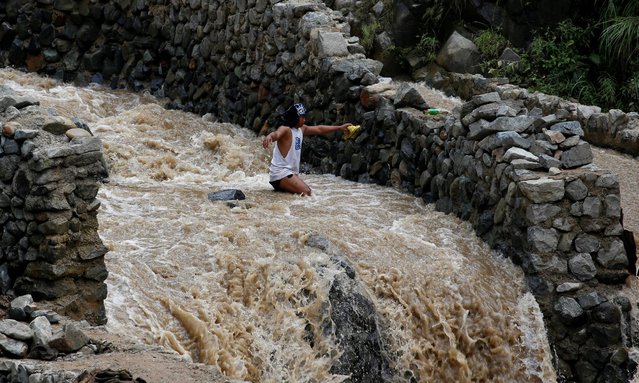
A local miner wades through water as he walks down from a mountain in Benguet a day after Typhoon Haima struck northern Philippines, October 21, 2016. (Photo by Erik De Castro/Reuters)

A local miner wades through water as he walks down from a mountain in Benguet a day after Typhoon Haima struck northern Philippines, October 21, 2016. Super Typhoon Haima slammed into the northeastern Philippine coast late Wednesday with ferocious winds and rain that rekindled fears and memories from the catastrophe wrought by Typhoon Haiyan in 2013. (Photo by Erik De Castro/Reuters)
Details
22 Oct 2016 10:15:00
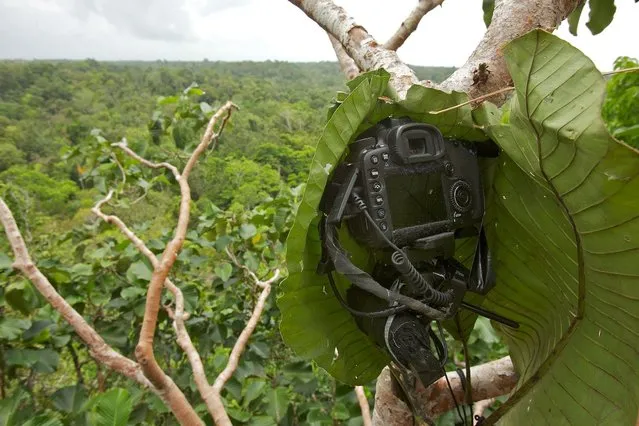
Tim Laman - Wildlife Photojournalist

Tim Laman is a field biologist and wildlife photojournalist. His pioneering research in the rain forest canopy in Borneo led to a PhD from Harvard and his first National Geographic article in 1997. Since then, he has pursued his passion for exploring wild places and documenting little-known and endangered wildlife by becoming a regular contributor to National Geographic. He has eighteen articles to his credit to date, all of which have had a conservation message. Some have focused on endangered species such as Orangutans or Hornbills, while others, such as a series of articles on Conservation International’s Biodiversity Hotspots, have highlighted regions under intense pressure.
Details
14 Sep 2013 10:13:00
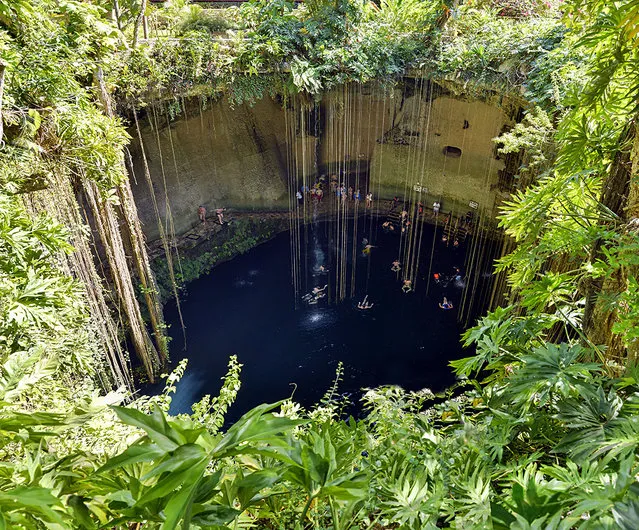
Cenote In Mexico

A cenote is a natural phenomenon, a sinkhole in the Earth’s surface. The Yucatan Peninsula in Mexico has an estimated 7,000 cenotes because it is primarily made up of porous limestone. For millions of years, rainfall slowly ate away at the limestone and a huge system of underground caves and caverns was formed. Many filled with water from rain or from the underground water table. When the roof of a water filled cave collapses, a cenote is born. The water found in a cenote may be fresh water, salt water, or both. Structurally it may be completely open, like a lake, almost completely closed with just a small opening at the top, or somewhere in between.
Details
06 Oct 2013 09:45:00
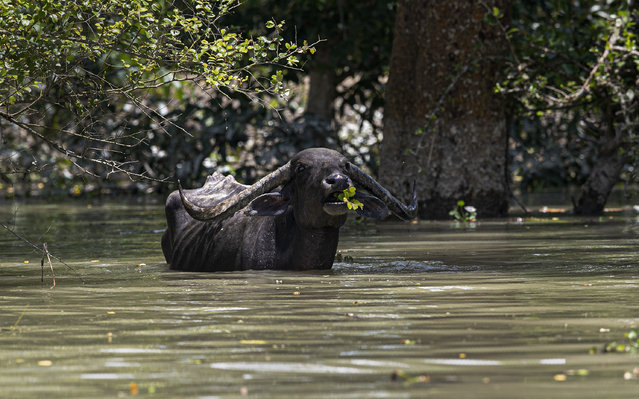
A wild water buffalo eats tree branches standing in flood water at the Pobitora wildlife sanctuary in Pobitora, Morigaon district, Assam, India, Thursday, July 16, 2020. (Photo by Anupam Nath/AP Photo)

A wild water buffalo eats tree branches standing in flood water at the Pobitora wildlife sanctuary in Pobitora, Morigaon district, Assam, India, Thursday, July 16, 2020. Floods and landslides triggered by heavy monsoon rains have killed dozens of people in this northeastern region. The floods also inundated most of Kaziranga National Park, home to an estimated 2,500 rare one-horned rhinos. (Photo by Anupam Nath/AP Photo)
Details
18 Jul 2020 00:01:00
A photograph of a dog taken from underneath on December 2016 in VA, Canada. (Photo by The Underdogs Project/Barcroft Images)

A photograph of a dog taken from underneath on December 2016 in VA, Canada. Forget the cats, itÌs just raining dogs! A creative duo have come up with an innovative way to raise money for animal welfare; photographing dogs as youÌve never seen them before. Professional photographer Jason Kenzie and designer Tania Ryan have created a unique set of images from the underside of dogs, named The Underdogs Project. The project will be featured as a 2017 calendar, with each month belonging to a quirky canine. (Photo by The Underdogs Project/Barcroft Images)
Details
20 Dec 2016 12:32:00


Hopeful models together after their casting call for the 2008 for the L'Oreal Melbourne Fashion Festival at the Prahran Town Hall on January 23, 2008 in Melbourne, Australia. (Photo by Kristian Dowling/Getty Images)
Details
05 Apr 2011 11:58:00
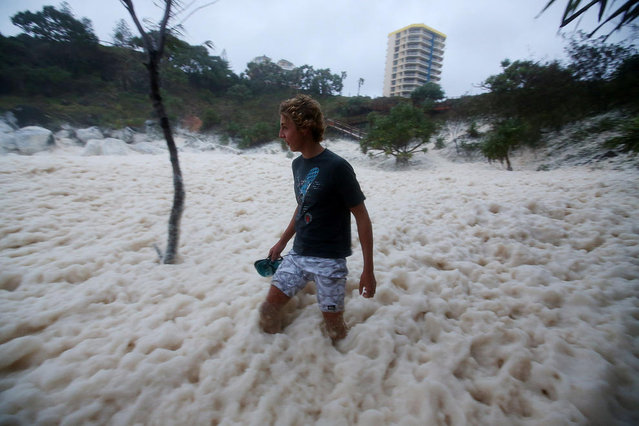
Cyclone Leaves Mooloolaba Covered In Foam

Wild weather in the Australian state of Queensland has led to a small town becoming covered in foam whipped up by rough seas.
Residents and visitors could be seen playing in the foam and taking pictures of the unusual phenomenon in Mooloolaba on the Sunshine Coast.
Details
06 Feb 2013 13:14:00
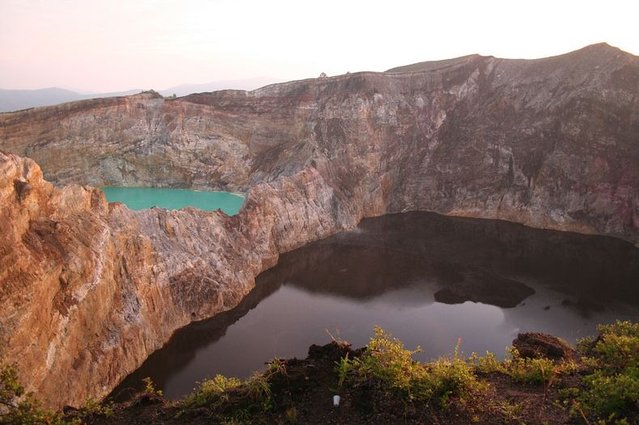
Indonesia Lakes of Mount Kelimutu

Kelimutu is a volcano, close to the small town of Moni about 50 km to the east of Ende, Indonesia in central Flores Island of Indonesia.
Details
27 Jun 2013 11:31:00