Loading...
Done
Cristine Angelie Garcia (C), 24, rides a jeepney on her way to work at a call centre for the midnight shift in Taguig city, Metro Manila, Philippines October 3, 2016. “Maybe there is another way where people do not need to die”, she said, adding she felt safer walking the streets at night. “I'm on Duterte's side. Maybe he's just misunderstood because he grew up on the streets”. (Photo by Ezra Acayan/Reuters)

Cristine Angelie Garcia (C), 24, rides a jeepney on her way to work at a call centre for the midnight shift in Taguig city, Metro Manila, Philippines October 3, 2016. “Maybe there is another way where people do not need to die”, she said, adding she felt safer walking the streets at night. “I'm on Duterte's side. Maybe he's just misunderstood because he grew up on the streets”. (Photo by Ezra Acayan/Reuters)
Details
29 Dec 2016 07:48:00
A ring-tailed lemur sunbakes at Melbourne Zoo in Melbourne, Victoria, Australia on December 21 2016. (Photo by Julian Smith/EPA)

A ring-tailed lemur sunbakes at Melbourne Zoo in Melbourne, Victoria, Australia on December 21 2016. (Photo by Julian Smith/EPA)
Details
01 Jan 2017 09:12:00
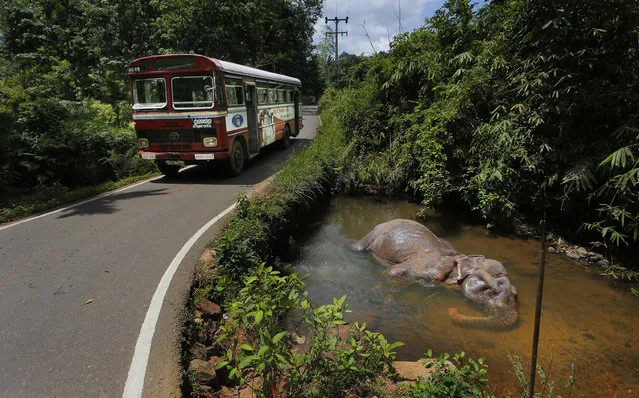
In this July 5, 2016 photo, a tamed elephant rests in a pool of water by a road in Baduraliya, a village outside Colombo, Sri Lanka. Even as the country cracks down on illegal ownership, the enduring demand for elephants has the government planning to set up its own pool of captive animals to be hired out to temples for ceremonies and maintained with budget funds. For Buddhists, who make up 70 percent of the island's 20 million population, elephants are believed to have been a servant of the Buddha and even a previous incarnation of the holy man himself. (Photo by Eranga Jayawardena/AP Photo)

In this July 5, 2016 photo, a tamed elephant rests in a pool of water by a road in Baduraliya, a village outside Colombo, Sri Lanka. Even as the country cracks down on illegal ownership, the enduring demand for elephants has the government planning to set up its own pool of captive animals to be hired out to temples for ceremonies and maintained with budget funds. (Photo by Eranga Jayawardena/AP Photo)
Details
04 Jan 2017 08:10:00
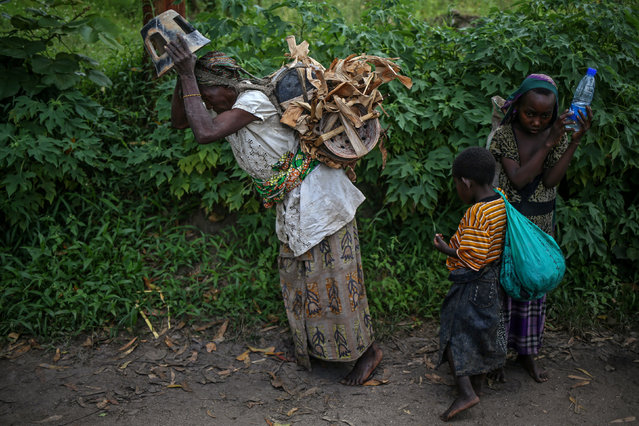
Habimana, 45, and her children walk to market to sell pottery on Idjwi island in the Democratic Republic of Congo, November 23, 2016. (Photo by Therese Di Campo/Reuters)

Habimana, 45, and her children walk to market to sell pottery on Idjwi island in the Democratic Republic of Congo, November 23, 2016. (Photo by Therese Di Campo/Reuters)
Details
13 Jan 2017 08:24:00
A group of people are seen on a Victoria line train in London, England during the first night of the Night Tube service on August 19 2016. The Central line and Victoria line are the first to operate a Night service with further lines expected to be running by the end of the year. (Photo by SWNS.com)

A group of people are seen on a Victoria line train in London, England during the first night of the Night Tube service on August 19 2016. The Central line and Victoria line are the first to operate a Night service with further lines expected to be running by the end of the year. (Photo by SWNS.com)
Details
28 Sep 2016 11:25:00
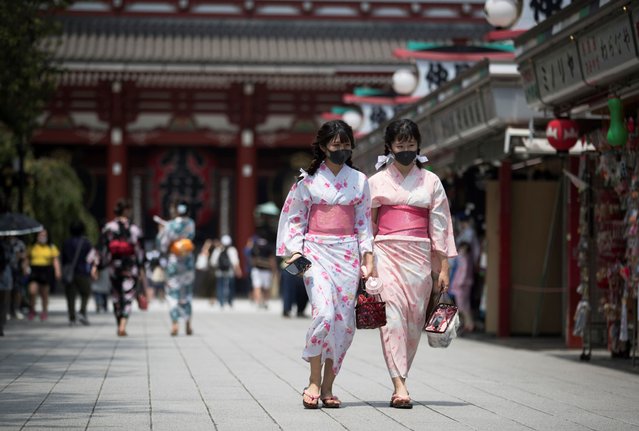
Two women in traditional kimonos wear face masks to help curb the spread of the coronavirus as they visit the Sensoji temple in Tokyo on Friday, August 7, 2020. (Photo by Hiro Komae/AP Photo)

Two women in traditional kimonos wear face masks to help curb the spread of the coronavirus as they visit the Sensoji temple in Tokyo on Friday, August 7, 2020. (Photo by Hiro Komae/AP Photo)
Details
03 Sep 2020 00:01:00
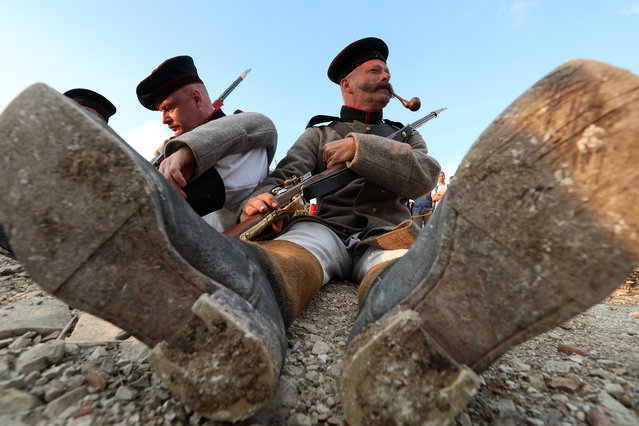
Enthusiasts participate in the historical re-enactment of the Sevastopol Fortress assault, which took place during the Crimean War of 1853-1856, at a military historical festival in Sevastopol, Crimea, September 5, 2020. (Photo by Alexey Pavlishak/Reuters)

Enthusiasts participate in the historical re-enactment of the Sevastopol Fortress assault, which took place during the Crimean War of 1853-1856, at a military historical festival in Sevastopol, Crimea, September 5, 2020. (Photo by Alexey Pavlishak/Reuters)
Details
21 Sep 2020 00:01:00
A dhobi, or a washerman washes cloths on the banks of the River Gomti in Lucknow, India, Saturday, September 12, 2020. Dhobis are traditional laundry workers who wash clothes by hand and dry them in the sun, an occupation which has been in existence for generations. Most cities in India have a Dhobi Ghat, or washermen's area, where the city's pile of clothes is laundered. This practice is still popular in India, despite of modern technology. Around 1,000 families work in Lucknow's Dhobi Ghat. However, in light of the novel coronavirus, their wages have decreased drastically. With each family earning around US$100-200 per month. (Photo by Rajesh Kumar Singh/AP Photo)

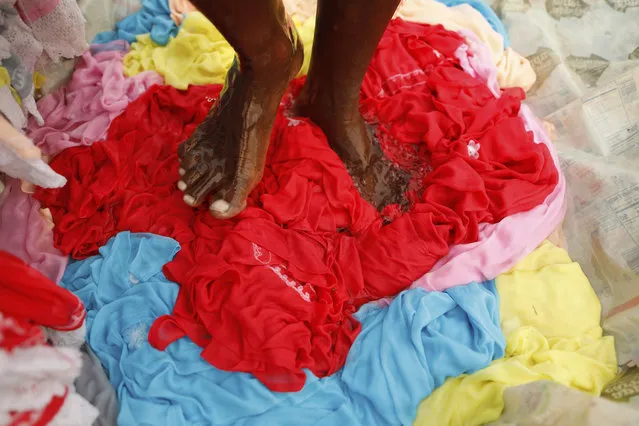
A dhobi, or a washerman washes cloths on the banks of the River Gomti in Lucknow, India, Saturday, September 12, 2020. Dhobis are traditional laundry workers who wash clothes by hand and dry them in the sun, an occupation which has been in existence for generations. Most cities in India have a Dhobi Ghat, or washermen's area, where the city's pile of clothes is laundered. This practice is still popular in India, despite of modern technology. Around 1,000 families work in Lucknow's Dhobi Ghat. However, in light of the novel coronavirus, their wages have decreased drastically. With each family earning around US$100-200 per month. (Photo by Rajesh Kumar Singh/AP Photo)
Details
25 Sep 2020 00:03:00