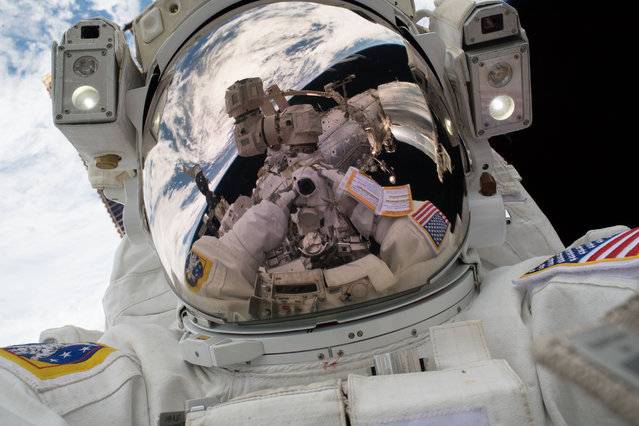
Spacewalker Mark Vande Hei took his own photograph during the first spacewalk of 2018, on January 23, 2018. These sky-high pictures are better known as “space-selfies”. (Photo by Mark Vande Hei/NASA)
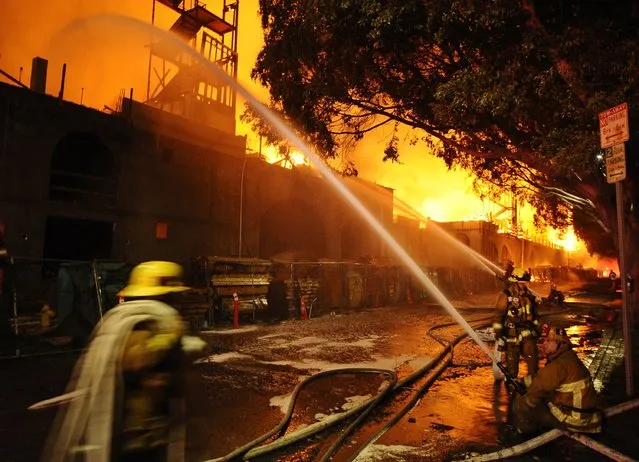
Los Angeles city firefighters battle a massive fire at a seven-story downtown apartment complex under construction in Los Angeles, California December 8, 2014. Over 250 firefighters battle the early morning blaze which shutdown two major freeways the Los Angeles Fire Department and California Highway Patrol said. (Photo by Gene Blevins/Reuters)
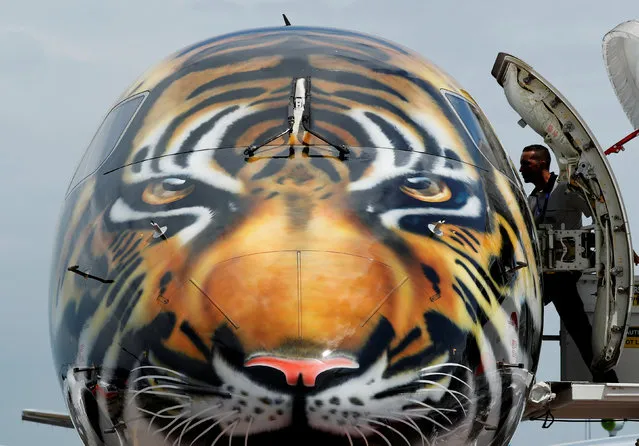
An Embraer E-190 E2 aircraft featuring a spray painted tiger's face on the nose of the aircraft is displayed during a media preview of the Singapore Airshow February 4, 2018. (Photo by Edgar Su/Reuters)
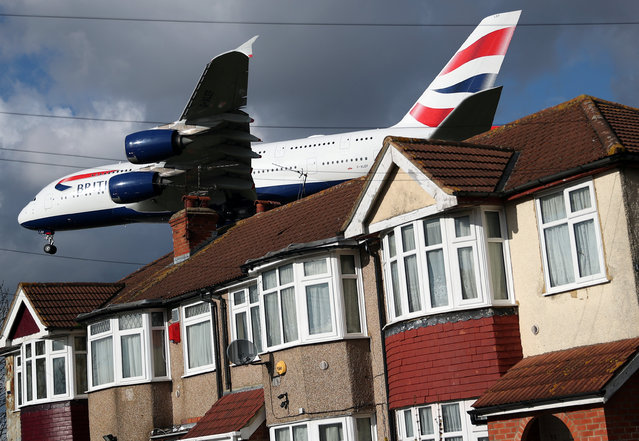
A British Airways Airbus A380 aircraft arrives over the top of residential houses to land at Heathrow Airport in west London, Britain, February 27, 2020. (Photo by Hannah McKay/Reuters)
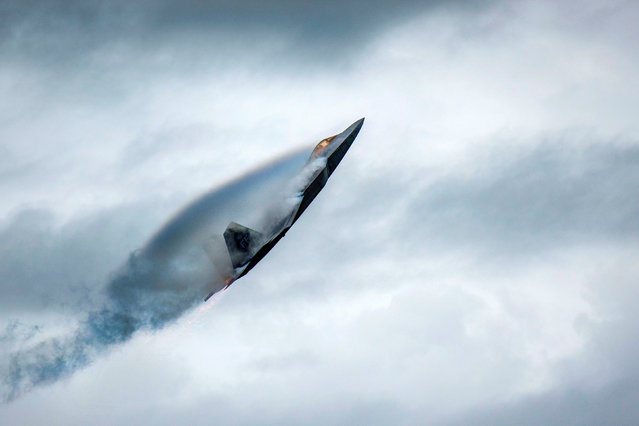
U.S. Air Force Major Paul “Loco” Lopez performs in an F-22 Raptor during the AirPower Over Hampton Roads JBLE Air and Space Expo at Joint Base Langley-Eustis, Virginia, U.S. May 18, 2018. (Photo by U.S. Air Force/Staff Sgt. Areca T. Bell/Handout via Reuters)
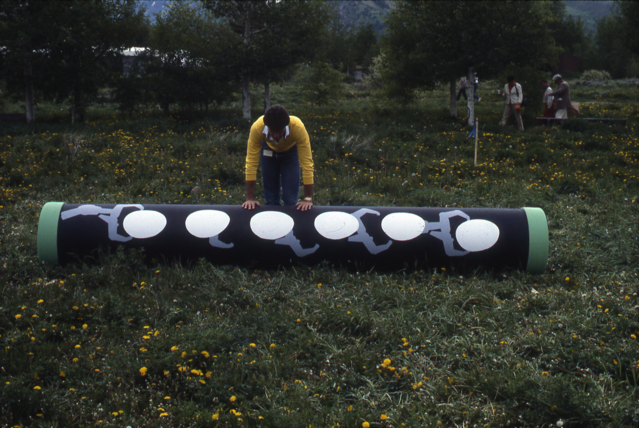
In 1983, Steve Jobs and his team who were attending a conference in Aspen, decided to bury a capsule that could be opened by future generations or roughly twenty years later. However, they forgot where the capsule was buried and therefore could not follow through with this plan. Recently, National Geographic’s TV Show, “Diggers” inadvertently discovered the capsule.
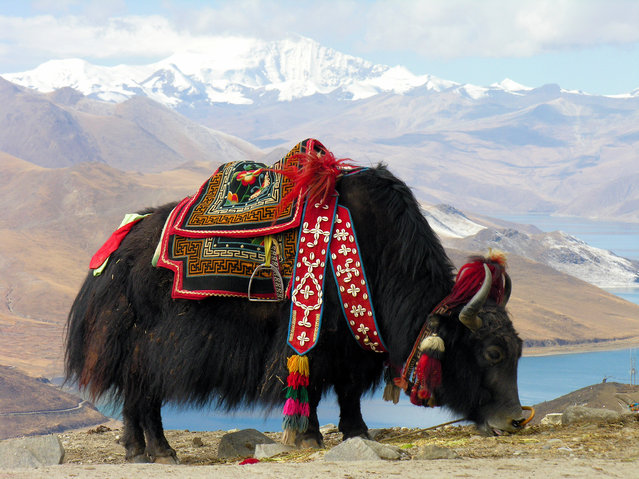
Yak near Yamdrok lake, Tibet. It is a long-haired bovinae found throughout the Himalayan region of south Central Asia, the Tibetan Plateau and as far north as Mongolia and Russia. The Tibetan economy is dominated by subsistence agriculture. Due to limited arable land, the primary occupation of the Tibetan Plateau is raising livestock, such as sheep, cattle, goats, camels, yaks, dzo, and horses. The Tibetan yak is an integral part of Tibetan life. (Photo by Dennis Jarvis)
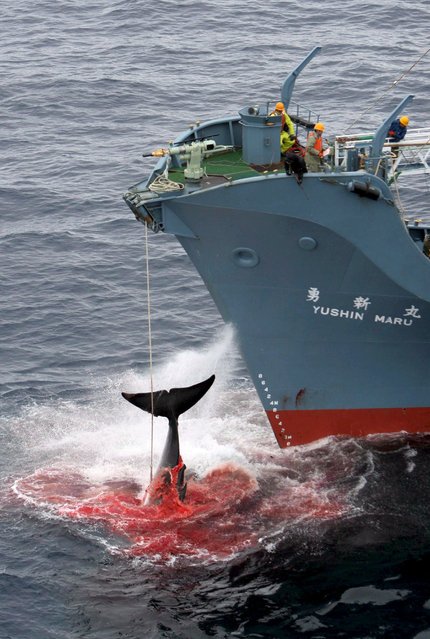
A file photograph dated 07 January 2006 and released by Greenpeace, showing the Yushin Maru, a factory ship in a Japanese whaling fleet, injuring a whale with it's first harpoon attempt. A UN court in The Hague on 31 March 2014 halted Japan's much-criticized whaling programme, ruling that it contravenes a 1986 moratorium on whale hunting. Japan must end its 'research whaling' programme, the International Court of Justice (ICJ) said. Japan said the programme was for scientific research and permitted under international conventions. Australia had brought the case to the ICJ in 2010, charging that Japan was breaching international law by killing hundreds of whales every year for commercial purposes. Japan was “deeply disappointed” by the ruling, an unnamed government official was quoted by the Kyodo News agency as saying. But the official said Japan would stand by the ruling. (Photo by Kate Davison/EPA)