Loading...
Done
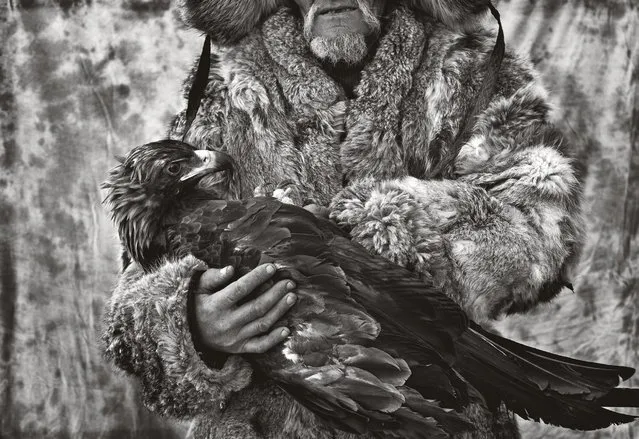
A Kazakh hunter has taken an eaglet from the nest, given it pride of place in their home and trained it. All hunters describe the eagle as part of their family. (Photo by Palani Mohan)

Kazakh nomads have been grazing their livestock in Mongolia for hundreds of years. Fascinated by the bond between hunter and eagle, photographer Palani Mohan has spent the last few years documenting the burkitshi. Mohan's photos of the landscape, isolation of the hunt, and most of all the trusting relationship between man and bird, convey the importance that the eagle plays in their lives. (Photo by Palani Mohan)
Details
11 Jan 2016 08:03:00
Charlize Theron and Kristen Stewart

“There’s so much that Snow White has been deprived of in terms of having the proper time to really develop and hone who she is. She’s put in jail at the beginning of her life, so she’s a stunted person. She has a really idealized concept of what the world is, and how people should live, and how wonderful things all can be, and there is this debilitating isolation that she feels because she has been locked away in a little cell for seven years. ...
Kristen Stewart
Details
12 May 2015 09:04:00
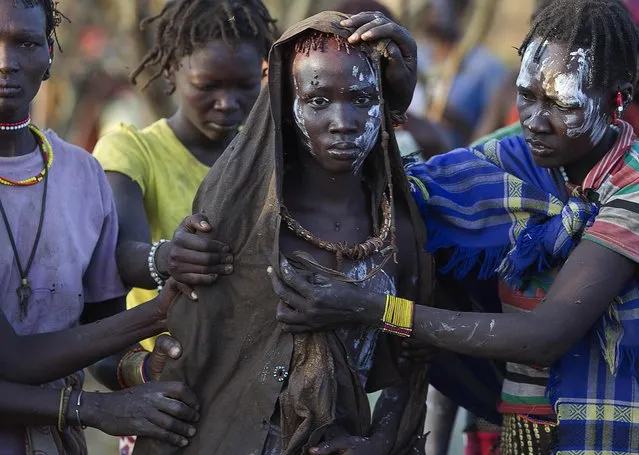
A Pokot girl, covered in animal skins, walks to a place where she will rest after being circumcised in a tribal ritual in a village about 80 kilometres from the town of Marigat in Baringo County, October 16, 2014. (Photo by Siegfried Modola/Reuters)

Reuters photographer Siegfried Modola gained access to a circumcision ceremony in rural Kenya for young girls of the Pokot tribe, in Baringo County. Here: a Pokot girl, covered in animal skins, walks to a place where she will rest after being circumcised in a tribal ritual in a village about 80 kilometres from the town of Marigat in Baringo County, October 16, 2014. (Photo by Siegfried Modola/Reuters)
Details
13 Nov 2014 14:12:00
A patient solves a rubik's cube at a temporary hospital converted from “Wuhan Livingroom” in central China's Hubei Province on February 10, 2020. In face of the outbreak of the novel coronavirus pneumonia epidemic, Wuhan authorities have transformed public venues such as exhibition centers and gymnasiums into temporary hospitals. The hospitals have a large capacity of treating patients with mild symptoms and play an important role in isolating the source of infection and cutting off the routes of infection during epidemic prevention. The first batch of patients was hospitalized on Feb. 5. (Photo by Chine Nouvelle/SIPA Press/Rex Features/Shutterstock)

A patient solves a rubik's cube at a temporary hospital converted from “Wuhan Livingroom” in central China's Hubei Province on February 10, 2020. In face of the outbreak of the novel coronavirus pneumonia epidemic, Wuhan authorities have transformed public venues such as exhibition centers and gymnasiums into temporary hospitals. The hospitals have a large capacity of treating patients with mild symptoms and play an important role in isolating the source of infection and cutting off the routes of infection during epidemic prevention. The first batch of patients was hospitalized on Feb. 5. (Photo by Chine Nouvelle/SIPA Press/Rex Features/Shutterstock)
Details
17 Feb 2020 00:07:00
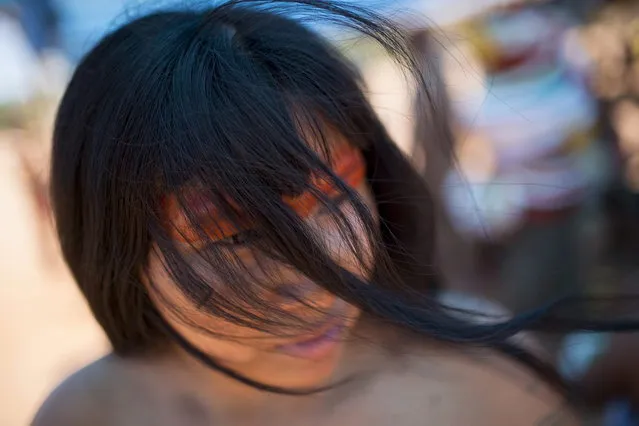
A Waura Indian woman watches the activities of this year's “quarup”, a ritual held over several days to honour in death a person of great importance to them, in Xingu National Park, Mato Grosso State, August 24, 2013. This year the Waura tribe is honouring their late cacique (chief) Atamai, who died in 2012 and helped created the Xingu Park, and his important contribution in facilitating communication between white Brazilians and Indians. (Photo by Ueslei Marcelino/Reuters)

A Waura Indian woman watches the activities of this year's “quarup”, a ritual held over several days to honour in death a person of great importance to them, in Xingu National Park, Mato Grosso State, August 24, 2013. This year the Waura tribe is honouring their late cacique (chief) Atamai, who died in 2012 and helped created the Xingu Park, and his important contribution in facilitating communication between white Brazilians and Indians. (Photo by Ueslei Marcelino/Reuters)
Details
04 Sep 2013 08:48:00
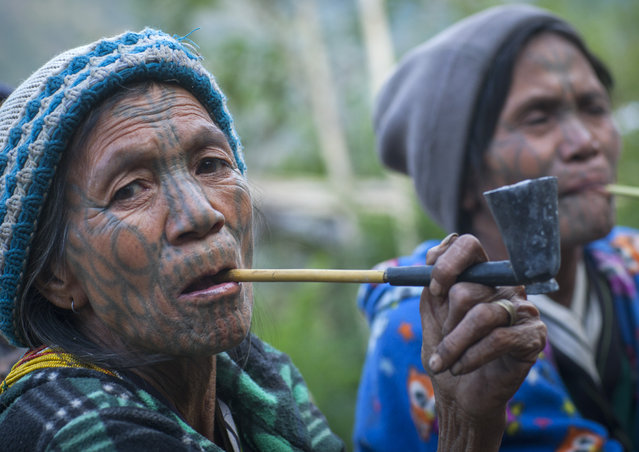
A group of tattooed women from the Muun tribe who inhabit the hills of the Arakan state. The design, known as the letter B-pattern, is common in the Mindat area. It is composed of dots, lines and occasionally circles, in February, 2015, in Myanmar, Burma. (Photo by Eric Lafforgue/Barcroft Media)

A group of tattooed women from the Muun tribe who inhabit the hills of the Arakan state. The design, known as the letter B-pattern, is common in the Mindat area. It is composed of dots, lines and occasionally circles, in February, 2015, in Myanmar, Burma. With spider webs, B-patterns and crossed lines painstakingly inked on their faces these stunning photographs show the tattooed women of Burma. French photographer Eric Lafforgue travelled to the Chin, Rakhine and Arakan states of northwestern Myanmar to capture the rare facial designs. (Photo by Eric Lafforgue/Barcroft Media)
Details
16 Mar 2015 10:54:00
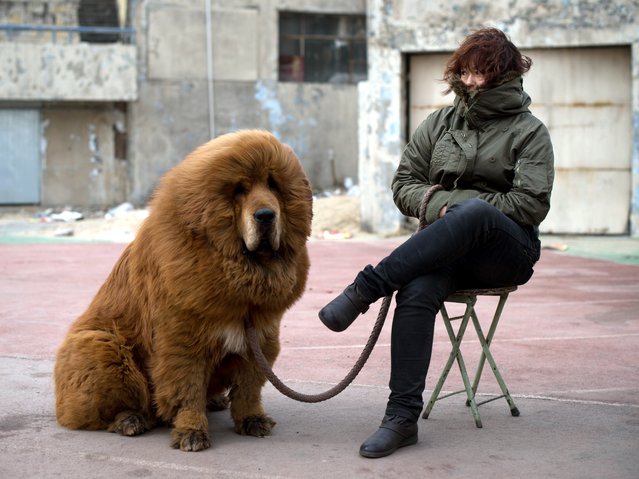
A Tibetan mastiff dog is displayed for sale at a mastiff show in Baoding, Hebei province, south of Beijing on March 9, 2013. Fetching prices up to around 750,000 USD, mastiffs have become a prized status-symbol amongst China's wealthy, with rich buyers across the country sending prices skyrocketing. Owners say the mastiffs, descendents of dogs used for hunting by nomadic tribes in central Asia and Tibet are fiercely loyal and protective. (Photo by Ed Jones/AFP Photo)

A Tibetan mastiff dog is displayed for sale at a mastiff show in Baoding, Hebei province, south of Beijing on March 9, 2013. Fetching prices up to around 750,000 USD, mastiffs have become a prized status-symbol amongst China's wealthy, with rich buyers across the country sending prices skyrocketing. Owners say the mastiffs, descendents of dogs used for hunting by nomadic tribes in central Asia and Tibet are fiercely loyal and protective. Breeders still travel to the Himalayan plateau to collect young puppies, although many are unable to adjust to the low altitudes and die during the journey. (Photo by Ed Jones/AFP Photo)
Details
02 May 2014 09:40:00
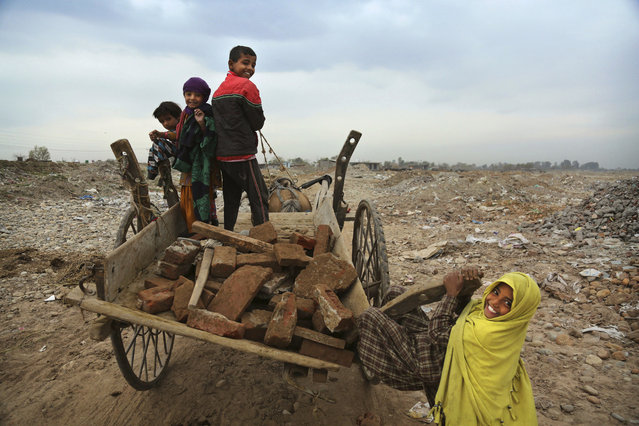
An Indian nomadic Gujjar girl hangs on to a horse cart after collecting bricks from debris on the outskirts of Jammu, India, Tuesday, March 7, 2017. The Gujjar tribal communities are considered by some to be economically and socially backward and the lack of care by the state government has led to resentment amongst the community. The tribe moves to the plains from the hills to escape the cold winters. (Photo by Channi Anand/AP Photo)

An Indian nomadic Gujjar girl hangs on to a horse cart after collecting bricks from debris on the outskirts of Jammu, India, Tuesday, March 7, 2017. The Gujjar tribal communities are considered by some to be economically and socially backward and the lack of care by the state government has led to resentment amongst the community. The tribe moves to the plains from the hills to escape the cold winters. (Photo by Channi Anand/AP Photo)
Details
09 Jun 2017 06:36:00