Loading...
Done
People in hard hats in a rage room in Moscow, Russia on January 27, 2016. The Debosh stress relief service gives its customers an opportunity to smash the rage room up with sledgehammers and bats to relieve stress and tension. (Photo by Artyom Geodakyan/TASS/Barcroft Media)

People in hard hats in a rage room in Moscow, Russia on January 27, 2016. The Debosh stress relief service gives its customers an opportunity to smash the rage room up with sledgehammers and bats to relieve stress and tension. (Photo by Artyom Geodakyan/TASS/Barcroft Media)
Details
05 Feb 2016 11:10:00
“Day 139/365”

“365 days project: Day 139/365”. (Photo by Nizaad)
Details
09 Nov 2012 12:58:00
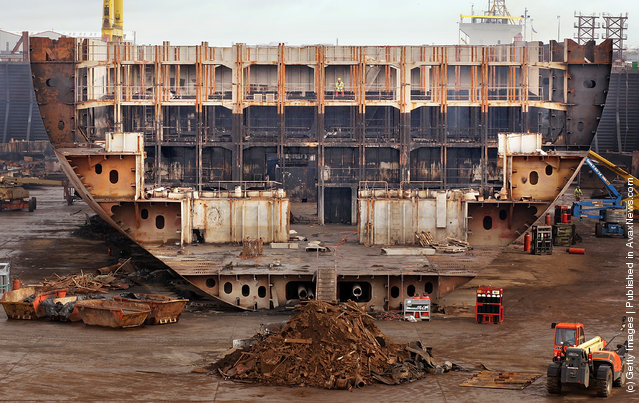
The Ending Of Life Of The Cargo Ship

The MSC Napoli cargo ship lies in a dry dock at Harland and Wolff ship builders as it is dismantled for recycling on April 11, 2008 in Belfast, Northern Ireland. (Photo by Peter Macdiarmid/Getty Images)
Details
23 Oct 2011 14:47:00
Muslim women light candles during the “EarthHour” in Jakarta, Indonesia, on March 23, 2013. Hundreds of people observed the global event that encourages people to turn off their lights for 60 minutes. (Photo by Dita Alangkara/Associated Press)

Muslim women light candles during the “EarthHour” in Jakarta, Indonesia, on March 23, 2013. Hundreds of people observed the global event that encourages people to turn off their lights for 60 minutes. (Photo by Dita Alangkara/Associated Press)
Details
24 Mar 2013 09:20:00
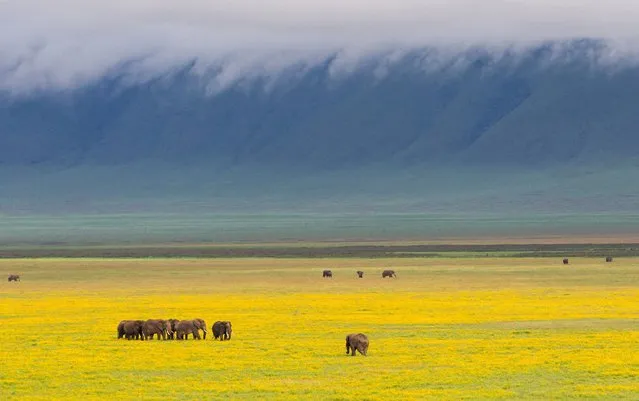
Ngorongoro Crater (Tanzania). At 610m deep and 260 sq km, this is the largest unflooded caldera in the world. A blue-green vision from above it's a haven for engangered wildlife and Maasai livestock. The crater was formed three million years ago when a giant volcano, which could have been as high as Kilimanjaro, exploded and collapsed. The caldera formed the concentric fractures in the crust cracked down to a magma reservoir deep underground. (Photo by John Bryant/Getty Images)

Ngorongoro Crater (Tanzania). At 610m deep and 260 sq km, this is the largest unflooded caldera in the world. A blue-green vision from above it's a haven for engangered wildlife and Maasai livestock. The crater was formed three million years ago when a giant volcano, which could have been as high as Kilimanjaro, exploded and collapsed. The caldera formed the concentric fractures in the crust cracked down to a magma reservoir deep underground. (Photo by John Bryant/Getty Images)
Details
28 Mar 2014 08:08:00
A model presents a creation by Indian designer Amit Aggarwal during the FDCI India Couture Week in New Delhi on July 28, 2024. (Photo by Sajjad Hussain/AFP Photo)

A model presents a creation by Indian designer Amit Aggarwal during the FDCI India Couture Week in New Delhi on July 28, 2024. (Photo by Sajjad Hussain/AFP Photo)
Details
06 Aug 2024 03:18:00
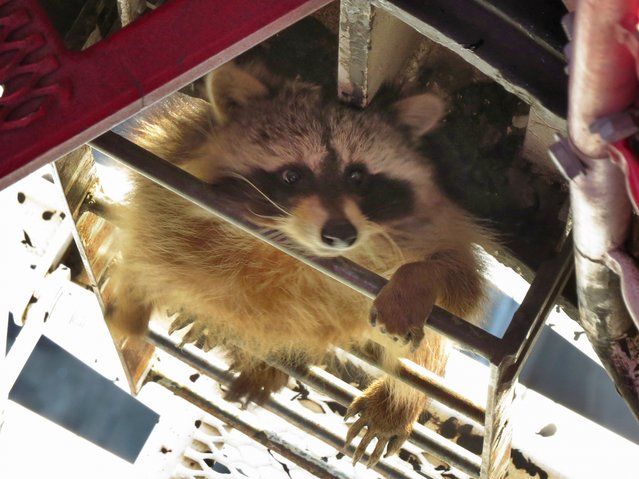
In this Thursday, April 16, 2015 photo provided by Robert MacFarlane, a raccoon climbs up a skyscraper in downtown Toronto. Social media was abuzz Thursday with the photo of the raccoon peering from between the metallic rungs of a crane 58 stories high. (Photo by Robert MacFarlane)

In this Thursday, April 16, 2015 photo provided by Robert MacFarlane, a raccoon climbs up a skyscraper in downtown Toronto. Social media was abuzz Thursday with the photo of the raccoon peering from between the metallic rungs of a crane 58 stories high. (Photo by Robert MacFarlane)
Details
18 Apr 2015 11:03:00


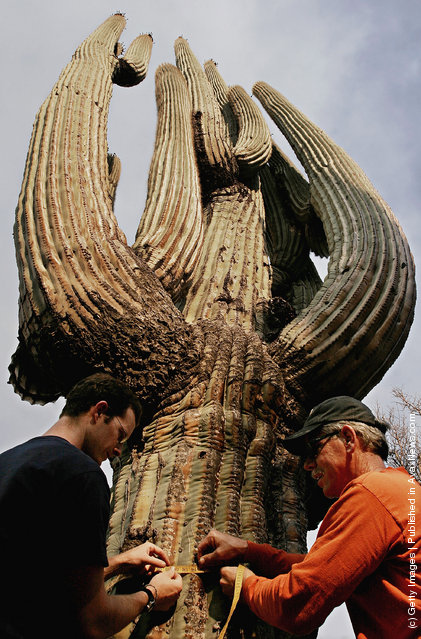
“The saguaro (scientific name Carnegiea gigantea) is a large, tree-sized cactus species in the monotypic genus Carnegiea. It is native to the Sonoran Desert in the U.S. state of Arizona, the Mexican state of Sonora, a small part of Baja California in the San Felipe Desert and an extremely small area of California, U.S. The saguaro blossom is the State Wildflower of Arizona”. – Wikipedia

Photo: Daniel Appel (L), a firefighter with Engine 84 from the Lassen National Forest in California and Mike Hallen, (R), Arizona representative of the National Register of Big Trees, measure the circumference of this Saguaro cactus called the "Grand One," in the Tonto National Forest on July 1, 2005 35 miles north of Phoenix, near Carefree, Arizona. The cactus, estimated to be more than 200 years old, measures a circumference of 7 feet, 10 inches (2.4 meters) and stands 46 feet high (14 meters). The cactus was burned in the Cave Creek Complex fire and may not survive. It was once the largest Saguaro in the world, two others have been found recently that have tied it's measurements. The fire has burned more than 214,000 acres of the Sonoran desert. (Photo by Jeff Topping/Getty Images)

Details
26 Jul 2011 12:27:00