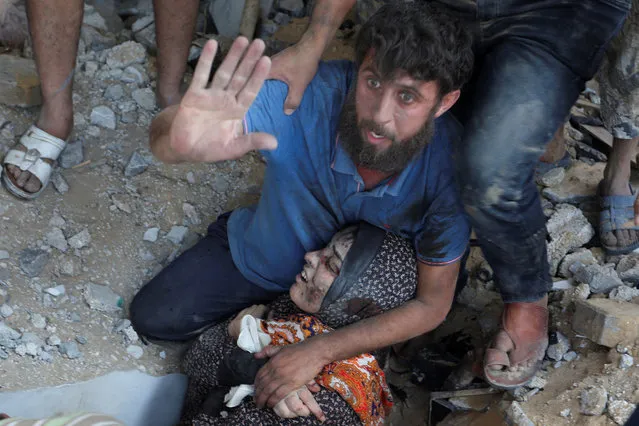
A Palestinian woman is assisted at the site of an Israeli strike on a house in Rafah in the southern Gaza Strip on October 30, 2023. (Photo by Reuters/Stringer)
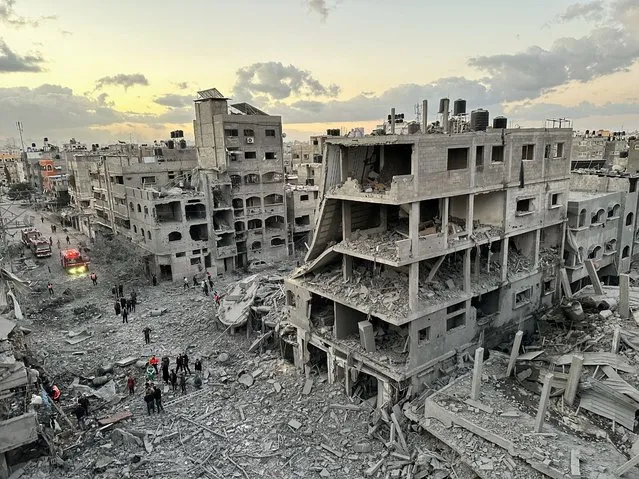
Palestinians walk at the site of Israeli strikes on houses, in Jabalia refugee camp in the northern Gaza Strip on November 21, 2023. (Photo by Abed Sabah/Reuters)
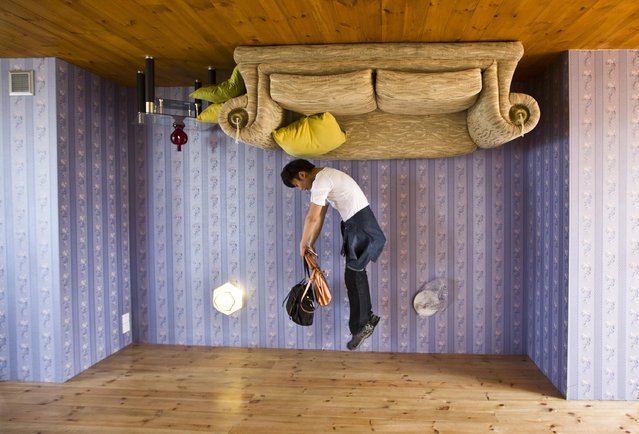
A tourist jumps inside an upside-down house at Fengjing Ancient Town, Jinshan District, south of Shanghai, May 1, 2014. The upside-down house was built as a tourist attraction using everyday household items and furniture. (Photo by Aly Song/Reuters)
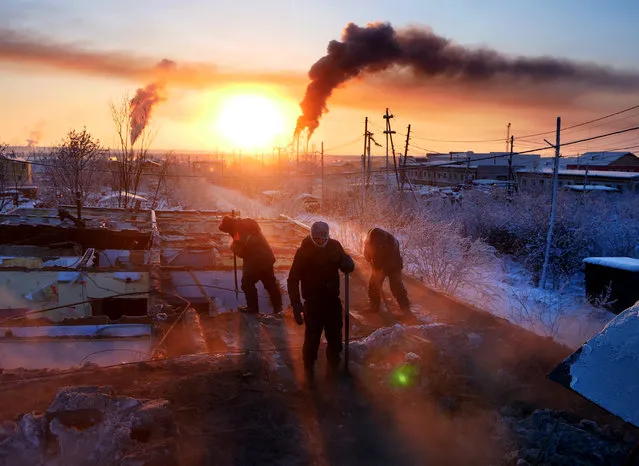
Workers pull apart a house in Khandyga, Russia, on February 2, 2018. The shifting ground caused by the uneven thawing of permafrost each summer causes buildings like this Soviet-era apartment house to sag and collapse. (Photo by Amos Chapple/Radio Free Europe/Radio Liberty)
White House Communications Director and presidential advisor Hope Hicks arrives at the U.S. Capitol Visitors Center February 27, 2018 in Washington, DC. Hicks is scheduled to testify behind closed doors to the House Intelligence Committee in its ongoing investigation into Russia's interference in the 2016 election. (Photo by Chip Somodevilla/Getty Images)
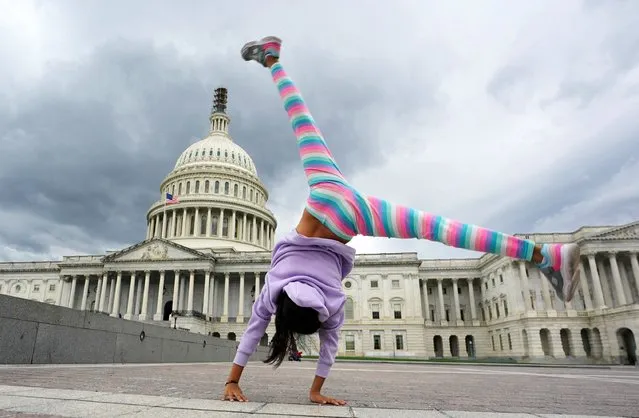
Valeria Ruiz, 10, from Colombia, does a cartwheel while visiting the U.S. Capitol, as Republican members of the House continue to work towards electing a new Speaker of the House in Washington, U.S., October 9, 2023. (Photo by Kevin Lamarque/Reuters)
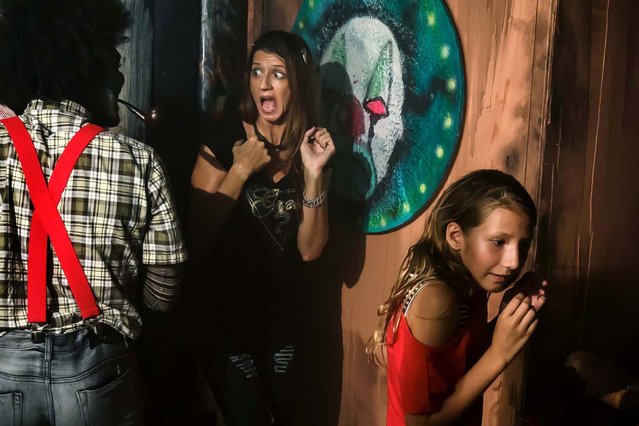
America’s Haunts, a trade association, estimates there are 1,200 for-profit haunted attractions in the U.S. plus another 3,000 haunted houses operated by charities that open for only a day or two every year. The commercial attractions collectively bring in from $300 million to $500 million annually. Fright Nights attendees make a turn through one of four haunted houses at this year's spooking season setup at the South Florida Fairgrounds. This house is named The Smiths and was created by Craig McInnis. (Photo by The Palm Beach Post)
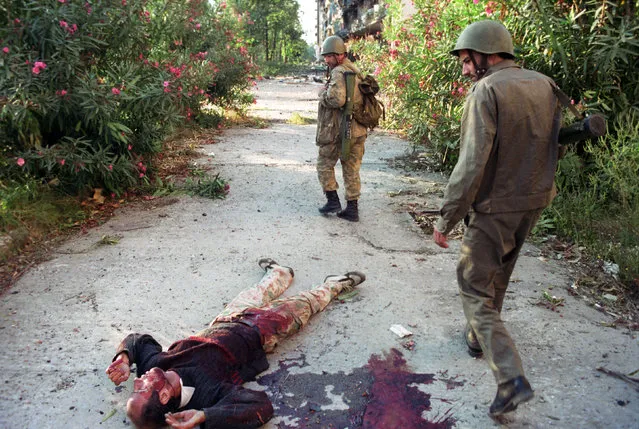
The War in Abkhazia from 1992 to 1993 was fought between Georgian government forces for the most part, and Abkhaz separatist forces, Russian armed forces and North Caucasian militants. Ethnic Georgians who lived in Abkhazia fought largely on the side of Georgian government forces. Ethnic Armenians and Russians within Abkhazia's population largely supported the Abkhazians, and many fought on their side. The separatists received support from thousands of North Caucasus and Cossack militants and from the Russian Federation forces stationed in and near Abkhazia. Here: Abkhazia. Sukhumi, 1993. A house-to-house combat. (Photo by Andrei Solovyov/ITAR-TASS)