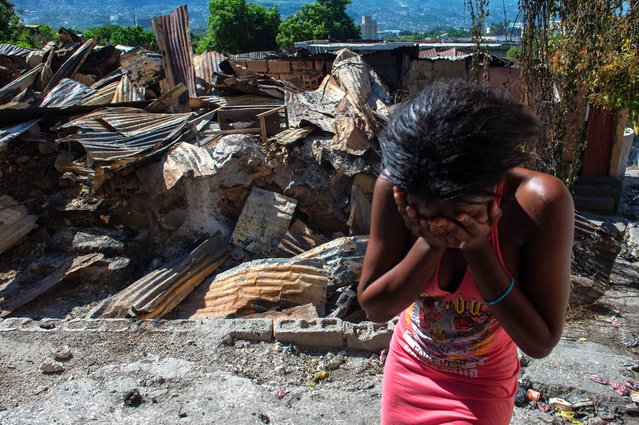
A woman cries outside her house after armed gangs set it on fire in the Post Marchand neighborhood of Port-au-Prince on December 17, 2024. (Photo by Clarens Siffroy/AFP Photo)
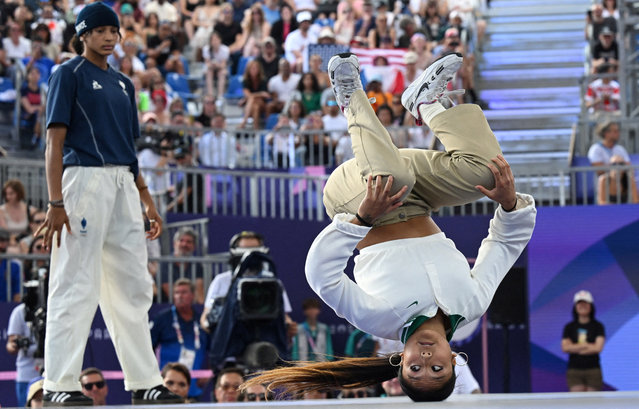
Logan Edra of the United States, known as Logistx, competes in the Women's Breaking dance Round robin of the Paris 2024 Olympic Games at La Concorde in Paris, on August 9, 2024. (Photo by Angelika Warmuth/Reuters)
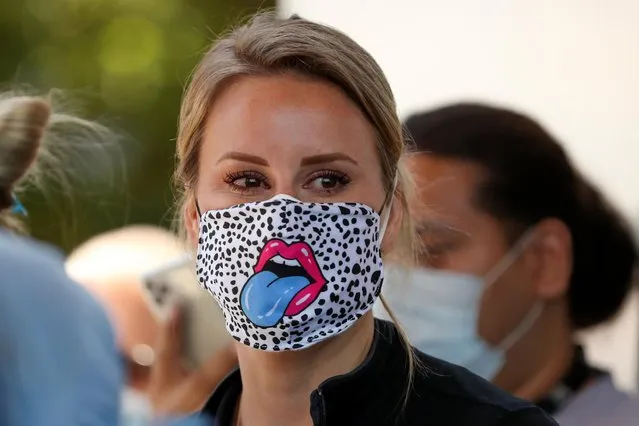
A nurse at St. Joseph's Hospital wears a unique mask as the hospital celebrates the release of a COVID-19 patient after 45 days in their care during the outbreak of the coronavirus disease (COVID-19) in Orange, California, U.S., May 5, 2020. (Photo by Mike Blake/Reuters)
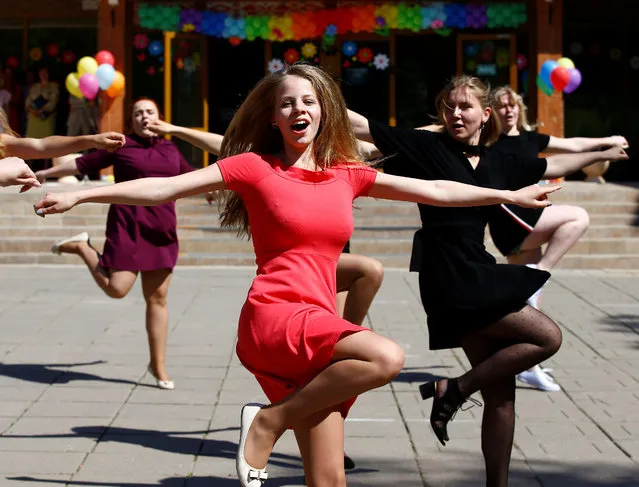
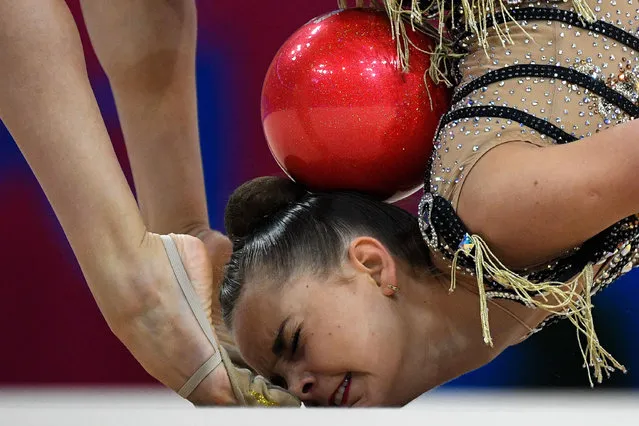
Russia's Dina Averina competes in the ball event of the rhythmic gymnastics individual final at the 2019 European Games in Minsk on June 23, 2019. (Photo by Kirill Kudryavtsev/AFP Photo)
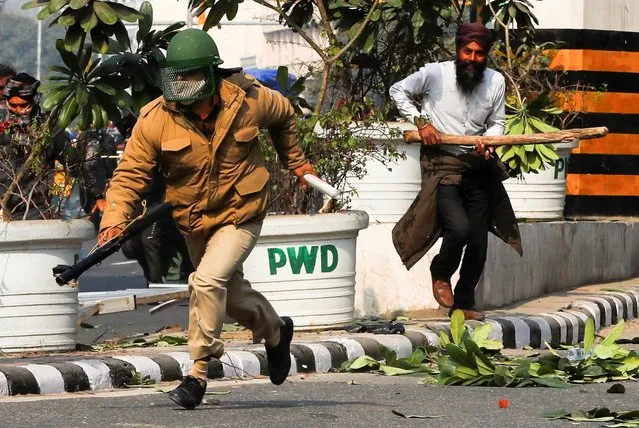
A farmer runs behind a police officer during a protest against farm laws introduced by the government, in New Delhi, India, January 26, 2021. Tens of thousands of farmers drove a convoy of tractors into the Indian capital as the nation celebrated Republic Day on Tuesday in the backdrop of agricultural protests that have grown into a rebellion and rattled the government. (Photo by Adnan Abidi/Reuters)
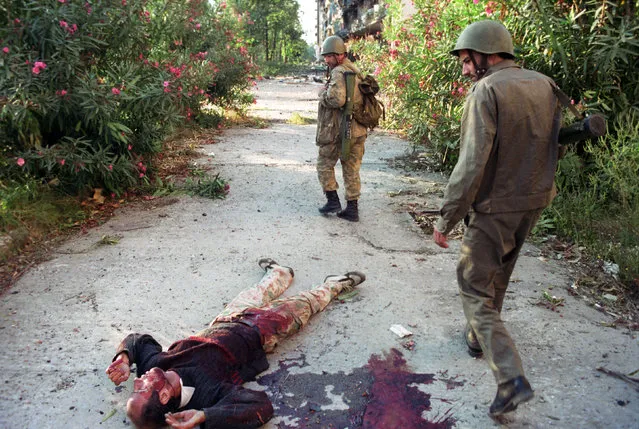
The War in Abkhazia from 1992 to 1993 was fought between Georgian government forces for the most part, and Abkhaz separatist forces, Russian armed forces and North Caucasian militants. Ethnic Georgians who lived in Abkhazia fought largely on the side of Georgian government forces. Ethnic Armenians and Russians within Abkhazia's population largely supported the Abkhazians, and many fought on their side. The separatists received support from thousands of North Caucasus and Cossack militants and from the Russian Federation forces stationed in and near Abkhazia. Here: Abkhazia. Sukhumi, 1993. A house-to-house combat. (Photo by Andrei Solovyov/ITAR-TASS)