Loading...
Done
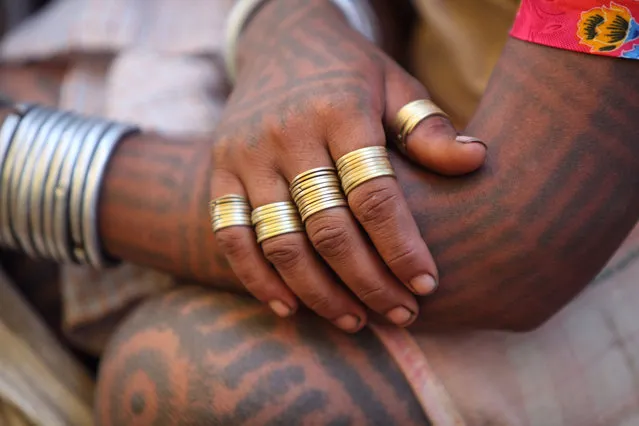
Once applied, the designs are washed using warm water and cow dung. Herbs are applied to promote faster healing. (Photo by Ronny Sen/WaterAid/The Guardian)

For more than 2,000 years, women from the Baiga tribe in the highland district of Dindori, in central India’s Madhya Pradesh state, have been tattooed. Sumintra, 25, from Bona village, has the markings across her forehead, legs and arms. The women who work as tattoo artists are knowledgable about the different types of designs and pigments preferred by various tribes, and their meanings are passed to them by their mothers. The tattooing ‘season’ begins with the approach of winter. (Photo by Ronny Sen/WaterAid/The Guardian)
Details
19 Aug 2017 08:48:00
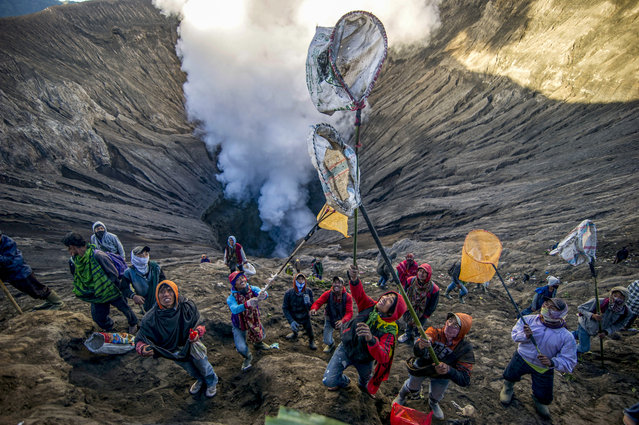
Some people prepare to catch offerings thrown by Tengger tribe people into the crater of Bromo volcano to in Probolinggo, East Java province, on June 30, 2018, as part of Yadnya Kasada festival which falls on the 14th day of the Kasada month based on the traditional Hindu lunar calendar. (Photo by Juni Kriswanto/AFP Photo)

Some people prepare to catch offerings thrown by Tengger tribe people into the crater of Bromo volcano to in Probolinggo, East Java province, on June 30, 2018, as part of Yadnya Kasada festival which falls on the 14th day of the Kasada month based on the traditional Hindu lunar calendar. (Photo by Juni Kriswanto/AFP Photo)
Details
03 Jul 2018 10:16:00
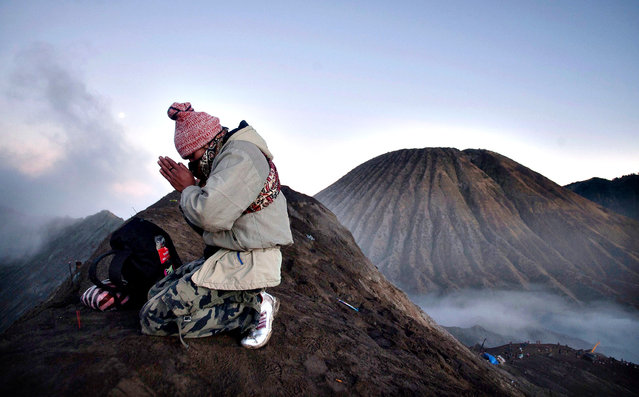
A Tengger tribesman prays at Mount Bromo during the annual Kasada ceremony in East Java on August 12, 2014. The Kasada ceremony is a festival held every 14th day of the Kasada month in the traditional Hindu lunar calender to honour Sang Hyang Widhi (God Almighty) and is based on the legend of Roro Anteng and Joko Seger from the Majapahit Kingdom, from which their Tengger tribe name originates. (Photo by Juni Kriswanto/AFP Photo)

A Tengger tribesman prays at Mount Bromo during the annual Kasada ceremony in East Java on August 12, 2014. The Kasada ceremony is a festival held every 14th day of the Kasada month in the traditional Hindu lunar calender to honour Sang Hyang Widhi (God Almighty) and is based on the legend of Roro Anteng and Joko Seger from the Majapahit Kingdom, from which their Tengger tribe name originates. Hundreds of worshippers from the Tengger tribe offer food and livestock as a symbolic sacrifice which they throw into the crater for the blessings of safety and prosperity to their familyies and community. (Photo by Juni Kriswanto/AFP Photo)
Details
16 Aug 2014 11:19:00
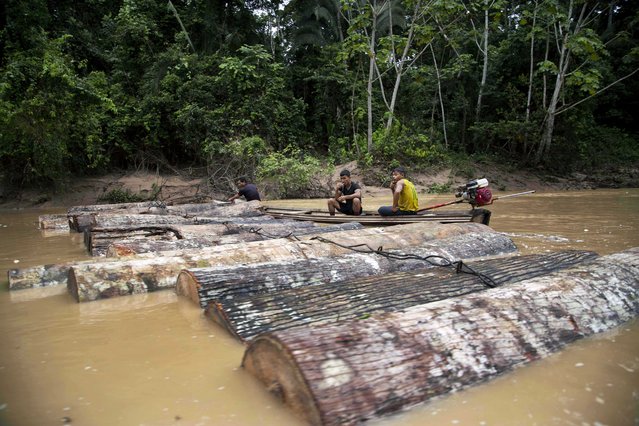
In this March 17, 2015 photo, Ashaninka Indian men, identified by locals as illegal loggers, tie tree trunks together to move them along the Putaya River near the hamlet of Saweto, Peru. Illegal logging persists unabated in this remote Amazon community where four indigenous leaders who resisted it were slain in September. The Putaya River is the waterway that transports felled trees, cut both legally and illegally, to the city of Pucallpa. (Photo by Martin Mejia/AP Photo)

In this March 17, 2015 photo, Ashaninka Indian men, identified by locals as illegal loggers, tie tree trunks together to move them along the Putaya River near the hamlet of Saweto, Peru. Illegal logging persists unabated in this remote Amazon community where four indigenous leaders who resisted it were slain in September. The Putaya River is the waterway that transports felled trees, cut both legally and illegally, to the city of Pucallpa. (Photo by Martin Mejia/AP Photo)
Details
27 Mar 2015 12:40:00
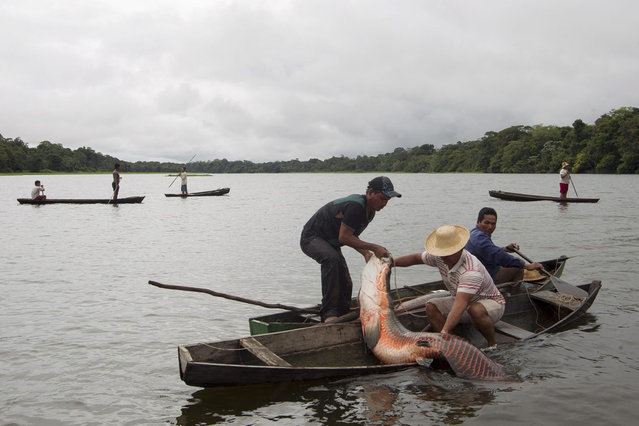
Villagers from the Porto Novo community load into their canoes arapaima or pirarucu, the largest freshwater fish species in South America and one of the largest in the world, while fishing in Poco Fundo lake along a branch of the Solimoes river, one of the main tributaries of the Amazon, in the Mamiraua nature reserve near Fonte Boa about 600 km (373 miles) west of Manaus, November 26, 2013. (Photo by Bruno Kelly/Reuters)

Villagers from the Porto Novo community load into their canoes arapaima or pirarucu, the largest freshwater fish species in South America and one of the largest in the world, while fishing in Poco Fundo lake along a branch of the Solimoes river, one of the main tributaries of the Amazon, in the Mamiraua nature reserve near Fonte Boa about 600 km (373 miles) west of Manaus, November 26, 2013. Catching the arapaima, a fish that is sought after for its meat and is considered by biologists to be a living fossil, is only allowed once a year by Brazil's environmental protection agency. The minimum size allowed for a fisherman to keep an arapaima is 1.5 meters (4.9 feet). (Photo by Bruno Kelly/Reuters)
Details
17 Dec 2013 08:03:00


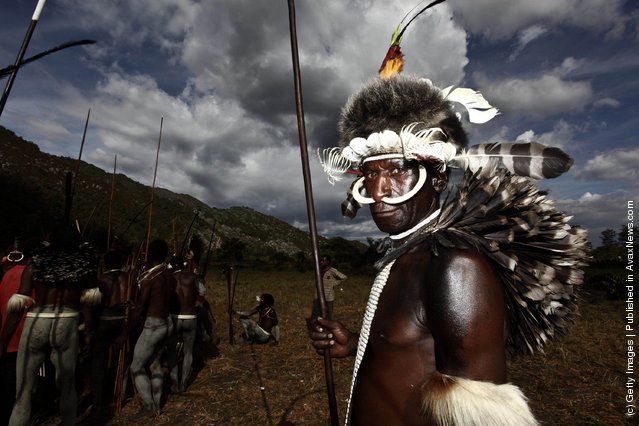
A Papuanese tribal man poses for a photograph during the Baliem Valley Festival on August 9, 2010 in Wamena, Indonesia. The Dani, Yali and Lani tribes gather at this annual festival each dressed in distinctive tribal attire, stage mock battles, perform traditional music and dance, and celebrate with a pig feast. (Photo by Ulet Ifansasti/Getty Images)
Details
01 May 2011 10:10:00
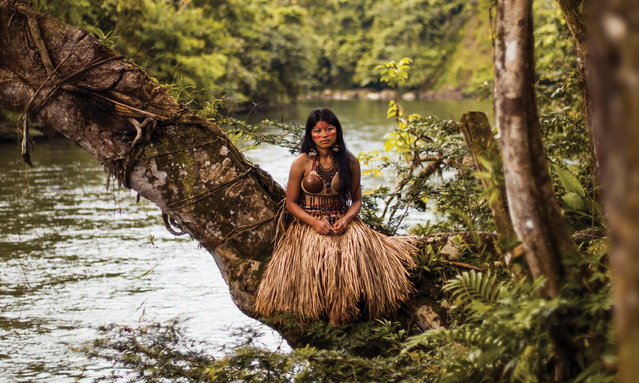
Ecuador: “More and more tribes of Amazonia are starting to adopt modern clothes for everyday life. But they are still keeping their traditional clothes for important events. I photographed this young woman in her wedding outfit”. (Photo by Mihaela Noroc/The Guardian)

Photographer Mihaela Noroc travelled the world from Ethiopia to the US and from Guatemala to France in search of natural and authentic beauty. She introduces some of the inspiring women she met on her journey. Here: Ecuador. “More and more tribes of Amazonia are starting to adopt modern clothes for everyday life. But they are still keeping their traditional clothes for important events. I photographed this young woman in her wedding outfit”. (Photo by Mihaela Noroc/The Guardian)
Details
27 Sep 2017 08:29:00
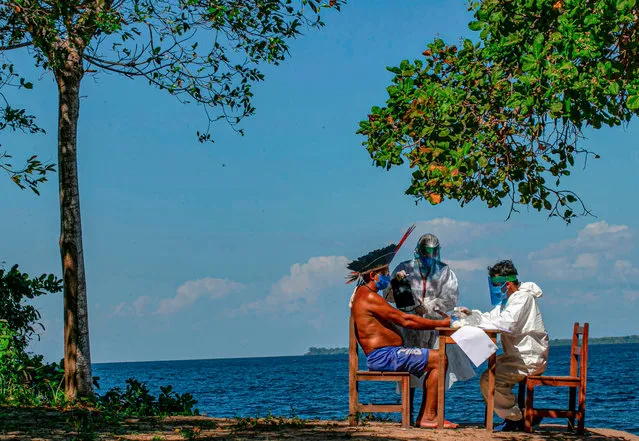
Indigenous nurses from the Special Secretariat for Indigenous Health (Sesai) of the Arapiuns ethnic group and Tapuia ethnic groups perform a rapid COVID-19 test on Chief Domingos from the Arapium tribe on the banks of the lower Tapajos River in the municipality of Santarem in western Para on July 19, 2020. (Photo by Tarso Sarraf/AFP Photo)

Indigenous nurses from the Special Secretariat for Indigenous Health (Sesai) of the Arapiuns ethnic group and Tapuia ethnic groups perform a rapid COVID-19 test on Chief Domingos from the Arapium tribe on the banks of the lower Tapajos River in the municipality of Santarem in western Para on July 19, 2020. (Photo by Tarso Sarraf/AFP Photo)
Details
22 Jul 2020 00:07:00