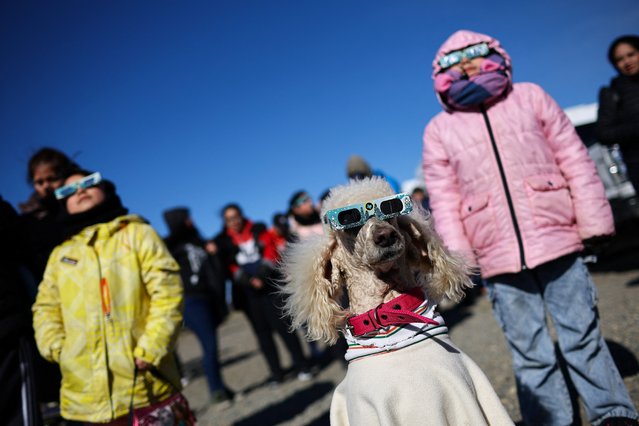
Dana the dog wears glasses as people watch an annular solar eclipse, in Las Horquetas, Santa Cruz, Argentina, on October 2, 2024. (Photo by Agustin Marcarian/Reuters)
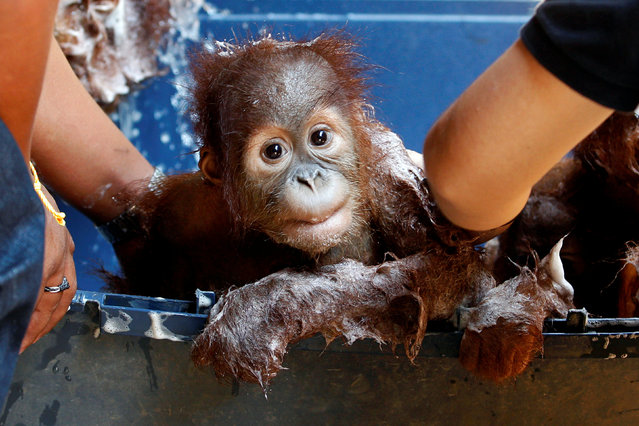
A baby Sumatran orangutan is bathed after arriving at a wildlife center at Ratchaburi province in Thailand September 13, 2017. (Photo by Kerek Wongsa/Reuters)
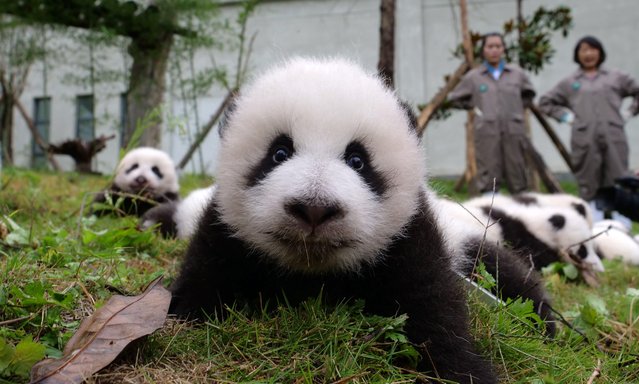
19 giant panda cubs, all born this year, meet the public at the Shenshuping Base of the China Conservation and Research Centre for the Giant Panda on October 13, 2017 in Ngawa Tibetan and Qiang Autonomous Prefecture, China. So far China Conservation and Research Centre for the Giant Panda has successfully bred 42 giant pandas this year. (Photo by VCG/VCG via Getty Images)
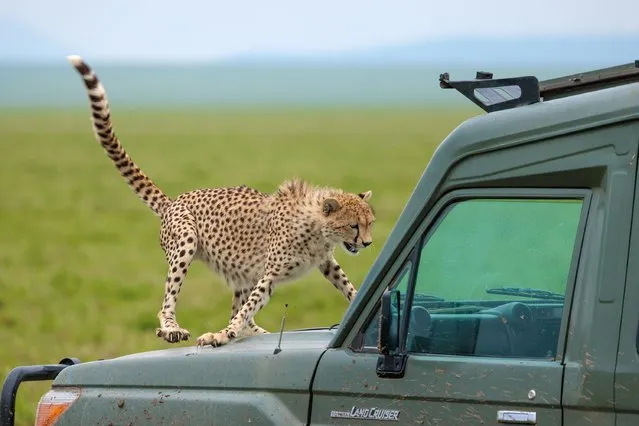
Tourists in the Serengeti, Tanzania in the second decade of February 2024, get more than they bargained for as a cheetah jumps on the bonnet of their jeep to make their acquaintance. (Photo by Ann Aveyard/Animal News Agency)
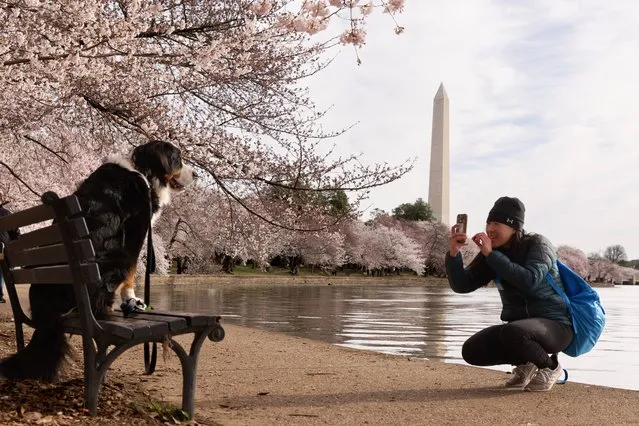
Adrienne Yip takes a picture of her Burmese mountain dog named “Walter”, beneath the cherry blossoms in peak bloom at the Tidal Basin with the Washington Monument seen behind, in Washington, DC, USA, 18 March 2024. Peak bloom, as defined when seventy percent of the cherry blossoms are open, is occuring this week. This year's peak bloom, beginning the 17th of March, is tied for the second earliest in history and is seen as a reflection of warming temperatures. (Photo by Michael Reynolds/EPA/EFE/Rex Features/Shutterstock)
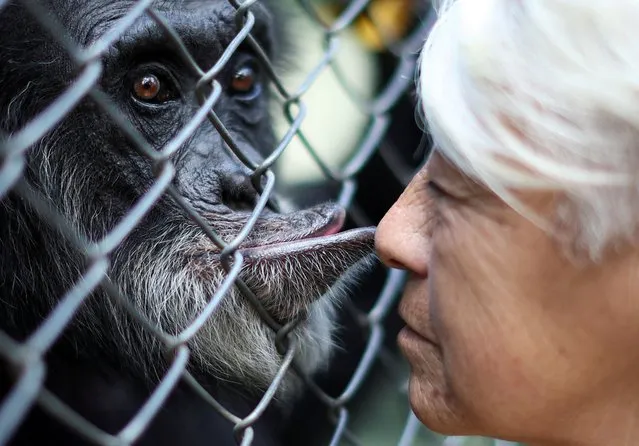
Keeper Silvia Salvatierra, 59, is kissed by a chimp named “Jony”, 54, who was rescued from a circus, at the Lujan Zoo from where felines, including tigers and lions, will be transferred to a wildlife sanctuary in India, in Lujan, on the outskirts of Buenos Aires, Argentina on April 8, 2024. (Photo by Agustin Marcarian/Reuters)
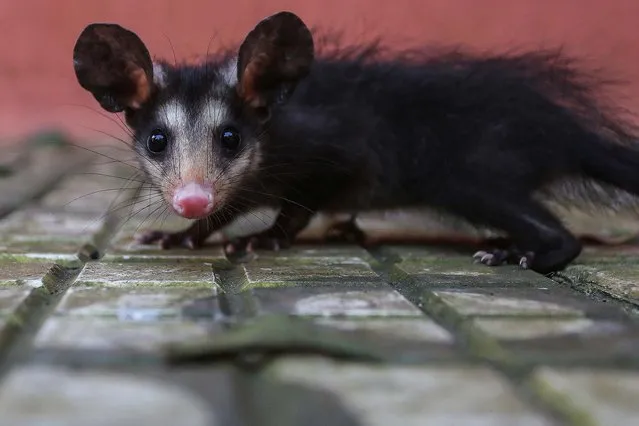
Photo taken on September 19, 2015 shows a baby Brazilian opossum at the “Parque Estoril” zoo in Sao Bernardo do Campo of Sao Paulo, Brazil. According to local press, the “Parque Estoril” zoo houses currently 23 orphan cubs of wild animals rescued in the south region of Sao Paulo, victims of illegal wildlife trade or problems caused by urban growth. According to the zoo, all the animals arrived in the last three months, and many of them, not being able to be reintroduced to their natural habitat, will be used as examples in environmental education classes. (Photo by Rahel Patrasso/Xinhua via ZUMA Wire)