People dance as they play with colored powder during celebrations marking Holi, the Hindu festival of colors, in Guwahati, India, Monday, March 25, 2024. (Photo by Anupam Nath/AP Photo)
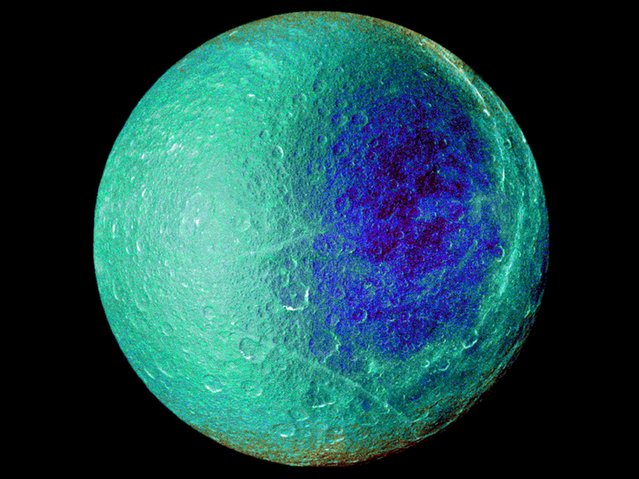
Hemispheric color differences on Saturn's moon Rhea are apparent in this false-color view from NASA's Cassini spacecraft in this March 2, 2010 file photo. (Photo by Reuters/NASA/JPL/SSI)
Smeared in colored powder fashionable women wearing sun glasses celebrate Holi, the Hindu festival of colors, in the Encino section of Los Angles on Sunday, March 24, 2024. (Photo by Richard Vogel/AP Photo)
Revelers throw colored corn starch into the air as they celebrate the 2015 Holi (Festival of Colors) at the Krishna Temple in Spanish Fork, Utah on Saturday, March 28, 2015. (Photo by Rick Bowmer/AP Photo)
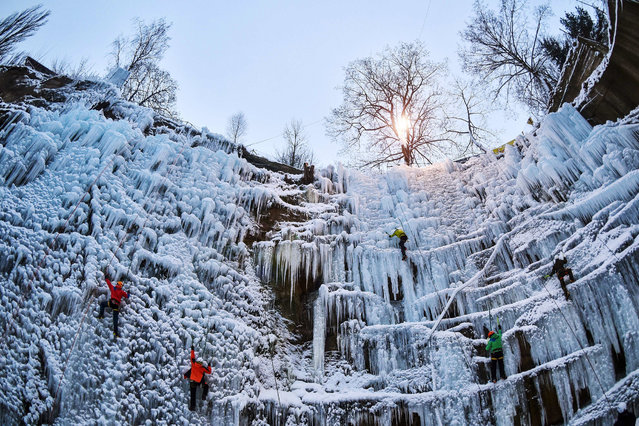
People climb on an artificial ice-wall in Liberec, about 100 km north of Prague, Czech Republic, Saturday, January 23, 2015. The wall was prepared in a former quarry just near the centre of the city. (Photo by Radek Petrasek/CTK via AP Photo)
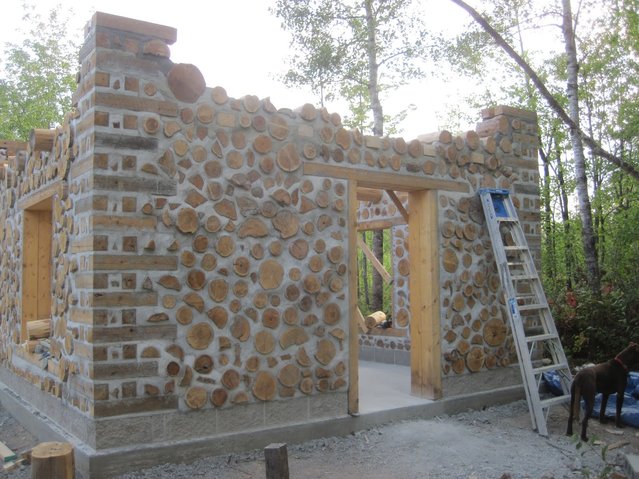
Cordwood construction is a method of natural building that originated roughly one thousand years ago in Greece and Siberia. This method involves using pieces of wood that slightly protrude from the mortar, giving the walls an attractive appearance. Usually, the walls are made 12 to 24 inches thick. However, in some parts of Canada, the walls can be as thick as 36 inches. This method appeals to many people due to its ease of construction economy of resources. Cordwood Construction can be separated into two main types: mortar-insulation-mortar (M-I-M) and Throughwall. M-I-M is a more preferable and widely used choice as it allows for better insulating properties.