Loading...
Done
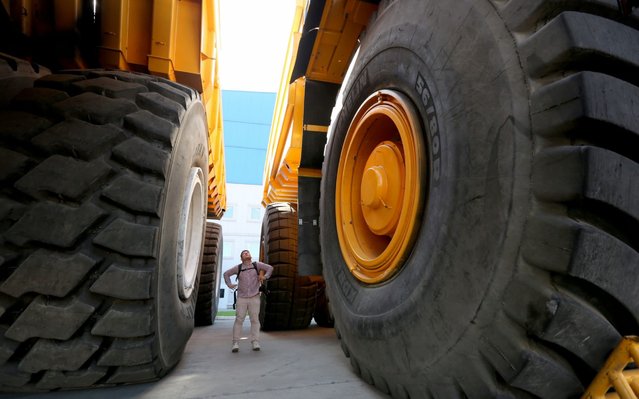
A visitor is dwared between the wheels of BelAZ 450-ton dump truck (L) and BelAZ 360-ton dump truck (R) at the plant of Belarusian manufacturer of heavy trucks and equipment for earthmoving, BelAZ, in Zhodino, some 55 km from Minsk, Belarus, 27 August 2019. The company mostly delivers its products to CIS mining companies, mainly from Russia and Ukraine. (Photo by Tatyana Zenkovich/EPA/EFE/Rex Features/Shutterstock)

A visitor is dwared between the wheels of BelAZ 450-ton dump truck (L) and BelAZ 360-ton dump truck (R) at the plant of Belarusian manufacturer of heavy trucks and equipment for earthmoving, BelAZ, in Zhodino, some 55 km from Minsk, Belarus, 27 August 2019. The company mostly delivers its products to CIS mining companies, mainly from Russia and Ukraine. (Photo by Tatyana Zenkovich/EPA/EFE/Rex Features/Shutterstock)
Details
29 Aug 2019 00:05:00
A juvenile blackcap is recorded in the soft light of morning at Minorca, UK, a former open-cast mine near Moira in the National Forest on June 18, 2025. Dr Heather Gilbert, research and evidence manager, checks mist nets among wildflowers and young trees as part of long-term monitoring that shows bird numbers have increased by 48 per cent over 30 years. (Photo by Rod Kirkpatrick/RKP Photography)

A juvenile blackcap is recorded in the soft light of morning at Minorca, UK, a former open-cast mine near Moira in the National Forest on June 18, 2025. Dr Heather Gilbert, research and evidence manager, checks mist nets among wildflowers and young trees as part of long-term monitoring that shows bird numbers have increased by 48 per cent over 30 years. (Photo by Rod Kirkpatrick/RKP Photography)
Details
29 Jun 2025 03:58:00
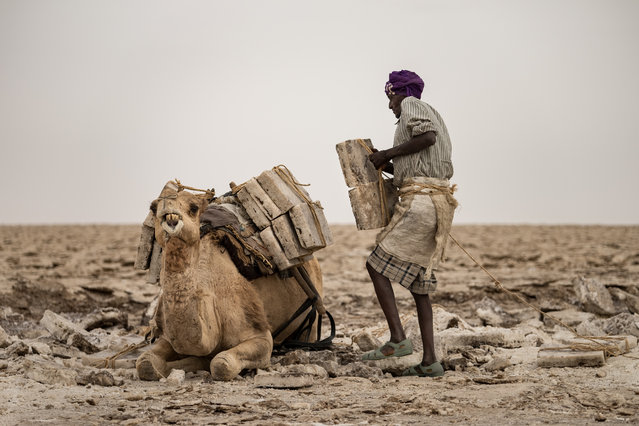
Dromedaries and donkeys are used to transport the salt. (Photo by Joel Santos/Barcroft Images)

Unforgiving temperatures of up to 60℃ (140℉) beat down on these saltminers on a daily basis. The mines, situated in the Afar Triangle in Ethiopia, stretch across 38,000 sq miles and at their lowest point are more than 300ft below sea level. Joel Santos travelled to capture the area’s dry, brutal beauty. Here: Dromedaries and donkeys are used to transport the salt. (Photo by Joel Santos/Barcroft Images)
Details
24 Aug 2016 11:31:00
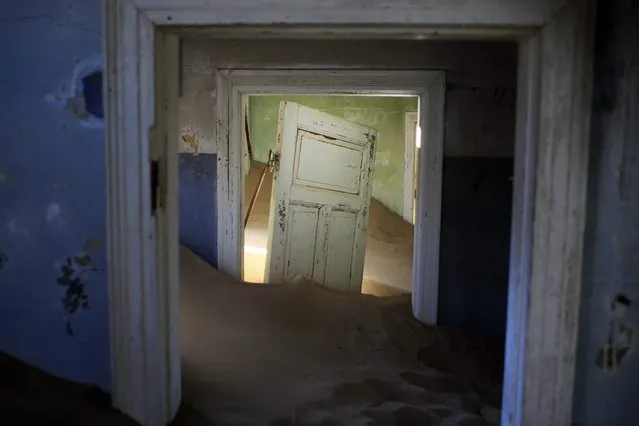
In this July 23, 2013 photo, sand fills an abandoned house in Kolmanskop, Namibia. Kolmanskop, was a diamond mining town south of Namibia, build in 1908 and deserted in 1956. SInce then, the desert slowly reclaims its territory, with sand invading the buildings where 350 German colonists and more than 800 local workers lived during its hay-days of the 1920s. (Photo by Jerome Delay/AP Photo)

In this July 23, 2013 photo, sand fills an abandoned house in Kolmanskop, Namibia. Kolmanskop, was a diamond mining town south of Namibia, build in 1908 and deserted in 1956. SInce then, the desert slowly reclaims its territory, with sand invading the buildings where 350 German colonists and more than 800 local workers lived during its hay-days of the 1920s. (Photo by Jerome Delay/AP Photo)
Details
14 Nov 2014 14:34:00
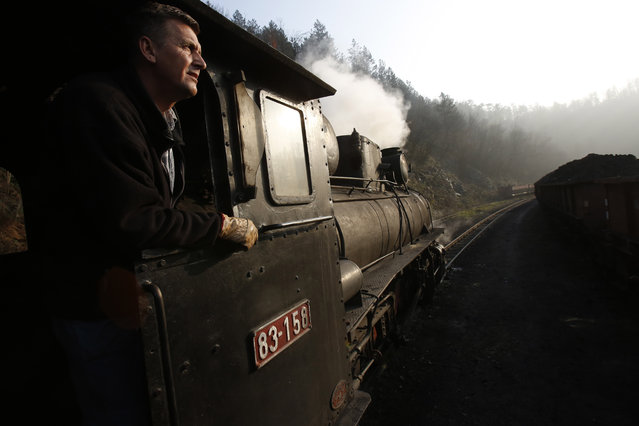
Bosnian worker Sefik Salihovic drives a steam engine in the Bosnian town of Banovici, 140 kms (86.9 miles) north of Sarajevo, on Monday, November 24, 2014. Every day, steam engines over 60 years old, defy their age and still pull wagons of coal from Banovici's coal mine to clients in nearby towns. But in the summer some of them turn into the only tourist attraction this impoverished north Bosnian town has to offer. (Photo by Amel Emric/AP Photo)

Bosnian worker Sefik Salihovic drives a steam engine in the Bosnian town of Banovici, 140 kms (86.9 miles) north of Sarajevo, on Monday, November 24, 2014. Every day, steam engines over 60 years old, defy their age and still pull wagons of coal from Banovici's coal mine to clients in nearby towns. But in the summer some of them turn into the only tourist attraction this impoverished north Bosnian town has to offer. (Photo by Amel Emric/AP Photo)
Details
05 Dec 2014 13:07:00
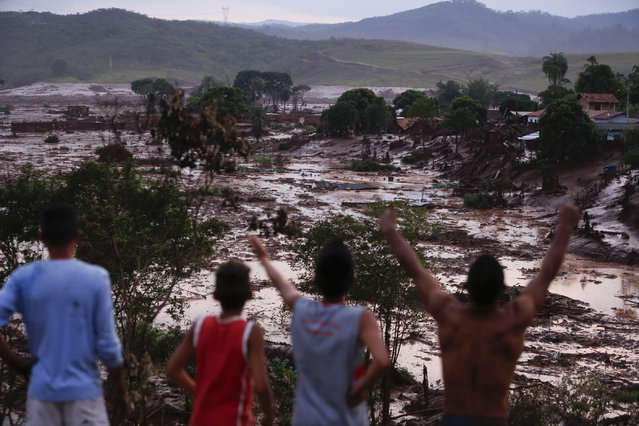
Photo taken on November 5, 2015 shows flood in Bento Rodrigues, a town in the southeastern Brazilian state of Minas Gerais, after a dam at a mining waste site burst early Thursday. An iron ore tailings dam in the southeast Brazilian state of Minas Gerais collapsed Thursday, killing at least 15 people, according to local media reports. (Photo by Agencia Estado/Xinhua Press/Corbis)

Photo taken on November 5, 2015 shows flood in Bento Rodrigues, a town in the southeastern Brazilian state of Minas Gerais, after a dam at a mining waste site burst early Thursday. An iron ore tailings dam in the southeast Brazilian state of Minas Gerais collapsed Thursday, killing at least 15 people, according to local media reports. (Photo by Agencia Estado/Xinhua Press/Corbis)
Details
08 Nov 2015 08:02:00
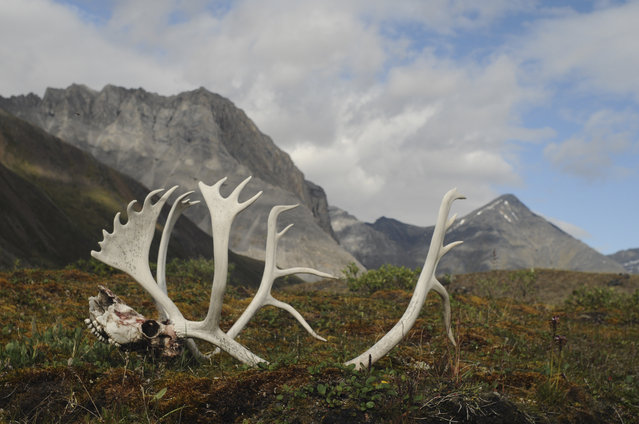
In this August 1, 2014 photo provided by the National Park Service are male caribou antlers in the Oolah Valley, likely the result of a grizzly kill as he migrated south for the winter at the Arctic National Park and Preserve in Alaska. The nation's northernmost national park says its new management plan will have to consider the effects of a new industrial road to the mining district of Ambler, the first road that would be constructed within its Maryland-sized boundaries. (Photo by Cadence Cook/AP Photo/National Park Service)

In this August 1, 2014 photo provided by the National Park Service are male caribou antlers in the Oolah Valley, likely the result of a grizzly kill as he migrated south for the winter at the Arctic National Park and Preserve in Alaska. The nation's northernmost national park says its new management plan will have to consider the effects of a new industrial road to the mining district of Ambler, the first road that would be constructed within its Maryland-sized boundaries. (Photo by Cadence Cook/AP Photo/National Park Service)
Details
03 Sep 2016 09:54:00
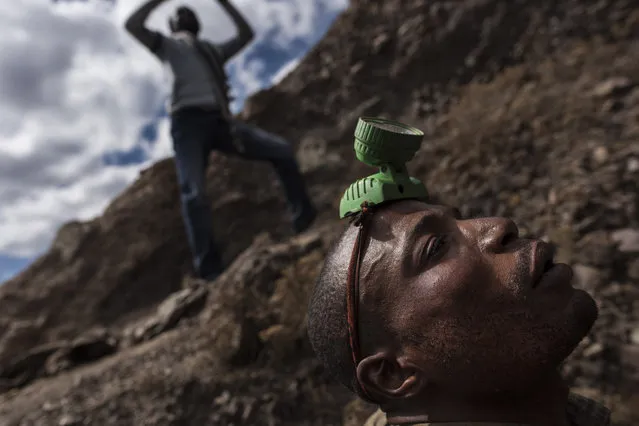
A “creuseur”, or digger, a plastic lantern on his head, readies to enter a copper and cobalt mine in Kawama, Democratic Republic of Congo on June 8, 2016. Cobalt is used in the batteries for electric cars and mobile phones. Working conditions are dangerous, often with no safety equipment or structural support for the tunnels. The diggers say they are paid on average US$2-3/day. (Photo by Michael Robinson Chavez/The Washington Post)

A “creuseur”, or digger, a plastic lantern on his head, readies to enter a copper and cobalt mine in Kawama, Democratic Republic of Congo on June 8, 2016. Cobalt is used in the batteries for electric cars and mobile phones. Working conditions are dangerous, often with no safety equipment or structural support for the tunnels. The diggers say they are paid on average US$2-3/day. (Photo by Michael Robinson Chavez/The Washington Post)
Details
30 Dec 2016 10:29:00