Loading...
Done
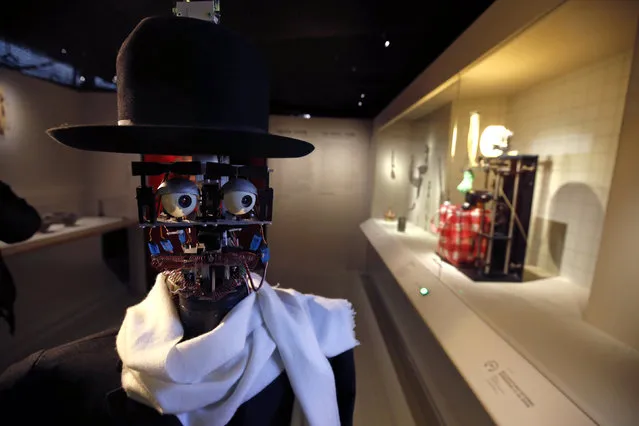
The Berenson robot strolls among visitors during the exhibition “Persona : Oddly Human” at the Quai Branly museum in Paris, France, February 23, 2016. The Berenson robot, developed in France in 2011, is the brainchild of anthropologist Denis Vidal and robotics engineer Philippe Gaussier. Its programming allows it to record reactions of museum visitors to certain pieces of art and then use the data to develop its own unique taste, which allows “Berenson” to judge whether or not it likes a certain work of art within an exhibition. (Photo by Philippe Wojazer/Reuters)

The Berenson robot strolls among visitors during the exhibition “Persona : Oddly Human” at the Quai Branly museum in Paris, France, February 23, 2016. The Berenson robot, developed in France in 2011, is the brainchild of anthropologist Denis Vidal and robotics engineer Philippe Gaussier. Its programming allows it to record reactions of museum visitors to certain pieces of art and then use the data to develop its own unique taste, which allows “Berenson” to judge whether or not it likes a certain work of art within an exhibition. (Photo by Philippe Wojazer/Reuters)
Details
25 Feb 2016 12:26:00
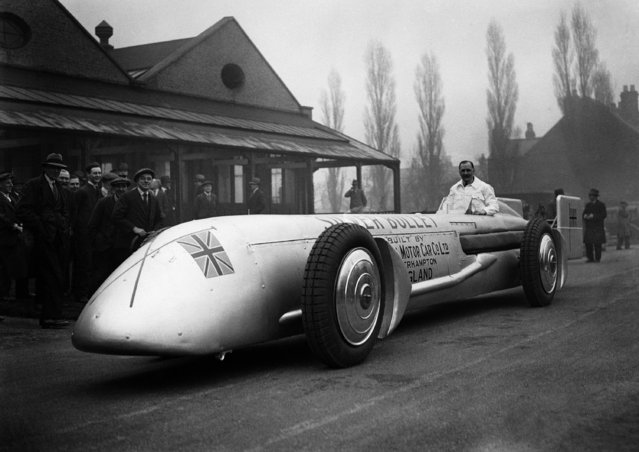
Kaye Don seated in the cockpit of his new racing car the “Silver Bullet” at Wolverhampton, England on February 21, 1930, in which he will attempt to beat world land speed record at Daytona. It has two 12-cylinder V shaped engines and each develops 2,000-h.p. The theoretical speed of the car is 275 m.p.h. but the designer estimated that will be able to reach 250 m.p.h. allowing for wind pressures. (Photo by AP Photo/Staff/Puttnam)

Kaye Don seated in the cockpit of his new racing car the “Silver Bullet” at Wolverhampton, England on February 21, 1930, in which he will attempt to beat world land speed record at Daytona. It has two 12-cylinder V shaped engines and each develops 2,000-h.p. The theoretical speed of the car is 275 m.p.h. but the designer estimated that will be able to reach 250 m.p.h. allowing for wind pressures. (Photo by AP Photo/Staff/Puttnam)
Details
03 Mar 2018 00:03:00
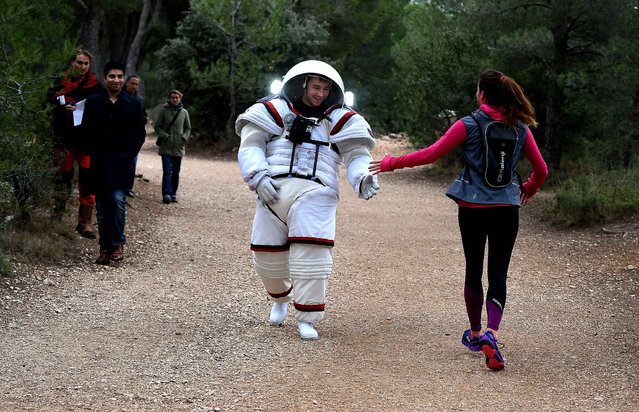
Aeronautics and Space engineer at France's Compagnie Maritime d'Expertises, or Comex, Arnaud Prost (C) meets with a jogger as he tests on the ground the “Gandolfi 2” underwater training suit for spacewalk, on January 20, 2016 in the calanques region (rocky inlets) of Marseille. The underwater training suit “Gandolfi 2”, developed with the European Space Agency (ESA), is designed for training astronauts underwater to simulate space gravity for the astronaut's extravehicular activities (EVAs). (Photo by Boris Horvat/AFP Photo)

Aeronautics and Space engineer at France's Compagnie Maritime d'Expertises, or Comex, Arnaud Prost (C) meets with a jogger as he tests on the ground the “Gandolfi 2” underwater training suit for spacewalk, on January 20, 2016 in the calanques region (rocky inlets) of Marseille. The underwater training suit “Gandolfi 2”, developed with the European Space Agency (ESA), is designed for training astronauts underwater to simulate space gravity for the astronaut's extravehicular activities (EVAs). (Photo by Boris Horvat/AFP Photo)
Details
23 Jan 2016 13:41:00
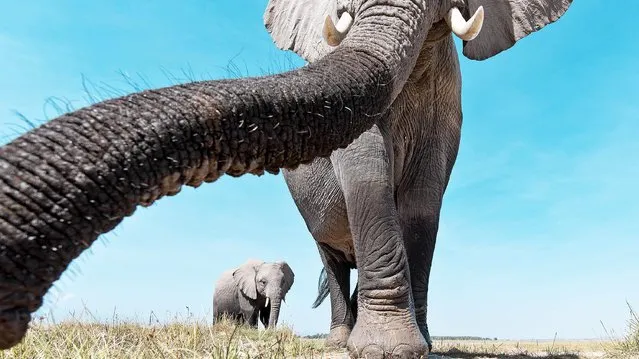
An elephant in Amboseli National Park in Kenya, June 2021. Gurcharan Roopra, 42, a Nairobi-born engineer-turned-wildlife photographer, has dedicated the past four years of his career to photographing these animals. He spends hours in his workshop camouflaging and encasing his equipment with protective gear before laying his camera in the path of lions, elephants, rhino, zebra and buffalo. (Photo by Gurcharan Roopra/Mercury Press)

An elephant in Amboseli National Park in Kenya, June 2021. Gurcharan Roopra, 42, a Nairobi-born engineer-turned-wildlife photographer, has dedicated the past four years of his career to photographing these animals. He spends hours in his workshop camouflaging and encasing his equipment with protective gear before laying his camera in the path of lions, elephants, rhino, zebra and buffalo. (Photo by Gurcharan Roopra/Mercury Press)
Details
24 Feb 2024 08:48:00
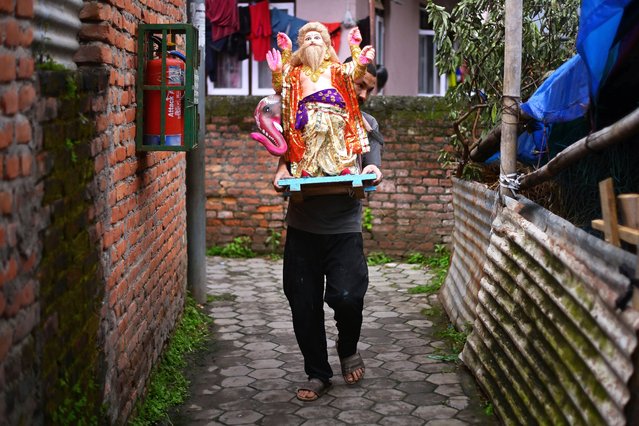
An artist carries a clay statue of Lord Vishwakarma to the market for sale before the Vishwakarma Puja festival in Nepal, Kathmandu on September 16, 2025. The festival, celebrated on September 17 this year, honors Lord Vishwakarma, regarded as the divine engineer and craftsman, and involves prayers for creativity, prosperity, and protection of tools and workplaces. (Photo by Safal Prakash Shrestha/ZUMA Press Wire/Rex Features/Shutterstock)

An artist carries a clay statue of Lord Vishwakarma to the market for sale before the Vishwakarma Puja festival in Nepal, Kathmandu on September 16, 2025. The festival, celebrated on September 17 this year, honors Lord Vishwakarma, regarded as the divine engineer and craftsman, and involves prayers for creativity, prosperity, and protection of tools and workplaces. (Photo by Safal Prakash Shrestha/ZUMA Press Wire/Rex Features/Shutterstock)
Details
29 Oct 2025 03:44:00
Street Art By El Mac

Born in Los Angeles in 1980 to an engineer and an artist, Mac has been creating and studying art independently since childhood. He was inspired at a young age by classic European painters such as Caravaggio, and Vermeer and Art Nouveau symbolists such as Klimt and Mucha. This was mixed with the more contemporary influences of graffiti and photorealism, as well as as the Chicano & Mexican culture he grew up around.
Details
16 May 2013 10:42:00
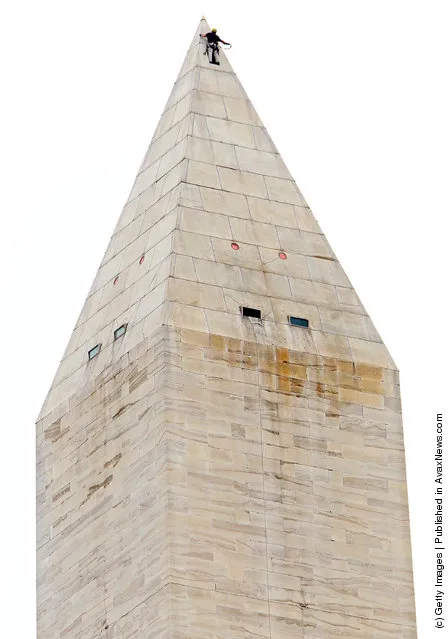
Washington Monument Inspected Again For Damage From The August Earthquake

An engineer begins the process of conducting a block-by-block inspection of the exterior of the Washington Monument while suspended by ropes September 27, 2011 in Washington, DC. The National Park Service has closed the landmark in the nation's capital indefinitely due to damage caused by a 5.8 magnitude earthquake in August. (Photo by Win McNamee/Getty Images)
Details
28 Sep 2011 12:48:00
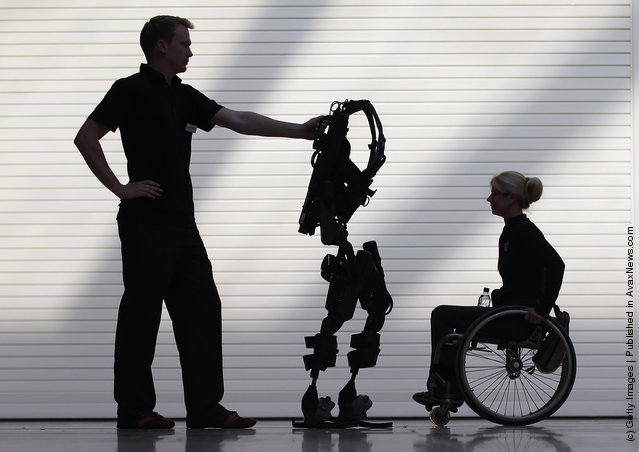
Bionic Exoskeleton

Engineer Thomas Dwyer stands with the new Bionic Exoskeleton next to Amanda Boxtel during its launch at the Excel centre on October 21, 2011 in London, England. The bionic device developed by Ekso Bionics is a wearable, battery-powered, robotic exoskeleton, designed to aid wheelchair users and those who have suffered from spinal chord injuries to stand and walk. (Photo by Dan Kitwood/Getty Images)
Details
22 Oct 2011 10:41:00