A man wearing a Pikachu hat, a character from Pokemon, plays Pokemon Go during a gathering to celebrate “Pokemon Day” in Mexico City, Mexico August 21, 2016. (Photo by Carlos Jasso/Reuters)
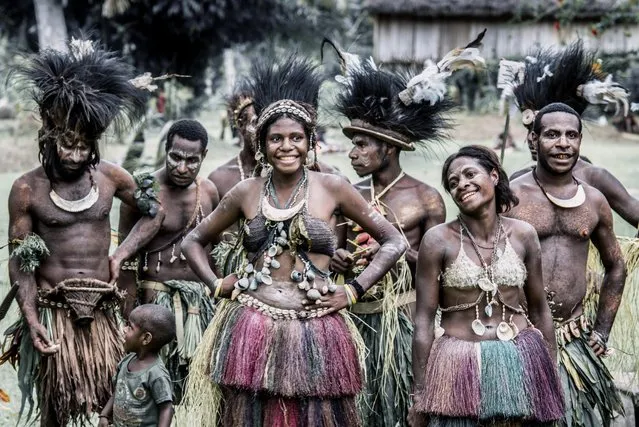
These powerful images capture the spear-wielding tribes of Papua new Guinea who believe they are possessed with the spirit of the crocodile. They show how the Kangunaman clansmen scar their backs to resemble reptile scales while the Huli Wigmen wear elaborate headdresses to signal they are ready for battle. (Photo by Trevor Cole/Media Drum World)
A model presents a creation from the Juozas Statkevicius Spring-Summer 2018 fashion collection in Vilnius, Lithuania, Thursday, November 9, 2017. (Photo by Mindaugas Kulbis/AP Photo)
Model Brooks Nader attends Charity Day 2025 Hosted by Cantor Fitzgerald Relief Fund at BGC Group on September 11, 2025 in New York City. (Photo by Dave Kotinsky/Getty Images for Cantor Fitzgerald)
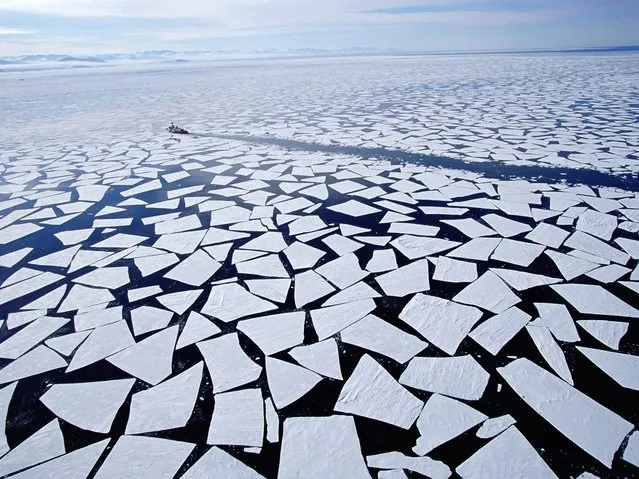
McMurdo Station is a U.S. Antarctic research centre located on the southern tip of Ross Island, which is in the New Zealand-claimed Ross Dependency on the shore of McMurdo Sound in Antarctica. It is operated by the United States through the United States Antarctic Program, a branch of the National Science Foundation. The station is the largest community in Antarctica, capable of supporting up to 1,258 residents, and serves as the United States Antarctic science facility. All personnel and cargo going to or coming from Amundsen–Scott South Pole Station first pass through McMurdo.
Liu Yi, Chinese painter, was born in Shanghai in 1958. He was a Fine Arts graduate from the Hua Dong University for Education. He did his postgraduate study of watercolor painting at the China College of Fine Arts. He lectures at university for painting and design. He is a member of the Chinese Artists Association and is also a member of the Watercolor Painting Artists Association. He is the retired Deputy President of the Shanghai Watercolor Painting Society, and is currently the Deputy Principal of the Shanghai Arts and Technical College. He is a very accomplished watercolor painter in China.
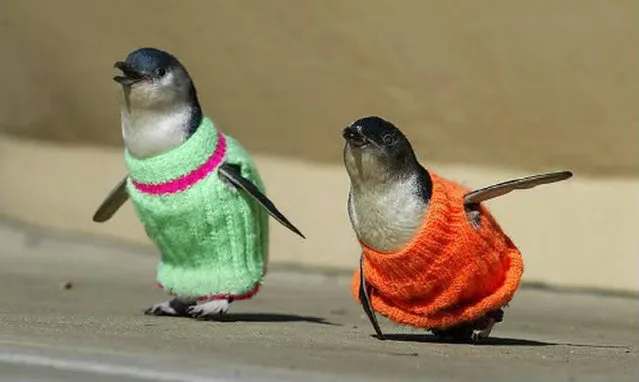
Penguin sweaters, also known as penguin jumpers, are sweaters which are knitted for penguins that have been caught in oil slicks. When an oil spill affects penguins, they are dressed in knitted sweaters to stop them preening their feathers and to keep them warm, since the spilled oil destroys their natural oils. This also prevents them from poisoning themselves by ingesting the oil. The sweaters are removed and discarded as soon as the penguins can be washed. The original project has been completed, but the knitting pattern is still available on-line, as subsequent oil spills make it necessary. The extra sweaters are kept on behalf of the Wildlife Rescue Team.