Loading...
Done
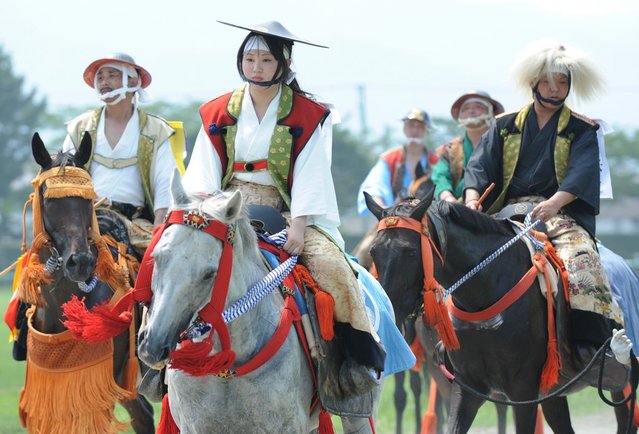
A young woman (C) clad in samurai costume leads other local poeple as she rides her horse during a parade at the annual Soma Nomaoi festival in Minamisoma, Fukushima Prefecture, on July 28, 2012.  The traditional full-scale festival kicked off for the first time after the accident of the Fukushima Dai-ichi Nuclear Power Plant following the massive earthquake and the tsunami on March 11, 2011. (Photo by Toru Yamanaka/AFP Photo)

Soma-Nomaoi is a festival that recreates a battle scene from more than 1,000 years ago. It is annually held for 4 days from July 22 to 25 in Haramachi City, Fukushima Prefecture, in the eastern part of Japan. In this historical event, 600 mounted samurai in traditional Japanese armor, with long swords at their side and ancestral flagstaffs streaming from their backs, ride across open fields. Soma-Nomaoi has been designated an Important Intangible Folk Cultural Property.

Photo: A young woman (C) clad in samurai costume leads other local poeple as she rides her horse during a parade at the annual Soma Nomaoi festival in Minamisoma, Fukushima Prefecture, on July 28, 2012. The traditional full-scale festival kicked off for the first time after the accident of the Fukushima Dai-ichi Nuclear Power Plant following the massive earthquake and the tsunami on March 11, 2011. (Photo by Toru Yamanaka/AFP Photo)
Details
02 Aug 2012 12:59:00


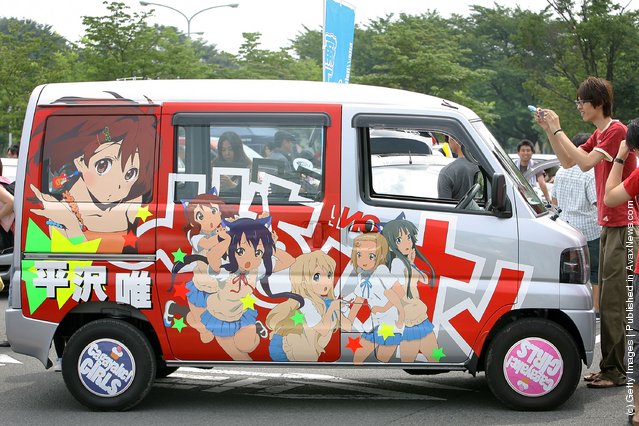
“Itasha (痛車), literally “painmobile”, is a Japanese term for an otaku fad of individuals decorating the bodies of their cars with fictional characters of anime, manga, or video games (especially bishōjo game or eroge). These characters are predominately “cute” female. The decorations usually involve paint schemes and stickers. Automobiles are called Itasha, while similar motorcycles and bicycles are called itansha (痛単車) and itachari (痛チャリ), respectively”. – Wikipedia


Photo: A visitor takes pictures of an anime-decorated «Itasha» car displayed during the “Moe Fes in Washimiya” at Washimiya Town Hall on July 18, 2009 in Washimiya, Saitama, Japan. Itasha, a word derived from “itai” (painful) and “sha” (car), are vehicles decorated with mostly female characters from Japanese manga, anime and video games. (Photo by Kiyoshi Ota/Getty Images)
Details
02 May 2011 08:38:00
This photo taken on January 28, 2018 shows participants taking part in games on stage during the “&Proud” LGBT festival in Yangon. (Photo by Ye Aung Thu/AFP Photo)

This photo taken on January 28, 2018 shows participants taking part in games on stage during the “&Proud” LGBT festival in Yangon. Races, games, music and fun were just some of the highlights of the “&Proud” LGBT festival, which took place in a Yangon public park for the first time at the weekend in a country where same-s*x relations are still officially illegal. (Photo by Ye Aung Thu/AFP Photo)
Details
02 Feb 2018 06:49:00
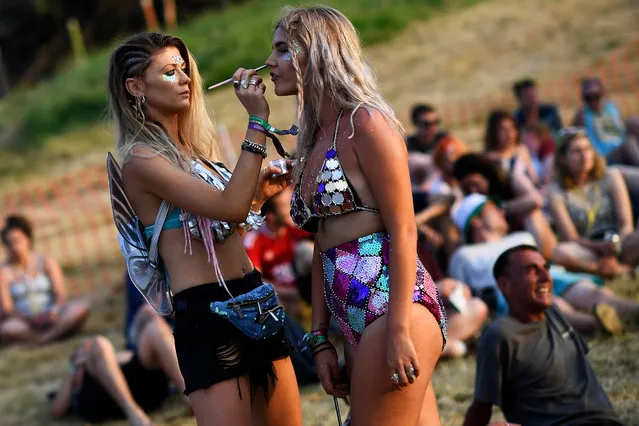
Revellers paint faces at Worthy Farm in Somerset for the Glastonbury Festival of Music and Performing Arts on Worthy Farm near the village of Pilton in Somerset, South West England, on June 21, 2017. (Photo by Dylan Martinez/Reuters)

Revellers paint faces at Worthy Farm in Somerset for the Glastonbury Festival of Music and Performing Arts on Worthy Farm near the village of Pilton in Somerset, South West England, on June 21, 2017. The largest greenfield festival in the world Glastonbury Festival is now a five-day festival of contemporary performing arts. The Somerset Festival, which Michael Eavis started in 1970 when several hundred hippies paid just £1, now attracts more than 175,000 people. (Photo by Dylan Martinez/Reuters)
Details
22 Jun 2017 08:57:00
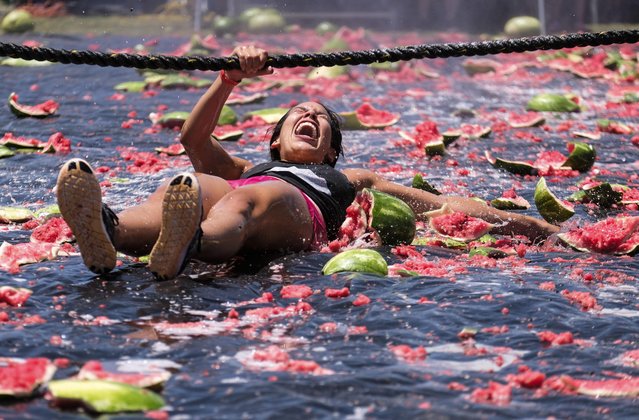
Festival-goers have gathered together to play homage to the humble watermelon during the 55th Annual Watermelon Festival in Los Angeles, California on July 29, 2017. (Photo by Xinhua News Agency/Rex Features/Shutterstock)

A woman takes part in the Watermelon Games at the 55th annual California Watermelon festival in Los Angeles, California on July 29, 2017. The day has become a tradition because watermelons have long been the prized crop of the eastern San Fernando foothills. (Photo by Xinhua News Agency/Rex Features/Shutterstock)
Details
31 Jul 2017 09:11:00
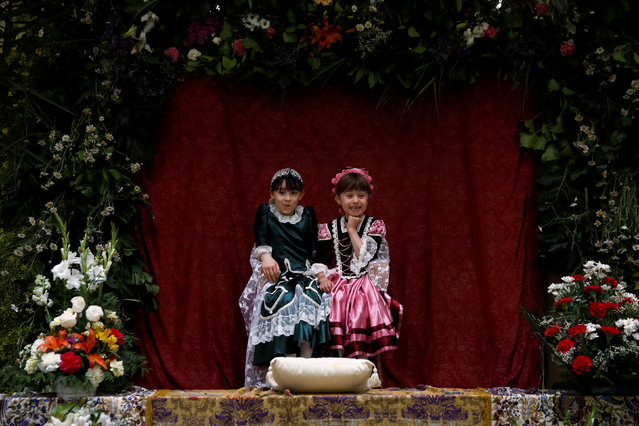
“Maya” girl Ines de la Paloma, 9, (L), sits with her friend Nuria Sanchez Caballero, 6, at an altar during “Las Mayas” festivity in Madrid, Spain, May 8, 2016. “Las Mayas” festival is held annually at the beginning of May to celebrate the awakening of nature in Spring. Young girls are chosen to become “Mayas” and sit at altars decorated with flowers so that people can admire them. The “Mayas” are dressed in traditional costumes, often displaying shawls and a wreath of flowers on their heads. (Photo by Susana Vera/Reuters)

“Maya” girl Ines de la Paloma, 9, (L), sits with her friend Nuria Sanchez Caballero, 6, at an altar during “Las Mayas” festivity in Madrid, Spain, May 8, 2016. “Las Mayas” festival is held annually at the beginning of May to celebrate the awakening of nature in Spring. Young girls are chosen to become “Mayas” and sit at altars decorated with flowers so that people can admire them. (Photo by Susana Vera/Reuters)
Details
11 May 2016 11:36:00
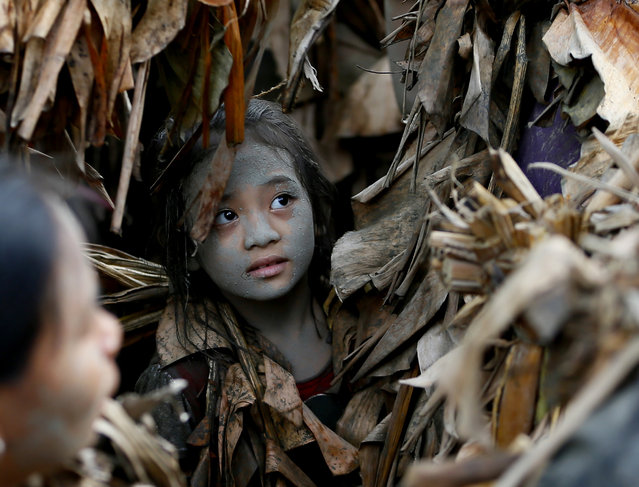
A village girl, donning capes mostly of dried banana leaves and covered in mud, attends a mass in a bizarre annual ritual to venerate their patron saint, John the Baptist, Friday, June 24, 2016 at Bibiclat, Aliaga township, Nueva Ecija province in northern Philippines. (Photo by Bullit Marquez/AP Photo)

A village girl, donning capes mostly of dried banana leaves and covered in mud, attends a mass in a bizarre annual ritual to venerate their patron saint, John the Baptist, Friday, June 24, 2016 at Bibiclat, Aliaga township, Nueva Ecija province in northern Philippines. (Photo by Bullit Marquez/AP Photo)
Details
24 Jun 2016 13:44:00
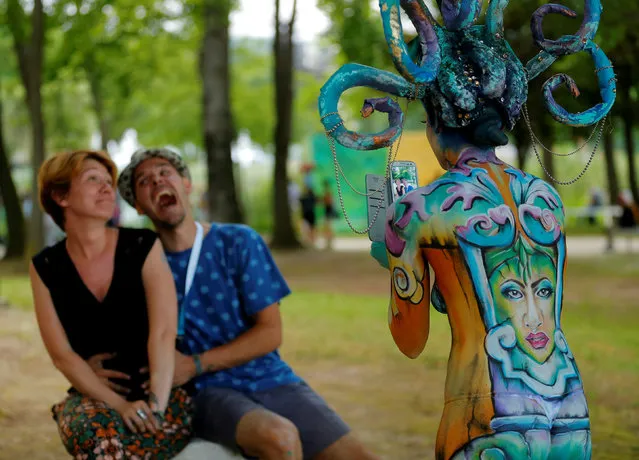
A model takes photographs during the World Bodypainting Festival in Poertschach, Austria, July 1, 2016. (Photo by Heinz-Peter Bader/Reuters)

A model takes photographs during the World Bodypainting Festival in Poertschach, Austria, July 1, 2016. (Photo by Heinz-Peter Bader/Reuters)
Details
02 Jul 2016 13:07:00