Loading...
Done
A devotee of the Afro-Brazilian goddess of the sea Lemanja pays tribute on Lemanja's Day at Ramirez beach in Montevideo February 2, 2015. On this day every year, worshippers light candles at a shrine and throw sweets, alcoholic drinks, fruits and cheap jewellery into the sea as offerings to ask for good health and luck in love and work. (Photo by Andres Stapff/Reuters)

A devotee of the Afro-Brazilian goddess of the sea Lemanja pays tribute on Lemanja's Day at Ramirez beach in Montevideo February 2, 2015. On this day every year, worshippers light candles at a shrine and throw sweets, alcoholic drinks, fruits and cheap jewellery into the sea as offerings to ask for good health and luck in love and work. (Photo by Andres Stapff/Reuters)
Details
04 Feb 2015 12:14:00
Faithful carry a boat out to sea, filled with offerings to Yemanja, the African sea goddess, during a ceremony honoring the deity in Montevideo, Uruguay, Saturday, February 2, 2013. Thousands of worshippers come to the beach in Montevideo on her feast day, February 2, bearing candles, flowers, perfumes and fruit to show their gratitude for her blessings bestowed upon them. The belief in the goddess sprouts from Umbanda, a blend of religions that include African, Catholicism and Spiritism. (Photo by Matilde Campodonico/AP Photo)

Faithful carry a boat out to sea, filled with offerings to Yemanja, the African sea goddess, during a ceremony honoring the deity in Montevideo, Uruguay, Saturday, February 2, 2013. Thousands of worshippers come to the beach in Montevideo on her feast day, February 2, bearing candles, flowers, perfumes and fruit to show their gratitude for her blessings bestowed upon them. The belief in the goddess sprouts from Umbanda, a blend of religions that include African, Catholicism and Spiritism. (Photo by Matilde Campodonico/AP Photo)
Details
03 Feb 2013 13:14:00
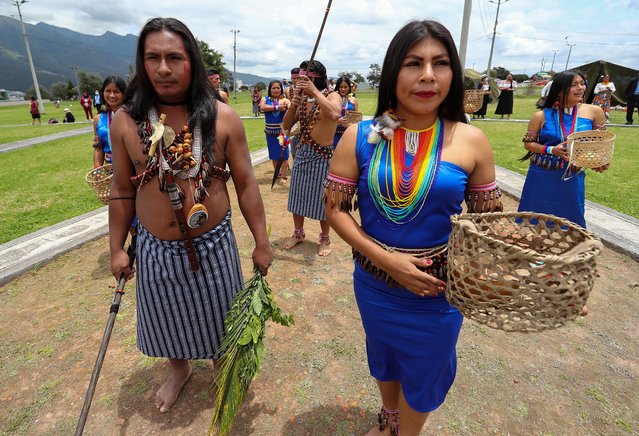
Ecuadorian indigenous people celebrate the festival of the moon or Kulla Raymi, in Quito, Ecuador, 21 September 2021. A circle on the ground made up of fruits and inside the Andean symbol of the chacana, multinational geometric flags and a cross that symbolizes the four cardinal points, were the setting in which the festival of the moon, the Kulla, was commemorated this Tuesday. Raymi, on a hill in Quito. It is one of the four most significant festivities of the Andean agroecological calendar, which commemorates the beginning of life and exalts women as the maximum representation of fertility. (Photo by Jose Jacome/EPA/EFE)

Ecuadorian indigenous people celebrate the festival of the moon or Kulla Raymi, in Quito, Ecuador, 21 September 2021. A circle on the ground made up of fruits and inside the Andean symbol of the chacana, multinational geometric flags and a cross that symbolizes the four cardinal points, were the setting in which the festival of the moon, the Kulla, was commemorated this Tuesday. Raymi, on a hill in Quito. It is one of the four most significant festivities of the Andean agroecological calendar, which commemorates the beginning of life and exalts women as the maximum representation of fertility. (Photo by Jose Jacome/EPA/EFE)
Details
22 Sep 2021 09:01:00
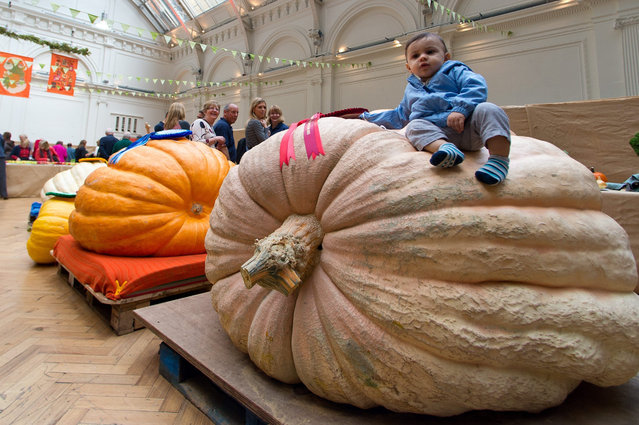
A toddler sits on the winner of the giant pumpkin category during the RHS (Royal Horticultural Society) London Harvest Festival Show at RHS Lindley Halls on October 6, 2015 in London, England. The traditional harvest themed show runs October 6-7 and showcases a wide range of late summer grown fruit and vegetables. (Photo by Ben Pruchnie/Getty Images)

A toddler sits on the winner of the giant pumpkin category during the RHS (Royal Horticultural Society) London Harvest Festival Show at RHS Lindley Halls on October 6, 2015 in London, England. The traditional harvest themed show runs October 6-7 and showcases a wide range of late summer grown fruit and vegetables. (Photo by Ben Pruchnie/Getty Images)
Details
09 Oct 2015 08:07:00
Masks that come with T'antawawas bread are displayed in a popular market of La Paz, October 27, 2015. Residents of La Paz city have started to prepare offerings for their dead relatives next Sunday as part of the All Saints' Day celebrations. The offerings include things the deceased liked during their life, such as fruits, food, breads and drinks, according to local media. (Photo by David Mercado/Reuters)

Masks that come with T'antawawas bread are displayed in a popular market of La Paz, October 27, 2015. Residents of La Paz city have started to prepare offerings for their dead relatives next Sunday as part of the All Saints' Day celebrations. The offerings include things the deceased liked during their life, such as fruits, food, breads and drinks, according to local media. (Photo by David Mercado/Reuters)
Details
01 Nov 2015 08:06:00
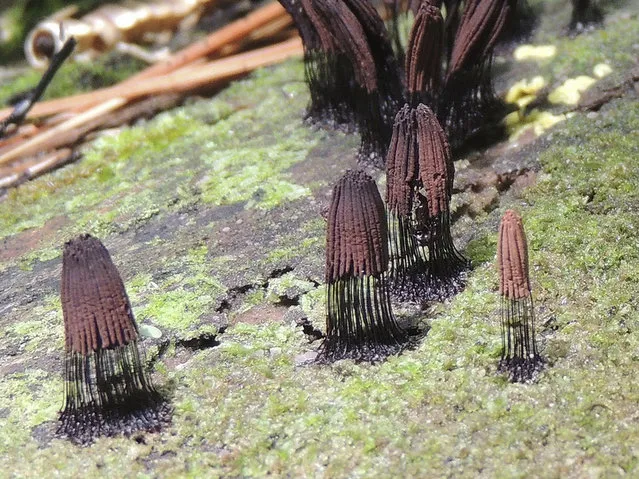
Stemonitis  Axifera

Stemonitis axifera is a species of slime mold. It fruits in clusters on dead wood, and has distinctive tall reddish-brown sporangia, supported on slender stalks. The species was first described as Trichia axifera by Jean Baptiste François Pierre Bulliard in 1791. Thomas Huston MacBride transferred it to the genus Stemonitis in 1889. Stemonitis fasciculata and Stemonitis smithii are synonyms.
Details
08 Feb 2014 10:30:00
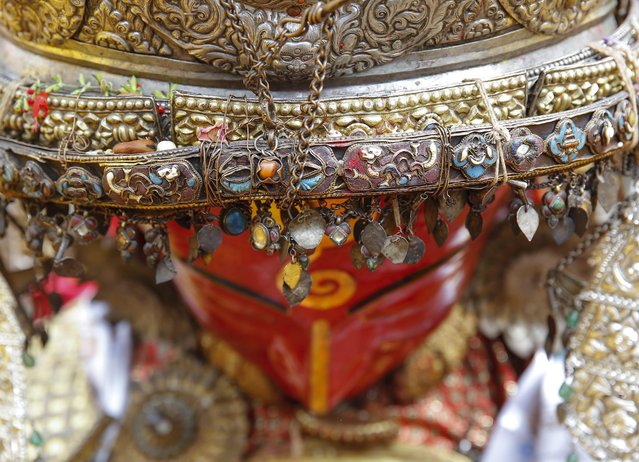
A close up of ornaments of centuries-old idols of Lord Buddha during the Pancha Daan, Five donation, festival in Bhaktapur, Nepal, 30 August 2016. (Photo by Narendra Shrestha/EPA)

A close up of ornaments of centuries-old idols of Lord Buddha during the Pancha Daan, Five donation, festival in Bhaktapur, Nepal, 30 August 2016. Thousands of Buddhist pilgrims observe the main day of the Pancha Daan also known as a five summer gifts (rice, grain, salt, money and fruits) festival which is observes for world peace and human welfare. (Photo by Narendra Shrestha/EPA)
Details
31 Aug 2016 12:18:00
A follower of the Afro-Brazilian religion Umbanda pays tribute for Iemanja, goddess of the sea, in Copacabana Beach in Rio de Janeiro, Brazil December 29, 2017. (Photo by Ricardo Moraes/Reuters)

A follower of the Afro-Brazilian religion Umbanda pays tribute for Iemanja, goddess of the sea, in Copacabana Beach in Rio de Janeiro, Brazil December 29, 2017. Hundreds of practitioners of Brazil's Afro-Brazilian Candomble and Umbanda faiths have gathered at Rio de Janeiro's Copacabana beach to honor Yemanja. Worshippers were mostly dressed in white as they launched their offerings to Iemanja: small boats with flowers and bowls with candles and fruits. (Photo by Ricardo Moraes/Reuters)
Details
30 Dec 2017 06:22:00