Loading...
Done
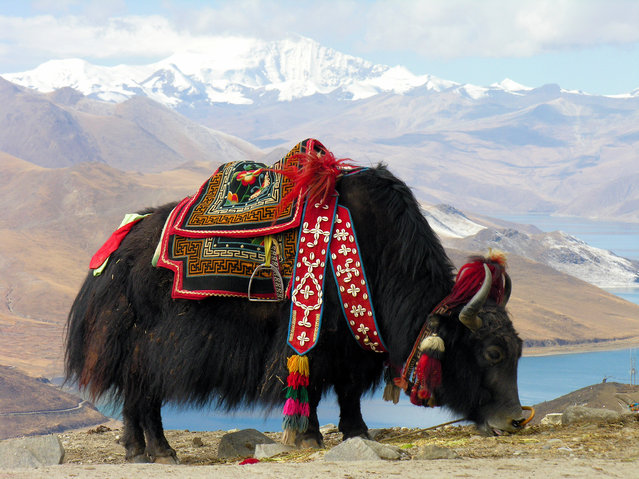
Yak near Yamdrok lake, Tibet. It is a long-haired bovinae found throughout the Himalayan region of south Central Asia, the Tibetan Plateau and as far north as Mongolia and Russia. The Tibetan economy is dominated by subsistence agriculture. Due to limited arable land, the primary occupation of the Tibetan Plateau is raising livestock, such as sheep, cattle, goats, camels, yaks, dzo, and horses. The Tibetan yak is an integral part of Tibetan life. (Photo by Dennis Jarvis)

Yak near Yamdrok lake, Tibet. It is a long-haired bovinae found throughout the Himalayan region of south Central Asia, the Tibetan Plateau and as far north as Mongolia and Russia. The Tibetan economy is dominated by subsistence agriculture. Due to limited arable land, the primary occupation of the Tibetan Plateau is raising livestock, such as sheep, cattle, goats, camels, yaks, dzo, and horses. The Tibetan yak is an integral part of Tibetan life. (Photo by Dennis Jarvis)
Details
10 Jun 2015 10:48:00
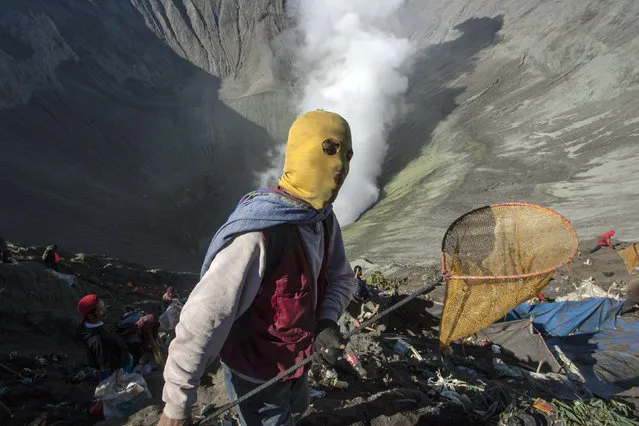
Non-Hindus carry nets as they wait on the edge of the crater to catch offerings cast down by Hindus during the Kasodo ceremony at Mount Bromo, Probolinggo, Indonesia, August 12, 2014. The Kasodo ceremony is a way of Tengger Hindus to express their gratitude to God for good harvest and fortune. The offerings range from vegetables to chickens, from fruits to goats, from money to other valuables. (Photo by Fully Handoko/EPA)

Non-Hindus carry nets as they wait on the edge of the crater to catch offerings cast down by Hindus during the Kasodo ceremony at Mount Bromo, Probolinggo, Indonesia, August 12, 2014. The Kasodo ceremony is a way of Tengger Hindus to express their gratitude to God for good harvest and fortune. The offerings range from vegetables to chickens, from fruits to goats, from money to other valuables. (Photo by Fully Handoko/EPA)
Details
14 Aug 2014 11:06:00
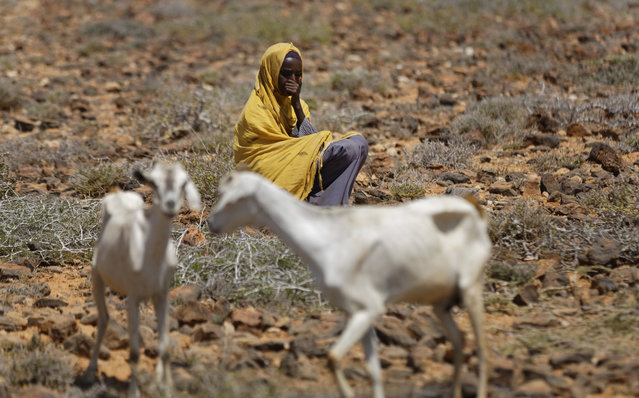
In this photo taken Wednesday, March 8, 2017, a woman herder sits with her goats in a remote desert area near Bandar Beyla in Somalia's semiautonomous northeastern state of Puntland. Somalia has declared the drought a national disaster, part of what the United Nations calls the largest humanitarian crisis since the world body was founded in 1945, and with animals being central to many the drought threatens their main sources of nutrition and survival. (Photo by Ben Curtis/AP Photo)

In this photo taken Wednesday, March 8, 2017, a woman herder sits with her goats in a remote desert area near Bandar Beyla in Somalia's semiautonomous northeastern state of Puntland. Somalia has declared the drought a national disaster, part of what the United Nations calls the largest humanitarian crisis since the world body was founded in 1945, and with animals being central to many the drought threatens their main sources of nutrition and survival. (Photo by Ben Curtis/AP Photo)
Details
15 Mar 2017 00:03:00
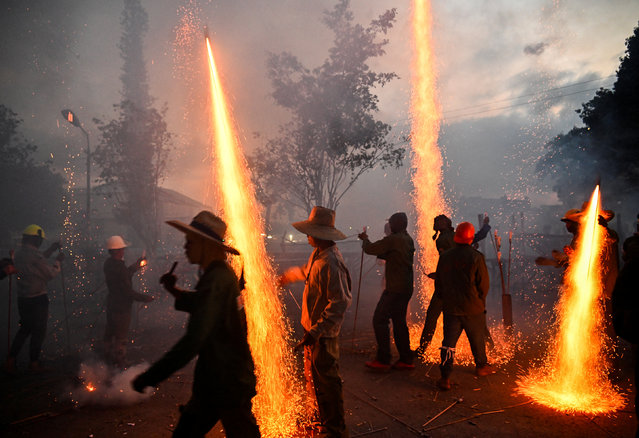
People paly with fireworks during Parrandas de Camajuani, Cuba on March 22, 2025. Two neighborhoods of the city, San Jose, represented by a toad, and Santa Teresa, represented by a goat, fight with carnival shows that involve the whole town in a party with bands, huge floats and fireworks. The Parrandas de Camajuani with more than 130 years, are recognized as Intangible Cultural Heritage of Humanity since 2018. (Photo by Yamil Lage/AFP Photo)

People paly with fireworks during Parrandas de Camajuani, Cuba on March 22, 2025. Two neighborhoods of the city, San Jose, represented by a toad, and Santa Teresa, represented by a goat, fight with carnival shows that involve the whole town in a party with bands, huge floats and fireworks. The Parrandas de Camajuani with more than 130 years, are recognized as Intangible Cultural Heritage of Humanity since 2018. (Photo by Yamil Lage/AFP Photo)
Details
24 Oct 2025 04:44:00
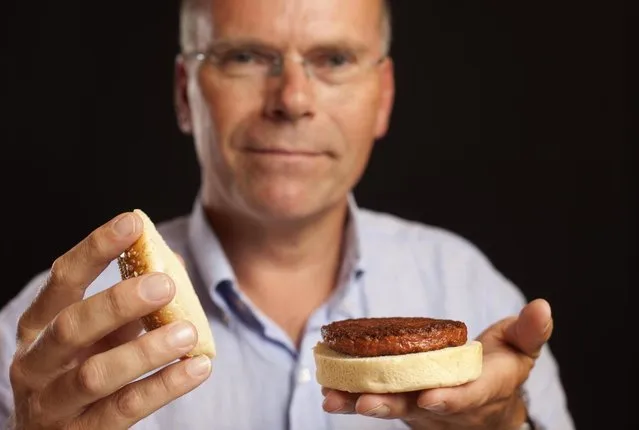
In this handout image provided by Ogilvy, a burger made from cultured beef, which has been developed by Professor Mark Post of Maastricht University in the Netherlands (pictured) is shown to the media during a press conference on August 5, 2013 in London, England. Cultured Beef could help solve the coming food crisis and combat climate change with commercial production of Cultured Beef beginning within ten to twenty years. (Photo by David Parry via Getty Images)

In this handout image provided by Ogilvy, a burger made from cultured beef, which has been developed by Professor Mark Post of Maastricht University in the Netherlands (pictured) is shown to the media during a press conference on August 5, 2013 in London, England. The in-vitro burger, cultured from cattle stem cells, the first example of what its creator says could provide an answer to global food shortages and help combat climate change, was fried in a pan and tasted by two volunteers. The burger is the result of years of research by Dutch scientist Mark Post, a vascular biologist at the University of Maastricht, who is working to show how meat grown in petri dishes might one day be a true alternative to meat from livestock.The meat in the burger has been made by knitting together around 20,000 strands of protein that has been cultured from cattle stem cells in Post's lab. (Photo by David Parry)
Details
06 Aug 2013 08:48:00
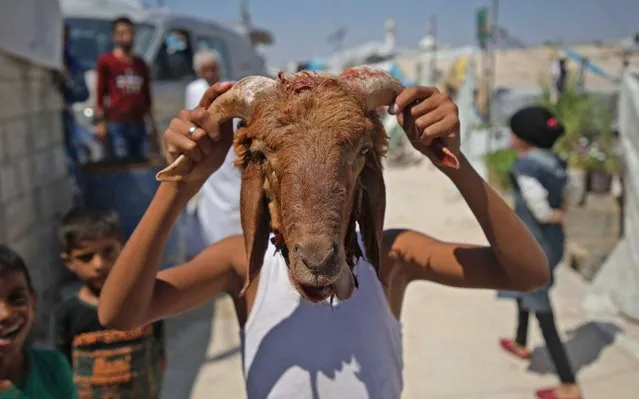
A Syrian boy plays with the head of a sacrificed sheep at a DIP camp for Interally Displaced Persons near the town of Aqrabat in Syria's northern Idlib province on August 12, 2019. Known as the “big” festival, Eid Al-Adha is celebrated each year by Muslims sacrificing various animals according to religious traditions, including cows, camels, goats and sheep. The festival marks the end of the Hajj pilgrimage to Mecca and commemorates Prophet Abraham's readiness to sacrifice his son to show obedience to God. (Photo by Aaref Watad/AFP Photo)

A Syrian boy plays with the head of a sacrificed sheep at a DIP camp for Interally Displaced Persons near the town of Aqrabat in Syria's northern Idlib province on August 12, 2019. Known as the “big” festival, Eid Al-Adha is celebrated each year by Muslims sacrificing various animals according to religious traditions, including cows, camels, goats and sheep. The festival marks the end of the Hajj pilgrimage to Mecca and commemorates Prophet Abraham's readiness to sacrifice his son to show obedience to God. (Photo by Aaref Watad/AFP Photo)
Details
15 Aug 2019 00:05:00
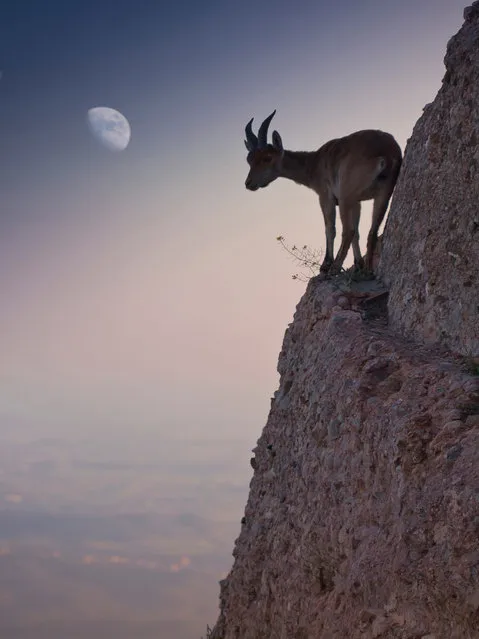
“For a bouquet of flowers”. Photographs made ​​in the last hours of the day. A goat is directed by a dangerous way to eat a small bouquet of flowers. Location: España, Barcelona, Montserrat. (Photo and caption by Renato Lopez Baldo/National Geographic Traveler Photo Contest)

“For a bouquet of flowers”. Photographs made ​​in the last hours of the day. A goat is directed by a dangerous way to eat a small bouquet of flowers. Location: España, Barcelona, Montserrat. (Photo and caption by Renato Lopez Baldo/National Geographic Traveler Photo Contest)

ATTENTION! All pictures are presented in high resolution. To see Hi-Res images – just TWICE click on any picture. In other words, click small picture – opens the BIG picture. Click BIG picture – opens VERY BIG picture.
Details
25 Jun 2013 12:51:00
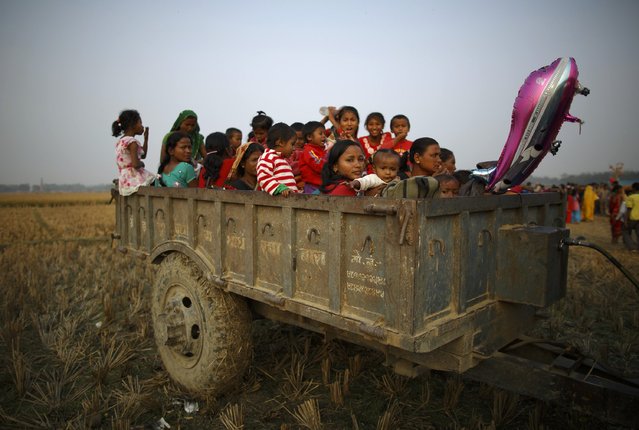
Family and friends sit in a vehicle trailer, where they will spend the night, near the enclosure for buffalos awaiting sacrifice on the eve of the sacrificial ceremony for the “Gadhimai Mela” festival in Bariyapur November 27, 2014. (Photo by Navesh Chitrakar/Reuters)

Family and friends sit in a vehicle trailer, where they will spend the night, near the enclosure for buffalos awaiting sacrifice on the eve of the sacrificial ceremony for the “Gadhimai Mela” festival in Bariyapur November 27, 2014. The festival renowned for its large number of animal sacrifices, is held every five years at the Gadhimai Temple where devotees from Nepal and bordering India will sacrifice buffaloes, goats and birds while offering prayers to Gadhimai, the goddess of power. (Photo by Navesh Chitrakar/Reuters)
Details
28 Nov 2014 12:03:00