Loading...
Done
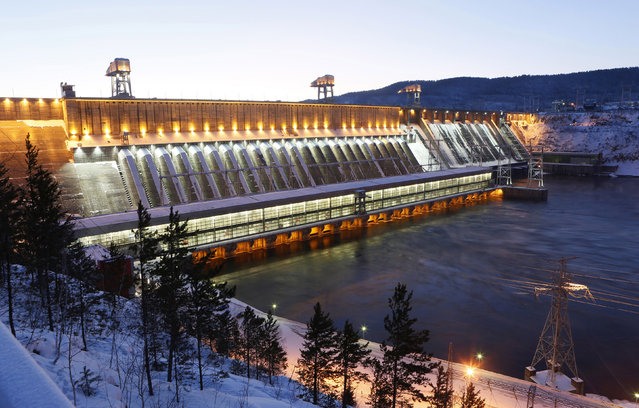
A general view shows the Krasnoyarsk hydro-electric power station on the Yenisei River near the Siberian city of Krasnoyarsk, Russia, January 13, 2016. The power plant, owned by EuroSibEnergo company, part of En+ Group, with a generating capacity of 6,000 megawatt (MW), has a ferro-concrete dam 124-metres high and 1065-metres long and is the second largest Russian hydroelectric power station. About 85% of the energy generated is intended for the Rusal Krasnoyarsk aluminium smelter, according to representatives of the power station. (Photo by Ilya Naymushin/Reuters)

A general view shows the Krasnoyarsk hydro-electric power station on the Yenisei River near the Siberian city of Krasnoyarsk, Russia, January 13, 2016. The power plant, owned by EuroSibEnergo company, part of En+ Group, with a generating capacity of 6,000 megawatt (MW), has a ferro-concrete dam 124-metres high and 1065-metres long and is the second largest Russian hydroelectric power station. About 85% of the energy generated is intended for the Rusal Krasnoyarsk aluminium smelter, according to representatives of the power station. (Photo by Ilya Naymushin/Reuters)
Details
16 Jan 2016 08:03:00
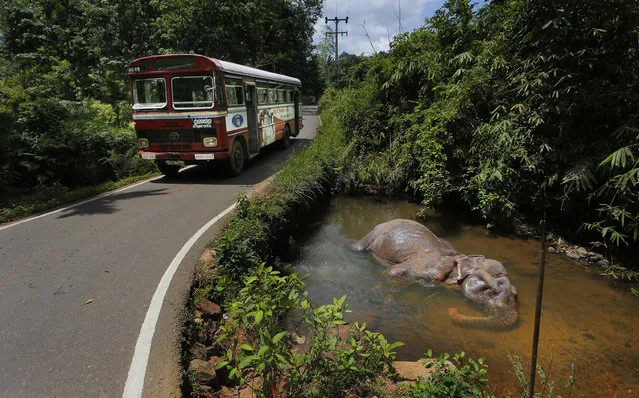
In this July 5, 2016 photo, a tamed elephant rests in a pool of water by a road in Baduraliya, a village outside Colombo, Sri Lanka. Even as the country cracks down on illegal ownership, the enduring demand for elephants has the government planning to set up its own pool of captive animals to be hired out to temples for ceremonies and maintained with budget funds. For Buddhists, who make up 70 percent of the island's 20 million population, elephants are believed to have been a servant of the Buddha and even a previous incarnation of the holy man himself. (Photo by Eranga Jayawardena/AP Photo)

In this July 5, 2016 photo, a tamed elephant rests in a pool of water by a road in Baduraliya, a village outside Colombo, Sri Lanka. Even as the country cracks down on illegal ownership, the enduring demand for elephants has the government planning to set up its own pool of captive animals to be hired out to temples for ceremonies and maintained with budget funds. (Photo by Eranga Jayawardena/AP Photo)
Details
04 Jan 2017 08:10:00
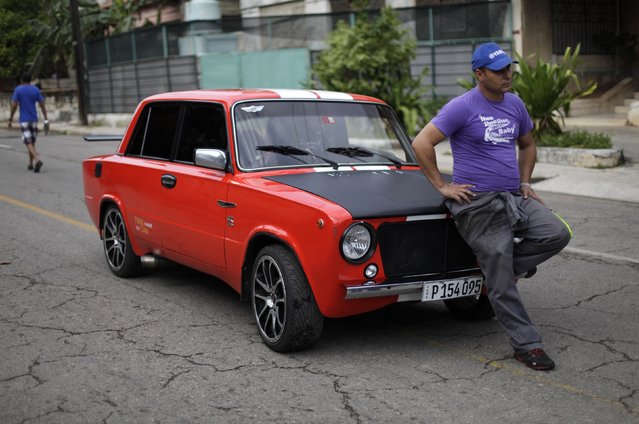
David Pena poses for a photograph with his Lada 2101 built in 1979 on a street in Havana February 9, 2015. Getting parts from the United States is cheaper than in Cuba, where state-run stores sell them at four times the cost, said Pena, a mechanic and president of the Russian Car Club in Havana who drives a souped-up, sporty red 1972 Lada 2101 that he fixed himself. His own Lada has a Fiat engine and an extra Alfa Romeo carburetor. (Photo by Enrique De La Osa/Reuters)

David Pena poses for a photograph with his Lada 2101 built in 1979 on a street in Havana February 9, 2015. Getting parts from the United States is cheaper than in Cuba, where state-run stores sell them at four times the cost, said Pena, a mechanic and president of the Russian Car Club in Havana who drives a souped-up, sporty red 1972 Lada 2101 that he fixed himself. His own Lada has a Fiat engine and an extra Alfa Romeo carburetor. (Photo by Enrique De La Osa/Reuters)
Details
12 Feb 2015 12:55:00
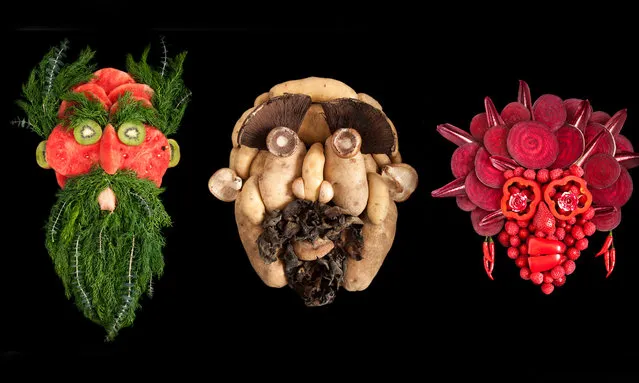
Photographer Emily Dryden and sculptor/actor Zahydé Pietri combine theatricality and organic produce to compose the photographs for their series Fresh Faces. The portraits are made from a wide range of fruit and vegetables and aim to highlight humanity’s diversity – Pietri is from Puerto Rico and Dryden is from New York. Each face has its own name and identity: “We have stories for them, which you can see in the expressions”, says Dryden, “but we decided to keep them to ourselves. We didn’t want to spoil that”. (Photo by Emily Dryden and Zahydé Pietri/The Guardian)

Photographer Emily Dryden and sculptor/actor Zahydé Pietri combine theatricality and organic produce to compose the photographs for their series Fresh Faces. The portraits are made from a wide range of fruit and vegetables and aim to highlight humanity’s diversity – Pietri is from Puerto Rico and Dryden is from New York. Each face has its own name and identity: “We have stories for them, which you can see in the expressions”, says Dryden, “but we decided to keep them to ourselves. We didn’t want to spoil that”. (Photo by Emily Dryden and Zahydé Pietri/The Guardian)
Details
25 Jul 2016 11:08:00
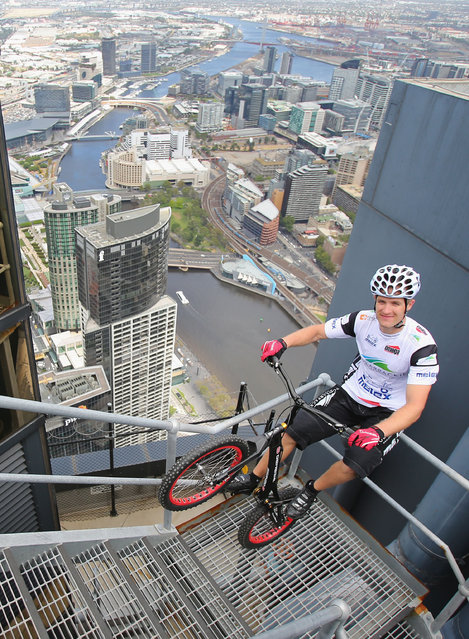
Krystian Herba, a Polish extreme cyclist jumps up the steps of Eureka Tower on a bicycle as he breaks a Guinness World Record at Eureka Tower on February 4, 2014 in Melbourne, Australia. Herba jumped up 2,919 steps on his bicycle in 1 hour 45 minutes without supporting himself with his hands or feet to break his own Guinness World Record. (Photo by Scott Barbour/Getty Images)

Krystian Herba, a Polish extreme cyclist jumps up the steps of Eureka Tower on a bicycle as he breaks a Guinness World Record at Eureka Tower on February 4, 2014 in Melbourne, Australia. Herba jumped up 2,919 steps on his bicycle in 1 hour 45 minutes without supporting himself with his hands or feet to break his own Guinness World Record. (Photo by Scott Barbour/Getty Images)
Details
05 Feb 2014 10:45:00
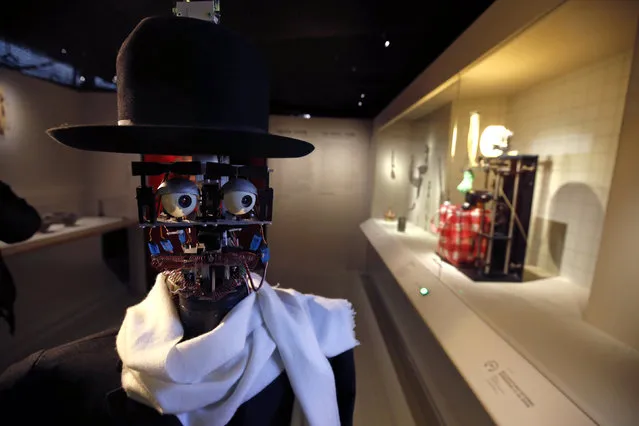
The Berenson robot strolls among visitors during the exhibition “Persona : Oddly Human” at the Quai Branly museum in Paris, France, February 23, 2016. The Berenson robot, developed in France in 2011, is the brainchild of anthropologist Denis Vidal and robotics engineer Philippe Gaussier. Its programming allows it to record reactions of museum visitors to certain pieces of art and then use the data to develop its own unique taste, which allows “Berenson” to judge whether or not it likes a certain work of art within an exhibition. (Photo by Philippe Wojazer/Reuters)

The Berenson robot strolls among visitors during the exhibition “Persona : Oddly Human” at the Quai Branly museum in Paris, France, February 23, 2016. The Berenson robot, developed in France in 2011, is the brainchild of anthropologist Denis Vidal and robotics engineer Philippe Gaussier. Its programming allows it to record reactions of museum visitors to certain pieces of art and then use the data to develop its own unique taste, which allows “Berenson” to judge whether or not it likes a certain work of art within an exhibition. (Photo by Philippe Wojazer/Reuters)
Details
25 Feb 2016 12:26:00
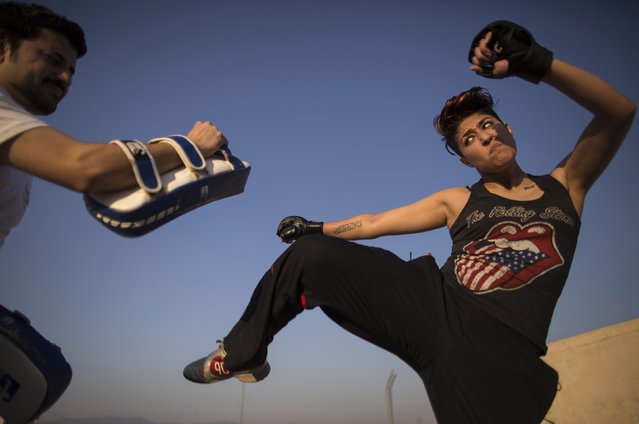
Interior designer Zahra Afridi (R) kicks a punching bag during a kickboxing training session at her home in Islamabad February 10, 2014. Afridi runs her own interior design company. Her most recent project was a Classic Rock Coffee cafe in Islamabad. (Photo by Zohra Bensemra/Reuters)

Interior designer Zahra Afridi (R) kicks a punching bag during a kickboxing training session at her home in Islamabad February 10, 2014. Afridi runs her own interior design company. Her most recent project was a Classic Rock Coffee cafe in Islamabad. Though instability continues to plague Pakistan and many areas are dominated by social conservatism, some of the country's more affluent residents have worked to fashion a very different kind of lifestyle for themselves. Pictures of men and women taking part in all sorts of activities and professions – from being a pilates instructor, to a textile retail entrepreneur, to a member of a rock band – offer a different view of Pakistan to images of conflict that often make the news. (Photo by Zohra Bensemra/Reuters)
Details
13 Jul 2014 10:47:00
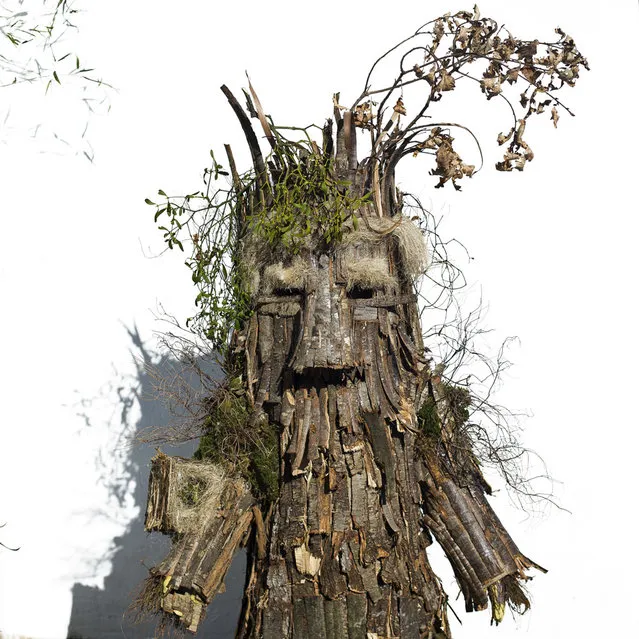
A man dressed as a  “Trapajon”, representing entities of nature, poses for a picture after taking part in the Vijanera Festival in Silio, northern Spain, Sunday, Jan. 6, 2013. The Vijanera masquerade, of pre-Roman origin, is the first carnival of the year in Europe symbolizing the triumph of good over evil and involving the participation of crowds of residents wearing different masks, animal skins and brightly colored clothing with its own complex function and symbolism and becoming the living example of the survival of archaic cults to nature. (Photo by Daniel Ochoa de Olza/AP Photo)

A man dressed as a “Trapajon”, representing entities of nature, poses for a picture after taking part in the Vijanera Festival in Silio, northern Spain, Sunday, Jan. 6, 2013. The Vijanera masquerade, of pre-Roman origin, is the first carnival of the year in Europe symbolizing the triumph of good over evil and involving the participation of crowds of residents wearing different masks, animal skins and brightly colored clothing with its own complex function and symbolism and becoming the living example of the survival of archaic cults to nature. (Photo by Daniel Ochoa de Olza/AP Photo)
Details
19 Jan 2013 13:01:00