Loading...
Done
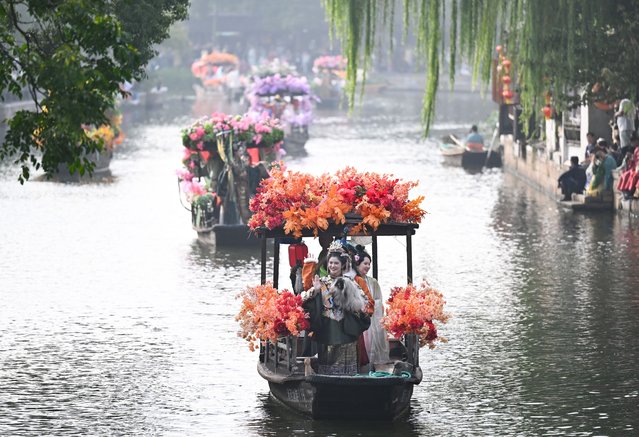
People dressed in Hanfu robes take a boat parade during the Xitang Hanfu Culture Week in the ancient town of Xitang on November 1, 2025 in Jiaixng, Zhejiang Province of China. (Photo by Wang Gang/China News Service/VCG via Getty Images)

People dressed in Hanfu robes take a boat parade during the Xitang Hanfu Culture Week in the ancient town of Xitang on November 1, 2025 in Jiaixng, Zhejiang Province of China. (Photo by Wang Gang/China News Service/VCG via Getty Images)
Details
22 Nov 2025 05:41:00
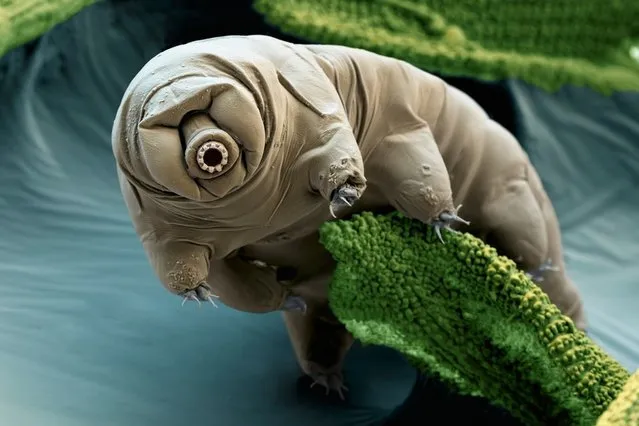
Tardigrades (commonly known as waterbears or moss piglets). (Photo by SPL/East News)

“Tardigrades (commonly known as waterbears or moss piglets) are small, water-dwelling, segmented animals with eight legs. Tardigrades were first discovered in 1773 by Johann August Ephraim Goeze, who called them kleiner Wasserbär, meaning “little water bear” in German. The name Tardigrada means “slow walker” and was given by Lazzaro Spallanzani in 1777. The name water bear comes from the way they walk, reminiscent of a bear's gait. The biggest adults may reach a body length of 1.5 millimetres (0.059 in), the smallest below 0.1 mm. Freshly hatched tardigrades may be smaller than 0.05 mm”. – Wikipedia. Photo: Tardigrades. (Photo by SPL/East News)

Details
26 Sep 2012 09:55:00
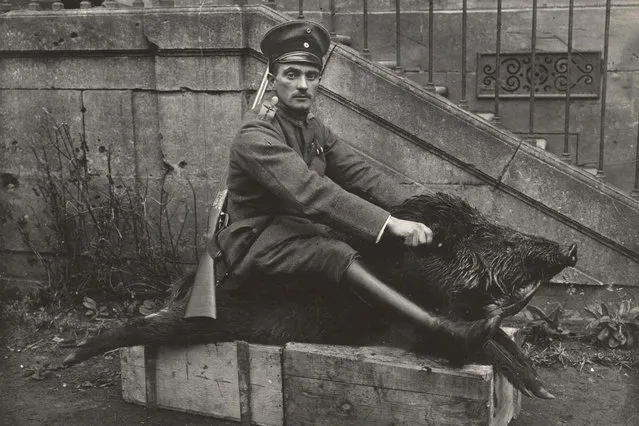
A German Air Force Officer sits astride a dead boar outside a house where he is stationed near the Western Front, in this 1918 handout picture. This picture is part of a previously unpublished set of World War One (WWI) images from a private collection. The pictures offer an unusual view of varied and contrasting aspects of the conflict, from high tech artillery to mobile pigeon lofts, and from officers partying in their headquarters to the grim reality of life and death in the trenches. The year 2014 marks the centenary of the start of the war. (Photo by Reuters/Archive of Modern Conflict London)

A German Air Force Officer sits astride a dead boar outside a house where he is stationed near the Western Front, in this 1918 handout picture. This picture is part of a previously unpublished set of World War One (WWI) images from a private collection. The pictures offer an unusual view of varied and contrasting aspects of the conflict, from high tech artillery to mobile pigeon lofts, and from officers partying in their headquarters to the grim reality of life and death in the trenches. The year 2014 marks the centenary of the start of the war. (Photo by Reuters/Archive of Modern Conflict London)
Details
26 Jun 2014 12:13:00
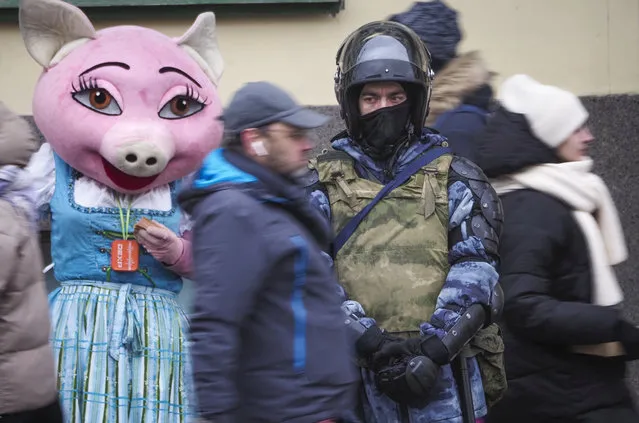
A Russian Rosguardia (National Guard) soldier stands at a central avenue in front of a restaurant promoter, a day before Sunday's protest in St. Petersburg, Russia, Saturday, January 30, 2021. (Photo by Dmitri Lovetsky/AP Photo)

A Russian Rosguardia (National Guard) soldier stands at a central avenue in front of a restaurant promoter, a day before Sunday's protest in St. Petersburg, Russia, Saturday, January 30, 2021. (Photo by Dmitri Lovetsky/AP Photo)
Details
31 Jan 2021 08:52:00
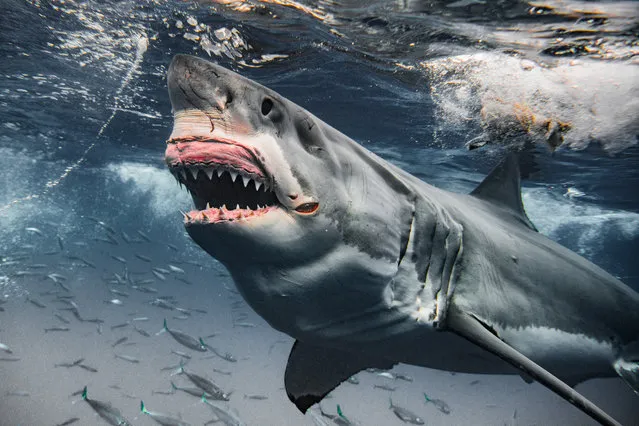
Weighing 1,500lb, Brutus the great white shark lunges at some bait off Guadalupe Island, Mexico in July 2022. (Photo by Euan Rannachan/Media Drum Images/The Times)

Weighing 1,500lb, Brutus the great white shark lunges at some bait off Guadalupe Island, Mexico in July 2022. (Photo by Euan Rannachan/Media Drum Images/The Times)
Details
18 Apr 2023 04:33:00
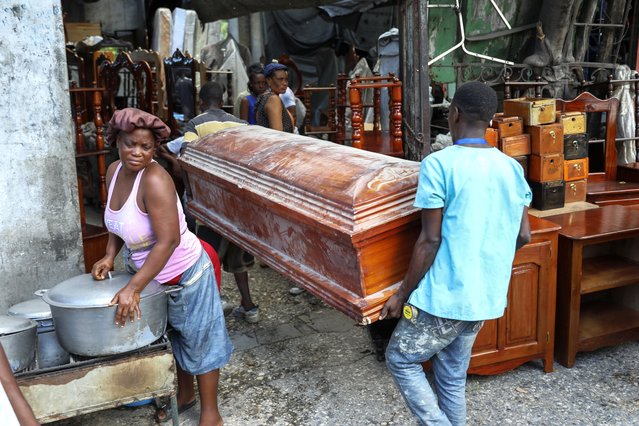
People carry an empty coffin past a street food vendor into the shop that is buying it to repair and sell in Port-au-Prince, Haiti, Friday, September 13, 2024. (Photo by Odelyn Joseph/AP Photo)

People carry an empty coffin past a street food vendor into the shop that is buying it to repair and sell in Port-au-Prince, Haiti, Friday, September 13, 2024. (Photo by Odelyn Joseph/AP Photo)
Details
27 Sep 2024 03:57:00
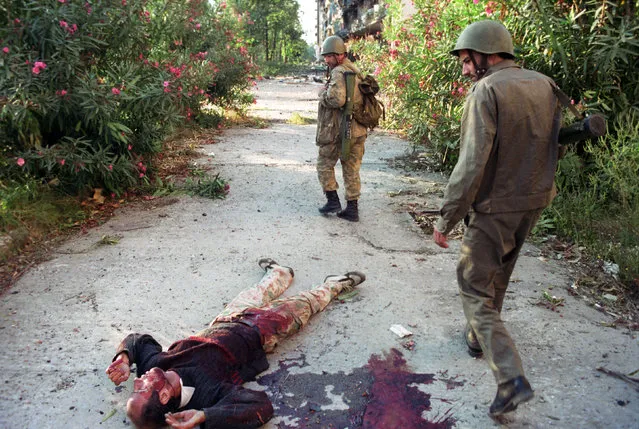
Abkhazia. Sukhumi, 1993. A house-to-house combat. (Photo by Andrei Solovyov/ITAR-TASS)

The War in Abkhazia from 1992 to 1993 was fought between Georgian government forces for the most part, and Abkhaz separatist forces, Russian armed forces and North Caucasian militants. Ethnic Georgians who lived in Abkhazia fought largely on the side of Georgian government forces. Ethnic Armenians and Russians within Abkhazia's population largely supported the Abkhazians, and many fought on their side. The separatists received support from thousands of North Caucasus and Cossack militants and from the Russian Federation forces stationed in and near Abkhazia. Here: Abkhazia. Sukhumi, 1993. A house-to-house combat. (Photo by Andrei Solovyov/ITAR-TASS)
Details
29 Sep 2017 07:31:00
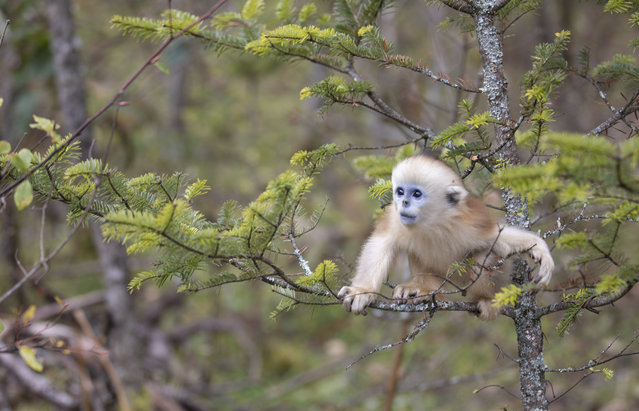
Photo taken on October 11, 2020 shows a golden monkey at Dalongtan Golden Monkey Research Center in Shennongjia National Park of central China's Hubei Province. With the efforts of local authority and improvement of the environment in the past many years, the number of golden monkeys in Shennongjia area reached nearly 1,500 nowadays. (Photo by Xinhua News Agency/Rex Features/Shutterstock)

Photo taken on October 11, 2020 shows a golden monkey at Dalongtan Golden Monkey Research Center in Shennongjia National Park of central China's Hubei Province. With the efforts of local authority and improvement of the environment in the past many years, the number of golden monkeys in Shennongjia area reached nearly 1,500 nowadays. (Photo by Xinhua News Agency/Rex Features/Shutterstock)
Details
18 Oct 2020 00:03:00