Loading...
Done
The Skeleton Coast, Namibia

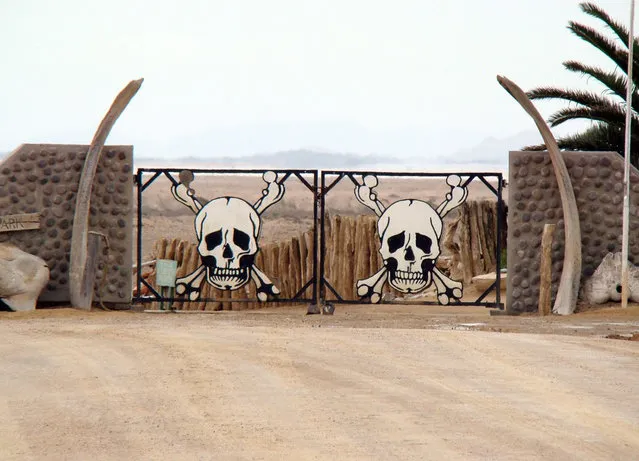
The Skeleton Coast is the northern part of the Atlantic Ocean coast of Namibia and south of Angola from the Kunene River south to the Swakop River, although the name is sometimes used to describe the entire Namib Desert coast. The Bushmen of the Namibian interior called the region "The Land God Made in Anger", while Portuguese sailors once referred to it as "The Gates of Hell".
Details
23 Feb 2014 09:27:00
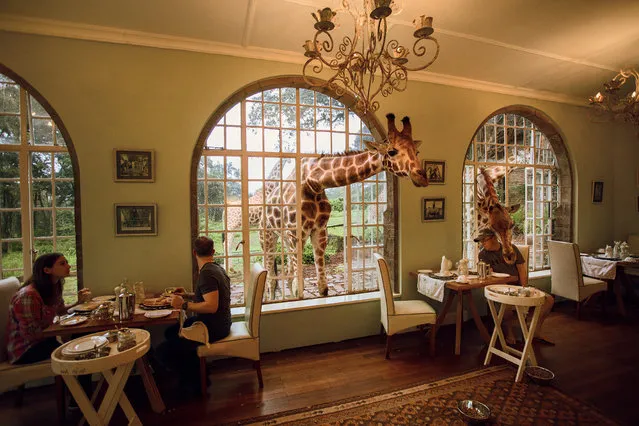
The giraffes visit twice a day searching for food, before returning to the forest. Although still wild animals, they have become accustomed to receiving treats from residents and guests. (Photo by Klaus Thymann)

Situated 10km outside Nairobi city centre, this private giraffe sanctuary is centred around a colonial manor house named Giraffe Manor. Living within the grounds is a herd of rare Rothschild giraffe. The giraffes visit twice a day searching for food, before returning to the forest. Although still wild animals, they have become accustomed to receiving treats from residents and guests. (Photo by Klaus Thymann)
Details
28 Jan 2016 12:36:00
Aerial Acrobat

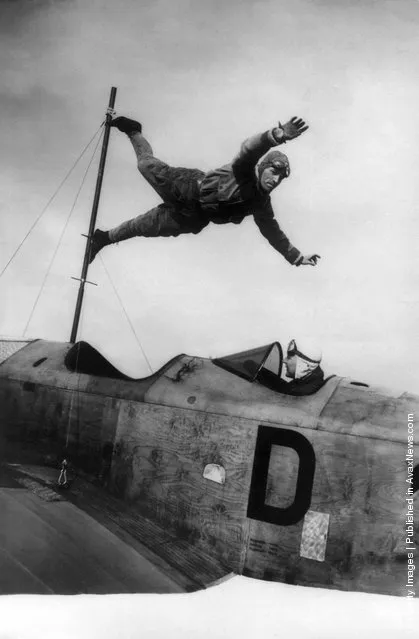
Aerial acrobat Schindler, notorious for his foolhardy stunts, practising one of his tricks listing out of the vertical, from a Klemp plane piloted by Richard Perlia. (Photo by General Photographic Agency/Getty Images). Circa 1927
Details
22 Aug 2011 12:18:00
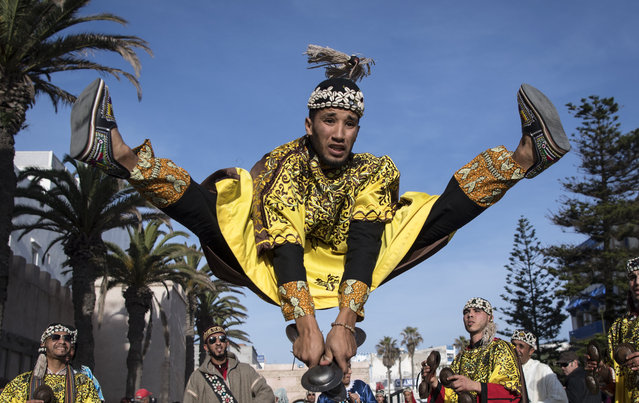
A Gnawa traditional group performs in the city of Essaouira on December 14, 2019, to celebrate the decision of adding the Gnawa culture to UNESCO's list of Intangible Cultural Heritage of Humanity. Gnawa culture, a centuries-old Moroccan practice rooted in music, African rituals and Sufi traditions, was added to UNESCO's list of Intangible Cultural Heritage of Humanity earlier in the week. Gnawa refers to a “set of musical productions, fraternal practices and therapeutic rituals where the secular mixes with the sacred”, according to the nomination submitted by Morocco. Often dressed in colourful outfits, Gnawa musicians play the guenbri, a type of lute with three strings, accompanied by steel castanets called krakebs. (Photo by Fadel Senna/AFP Photo)

A Gnawa traditional group performs in the city of Essaouira on December 14, 2019, to celebrate the decision of adding the Gnawa culture to UNESCO's list of Intangible Cultural Heritage of Humanity. Gnawa culture, a centuries-old Moroccan practice rooted in music, African rituals and Sufi traditions, was added to UNESCO's list of Intangible Cultural Heritage of Humanity earlier in the week. Gnawa refers to a “set of musical productions, fraternal practices and therapeutic rituals where the secular mixes with the sacred”, according to the nomination submitted by Morocco. Often dressed in colourful outfits, Gnawa musicians play the guenbri, a type of lute with three strings, accompanied by steel castanets called krakebs. (Photo by Fadel Senna/AFP Photo)
Details
18 Dec 2019 00:05:00
A painter was drawing a lion head body painting on a model during the auto show on March 15, 2015. The local 2015 auto show was held in Xuchang Stadium in Xuchang, Henan Province, China. The exhibitors tried a variety of ways for promotion and attracting people's attention. Some exhibitors were giving gifts to the people scanning their QR codes and add them onto friends list. (Photo by Xu Zhongxin/Sipa Asia)

A painter was drawing a lion head body painting on a model during the auto show on March 15, 2015. The local 2015 auto show was held in Xuchang Stadium in Xuchang, Henan Province, China. The exhibitors tried a variety of ways for promotion and attracting people's attention. Some exhibitors were giving gifts to the people scanning their QR codes and add them onto friends list. An auto company has invited young s*x underwear models and drew body paintings on the girls. (Photo by Xu Zhongxin/Sipa Asia)
Details
21 Mar 2015 13:04:00
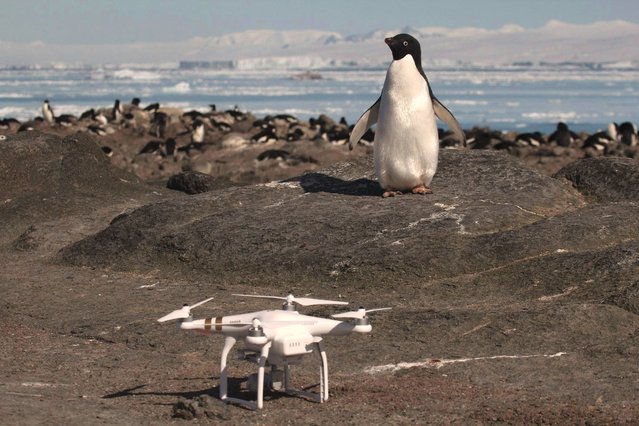
This undated handout photograph released by Stony Brook University/ Louisiana State University on March 2, 2018, shows an Adélie penguin (R) looking at a drone at breeding colony on Heroina Island, Danger Islands, Antarctica. A thriving “hotspot” of some 1.5 million Adelie penguins has been discovered on the remote Danger Islands in the east Antarctic, surprised scientists announced on March 2, 2018. (Photo by Rachael Herman/AFP Photo/Louisiana State University AND Stony Brook University)

This undated handout photograph released by Stony Brook University/ Louisiana State University on March 2, 2018, shows an Adélie penguin looking at a drone at breeding colony on Heroina Island, Danger Islands, Antarctica. A thriving “hotspot” of some 1.5 million Adelie penguins has been discovered on the remote Danger Islands in the east Antarctic, surprised scientists announced on March 2, 2018. (Photo by Rachael Herman/AFP Photo/Louisiana State University AND Stony Brook University)
Details
04 Mar 2018 00:03:00
In this July 29, 2016 photo, cowgirl Dariadna Corujo winds up to lasso a calf during an improvised rodeo event at a farm in Sancti Spiritus, central Cuba. At the tender age of 6, Dariadna is already an expert barrel racer and calf roper. In the flat grasslands of Sancti Spiritus, a group of neighboring cattle ranchers founded a non-governmental organization called Future Ranchers more than a decade ago to revive Cuba’s rodeo culture, which dates back centuries to Spanish colonial times. (Photo by Ramon Espinosa/AP Photo)

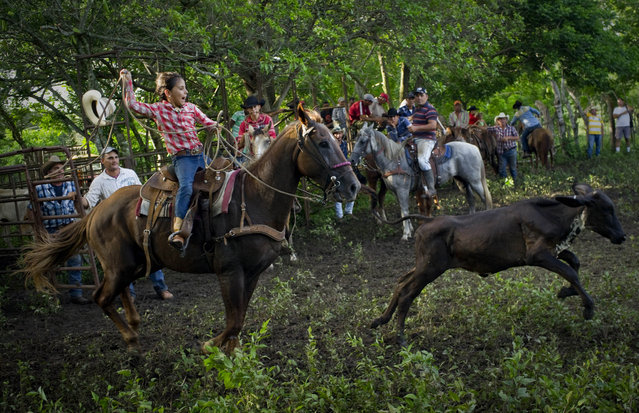
In this July 29, 2016 photo, cowgirl Dariadna Corujo winds up to lasso a calf during an improvised rodeo event at a farm in Sancti Spiritus, central Cuba. At the tender age of 6, Dariadna is already an expert barrel racer and calf roper. In the flat grasslands of Sancti Spiritus, a group of neighboring cattle ranchers founded a non-governmental organization called Future Ranchers more than a decade ago to revive Cuba’s rodeo culture, which dates back centuries to Spanish colonial times. (Photo by Ramon Espinosa/AP Photo)
Details
03 Aug 2016 11:39:00
A boy jumps into a pool of mud during the traditional “Bloco da Lama” or “Mud Street” carnival party, in Paraty, Brazil, Saturday, February 25, 2017. Legend has it the “bloco” was born in 1986 after local teens hiking in a nearby mangrove forest smeared themselves with mud to discourage mosquitoes and then wandered through Paraty. The party grew year after year, but revelers eventually were banned from parading in the colonial downtown after shopkeepers complained pristine white walls were stained with the hard-to-remove mud. (Photo by Mauro Pimentel/AP Photo)

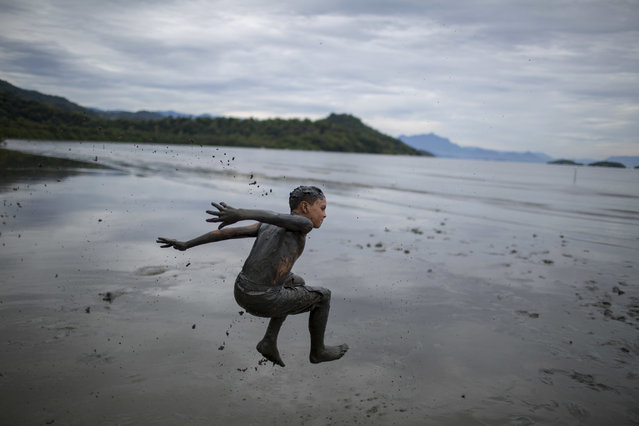
A boy jumps into a pool of mud during the traditional “Bloco da Lama” or “Mud Street” carnival party, in Paraty, Brazil, Saturday, February 25, 2017. Legend has it the “bloco” was born in 1986 after local teens hiking in a nearby mangrove forest smeared themselves with mud to discourage mosquitoes and then wandered through Paraty. The party grew year after year, but revelers eventually were banned from parading in the colonial downtown after shopkeepers complained pristine white walls were stained with the hard-to-remove mud. (Photo by Mauro Pimentel/AP Photo)
Details
28 Mar 2017 09:07:00