Loading...
Done
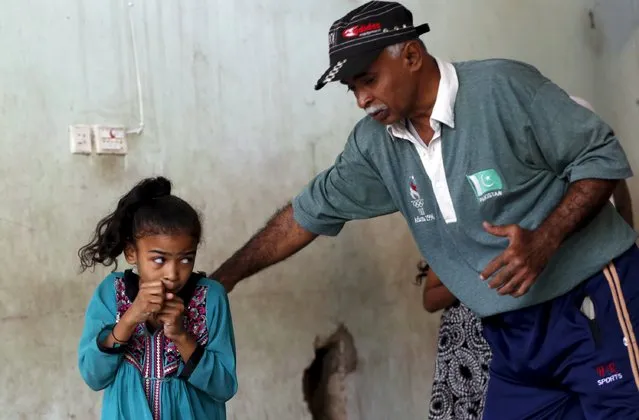
Arisha, 9, takes instructions from coach Younus Qambrani during an exercise session at the first women's boxing coaching camp in Karachi, Pakistan February 19, 2016. (Photo by Akhtar Soomro/Reuters)

Arisha, 9, takes instructions from coach Younus Qambrani during an exercise session at the first women's boxing coaching camp in Karachi, Pakistan February 19, 2016. For the past six months about a dozen girls, aged 8 to 17, have gone to the Pak Shine Boxing Club after school to practice their jabs, hooks and upper cuts. (Photo by Akhtar Soomro/Reuters)
Details
01 Mar 2016 09:46:00
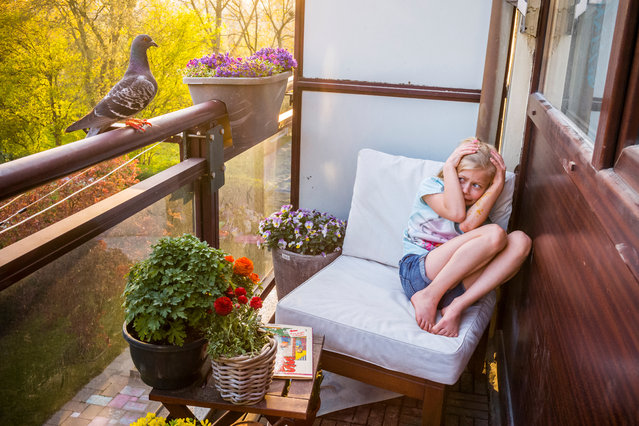
Nature – first prize, stories. Pandemic Pigeons – A Love Story. The photographer’s daughter, Merel, cowers after Dollie flies past and perches on the balcony before entering the house in Vlaardingen in the Netherlands on 6 April 2020. “She’s still frightened when Dollie suddenly lands on the balcony railing. I hide my smile behind the camera, as I try to comfort her by saying they won’t hurt you. “I thought he was going to attack me”, she replies. As the nesting pigeons keep coming back to our place, slowly my girls have started to appreciate them – perhaps not as much as I do, but it’s a start”. (Photo by Jasper Doest/World Press Photo 2021)

Nature – first prize, stories. Pandemic Pigeons – A Love Story. The photographer’s daughter, Merel, cowers after Dollie flies past and perches on the balcony before entering the house in Vlaardingen in the Netherlands on 6 April 2020. “She’s still frightened when Dollie suddenly lands on the balcony railing. I hide my smile behind the camera, as I try to comfort her by saying they won’t hurt you. “I thought he was going to attack me”, she replies. As the nesting pigeons keep coming back to our place, slowly my girls have started to appreciate them – perhaps not as much as I do, but it’s a start”. (Photo by Jasper Doest/World Press Photo 2021)
Details
17 Apr 2021 09:30:00
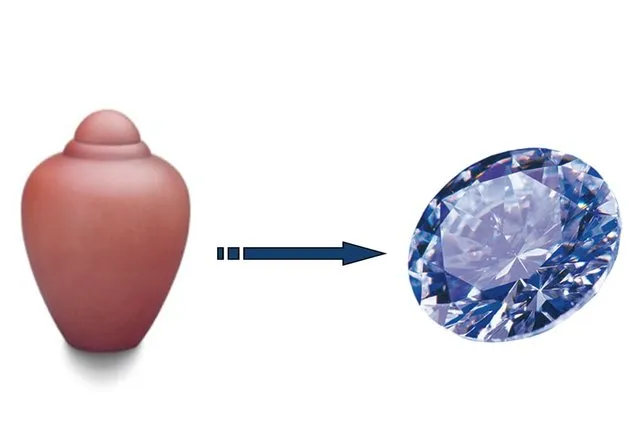
Swiss Company Turns People’s Ashes Into Diamonds

In the past people used to bury their loved ones or turn them into ashes. However, now there is a completely new possibility. Since having an urn with ashes in your house may be a bit weird, you may want to choose the option of turning your deceased relative into a diamond. Yes, diamond! You’ve heard us correctly. By using immense heat and pressure, the ashes you get after cremating a person can be turned into a real diamond. After this, the diamond can be left as it is, and stored in a jewelry box, or it can be used as a piece of jewelry, such as a ring or a pendant, allowing you to always keep your loved one close to your heart. (Photo by djd/Algordanza memorial diamonds)
Details
20 Oct 2014 08:52:00

An important historic event: For the first time a container ship sailed the Northern Sea Route through the Russian Arctic, traveling from China to Amsterdam. The journey, which began on August 15 and was completed on September 10, is only now possible due to high levels of Arctic sea ice melt that have occurred in the past several years.
Details
23 Sep 2013 12:57:00
Tuna Melts My Heart

Tuna is an adorable and charming 3 year-old Chiweenie who was born with an aggressive overbite and a lower recessed jawline. He also has 5 moles surrounding his mouth, a crumbled chin and a neck that looks like he has been soaking in a bathtub for days! Those who can see past his irregularities will also adore him for them. They have eyes see his true beauty, because true beauty captivates our hearts and not just our eyes.
Details
10 Nov 2013 09:26:00


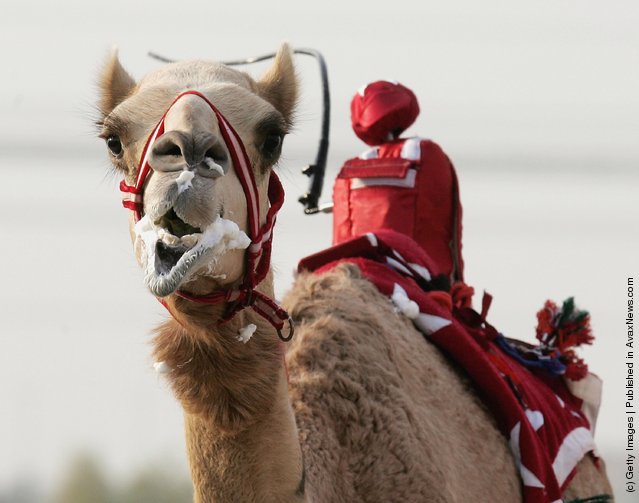
A camel foams at the mouth as he is whipped by a robot jockey during a race at Nad al-Sheba on December 6, 2006 in Dubai, United Arab Emirates. This is the first season that robotic jockeys have been used to race camels in Dubai. Controversially children from India were used to ride the camels in past seasons. These robot jockeys costing 15000GBP and up, were designed in Geneva and include shock absorbers and GPS tracking systems. The camel's owners control them from their speeding four wheel drives at the side of the track. (Photo by Chris Jackson/Getty Images)
Details
01 May 2011 09:01:00
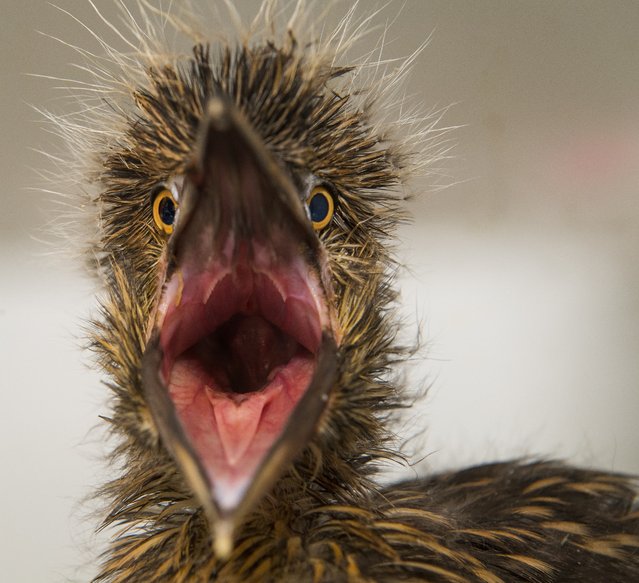
A baby Black-crowned Night Heron squawks in its incubator while being cared for at City Wildlife rescue and rehabilitation center in Washington, DC on May 31, 2017. The heron is one of several that have been brought to CW by the staff at The National Zoo over the past few years. The heron is a native bird and has made an established rookery inside the zoo grounds over a hundred years ago.  Every year at this time, some of the chicks get pushed or fall out of the nest and require human care.  Because the birds are native and not part of the Smithsonian collection, they partnered with CW to rehabilitate the herons for re-release back to the flock inside Zoo. They're reintroduced back to their flock so that they can migrate together in the Fall. The Black-crowned heron usually migrates from the DC area down to southeast North Carolina, some going as far as Jacksonville, FL in winter. The Black-crowned heron is the species of greatest conservation need in the District of Columbia because their numbers are in such rapid decline due to habitat loss. (Photo Linda Davidson/The Washington Post)

A baby Black-crowned Night Heron squawks in its incubator while being cared for at City Wildlife rescue and rehabilitation center in Washington, DC on May 31, 2017. The heron is one of several that have been brought to CW by the staff at The National Zoo over the past few years. (Photo Linda Davidson/The Washington Post)
Details
04 Jun 2017 08:04:00
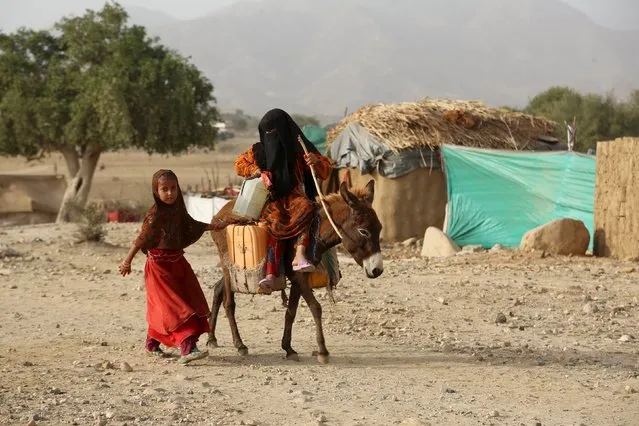
A girl rides a donkey as another walks by at the Shawqaba camp for internally displaced people who were forced to leave their villages by the war in Yemen's northwestern province of Hajjah March 12, 2016. In northwest Yemen, one of the poorest countries in the Middle East, about 400 families uprooted by the war have been stuck in the Shawqaba camp in Hajjah province for the past year. Residents live in poorly built huts that protect them neither from summer heat nor winter cold in a camp that lacks the most basic services. (Photo by Abduljabbar Zeyad/Reuters)

A girl rides a donkey as another walks by at the Shawqaba camp for internally displaced people who were forced to leave their villages by the war in Yemen's northwestern province of Hajjah March 12, 2016. In northwest Yemen, one of the poorest countries in the Middle East, about 400 families uprooted by the war have been stuck in the Shawqaba camp in Hajjah province for the past year. Residents live in poorly built huts that protect them neither from summer heat nor winter cold in a camp that lacks the most basic services. (Photo by Abduljabbar Zeyad/Reuters)
Details
09 Apr 2016 13:16:00