Loading...
Done
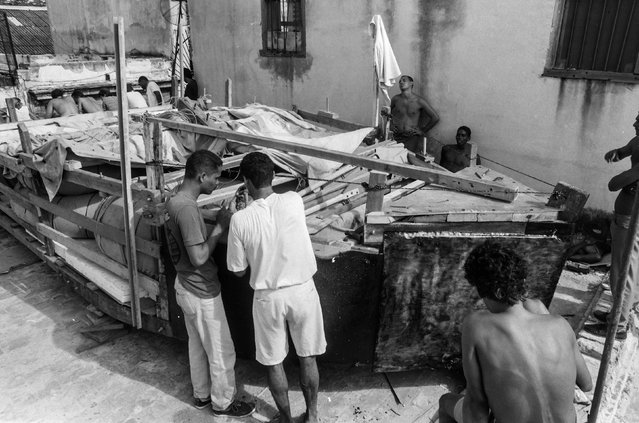
Rolando Pujol Rodriguez photographed the Cuban raft exodus in 1994, and twenty years later Enrique de la Osa took portraits of some of the people who made it to the United States, in this story which combines archive and present day images. Here: People put the finishing touches to a makeshift boat on a rooftop before lowering it onto a truck and launching it into the Straits of Florida towards the U.S., on the last day of the 1994 Cuban raft exodus in Havana, in this September 13, 1994 file photo. (Photo by Rolando Pujol Rodriguez/Reuters)

Rolando Pujol Rodriguez photographed the Cuban raft exodus in 1994, and twenty years later Enrique de la Osa took portraits of some of the people who made it to the United States, in this story which combines archive and present day images. Here: People put the finishing touches to a makeshift boat on a rooftop before lowering it onto a truck and launching it into the Straits of Florida towards the U.S., on the last day of the 1994 Cuban raft exodus in Havana, in this September 13, 1994 file photo. (Photo by Rolando Pujol Rodriguez/Reuters)
Details
13 Nov 2014 14:07:00
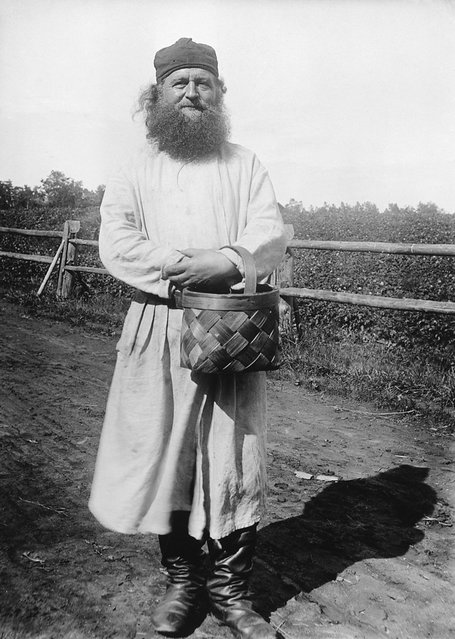
Priest, Valamo Monastery, Karelia, Russia (then Finland), 1930s. Father Venerius with a birchbark basket. (Photo by Einar Erici)

“Einar Erici (1885–1965) was a physician by profession, working at a tuberculosis hospital in Stockholm, even running a private medical practice. He was by then the most renowned Swedish expert of church organs and organ builders, and his archival collection is today held by the Swedish National Heritage Board. This archive includes mostly writings, such as letters and manuscripts for published articles and essays, but also more than 2 000 black and white photos – original prints, glass plates and film negatives”. – Swedish National Heritage Board

Photo: Priest, Valamo Monastery, Karelia, Russia (then Finland), 1930s. Father Venerius with a birchbark basket. (Photo by Einar Erici)
Details
09 Dec 2012 11:41:00
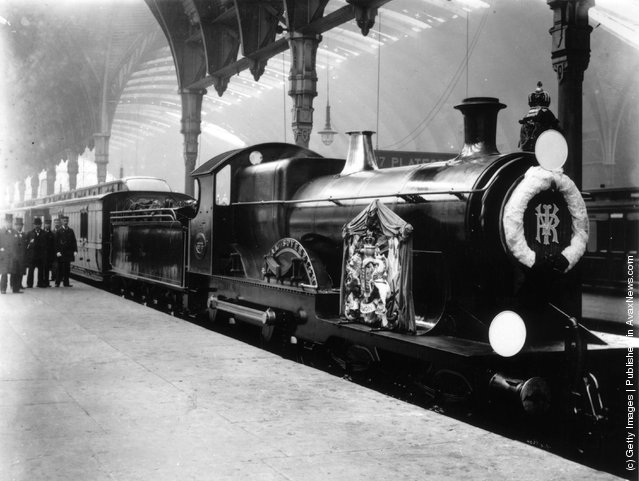
1901: A spotless GWR (Great Western Railway) locomotive, the 'Royal Sovereign' waiting to carry Queen Victoria's coffin

A spotless GWR (Great Western Railway) locomotive, the “Royal Sovereign” waiting to carry Queen Victoria's coffin. (Photo by Hulton Archive/Getty Images). 28th January 1901
Details
27 Oct 2011 11:26:00


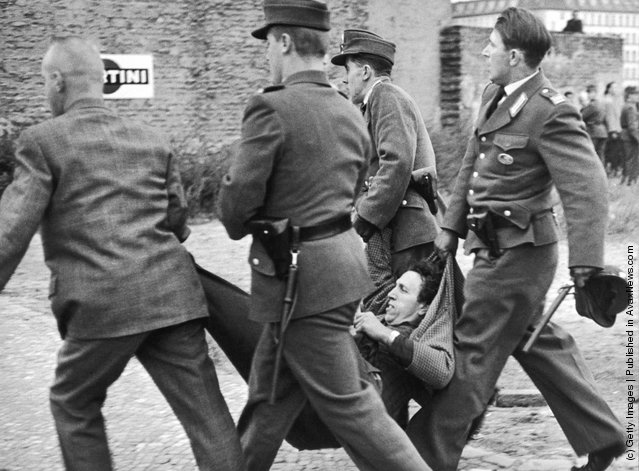
West German police arrest a young man, one of the angry crowd throwing stones at a bus full of Soviet guards making their way to the Soviet War Memorial, 20th August 1962. The crowd were incensed by the death of 18-year-old Peter Fechter, who was shot while trying to cross the Berlin Wall a few days earlier. (Photo by Central Press/Hulton Archive/Getty Images)
Details
23 May 2011 08:24:00


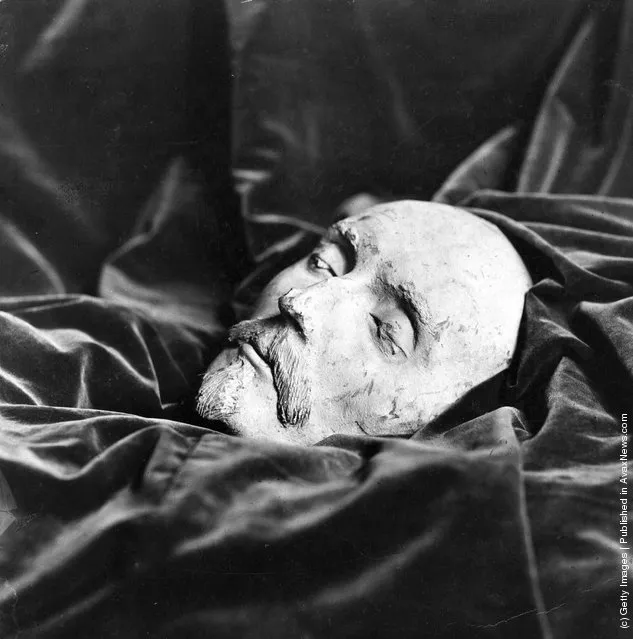
A death mask thought to be that of English dramatist William Shakespeare (1566–1616). Found by Dr. Ludwig Becker in Mainz in 1849, the mask was linked to Shakespeare because of its 1616 date and its supposed facial resemblance to the writer. A rival theory, however, maintains that the mask is more likely to be that of English poet Ben Johnson. (Photo by Hulton Archive/Getty Images). Circa 1900
Details
23 Jun 2011 10:19:00
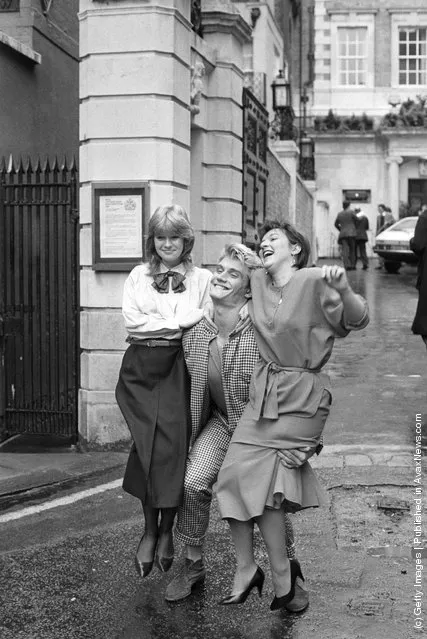
Swedish-born actor Dolph Lundgren shows off his muscles by sweeping two women off their feet at the same time, 1986

Swedish-born actor Dolph Lundgren shows off his muscles by sweeping two women off their feet at the same time, 1986. (Photo by Dave Hogan/Hulton Archive/Getty Images)
Details
14 Oct 2011 09:31:00
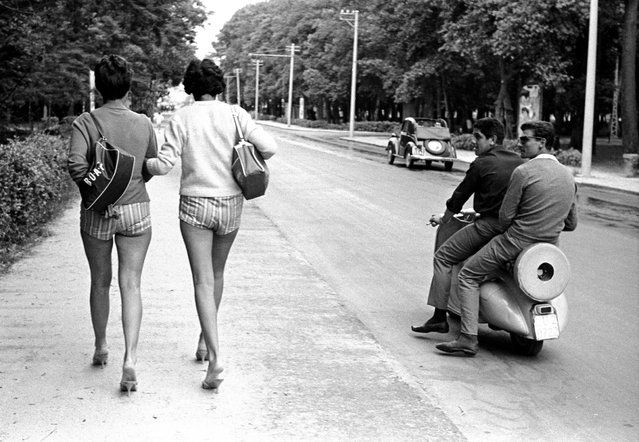
Viareggio in 1959. (Photo by Paolo Di Paolo/National Museum of 21st Century Arts)

The “Paolo Di Paolo: Lost World” exhibition presents more than 250 largely unseen images from the photographer’s archive. Di Paolo chronicled life in his country as an economic boom followed the destruction of the second world war. Although those were the years of la dolce vita he was an anti-paparazzo – he shunned the salacious and respected his subjects. The exhibition is at MAXXI, the National Museum of 21st Century Arts in Rome until 30 June. Here: Viareggio in 1959. (Photo by Paolo Di Paolo/National Museum of 21st Century Arts)
Details
01 May 2019 00:03:00
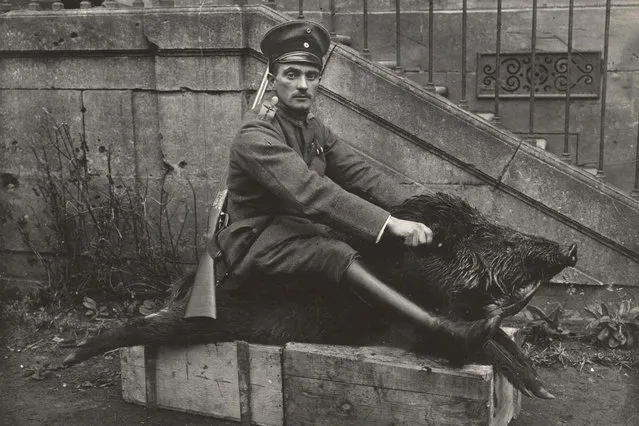
A German Air Force Officer sits astride a dead boar outside a house where he is stationed near the Western Front, in this 1918 handout picture. This picture is part of a previously unpublished set of World War One (WWI) images from a private collection. The pictures offer an unusual view of varied and contrasting aspects of the conflict, from high tech artillery to mobile pigeon lofts, and from officers partying in their headquarters to the grim reality of life and death in the trenches. The year 2014 marks the centenary of the start of the war. (Photo by Reuters/Archive of Modern Conflict London)

A German Air Force Officer sits astride a dead boar outside a house where he is stationed near the Western Front, in this 1918 handout picture. This picture is part of a previously unpublished set of World War One (WWI) images from a private collection. The pictures offer an unusual view of varied and contrasting aspects of the conflict, from high tech artillery to mobile pigeon lofts, and from officers partying in their headquarters to the grim reality of life and death in the trenches. The year 2014 marks the centenary of the start of the war. (Photo by Reuters/Archive of Modern Conflict London)
Details
26 Jun 2014 12:13:00