MAKS – 2011 provides experts and businessmen a rare opportunity to establish contacts at various levels, further development of R&D and production cooperation and search for new business partners.
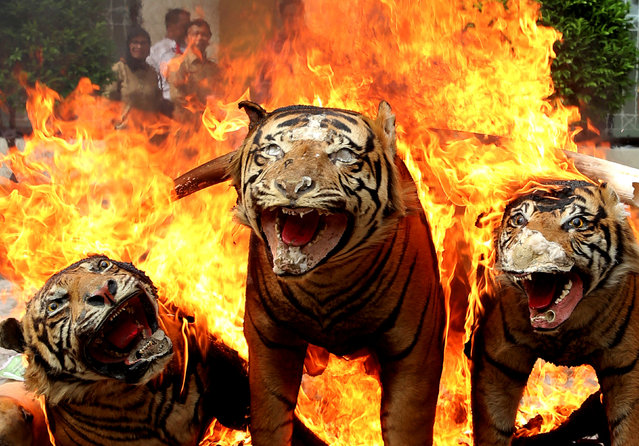
Confiscated rare and protected wildlife products such as these stuffed Sumatran tiger skins are burned and destroyed during a ceremony by government forestry and wildlife officials in Banda Aceh, Aceh province, Indonesia May 23, 2016 in this photo taken by Antara Foto. (Photo by Irwansyah Putra/Reuters/Antara Foto)
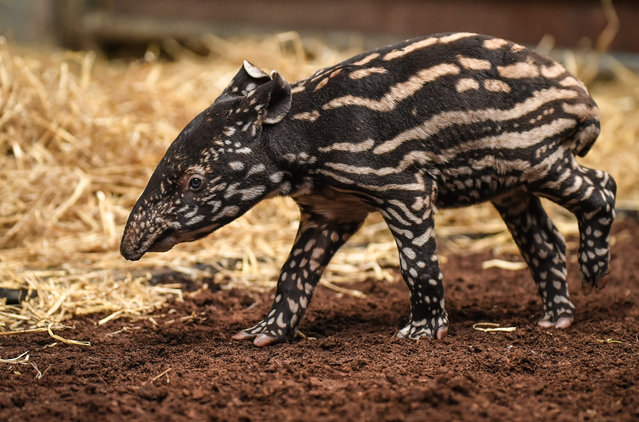
Solo, a rare baby tapir, makes his debut at Chester zoo, UK on July 18, 2016. The Malayan tapir is an endangered species and Solo is the first ever calf born at the zoo. (Photo by Chester Zoo/Rex Features/Shutterstock)
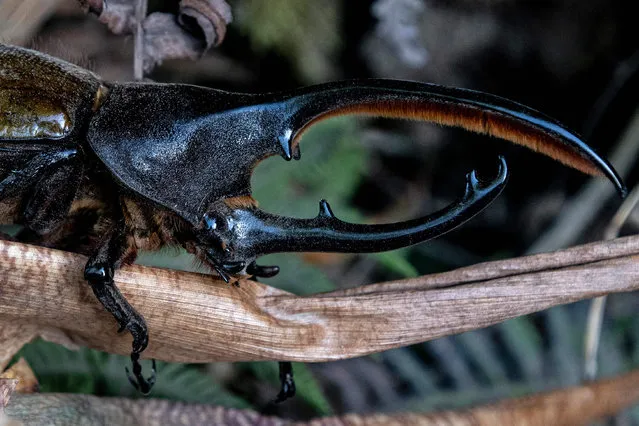
A Hercules beetle, one of the largest species of its kind, in seen at the Monteverde Cloud Forest Biological Reserve, in Puntarenas, Costa Rica, on May 23, 2023. In the Monteverde cloud forest, dense fog among the lush vegetation is increasingly rare and temperatures are increasing each year due to climate change. (Photo by Ezequiel Becerra/AFP Photo)
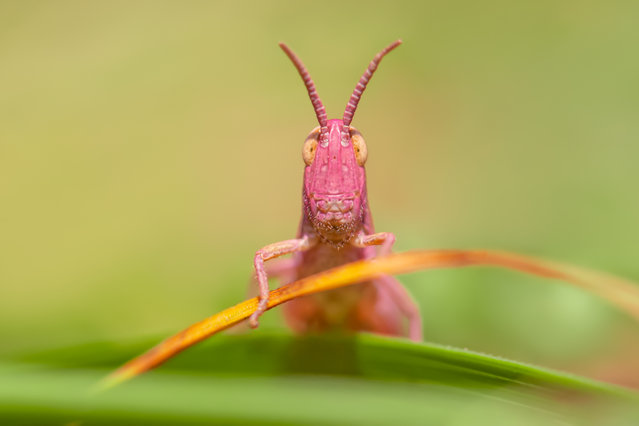
A rare grasshopper shines bright against its leafy background in North Holland, Netherlands in the first decade of October 2024. The insects are usually brown or green but turn pink due to a genetic mutation. (Photo by Roeselien Raimond/Media Drum Images)
Broomfield Samson, a rare breed Suffolk punch, and his rider, Alison Carroll, cool off in the River Lune at Loyne Bridge near Gressingham in Lancashire, UK on May 21, 2024. (Photo by James Glossop/ The Times & Sunday Times)
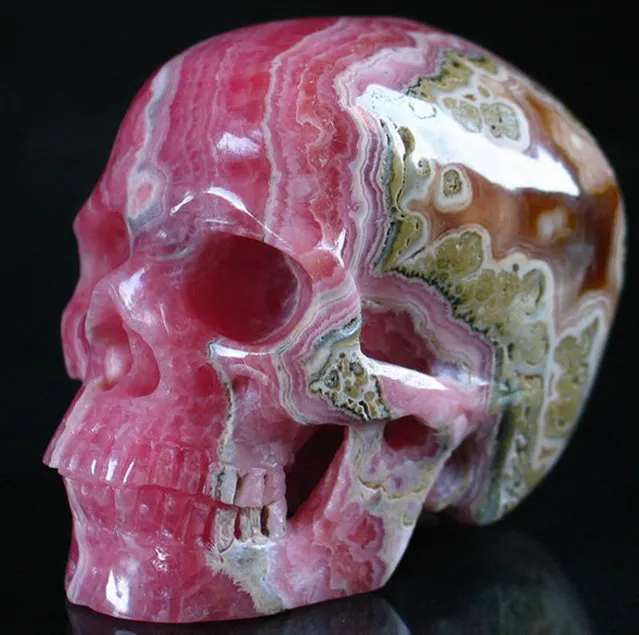
Rhodochrosite is a manganese carbonate mineral with chemical composition MnCO3. In its (rare) pure form, it is typically a rose-red color, but impure specimens can be shades of pink to pale brown. It streaks white, and its Mohs hardness varies between 3.5 and 4. Its specific gravity is between 3.5 and 3.7. It crystallizes in the trigonal system, and cleaves with rhombohedral carbonate cleavage in three directions.
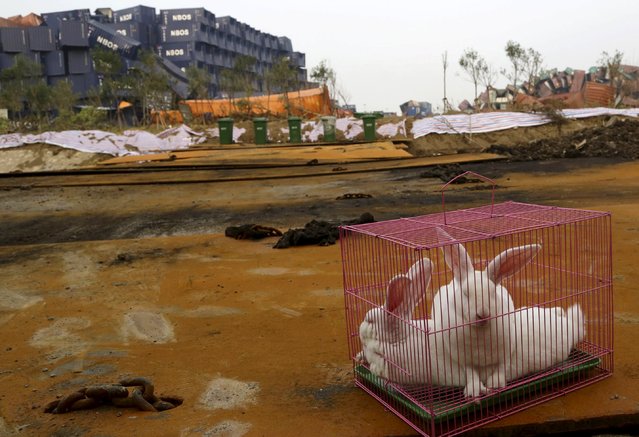
Rabbits are seen in a cage, which is placed by authority as a test of the living conditions near the site of last week's blasts at Binhai new district in Tianjin, China, August 19, 2015. According to local media, the animals were alive after being placed near the blasts site for two hours. Four new fires have broken out at the site where two huge blasts last week killed 116 people, Chinese state media reported Friday soon after officials said safety hazards were found at almost 70 percent of firms handling dangerous chemicals in Beijing. (Photo by Reuters/Stringer)