Loading...
Done
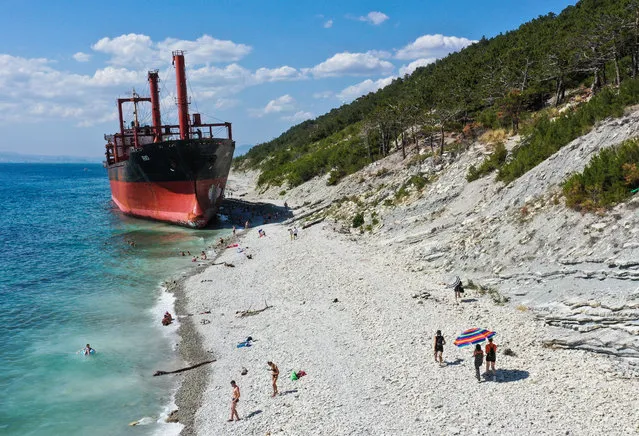
The Rio dry cargo ship that has ran aground during a storm in December 2018 in Kabardinka, Krasnodar Territory, Russia on August 11, 2020. The vessel has become a tourist attraction of the region. (Photo by Alexander Ryumin/TASS)

The Rio dry cargo ship that has ran aground during a storm in December 2018 in Kabardinka, Krasnodar Territory, Russia on August 11, 2020. The vessel has become a tourist attraction of the region. (Photo by Alexander Ryumin/TASS)
Details
21 Aug 2020 00:05:00
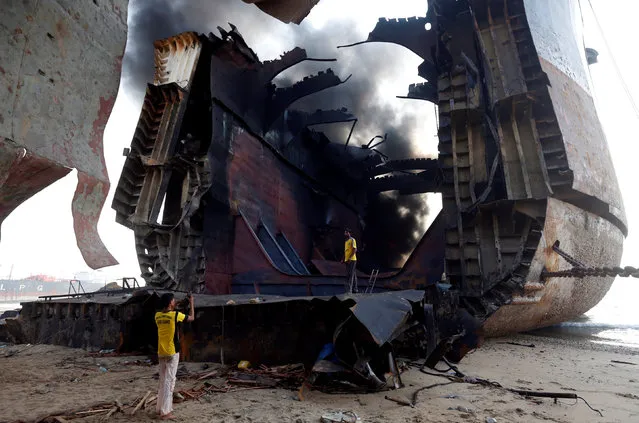
A man takes photo of his colleague with a mobile phone on the burning oil tanker at the ship-breaking yard in Gaddani, Pakistan, November 2, 2016. (Photo by Akhtar Soomro/Reuters)

A man takes photo of his colleague with a mobile phone on the burning oil tanker at the ship-breaking yard in Gaddani, Pakistan, November 2, 2016. Reports state that at least eighteen workers were killed and more than 100 were wounded in a blast at Gaddani ship breaking yard near Karachi on 01 November. Initial reports suggest the blast occurred when a gas cylinder exploded inside an oil tanker being broken up for scrap. (Photo by Akhtar Soomro/Reuters)
Details
04 Nov 2016 12:44:00
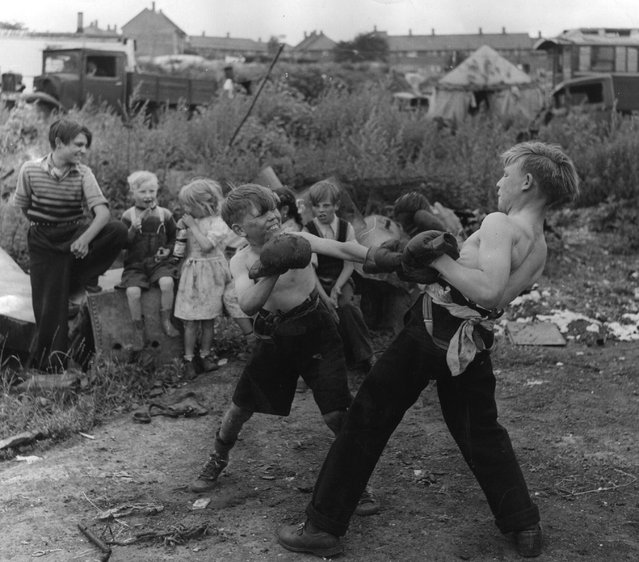
The unromantic gypsies. Children boxing in a gypsy camp in Kent, England on July 1, 1951. Like all boys these gypsy lads like to try their hand at boxing. Encouraged by their friends they fight it out on Corke's Meadow. Few Romanies now live a life of wandering romance. Most are like the three hundred squatters of Corke's Meadow, Kent, which is part of a “gypsy problem” that involves about 100,000 today. Of those about 25,000 can be rightly called gypsies, the rest are Mumpers and Posh-rats and Hobos. Corke's Meadow has both kinds. “Picture Post” cameraman Bert Hardy photographs the Corke's Meadow gypsies in their encampment. (Photo by Hulton-Deutsch Collection/Corbis via Getty Images)

The unromantic gypsies. Children boxing in a gypsy camp in Kent, England on July 1, 1951. Like all boys these gypsy lads like to try their hand at boxing. Encouraged by their friends they fight it out on Corke's Meadow. Few Romanies now live a life of wandering romance. Most are like the three hundred squatters of Corke's Meadow, Kent, which is part of a “gypsy problem” that involves about 100,000 today. Of those about 25,000 can be rightly called gypsies, the rest are Mumpers and Posh-rats and Hobos. Corke's Meadow has both kinds. “Picture Post” cameraman Bert Hardy photographs the Corke's Meadow gypsies in their encampment. (Photo by Hulton-Deutsch Collection/Corbis via Getty Images)
Details
12 Mar 2017 00:01:00
Caught In East Ukraine Crossfire

An old woman looks from inside a car with bullet holes and shattered windows as she flees fighting in the eastern Ukrainian town of Slaviansk June 9, 2014. REUTERS/Gleb Garanich.
Details
10 Jun 2014 11:15:00


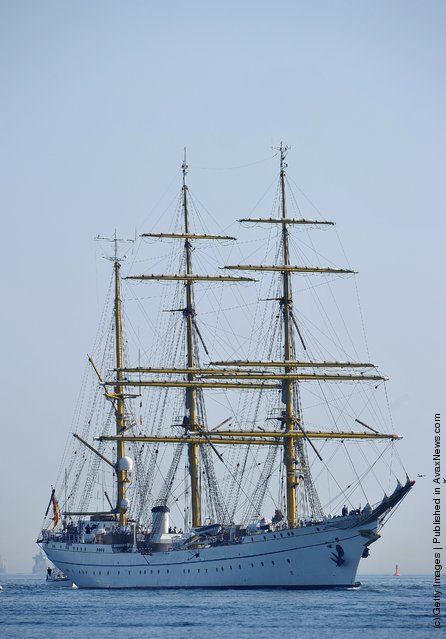
“The Gorch Fock is a tall ship of the German Navy (Deutsche Marine). She is the second ship of that name and a sister ship of the Gorch Fock built in 1933. Both ships are named in honor of the German writer Johann Kinau who wrote under the pseudonym "Gorch Fock" and died in the battle of Jutland/Skagerrak in 1916. The modern-day Gorch Fock was built in 1958 and has since then undertaken 146 cruises (as of October 2006), including one tour around the world in 1988. She is sometimes referred to (unofficially) as the Gorch Fock II to distinguish her from her older sister ship”. – Wikipedia

Photo: The “Gorch Fock” German Navy tall ship sails towards Kiel on May 6, 2011 in Kiel, Germany. The ship returns to Germany following investigations in January while it was in port in Ushuia, Argentina, into allegations of attempted mutiny following the death of a female crew member. German Defense Minister at the time Karl-Theodor zu Guttenberg suspended Captain Norbert Schatz, and though investigators absolved Schatz of wrongdoing, critics charge the investigation was inadequate. The "Gorch Fock" is the German Navy's flagship training vessel. (Photo by Stuart Franklin/Getty Images)
Details
06 May 2011 11:38:00
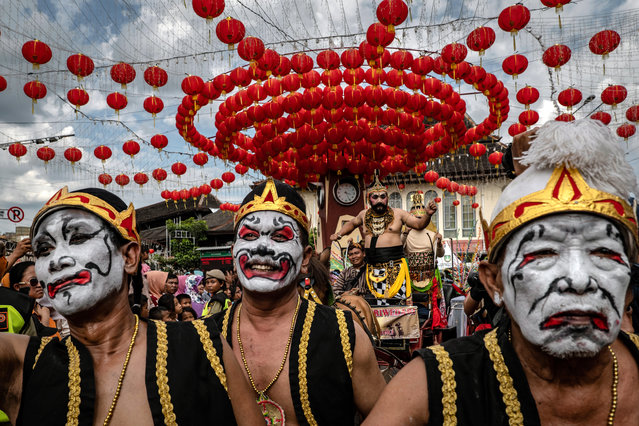
Participants perform parade in the street during Grebeg Sudiro festival on January 19, 2020 in Solo City, Central Java, Indonesia. Grebeg Sudiro festival is held as a prelude to the Chinese New Year, which falls on January 25th this year, welcoming the Year of the Rat. People bring offerings known as gunungan, including Chinese sweetcakes piled up into the shape of mountains, which are paraded in the streets followed by Chinese and Javanese performers. (Photo by Ulet Ifansasti/Getty Images)

Participants perform parade in the street during Grebeg Sudiro festival on January 19, 2020 in Solo City, Central Java, Indonesia. Grebeg Sudiro festival is held as a prelude to the Chinese New Year, which falls on January 25th this year, welcoming the Year of the Rat. People bring offerings known as gunungan, including Chinese sweetcakes piled up into the shape of mountains, which are paraded in the streets followed by Chinese and Javanese performers. (Photo by Ulet Ifansasti/Getty Images)
Details
23 Jan 2020 00:01:00
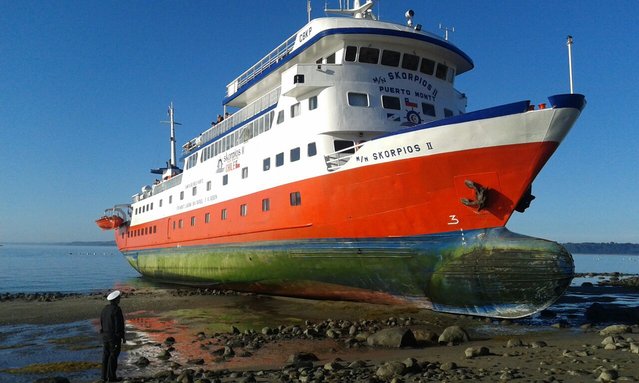
The Chilean ship “Skorpios II” is seen after it ran aground in “Maillen” island, near Puerto Montt, south of Santiago, in this handout picture from the Chilean Navy, February 5, 2015. According to the Chilean Navy, the ship's 89 passengers and 31 crew members were all evacuated and no oil spills or casualties were reported. (Photo by Reuters/Chilean Navy)

The Chilean ship “Skorpios II” is seen after it ran aground in “Maillen” island, near Puerto Montt, south of Santiago, in this handout picture from the Chilean Navy, February 5, 2015. According to the Chilean Navy, the ship's 89 passengers and 31 crew members were all evacuated and no oil spills or casualties were reported. (Photo by Reuters/Chilean Navy)
Details
07 Feb 2015 14:22:00
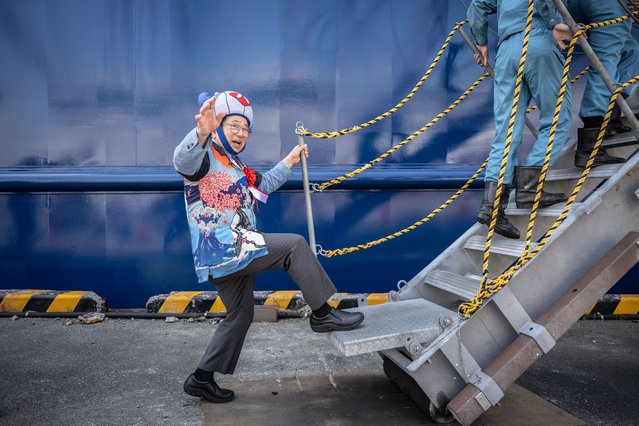
Hideki Tokoro, president of whaling company Kyodo Senpaku, boards Japan's new whaling mothership, the Kangei Maru, following the ship's launch ceremony at a port in Shimonoseki city, Yamaguchi prefecture on May 21, 2024. The nearly 9,300-tonne ship set sail on its maiden hunting voyage on May 21, heralding a new era for the controversial practice defended by the government as an integral part of national culture. (Photo by Yuichi Yamazaki/AFP Photo)

Hideki Tokoro, president of whaling company Kyodo Senpaku, boards Japan's new whaling mothership, the Kangei Maru, following the ship's launch ceremony at a port in Shimonoseki city, Yamaguchi prefecture on May 21, 2024. The nearly 9,300-tonne ship set sail on its maiden hunting voyage on May 21, heralding a new era for the controversial practice defended by the government as an integral part of national culture. (Photo by Yuichi Yamazaki/AFP Photo)
Details
31 May 2024 04:28:00