Loading...
Done
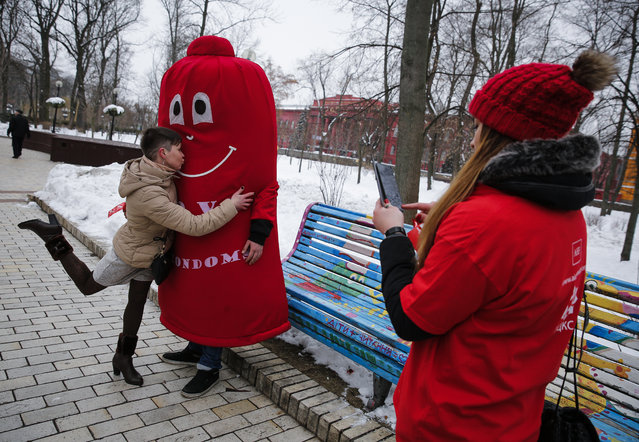
A volunteer photographs a woman as she kisses a volunteer wearing a condom costume during marking the International Condom Day in Kiev, Ukraine, 13 February 2015. The event was organized to promote and create awareness towards “Safe s*x” and the use of condoms to control and prevent Human Immunodeficiency Virus (HIV) and other sexually transmitted diseases on the occasion of the International Condom day. (Photo by Roman Pilipey/EPA)

A volunteer photographs a woman as she kisses a volunteer wearing a condom costume during marking the International Condom Day in Kiev, Ukraine, 13 February 2015. The event was organized to promote and create awareness towards “Safe s*x” and the use of condoms to control and prevent Human Immunodeficiency Virus (HIV) and other sexually transmitted diseases on the occasion of the International Condom day. (Photo by Roman Pilipey/EPA)
Details
14 Feb 2015 12:20:00
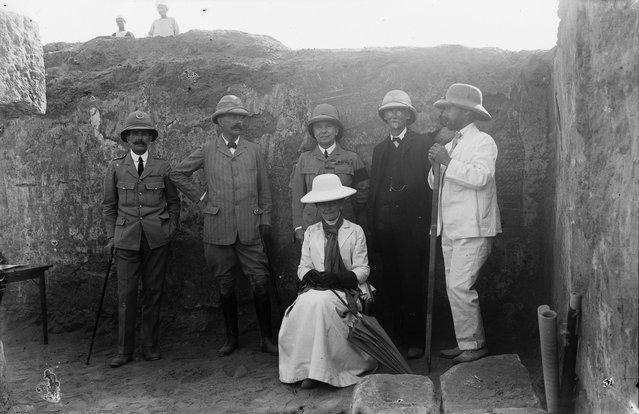
Remarkable discoveries were made, like the decapitated head of a bronze statue of Roman emperor Augustus, sacked from a raid on Roman garrisons further north in Egypt. Here: A group visiting the excavations at Meroë, including (from left) Midwinter Bey, director of Sudan Railways; Lord Kitchener; General Sir Francis Reginald Wingate, Sirdar of the Egyptian Army; Professor Archibald Sayce; John Garstang; and Lady Catherine Wingate, 1911. (Photo by Garstang Museum of Archaeology)

The city of Meroë laid undiscovered for two millennia before British archaeologist John Garstang excavated it in the early 20th century. Garstang took the radical decision to document his discoveries with photography – and immortalised an ancient world. “Meroë: Africa’s Forgotten Empire” is being shown until 14 September at Garstang Museum of Archaeology, Liverpool. Here: A group visiting the excavations at Meroë, including (from left) Midwinter Bey, director of Sudan Railways; Lord Kitchener; General Sir Francis Reginald Wingate, Sirdar of the Egyptian Army; Professor Archibald Sayce; John Garstang; and Lady Catherine Wingate, 1911. (Photo by Garstang Museum of Archaeology)
Details
15 Jun 2016 14:49:00
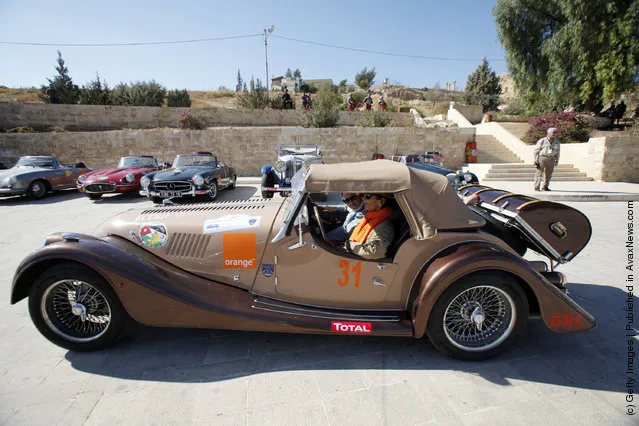
Classic Car Owners In Jordan For The «2011 Jordan Classic»

Classic car owners taking part in the “2011 Jordan Classic” arrive at the ancient Roman city of Jerash on October 31, 2011 in Jerash, Jordan. The 2011 Jordan Classic takes in world famous sites such as the Dead Sea and Petra. (Photo by Salah Malkawi/ Getty Images)
Details
01 Nov 2011 11:00:00


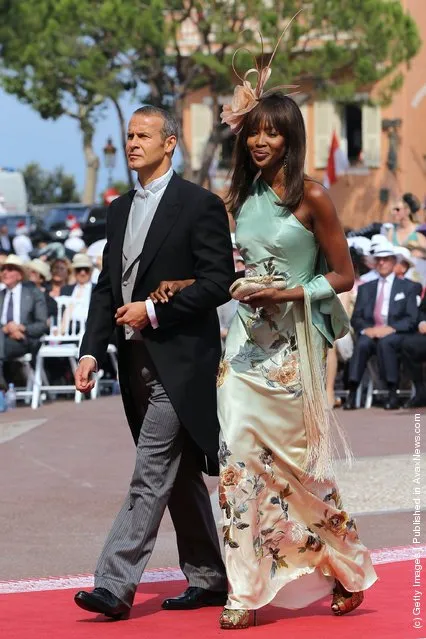
Vladislav Doronin and Naomi Campbell attend the religious ceremony of the Royal Wedding of Prince Albert II of Monaco to Princess Charlene of Monaco in the main courtyard at the Prince's Palace on July 2, 2011 in Monaco. The Roman-Catholic ceremony follows the civil wedding which was held in the Throne Room of the Prince's Palace of Monaco on July 1. With her marriage to the head of state of the Principality of Monaco, Charlene Wittstock has become Princess consort of Monaco and gains the title, Princess Charlene of Monaco. Celebrations including concerts and firework displays are being held across several days, attended by a guest list of global celebrities and heads of state. (Photo by Sean Gallup/Getty Images)
Details
03 Jul 2011 11:19:00


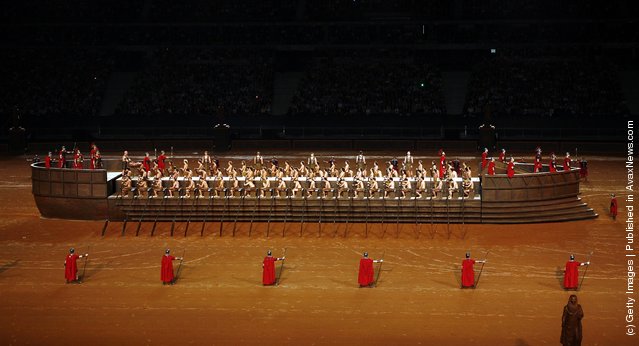
PARIS - SEPTEMBER 22: French actor Christophe Heraut plays Ben-Hur and rides in a Roman chariot during the stage production premiere of 'Ben-Hur' September 22, 2006 in Saint-Denis, Paris, France. After Charlton Heston played the lead in this sword and sandal epic, written by Civil War Union Gen. Lew Wallace, on the big screen, the play is set to return in a live version staged at France's biggest sports stadium. Behind the 13-million-euro (16.5-million-dollar) show is a veteran Paris-born director Robert Hossein, who involved a large crew of hundreds of actors for the show. (Photo by Francois Durand/Getty Images)
Details
16 Nov 2011 12:17:00
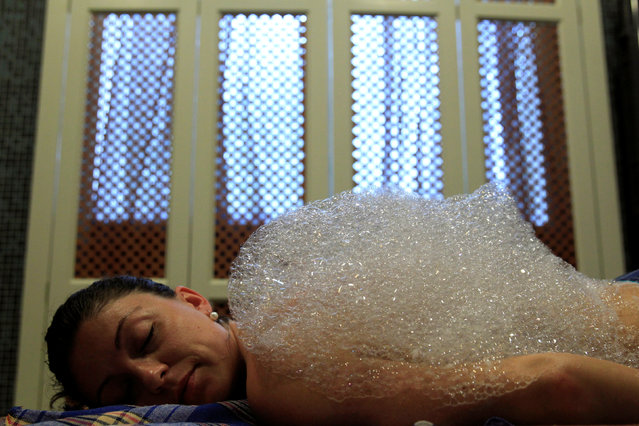
A woman is having a massage at the Lukacs Bath in Budapest, Hungary June 28, 2016. (Photo by Bernadett Szabo/Reuters)

A woman is having a massage at the Lukacs Bath in Budapest, Hungary June 28, 2016. Hungary's capital owes its popularity as a tourist destination partly to its numerous hot springs and bathing culture which have drawn visitors to the area since Roman times. Bath houses range from large, ornate 19th-century buildings like the Gellert and the Szechenyi to tiny Ottoman Turkish-era hamams, some of them more than 500 years old. (Photo by Bernadett Szabo/Reuters)
Details
20 Jul 2016 10:05:00
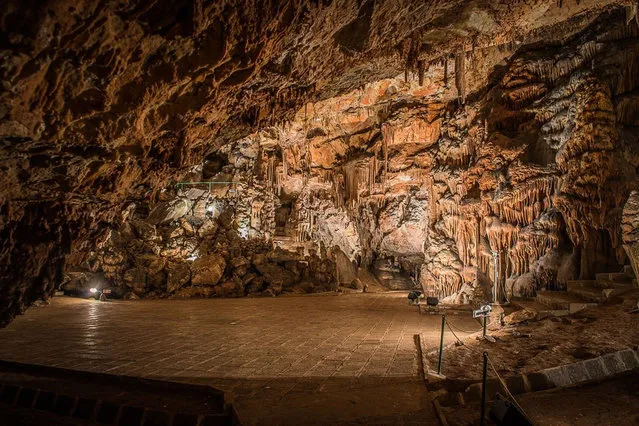
Saeva Dupka Cave

Saeva dupka (Bulgarian: Съева дупка) is a cave in Northern Bulgaria near the village of Brestnitsa, Lovech Province (43°2′N 24°11′E). Its five halls and 400 metres of corridors offer some of the most beautiful cave formations in the country. Besides that the cave has hosted many Choral music performances, thanks to the excellent acoustic conditions. Saeva dupka was named after two brothers Seyu and Sae who used it as a hiding place during the Ottoman occupation of Bulgaria. Recent excavations have showed the cave was inhabited since Roman times. Currently Saeva dupka is one of the 100 Tourist Sites of Bulgaria.
Details
20 Feb 2013 11:30:00
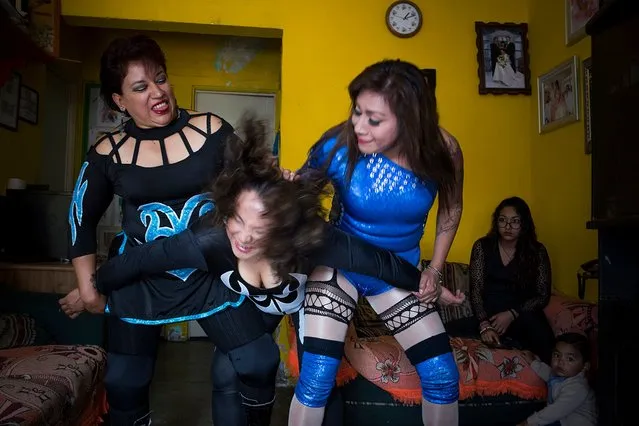
Juliza meets with colleagues at her home. (Photo by Diana Bagnoli/The Washington Post)

Lucha libre is Mexico’s version of what in the United States refer to as pro wrestling. Its dates to 1863, when a Mexican wrestler named Enrique Ugartechea developed a form of “freestyle” wrestling that was based on Greco-Roman wrestling. Lucha libre began to soar in popularity in Mexico after two Italian businessmen started promoting fights in the early 1900s. It has since become popular around the globe. Here: Juliza meets with colleagues at her home. (Photo by Diana Bagnoli/The Washington Post)
Details
15 Jun 2018 00:05:00